
$1,390 IRS Refund Claim: The $1,390 IRS refund claim has been making the rounds across social media, email inboxes, and video platforms, with bold promises that Americans are about to receive a surprise payment. If you’ve seen posts claiming the government is sending out a $1,390 direct deposit or check, you’re not alone. Many taxpayers across the United States are asking whether this payment is real, who qualifies, and when it’s coming. Let’s get straight to it: there is no officially authorized $1,390 stimulus payment currently announced by the Internal Revenue Service or approved by the United States Congress. As someone who has covered federal tax policy, consumer protection issues, and IRS updates for years, I can tell you that any legitimate nationwide payment would be clearly announced on IRS.gov and through official press releases. Before we go deeper, here’s a clear snapshot of what you need to know.
Table of Contents
$1,390 IRS Refund Claim
The $1,390 IRS refund claim is not backed by any official announcement from the Internal Revenue Service or the United States Congress. While taxpayers may receive refunds near that amount due to legitimate credits or over-withholding, there is no new universal stimulus payment program. Always verify payment information directly, stay alert for scams, and base financial decisions on confirmed government announcements rather than viral claims.
| Topic | Details |
|---|---|
| Claim | Viral posts suggest a nationwide $1,390 IRS payment |
| Official Confirmation | No new stimulus or automatic payment confirmed |
| Possible Source | Standard tax refunds or refundable credits |
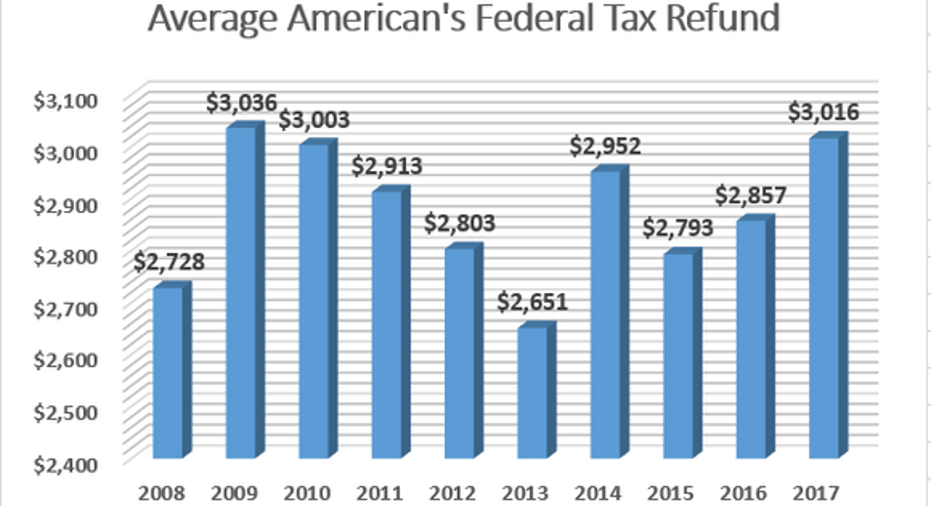
| Average Refund | Typically ranges between $2,800–$3,200 (varies by year) |
| Scam Risk | IRS-related fraud remains a major concern |
| Official Verification | Visit https://www.irs.gov |
| Consumer Fraud Reporting | https://www.ftc.gov |
Where Did the $1,390 IRS Refund Claim Come From?
In America, when folks hear about money from the government, ears perk up fast. Especially after the COVID-era stimulus checks, many people remain hopeful that more payments could be on the way.
But here’s the key difference: the pandemic stimulus checks were backed by federal legislation like the CARES Act. Those payments were:
- Publicly debated
- Passed by Congress
- Signed by the President
- Officially announced by the IRS
The current $1,390 refund claim does not follow that pattern. There is no bill in Congress authorizing it. No White House announcement. No IRS newsroom release.
Most viral claims appear to stem from three common misunderstandings:
- Confusion between individual tax refunds and government stimulus payments
- Misinterpretation of refund averages
- Social media amplification of misleading headlines
When someone files their taxes and receives a refund around $1,390, that amount reflects their personal tax situation — not a universal program.
What the IRS Officially Says About $1,390 IRS Refund Claim?
The IRS communicates all legitimate payments through:
- The IRS Newsroom section
- Official notices mailed directly to taxpayers
- Verified IRS.gov announcements
As of now, there is no official statement confirming a new $1,390 direct payment program.
If Congress were to authorize such a payment, the process would be transparent and public. You could track the bill at Congress.gov, see voting records, and read the legislation.
Federal payments don’t happen quietly behind the scenes.
Understanding How Tax Refunds Work
Let’s break this down so it’s crystal clear.
When you work, your employer withholds federal income tax from your paycheck. At the end of the year, you file your tax return. The IRS compares:
- How much you paid during the year
- How much you actually owed
If you paid too much, you get the difference back. That’s your refund.
Sometimes, that refund lands around $1,390. But that number isn’t universal. It’s personal.
Several credits can influence refund totals.
Earned Income Tax Credit (EITC)
The Earned Income Tax Credit helps low- to moderate-income workers. The amount depends on income level and number of qualifying children.
According to IRS guidelines, the maximum EITC can reach several thousand dollars for families with multiple children. For smaller households or single filers, partial credits could easily bring a refund near $1,390.
Official information is available at IRS.gov under EITC.
Child Tax Credit (CTC)
Families may qualify for up to $2,000 per qualifying child depending on the tax year. Portions of this credit may be refundable.
Combined with other credits, this can shape a refund that resembles the viral $1,390 amount.
Education Credits
The American Opportunity Tax Credit assists eligible college students with education expenses. Depending on eligibility, portions of this credit may also be refundable.
Each of these programs is legitimate. But none are automatic blanket payments.
Average IRS Refund Data
According to official IRS filing season statistics, the average federal refund has fluctuated between approximately $2,800 and $3,200 in recent years.
However, averages do not mean everyone receives that amount. Refunds vary widely depending on:
- Income
- Filing status
- Withholding levels
- Number of dependents
- Claimed deductions and credits
It’s entirely normal for someone’s refund to land near $1,390. That doesn’t make it a stimulus.
The Role of Scams and Misinformation
Now here’s where things get serious.
The Federal Trade Commission reported that Americans lost more than $10 billion to fraud in 2023 — the highest amount ever recorded. Government impersonation scams remain among the top categories.
Refund season is prime time for scammers. Criminals know taxpayers are expecting money. They send:
- Fake IRS emails
- Text messages claiming refund approval
- Robocalls threatening penalties
- Phishing links asking for Social Security numbers
The IRS clearly states:
- It does not initiate contact via social media.
- It does not demand immediate payment over the phone.
- It does not ask for gift cards or cryptocurrency.
If someone messages you promising a $1,390 payment but asks for personal details first, that’s a red flag.
Step-by-Step Guide to Verifying $1,390 IRS Refund Claim
If you want to check whether you’re owed money, here’s how to do it safely.
Step 1: Visit IRS.gov Directly
Do not rely on random blog posts. Type the address manually.
Step 2: Use “Where’s My Refund?”
This official tool allows taxpayers to track refund status using their Social Security Number and filing information.
Step 3: Check IRS News Releases
Every legitimate payment program is publicly announced.
Step 4: Review Your Tax Return
Confirm what refund amount you claimed when filing.
Step 5: Contact IRS Through Official Channels
Phone numbers listed on IRS.gov are verified.
Step 6: Report Suspicious Messages
Forward phishing attempts to phishing@irs.gov.
Could Congress Approve a New Payment?
Technically, yes. Congress always has the power to pass relief legislation.
But the process requires:
- Draft legislation
- Committee review
- House and Senate votes
- Presidential signature
- IRS implementation planning
All of that is public record. As of now, there is no active legislation authorizing a universal $1,390 payment.
Broader Economic Context
During 2020 and 2021, Americans received three rounds of Economic Impact Payments totaling up to $3,200 per eligible adult. Those payments were emergency measures during the COVID-19 shutdowns.
Since then, federal policy has shifted toward:
- Infrastructure investment
- Inflation management
- Expanded IRS enforcement modernization
- Targeted tax credit reforms
The IRS has also invested in improved customer service systems and digital modernization.
There is no current nationwide stimulus program.
Practical Advice for Taxpayers
Here’s some grounded, practical guidance.
If you’re hoping for a $1,390 check because you saw it trending online, pause before making financial decisions based on that expectation.
Instead:
- Adjust your withholding using the IRS Withholding Estimator
- File your taxes early
- Claim all eligible credits
- Consider setting up direct deposit
- Use IRS Free File if eligible
Tax professionals should also:
- Educate clients about refund myths
- Monitor IRS press releases
- Encourage identity protection PIN enrollment
- Warn clients about phishing attempts
Being proactive beats reacting to viral rumors.
IRS Explains Refund Tracking Steps And When Federal Payments Truly Arrive
IRS Confirms $1776 Tax-Free Payments for 1.5 million Americans
$1,000 Average Tax Refund For 2026 Could Change What Millions Expect This Season
Why Accuracy and Financial Literacy Matter?
In communities across America, financial misinformation spreads quickly. Many families live paycheck to paycheck. When headlines promise extra money, hope rises.
But hope should be grounded in facts.
The IRS operates under federal law. It does not secretly distribute nationwide payments without documentation. Transparency is part of the system.
As professionals, educators, and community members, we all share responsibility for verifying claims before passing them along. When we rely on trusted sources and official channels, we protect ourselves and our neighbors from financial harm.