

A new $6000 Senior Tax deduction introduced in recent U.S. tax legislation aims to reduce financial pressure on older Americans. However, the policy has sparked debate among economists, lawmakers, and retirees over whether it meaningfully supports vulnerable seniors or mainly benefits middle-income households while reducing federal tax revenue.
Table of Contents
$6000 Senior Tax
| Key Fact | Detail |
|---|---|
| Maximum deduction | Up to $6,000 per taxpayer aged 65+ |
| Income limits | Phases out above $75,000 ($150,000 couples) |
| Policy impact | Mostly benefits middle-income retirees |
What the $6000 Senior Tax Actually Does
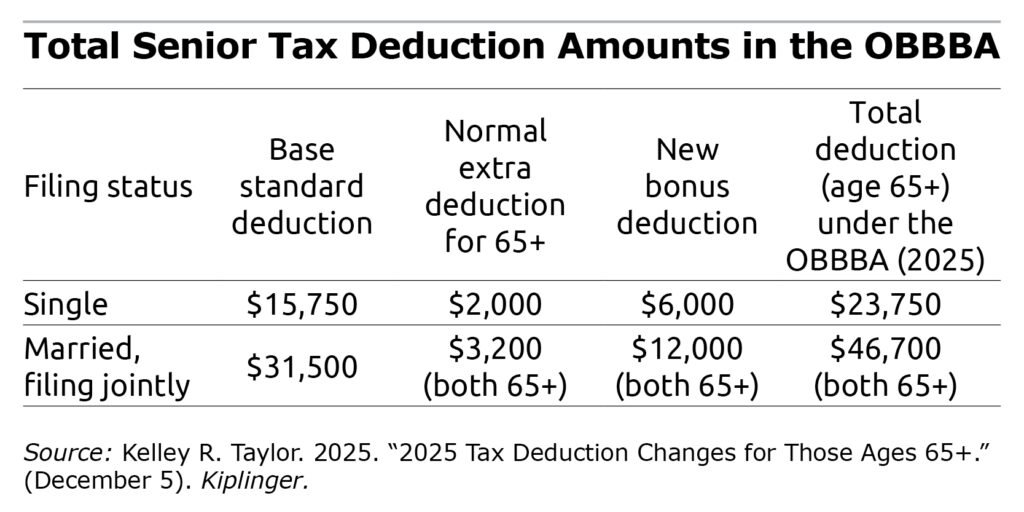
The $6000 Senior Tax provision creates an additional federal income tax deduction for Americans aged 65 and older. Unlike a stimulus payment or Social Security increase, it does not provide cash directly. Instead, it reduces the amount of income subject to federal taxation.
For example, a retiree reporting $40,000 in taxable income could be taxed as though they earned $34,000 after applying the deduction. Married couples may claim up to $12,000.
The Internal Revenue Service (IRS) confirmed the deduction applies on top of the existing standard deduction already available to seniors.
“This lowers taxable income rather than creating a transfer payment,” explained William McBride, chief economist at the Tax Foundation. “Many taxpayers misunderstand the difference between a deduction and a benefit.”
The deduction is temporary and currently scheduled to expire unless Congress renews it.
Difference Between a Deduction and a Credit
Understanding the policy requires a basic tax concept:
- Tax deduction: reduces income being taxed
- Tax credit: directly reduces the tax owed
Because this policy is a deduction, its value varies depending on income and tax bracket. That variation is central to the controversy.
Why Lawmakers Supported the Policy
Supporters say the measure responds to rising living costs for retirees.
Older Americans often rely on fixed income sources such as pensions, retirement savings withdrawals, and Social Security. According to the U.S. Bureau of Labor Statistics, healthcare and housing expenses account for nearly 40% of senior household spending.
Lawmakers promoting the policy argued inflation has eroded retirees’ purchasing power.
Some policymakers also said the deduction would indirectly reduce taxes on Social Security benefits for certain recipients. However, tax analysts note the policy does not eliminate Social Security taxation entirely.
Inflation and Retirees
Retirees face a different inflation reality than working households. Medical care, insurance premiums, and prescription drugs tend to rise faster than general consumer prices.
Economists call this “retiree inflation,” meaning seniors often experience higher real cost increases than headline inflation figures suggest.
For example:
- prescription drug prices
- assisted living services
- long-term care insurance
These categories heavily affect older Americans but less so younger families.
Critics Say Benefits Are Uneven
Economists say the debate centers on distribution — who actually gains financially from the $6000 Senior Tax deduction.
Many lower-income retirees already owe little or no federal income tax because their income falls below taxable thresholds. A deduction therefore provides minimal benefit.
“Tax deductions are not effective anti-poverty tools,” said Elaine Maag, senior fellow at the Urban-Brookings Tax Policy Center. “They help people who already pay taxes.”
Middle-income retirees — especially those drawing retirement account withdrawals — may receive the largest tax reduction.
Who Benefits Most
| Income Group | Effect |
|---|---|
| Low-income seniors | Little or none |
| Middle-income seniors | Significant benefit |
| High-income seniors | Partial benefit due to income cap |
Analysts at the Bipartisan Policy Center described the deduction as broad relief rather than targeted assistance.
Budget and Economic Concerns
Fiscal policy experts also warn about federal revenue.
Reducing taxable income lowers tax collection. Budget analysts estimate the policy could reduce government revenue by tens of billions of dollars over several years.
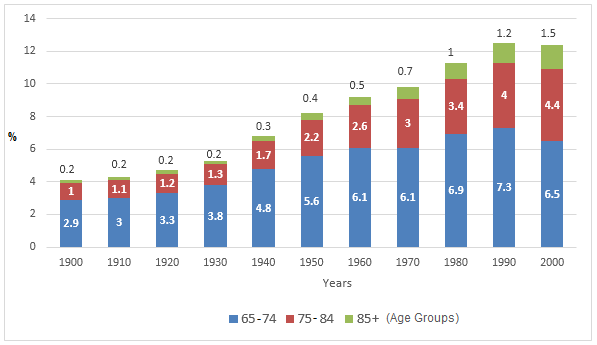
That matters because the U.S. population is aging rapidly. The number of Americans aged 65 and older is projected to grow significantly in the next decade.
The Committee for a Responsible Federal Budget warned that tax reductions combined with an aging population could worsen long-term retirement program financing.
Social Security operates largely through payroll taxes paid by current workers. If government revenue declines while retirees increase, fiscal pressure rises.
Generational Fairness Debate
The $6000 Senior Tax has triggered a generational fairness discussion.
Working-age Americans continue paying payroll taxes funding Social Security and Medicare but receive no equivalent tax deduction.
“Every tax policy reflects priorities,” said Maya MacGuineas, president of the Committee for a Responsible Federal Budget. “The challenge is balancing retirement support with fiscal sustainability.”
Younger workers, particularly renters and student-loan borrowers, have questioned why tax relief is tied primarily to age rather than income.
What Retirees Say
Reactions among seniors vary widely.
Some retirees support the deduction because it lowers annual tax bills. Others say it provides limited relief compared to rising healthcare and housing costs.
Financial planners report the deduction may help retirees managing required minimum distributions from retirement accounts, which often push them into taxable income ranges.
However, seniors relying solely on Social Security benefits often see little change.
Historical Context: Tax Policy and Seniors
This is not the first time Congress has used tax policy to assist retirees.
Previous policies include:
- extra standard deductions for age 65+
- tax-favored retirement accounts
- Social Security taxation thresholds
Historically, the U.S. has relied more on tax benefits than direct pension increases compared to many European nations.
Policy historians note tax-based relief became common during the 1980s and 1990s as governments attempted to manage retirement costs without expanding entitlement spending.
International Comparison
Other countries approach senior support differently.
United Kingdom: relies more heavily on direct pension payments.
Canada: uses refundable tax credits targeted to low-income seniors.
Germany: operates a contributory public pension system with fewer tax deductions.
Economists say refundable credits or direct payments better target poverty, while deductions favor middle-income households.
Practical Example
Consider two retirees:
Retiree A:
Income: $18,000 (mostly Social Security)
Federal tax owed: $0
Result: No meaningful benefit
Retiree B:
Income: $55,000 (pension + retirement withdrawals)
Taxable income reduced by $6,000
Result: Noticeable tax savings
This example illustrates why economists describe the policy as uneven.
Broader Policy Context
The debate highlights a broader economic question: should governments assist retirees through tax reductions or direct benefits?
Tax deductions:
- politically easier
- administratively simple
- less targeted
Direct benefits:
- more precise
- more expensive
- more effective for poverty reduction
The Pew Research Center reports older Americans represent one of the fastest-growing voting demographics, which makes retirement policy politically sensitive.
What Happens Next
The deduction remains active for now but faces review when Congress considers future tax legislation.
Lawmakers from both parties have suggested possible revisions, including income-targeted relief.
Economists expect continued debate as demographic aging accelerates and retirement systems face long-term financial pressure.
“The real policy question is not whether to help seniors,” said Brookings Institution economist William Gale. “It is how to help them effectively and sustainably.”
FAQ
Is the $6000 Senior Tax a payment?
No. It reduces taxable income rather than providing cash.
Does it eliminate Social Security taxes?
No. It may lower taxes for some retirees but does not remove them entirely.
Who benefits the most?
Middle-income retirees who already pay federal income taxes.
Will it continue permanently?
Not currently. The deduction is temporary unless renewed by Congress.