

Daylight Saving Time Isn’t Going Away: here are the confirmed dates, and that means millions of Americans will still be adjusting their clocks twice a year. If you live in the United States, you already know the drill: every spring we “spring forward” and every fall we “fall back.” It’s one of those traditions that has been around so long it almost feels like part of American culture—kind of like Sunday football, summer road trips, and grabbing coffee before the workday kicks off.
But here’s the real story: despite years of debate and several proposed laws, Daylight Saving Time (DST) remains in place under current federal law, meaning the clock change will continue at least through 2026. While lawmakers, scientists, and everyday Americans argue about whether DST should stay or go, businesses, schools, and households still need to plan around the official schedule. For professionals managing schedules, transportation, healthcare shifts, or nationwide operations, knowing the confirmed Daylight Saving Time dates is more than a small detail—it’s essential planning information.
Table of Contents
Daylight Saving Time Isn’t Going Away
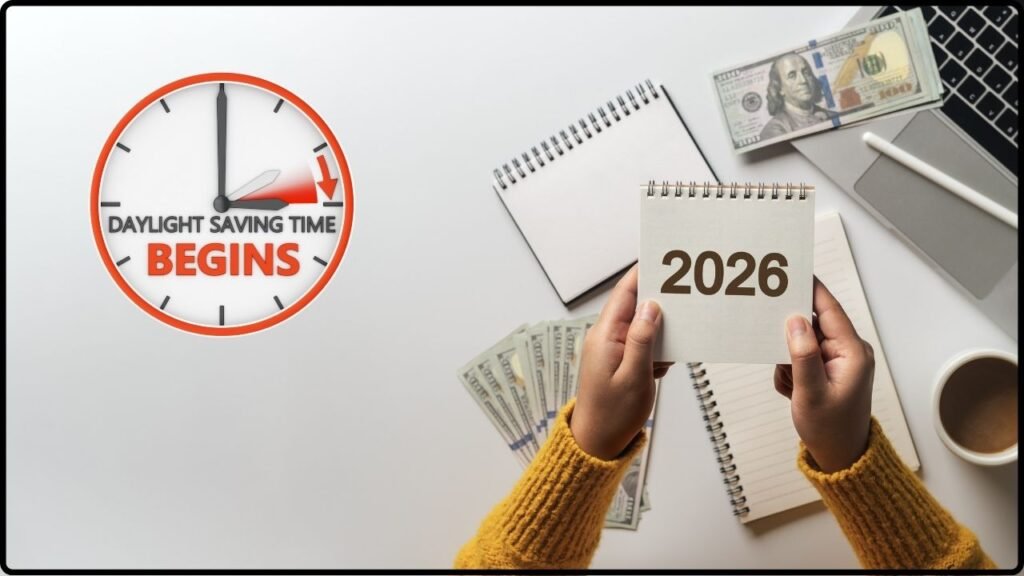
Daylight Saving Time isn’t going away before 2026, and the confirmed schedule remains firmly in place. Americans will move clocks forward on March 8, 2026, and turn them back on November 1, 2026. While the debate about eliminating DST continues across the country, businesses, workers, and families should expect the current system to remain for now. Understanding how the time change works—and planning ahead for it—helps minimize disruption and keeps schedules running smoothly.
| Topic | Details |
|---|---|
| DST Start Date (2026) | March 8, 2026 – clocks move forward one hour |
| DST End Date (2026) | November 1, 2026 – clocks move back one hour |
| Time of Clock Change | 2:00 a.m. local time |
| Federal Law Governing DST | Energy Policy Act of 2005 |
| States Not Observing DST | Hawaii and most of Arizona |
| Major Legislative Proposal | Sunshine Protection Act |
| Official Reference | https://www.timeanddate.com/time/change/usa |
| U.S. Time Authority | https://www.nist.gov |
Understanding Daylight Saving Time in the United States
At its core, Daylight Saving Time is a simple concept: move the clock forward during warmer months so evenings have more daylight.
When DST begins:
- Sunrise appears later on the clock
- Sunset happens later in the evening
- People experience longer daylight hours after work or school
When DST ends in November, the clock shifts back to Standard Time, which provides earlier morning daylight.
This practice affects more than 300 million Americans and influences daily routines, transportation schedules, business hours, financial markets, and even television programming.
The official explanation of DST rules is maintained by the National Institute of Standards and Technology (NIST), which manages time standards in the United States.
Confirmed Daylight Saving Time Dates for 2026
For those planning ahead—especially employers, healthcare providers, and travel companies—the 2026 schedule is already set.
Spring Forward – Start of DST
Date: Sunday, March 8, 2026
Time of change: 2:00 a.m. local time
At that moment, clocks jump forward:
2:00 a.m. → 3:00 a.m.
Americans effectively lose one hour of sleep that night.
However, the benefit is longer daylight in the evening, which many people enjoy for outdoor activities, sports, and social events.
Fall Back – End of DST
Date: Sunday, November 1, 2026
Time of change: 2:00 a.m. local time
At this point the clock shifts backward:
2:00 a.m. → 1:00 a.m.
That means Americans gain an extra hour of sleep, which is why the fall change tends to be more popular.
The History Behind Daylight Saving Time
The idea of adjusting clocks to maximize daylight has been around for centuries.
One of the earliest suggestions came from Benjamin Franklin in 1784, when he humorously proposed that people wake earlier to use natural sunlight instead of candles.
However, the modern version of DST emerged much later.
World War I
Daylight Saving Time was first widely adopted during World War I to conserve fuel and energy resources.
Countries including the United States and Germany used the system to reduce electricity consumption.
The Uniform Time Act of 1966
By the 1960s, different states and cities used different time rules, creating confusion for railroads, airlines, and broadcasters.
To solve the problem, Congress passed the Uniform Time Act, establishing consistent nationwide DST schedules.
Energy Policy Act of 2005
The current DST schedule—second Sunday in March through the first Sunday in November—was set by the Energy Policy Act of 2005.
This law extended DST by about four weeks compared to earlier schedules.
The purpose was to increase daylight hours and potentially reduce electricity demand.
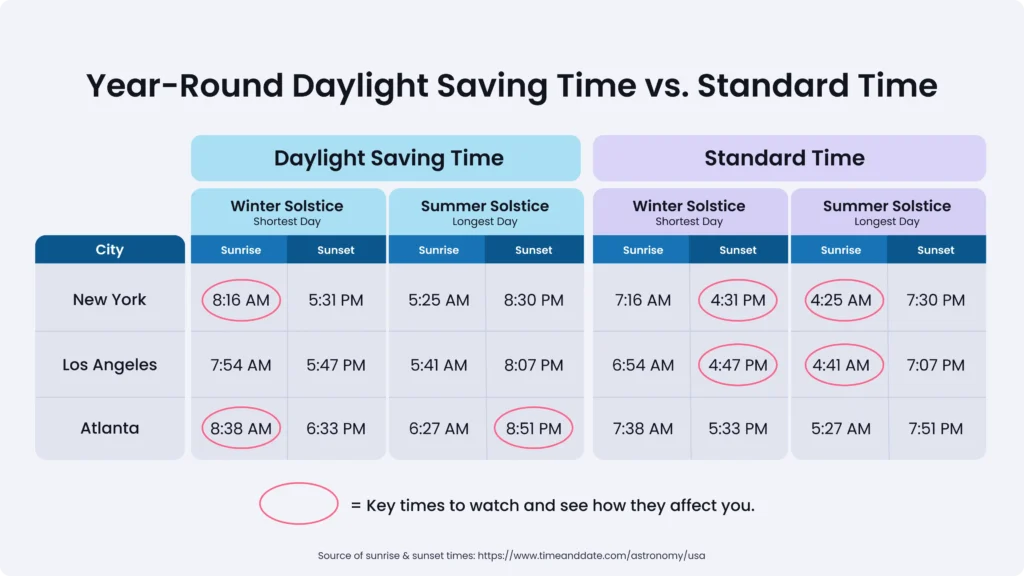
Daylight Saving Time Isn’t Going Away: States That Do Not Observe Daylight Saving Time
Even though most of the United States follows DST, two areas have opted out.
Hawaii
Hawaii remains on Standard Time year-round.
Because the state sits near the equator, seasonal daylight differences are small, so adjusting clocks provides little benefit.
Arizona
Most of Arizona also stays on Standard Time.
The reason is simple: desert heat.
Longer evening daylight would keep temperatures higher later in the day, increasing cooling costs.
However, there is an important exception.
Navajo Nation
The Navajo Nation, which stretches across parts of Arizona, New Mexico, and Utah, observes Daylight Saving Time.
This ensures consistency across the tribal territory.
Economic Effects of Daylight Saving Time
Whether Americans love or hate DST, it has clear economic impacts.
Several industries actually benefit from extended evening daylight.
Retail and Shopping
Longer daylight hours encourage people to spend time outdoors and visit stores.
According to retail industry research, evening daylight increases consumer activity, especially during spring and summer months.
Outdoor shopping districts, malls, and restaurants often see higher traffic during DST.
Tourism and Recreation
Tourism also benefits.
When daylight lasts longer, people are more likely to:
- Visit parks
- Attend sports games
- Go hiking or biking
- Travel on weekends
National parks, beaches, and recreation areas report higher visitation rates during longer daylight months.
Sports and Entertainment
Professional sports leagues also benefit from longer daylight hours.
Evening games are easier to attend when fans can leave work while it’s still light outside.
Major League Baseball and other leagues schedule many events during DST months for this reason.
Health Effects of the Time Change
While some industries benefit, health experts often raise concerns about DST.
The biggest issue is sleep disruption.
When the clock jumps forward in March, many people experience short-term sleep deprivation.
The American Academy of Sleep Medicine reports that sleep disturbances can lead to:
- Increased fatigue
- Reduced concentration
- Higher workplace accident risk
Research also shows a small increase in heart attack risk during the first week after the spring time change.
Does Daylight Saving Time Save Energy?
Originally, DST was designed to reduce electricity consumption.
The theory was simple: more daylight in the evening means people use fewer lights.
However, modern studies suggest the savings are modest.
The U.S. Department of Energy found that extended DST reduced electricity usage by about 0.5 percent per day during the observed period.
While that number seems small, across a large population it still represents measurable savings.
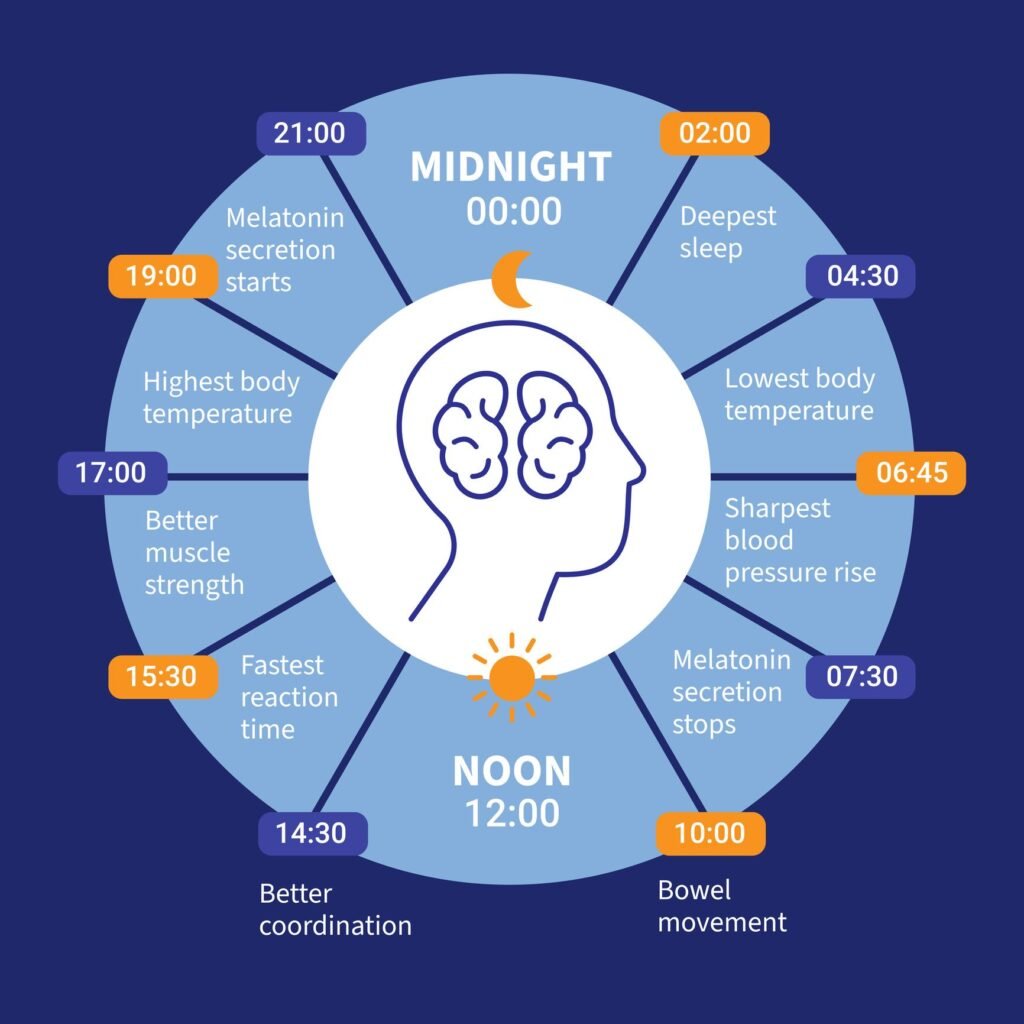
Daylight Saving Time Isn’t Going Away: Why the Debate Over Ending DST Continues?
In recent years, public opinion about Daylight Saving Time has shifted.
Many Americans now question whether the twice-yearly clock change is still necessary.
Polls show that more than 60 percent of Americans support eliminating the time change, according to research from the Monmouth University Polling Institute.
However, experts disagree on what should replace it.
There are two main proposals.
Permanent Daylight Saving Time
Supporters say keeping DST year-round would provide longer evening daylight, which benefits business and recreation.
Permanent Standard Time
Sleep scientists generally favor permanent Standard Time, arguing it aligns better with natural circadian rhythms.
Because of this disagreement, policymakers have struggled to reach a final decision.
The Sunshine Protection Act
The most widely discussed legislation is the Sunshine Protection Act.
This bill proposes making Daylight Saving Time permanent nationwide.
The U.S. Senate passed a version of the bill in 2022, but it did not complete the legislative process.
Until Congress and the President approve a final law, the current DST schedule remains unchanged.
Practical Tips for Handling the Time Change
Even though DST isn’t going away soon, there are ways to make the transition easier.
Adjust Your Sleep Schedule
Start shifting your bedtime by 10 to 15 minutes earlier a few days before the spring change.
This helps your body adjust gradually.
Increase Morning Sunlight
Exposure to natural sunlight helps regulate your body’s internal clock.
A quick morning walk can help reduce sleep disruption.
Limit Caffeine and Screens
Late-night caffeine and phone use can interfere with sleep patterns.
Try reducing both before bedtime during the week of the clock change.
Check Household Devices
While smartphones update automatically, many devices still require manual changes.
Common examples include:
- Microwave clocks
- Oven displays
- Car dashboards
- Wall clocks
Checking these ahead of time helps avoid confusion Monday morning.
How Businesses Prepare for Daylight Saving Time?
Companies that operate nationwide—especially airlines, hospitals, and financial markets—must prepare carefully for DST transitions.
Airlines update flight schedules to account for the clock change.
Hospitals often adjust overnight shift rotations to ensure patient care remains consistent.
Financial markets also coordinate trading hours to align with global time zones.
In industries where precise timing is critical, even a one-hour change requires careful planning.
Airport Security Is About to Feel Very Different — TSA’s 2026 Shift at 50 U.S. Airports
Farm Income in the U.S. May Fall in 2026 Despite Strong Government Support
U.S. Farm Income Forecast to Fall in 2026 Even With Strong Government Support