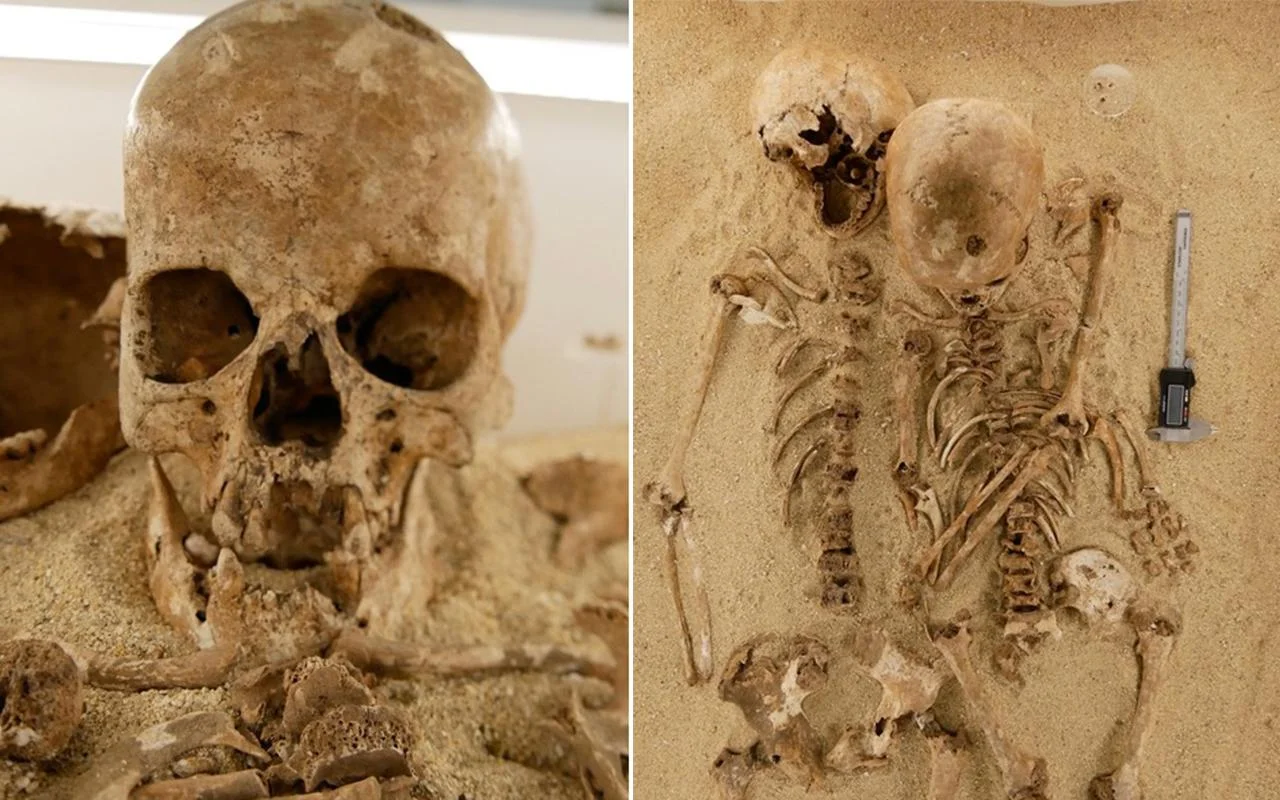

For a long time, the story of human origins felt almost settled. Generations of students learned that modern humans evolved in Africa before spreading outward to populate the rest of the world. This explanation, commonly known as the Out of Africa theory, offered a clean and convincing narrative supported by fossil evidence and genetic studies. Yet science is never static.
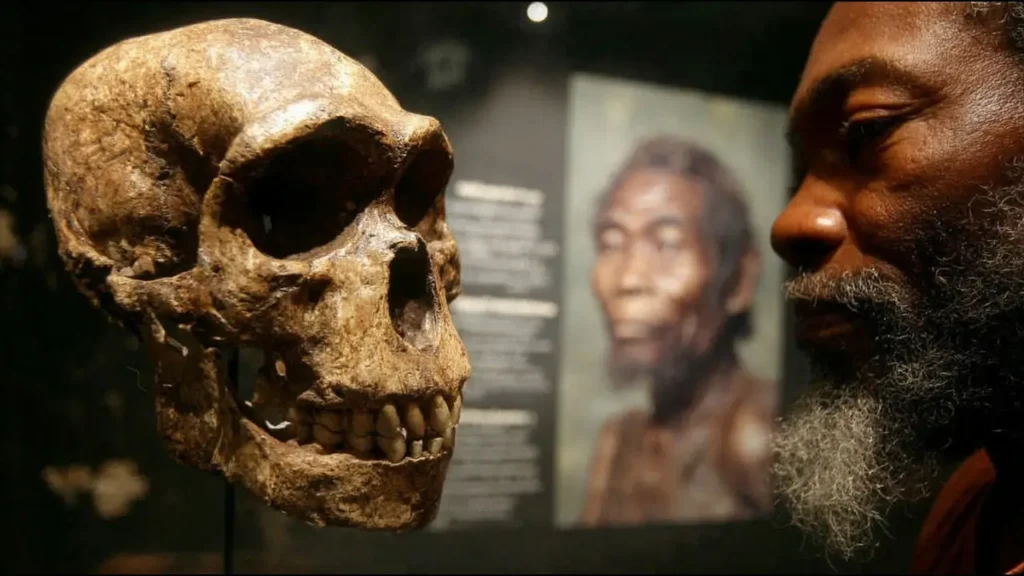
As new tools emerge and forgotten fossils resurface, long accepted ideas are often reexamined. In recent years, the human skull discovery that challenges the Out of Africa theory has become one of the most discussed topics in paleoanthropology. This single fossil has reopened debates that many believed were already resolved. It’s unusual mix of traits suggests that human evolution may have been far more complex, involving multiple regions and populations rather than a single point of origin followed by replacement.
The human skull discovery that challenges the Out of Africa theory centers on a remarkably complete fossil found in East Asia. What makes this skull so important is not just its age, but the way it blends features associated with both archaic and modern humans. Estimated to be around one hundred forty thousand years old, the skull suggests that advanced human characteristics were present outside Africa much earlier than previously believed. This finding does not dismiss Africa’s central role in human evolution. Instead, it questions whether Africa was the only region where key evolutionary developments occurred. The skull points toward a scenario in which human populations across different regions evolved in parallel, occasionally interacting and exchanging genes over long periods of time.
Table of Contents
The Human Skull Discovery
| Aspect | Details |
|---|---|
| Discovery region | East Asia |
| Estimated age | Around 140000 years |
| Preservation | Nearly complete skull |
| Brain size | Similar to modern humans |
| Scientific impact | Challenges simple migration models |
Where The Skull Was Found
- The skull was discovered in northeastern China during the early twentieth century, reportedly uncovered during construction work. For reasons that remain partly unclear, the fossil was hidden and passed down privately for decades before finally being examined by scientists. When it was formally studied using modern techniques, researchers quickly realized it did not fit comfortably within existing classifications.
- The location of the find is significant. For many years, East Asia was considered a peripheral region in discussions about early human evolution. The human skull discovery that challenges the Out of Africa theory forces scientists to reconsider this assumption and recognize that important evolutionary events may have taken place across a much wider geographic area.
What Makes The Skull So Unusual
- Anatomically, the skull presents a fascinating puzzle. It has a large braincase comparable to that of modern humans, suggesting advanced cognitive potential. At the same time, it retains thick brow ridges, a broad face, and other robust features typically associated with earlier human groups.
- This combination of traits does not align neatly with known categories such as early Homo sapiens or well documented archaic humans. Instead, the skull appears to represent a mosaic form, blending characteristics once thought to belong to separate evolutionary stages. This is one of the main reasons the human skull discovery that challenges the Out of Africa theory has generated so much attention.
Implications For Human Evolution
- The implications of this discovery reach far beyond a single fossil. If humans with advanced features lived in East Asia more than one hundred thousand years ago, it suggests that evolutionary innovation was not confined to Africa alone. Rather than a simple outward migration followed by replacement, human history may have involved long term coexistence among multiple populations.
- The human skull discovery that challenges the Out of Africa theory supports models that emphasize gene flow between regions. In this view, populations moved, mixed, and adapted locally, contributing to the gradual emergence of modern humans across continents.
Scientific Debate and Differing Views
- As with any major discovery, the skull has sparked lively debate. Some researchers argue that it represents a regional variation of known archaic humans rather than evidence of a broader evolutionary shift. Others believe it may belong to a previously unrecognized lineage that contributed genetically to modern populations.
- What most scientists agree on is that the fossil complicates existing models. The human skull discovery that challenges the Out of Africa theory has encouraged researchers to reexamine other fossils that may have been overlooked or misclassified in the past.
How This Fits With Other Fossil Finds
- This skull does not exist in isolation. Over the past few decades, several fossil discoveries across Asia and the Middle East have hinted at early human diversity outside Africa. Some remains show modern looking features at unexpectedly early dates, while others reveal signs of long term regional continuity.
- Taken together, these findings suggest that human evolution followed a branching and reconnecting pattern rather than a straight line. The human skull discovery that challenges the Out of Africa theory fits neatly into this emerging picture, reinforcing the idea that multiple populations played a role in shaping modern humanity.
Why This Discovery Matters
- Beyond academic debates, this discovery matters because it changes how we understand our shared past. It highlights the adaptability of early humans and their ability to thrive in diverse environments. It also underscores the importance of viewing human history as a collective process rather than the story of a single dominant group.
- The human skull discovery that challenges the Out of Africa theory reminds us that modern humans are the product of deep time, movement, and interaction. Our origins may be rooted in Africa, but our evolutionary journey appears to have been shaped by contributions from many regions.
A More Complex Human Story
As more fossils are discovered and new analytical tools are developed, the story of human evolution continues to evolve. What once seemed like a simple narrative now appears layered and interconnected. The Harbin skull adds another piece to this intricate puzzle, encouraging scientists to think beyond traditional boundaries. Rather than overturning established theories entirely, the human skull discovery that challenges the Out of Africa theory enriches them. It paints a picture of human evolution as a dynamic process involving migration, adaptation, and shared ancestry across continents. In doing so, it brings us closer to understanding who we are and how we came to be.
FAQs on Human Skull Discovery
What Is the Human Skull Discovery That Challenges The Out Of Africa Theory
It refers to the discovery of a well preserved ancient human skull in East Asia that shows a mix of modern and archaic features. Its age and anatomy suggest that advanced human traits existed outside Africa much earlier than previously believed.
Does This Discovery Disprove the Out of Africa Theory
No, it does not disprove it. Instead, it suggests the theory may be incomplete. Africa is still considered a key region in human evolution, but this discovery indicates that other regions also played important roles.
How Old Is the Skull
Scientists estimate the skull to be approximately 140000 years old based on geological context and comparative analysis with other fossils.
Why Is This Skull Considered Unusual
The skull is unusual because it combines a large brain size similar to modern humans with robust features typically seen in earlier human species. This combination challenges traditional classifications.