
A Mystery in Antarctica has emerged after scientists lost contact with a cutting-edge autonomous research robot during a high-risk mission beneath the continent’s ice shelves, highlighting both the growing reliance on robotics in climate science and the extreme hazards of exploring Earth’s least accessible environment.
Table of Contents
What Happened Beneath the Ice
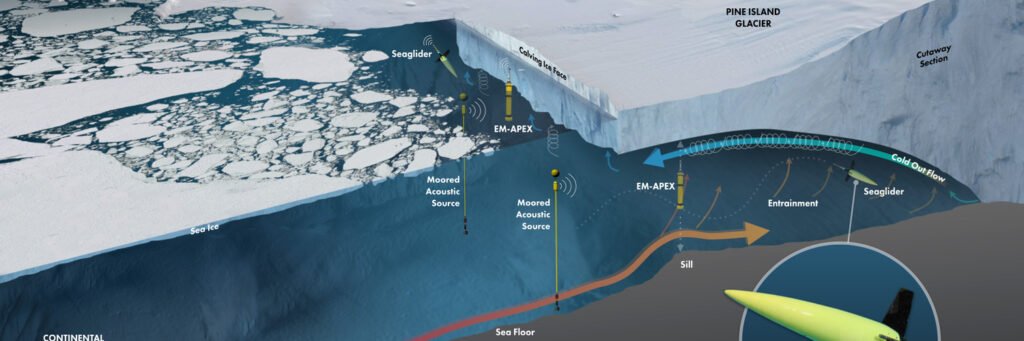
The robot, an autonomous underwater vehicle designed to travel for days beneath thick Antarctic ice, was deployed as part of an international scientific effort to better understand how warming oceans are eroding ice shelves from below.
After completing the early stages of its mission and transmitting valuable data, the vehicle failed to return to its planned rendezvous point. Scientists lost all communication, and subsequent attempts to re-establish contact were unsuccessful.
The disappearance immediately drew attention within the polar science community, where such missions are recognized as both essential and inherently risky.
“This is not an unusual outcome in under-ice exploration,” said one polar engineer familiar with the project, speaking to Reuters. “But it is always painful, because each vehicle represents years of planning and an irreplaceable opportunity.”
Why Robots Are Sent Where Humans Cannot Go
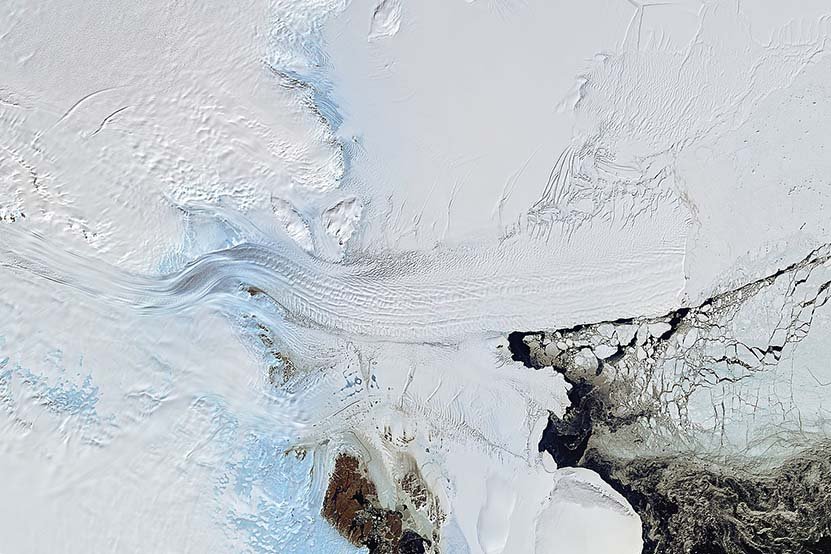
Antarctica’s ice shelves can be hundreds of meters thick and stretch for thousands of square kilometers. Beneath them lies a hidden world where relatively warm seawater interacts directly with ice, accelerating melting from below.
Human divers cannot reach these areas, and even crewed submarines face severe limitations. As a result, scientists rely on autonomous robots capable of navigating without GPS, radio signals, or real-time human control.
According to the British Antarctic Survey, under-ice robots provide the only direct measurements of temperature, salinity, and ocean currents in these regions. Satellite observations, while powerful, cannot see through ice.
“Without these instruments, we would be blind to some of the most important processes driving sea-level rise,” said a climate scientist interviewed by BBC News.
The Science at Stake
Ice shelves act as natural brakes, slowing the flow of land-based glaciers into the ocean. When ice shelves thin or collapse, glaciers behind them can accelerate, contributing directly to rising sea levels.
West Antarctica, in particular, has drawn intense scientific scrutiny because parts of its ice sheet are believed to be vulnerable to irreversible retreat.
Data collected by under-ice robots feeds directly into global climate models used by governments and international bodies, including the Intergovernmental Panel on Climate Change (IPCC).
Even partial data transmitted before the robot vanished may improve understanding of how heat moves beneath ice shelves, researchers say.
A Long History of Loss in Polar Exploration
A Mystery in Antarctica fits into a long tradition of scientific exploration marked by loss, failure, and incremental progress.
From early 20th-century expeditions led by Ernest Shackleton and Robert Falcon Scott to modern robotic missions, Antarctica has consistently tested the limits of technology and human ambition.
In recent decades, multiple autonomous vehicles have been lost beneath polar ice due to mechanical failures, navigation errors, or unexpected under-ice terrain, according to peer-reviewed studies in ocean engineering journals.
“Failure is part of exploration,” said a senior researcher involved in multiple Antarctic missions. “The key is whether the knowledge gained outweighs the cost.”
The Cost of Extreme Science
The lost robot represents an investment of several million dollars, including design, testing, transport, and deployment, according to scientists involved in similar missions.
Funding typically comes from a mix of national science agencies, including U.S. and European research institutions, as well as international partnerships designed to share costs and data.
While the financial loss is significant, scientists emphasize that such risks are factored into project planning.
“No one is surprised when a vehicle is lost,” said one project manager quoted by the Associated Press. “What matters is that the science justifies the risk.”
How These Robots Navigate Without GPS
Unlike surface vessels, under-ice robots cannot rely on satellite navigation. Instead, they use inertial navigation systems, onboard compasses, pressure sensors, and pre-programmed maps.
Small errors can accumulate over long distances, increasing the risk that a vehicle fails to find its way back to an exit point.
Ocean currents, under-ice ridges, and uneven seafloor terrain further complicate navigation.
Engineers describe under-ice autonomy as one of the most challenging problems in modern robotics.
Why Recovery Is Unlikely
Once a robot travels far from its deployment hole, recovery becomes nearly impossible unless it successfully returns on its own.
Drilling a new access hole through thick Antarctic ice can take days or weeks and requires heavy equipment that may not be available at remote sites.
In most cases, scientists must accept the loss and move on.
“If the vehicle does not come back, there is nothing we can do,” said one expedition leader.
The Human Decisions Behind the Mission
Despite the risks, scientists continue to approve under-ice missions because of the urgent need for data.
Climate change is reshaping polar regions faster than many models predicted, increasing pressure on researchers to observe processes directly rather than infer them indirectly.
“There is a sense that time is running out,” said a climate policy expert. “Decisions made today will affect coastal communities for centuries.”
A Mystery in Antarctica and Global Implications
What happens beneath Antarctic ice shelves has consequences far beyond the polar regions.
Sea-level rise threatens low-lying island nations, coastal megacities, and critical infrastructure worldwide. Even small improvements in forecasting can influence long-term planning decisions.
Governments increasingly rely on polar science to guide investments in flood defenses, insurance markets, and disaster preparedness.
“This is not abstract science,” said an environmental economist. “It has direct economic and humanitarian implications.”
Scientific Debate and Open Questions
While scientists broadly agree on the importance of under-ice data, debates continue over how best to balance risk, cost, and scientific return.
Some researchers argue for more conservative missions with shorter ranges, while others advocate pushing technological limits to reach unexplored regions.
The loss contributing to A Mystery in Antarctica will likely influence future mission designs, including redundancy systems and alternative navigation strategies.
What Comes Next
Scientists are now analyzing the data transmitted before contact was lost and reviewing mission logs to identify potential causes. Lessons learned may inform future expeditions scheduled for the next Antarctic research season. Despite the setback, researchers say exploration will continue. “Antarctica does not give up its secrets easily,” said one scientist. “But that is exactly why we keep going back.”