
Perseverance Marks 1,500 Sols on Mars with a Spectacular Selfie: When NASA’s Perseverance rover touched down on the reddish sands of Mars on February 18, 2021, it wasn’t just another robot sent into space. It was a promise—a symbol of humanity’s ever-curious spirit to explore the stars and ask the big questions. Now, over 1,500 sols later (a “sol” being a Martian day), Perseverance celebrated its time on Mars in the most 21st-century way imaginable—with a stunning selfie. But this wasn’t just any snapshot. This image had a surprise: a dust devil, captured swirling in the distance like a ghostly figure on a mission of its own. As scientists say, “the devil is in the details,” and this time, quite literally. Let’s dive deep into this cosmic milestone, what it means for science, technology, and our future beyond Earth.
Table of Contents
Perseverance Marks 1,500 Sols on Mars with a Spectacular Selfie
NASA’s Perseverance rover is living up to its name every single day. From its precision landings to its fearless drilling in alien rock, it embodies the soul of exploration. And now, with a selfie featuring a Martian dust devil in the background, it reminds us that science and storytelling go hand-in-hand—even 150 million miles from home. The 1,500-sol milestone isn’t the end. It’s a cosmic checkpoint. It’s proof that with grit, smarts, and a touch of luck, we can push beyond what was once just imagination.
| Topic | Details |
|---|---|
| Date of Selfie | May 10, 2025 |
| Location | “Witch Hazel Hill,” Jezero Crater, Mars |
| Imaging Camera | WATSON (Wide Angle Topographic Sensor for Operations and eNgineering) |
| Unique Feature | Martian dust devil photobombed the selfie |
| Rock Samples Collected | 26 core samples, analyzed for signs of past life |
| Total Distance Traveled | Over 22 miles (36 kilometers) |
| Mars Helicopter Flights | Ingenuity has flown over 70 successful missions |
| Main Mission Goal | Detect signs of ancient microbial life and prepare for sample return |
| Official Website | https://mars.nasa.gov/mars2020 |
What Is a Sol—and Why Does Perseverance Marks 1,500 Sols on Mars with a Spectacular Selfie Matter?
A sol is a Martian day, lasting approximately 24 hours and 39 minutes—just a bit longer than an Earth day. Hitting 1,500 sols on the Martian surface means Perseverance has not only outlived its original mission design (one Martian year, or about 687 Earth days) but has also thrived in one of the harshest environments known to humanity.
Surviving over 4 Earth years on Mars with no physical human maintenance? That’s no small feat. It’s a testimony to the skill and precision of the engineers, scientists, and mission planners who spent years perfecting every gear, sensor, and bolt.
The Selfie with a Ghost: What Happened?
On May 10, 2025, Perseverance’s robotic arm extended its WATSON camera and snapped a set of 59 individual photos. Once stitched together back on Earth, the image revealed more than just the rover—it showed a faint, swirling dust devil meandering across the Martian terrain, about 3 miles (5 kilometers) away.
Dust devils form when the sun heats the Martian surface, causing warm air to rise and spiral into a mini-tornado. These phenomena are common on Mars, but catching one in the act—especially in a selfie—is rare. It was a lucky moment that combined precise planning, timing, and a little Martian magic.
The dust devil didn’t pose a threat to the rover, but it did add to the story. In some Native American traditions, dust devils are considered spirits of the land—moving energy that shouldn’t be disturbed. In a way, this otherworldly guest added not just scientific interest but a symbolic, spiritual layer to Perseverance’s journey.
Breaking Down the Perseverance Marks 1,500 Sols on Mars with a Spectacular Selfie: Technology and Planning
This wasn’t just a point-and-shoot moment. Here’s what went into it:
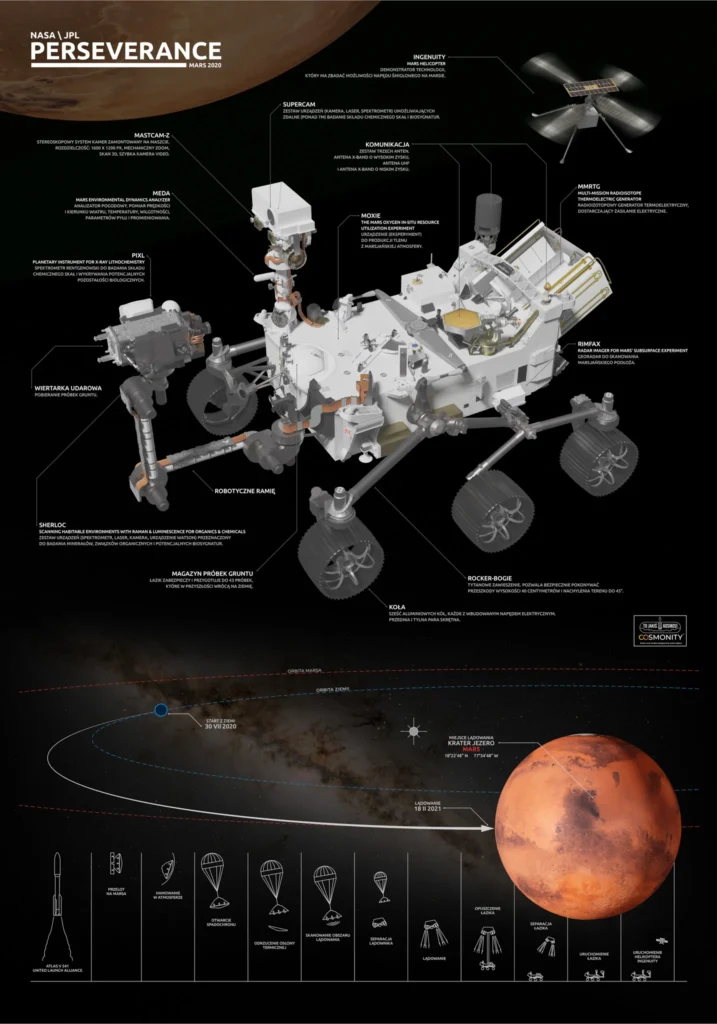
- The WATSON camera, part of the SHERLOC instrument suite, is mounted on the end of the rover’s 7-foot robotic arm.
- Engineers on Earth planned out the arm’s positions days in advance, ensuring every angle was captured while avoiding collisions with the rover’s body.
- Each image was taken with precise lighting conditions to avoid harsh shadows or overexposure.
- The photos were then sent back to Earth, where NASA’s image team carefully stitched them into one seamless panorama.
The final image wasn’t just beautiful—it served a real purpose. Selfies help engineers monitor the health of the rover: tire wear, dust accumulation, arm alignment, and instrument exposure.
Scientific Milestones Since Landing
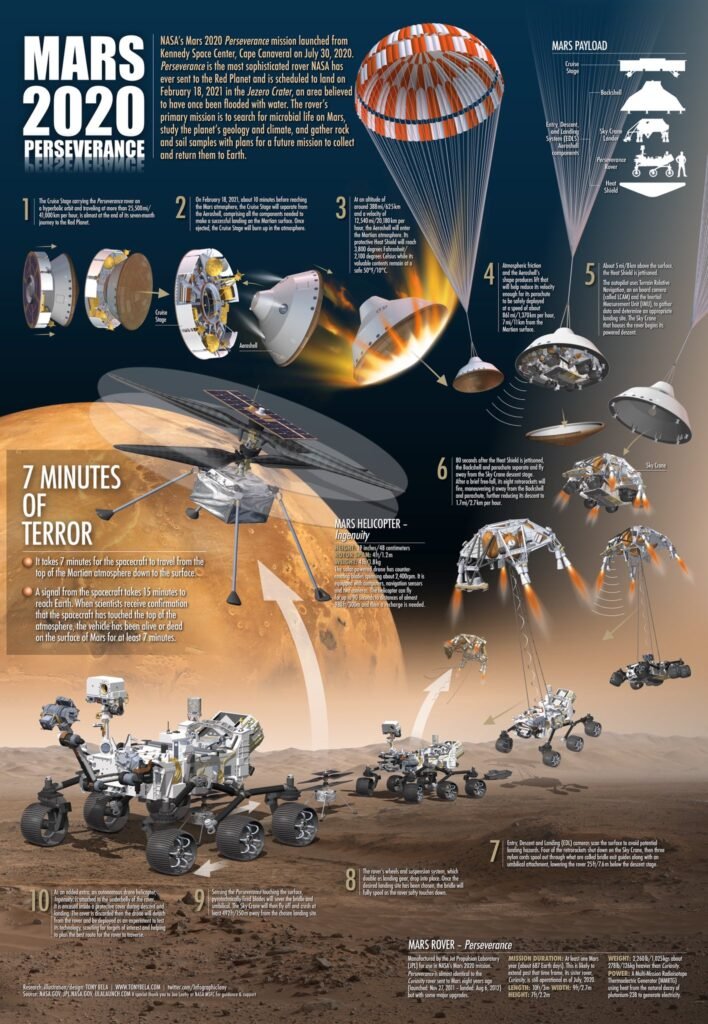
Perseverance wasn’t sent to Mars just for a photoshoot. Its real job? To search for evidence of ancient microbial life and collect samples for future return to Earth. Here’s what it’s achieved so far:
1. Rock and Soil Sampling
- Collected 26 core samples from sedimentary and igneous rocks.
- Samples are hermetically sealed in titanium tubes and stored for eventual pickup by the Mars Sample Return (MSR) mission, targeted for the 2030s.
- Many samples come from the former lakebed and delta region inside Jezero Crater, believed to have held water over 3.5 billion years ago.
2. Surface Analysis
- Analyzed mineral composition using tools like PIXL and SHERLOC.
- Identified clay and sulfate-bearing rocks, which are strong indicators of past water and potential habitability.
3. Atmospheric Studies
- Perseverance’s onboard weather station, MEDA, monitors temperature, wind, dust, and UV radiation.
- Helps scientists understand Mars’ climate and plan for future crewed missions.
Meet Ingenuity: The Mars Helicopter
Originally planned as a short-term tech demo, Ingenuity, the Mars helicopter, has become a critical mission partner. It’s the first aircraft to achieve powered, controlled flight on another planet. It has:
- Completed over 70 flights, far beyond its 5-flight mission goal.
- Flown reconnaissance missions to scout routes and terrain for Perseverance.
- Demonstrated how future missions might use aerial drones for faster terrain mapping.
This small, solar-powered aircraft is no bigger than a backpack, yet it’s reshaping how we think about Martian exploration.
Why Perseverance Marks 1,500 Sols on Mars with a Spectacular Selfie Mission Matters—Professionally and Personally
Space exploration isn’t just about high-tech hardware and physics. It’s a deeply human endeavor, blending engineering, creativity, and ancient wonder. Whether you’re a professional in aerospace, a teacher in a rural classroom, or a student dreaming big, here’s what Perseverance means for all of us:
For Engineers & Scientists
- It’s a case study in long-term autonomous robotics, remote AI navigation, and extreme environment operations.
- Demonstrates the value of inter-agency cooperation (NASA + ESA) for complex missions.
For Students & Educators
- Inspires interest in STEM education with real-world examples of science in action.
For Indigenous Communities
- The dust devil imagery and perseverance of the mission connect to the cultural teachings about nature, spirits, and cosmic responsibility.
- Many Native scholars emphasize reciprocity with the land, a lesson equally important when we explore other planets.
What’s Next for Perseverance Marks 1,500 Sols on Mars with a Spectacular Selfie?
The rover is heading into even more geologically rich terrain as it climbs the slopes beyond Jezero’s ancient delta. Mission scientists are eager to:
- Collect more diverse rock types from older Martian crust.
- Capture audio with its microphones—yes, Perseverance can “hear” Mars, including wind gusts and rock drilling sounds.
- Prepare for the Mars Sample Return campaign, in which ESA and NASA will work together to launch a new retrieval mission.
The mission also continues to serve as a testbed for human exploration, informing how astronauts might one day navigate, survive, and even build shelters using Martian resources.
Scientists Warn a New AI Tool Could Flood Research with Low-Quality Studies
Scientists Confirm Living Beings Emit Light — And It Fades at the Moment of Death