
1.5 Million Hidden Space Phenomena: When someone says “space discovery,” you probably picture a NASA scientist in a lab coat or a PhD astronomer peering through a massive telescope. But in an inspiring twist that feels straight out of a Hollywood script, Matteo Paz, an 18-year-old high school student from Pasadena, California, has changed the game. Using artificial intelligence, he discovered over 1.5 million previously undetected space phenomena. Let that sink in. Yep, a teenager just cracked a code that baffled scientists for years. His work didn’t just earn him a jaw-dropping $250,000 prize—it opened new doors in how we explore our universe.
Table of Contents
1.5 Million Hidden Space Phenomena
Matteo Paz didn’t just win a science fair. He carved a path that blends passion, data science, and a relentless hunger to understand the universe. He cracked a code buried inside 200 billion data points and changed how we look at space. This isn’t just a story about stars — it’s about what happens when young minds are given the tools to explore. His work is now being cited in professional astrophysics circles, and his approach could become the blueprint for future deep space surveys. And all this began not in a NASA lab, but in a high school student’s bedroom. So whether you’re a 10-year-old curious about the cosmos or a data analyst working 9 to 5, Matteo’s discovery should light a spark. Because, hey — the next big breakthrough? It might just come from you.
| Category | Details |
|---|---|
| Name | Matteo Paz |
| Age | 18 |
| Discovery | 1.5 million potential new space objects |
| Tool Used | AI algorithm (machine learning) |
| Data Source | NEOWISE telescope (NASA) |
| Data Size | ~200 billion infrared data points |
| Recognition | First place, 2025 Regeneron Science Talent Search |
| Award | $250,000 |
| Published Paper | The Astronomical Journal |
| Official Website | Society for Science |
How It All Began: The NEOWISE Dataset
Let’s backtrack for a hot second.
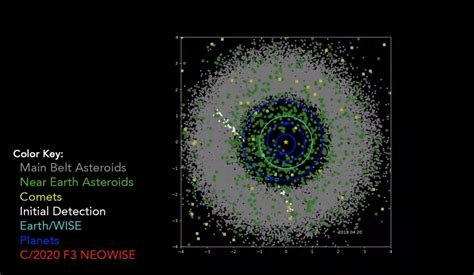
NASA launched the NEOWISE (Near-Earth Object Wide-field Infrared Survey Explorer) telescope back in 2009. Its mission? Spot and track asteroids and comets near Earth. But along the way, it gathered a crazy amount of extra data — over 200 billion entries of infrared readings.
Imagine trying to go through that by hand. Not gonna happen.
But most of this data was sitting there, collecting digital dust. That’s where Matteo Paz stepped in. While participating in Caltech’s Planet Finder Academy, he connected with NASA astronomer Davy Kirkpatrick, who challenged him to dig into the untouched NEOWISE data.
Instead of hand-sifting tiny sections of the sky like previous researchers, Matteo took it next-level.
What sets NEOWISE apart is its ability to track the same parts of the sky repeatedly, allowing scientists to look for changes over time. Yet, due to the size of the dataset and limited resources, only a fraction of this data had been fully analyzed. Many researchers focused only on small portions, leaving a treasure trove untouched. Matteo decided to unlock that vault.
Building an AI That Thinks Like a Scientist
Matteo said, “Hold my root beer,” and built a custom machine learning model designed to scan the entire NEOWISE dataset for variable space objects — things like quasars, binary stars, black holes, and supernovae that flicker or shift in brightness.
His AI wasn’t just hunting for dots of light. It was trained to understand patterns of change in time-based infrared data — a complex task even for professionals.
The result? VarWISE, a new catalog of 1.5 million potential space objects.
And the cherry on top: Caltech researchers and NASA scientists are already using Matteo’s data to identify binary star systems.
Developing VarWISE wasn’t an overnight success. Matteo spent nearly a year building and training the model, iterating over various neural network designs, fine-tuning parameters, and validating results with control datasets. He ran simulations to test the AI’s accuracy, even comparing outputs with known variable star databases to confirm the reliability of the results.
He also had to learn how to manage massive datasets, clean noisy signals, and understand how to detect real phenomena versus algorithmic anomalies. The level of technical maturity shown in his work was on par with many graduate-level research projects, further stunning the scientific community.
What Exactly Did Matteo Discover?
Here’s a breakdown of the kinds of things his AI detected:
- Variable Stars: Stars that pulsate or shift in brightness over time. These stars are often used by astronomers to measure distance in space.
- Supernovae: Exploding stars sending shockwaves through the cosmos. These can lead to the formation of neutron stars or black holes.
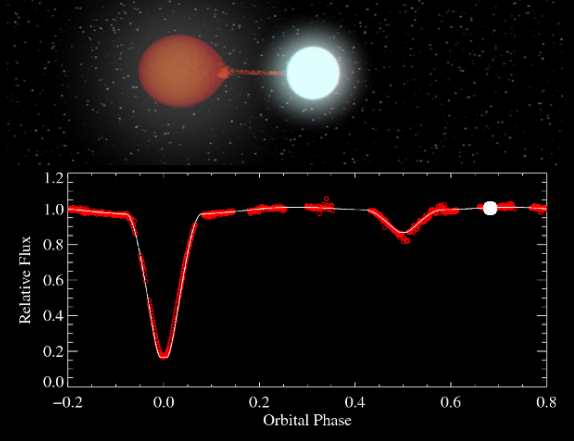
- Binary Systems: Two stars orbiting one another, sometimes exchanging matter, which can lead to nova events.
- Quasars: Ultra-bright, energetic galactic cores powered by black holes, often found at the center of young galaxies.
This wasn’t just noise in the data. These were real, measurable phenomena that had gone totally unnoticed for years.
“Before Matteo, no one had used the entire NEOWISE database to mine for variability at this scale,” said Kirkpatrick. “Now we can study entire star systems thanks to his work.”
Several astronomers have confirmed that Matteo’s discoveries are likely to contribute to long-term astrophysical modeling, especially in studying cosmic evolution, stellar lifecycles, and deep space dynamics. His approach is also being adapted for other telescope datasets, like the upcoming Nancy Grace Roman Space Telescope.
Added Value: Scientific and Educational Impact
Advancing Space Cataloging Techniques
Matteo’s model represents a major leap forward in how scientists analyze and catalog deep space data. Traditional classification methods can now be complemented or even replaced by AI-driven models, potentially saving years of manual labor.
Contributing to Citizen Science
Matteo’s work highlights how citizen science and student-led initiatives can play a real role in professional-grade discoveries.
STEM Education Inspiration
His story has already inspired thousands of students. Schools and STEM educators now reference Matteo’s journey to encourage interest in AI, astronomy, and coding.
Science museums, observatories, and even education boards are now exploring how Matteo’s project can be turned into a national science curriculum module.
Why Discovery of 1.5 Million Hidden Space Phenomena Matters for You (Even If You’re Not an Astronomer)?
You might be thinking, “Cool story, but I’m not building a space robot anytime soon.” But Matteo’s work teaches us some killer life and career lessons:
Big Data Needs Smart Thinking
Every field is drowning in data — from finance to climate change to social media. Matteo shows that AI can unlock hidden insights where humans alone fall short.
Age Doesn’t Equal Impact
Don’t let age or job title stop you from solving big problems. Matteo was 17 when he started this work.
AI + Curiosity = Innovation
Whether it’s space, medicine, or agriculture, combining artificial intelligence with curiosity is a recipe for breakthroughs.
Interdisciplinary Thinking Wins
Matteo merged computer science and astronomy. That’s the future, folks: merging fields to create hybrid skills.
How You Can Start Doing Similar Work?
Thinking, “Dang, I wanna get in on this!” Here’s how:
Step 1: Learn Python & Machine Learning
Start with free platforms like Kaggle, Google AI, or Coursera.
Step 2: Explore Open Data Projects
NASA has tons of public datasets. Check out:
- NASA Open Data Portal
- NEOWISE Mission Page
Step 3: Join a Research Program
Programs like Caltech’s Planet Finder Academy, MIT PRIMES, and NASA Internships give students real-world experience.
Step 4: Publish & Share
Got results? Share them on GitHub, submit to science fairs, or write a paper for The Astronomical Journal.
Step 5: Follow and Engage with Space Science Communities
Engage with communities like:
- American Astronomical Society (AAS)
- Space.com Forums
- Astronomy on Reddit
Step 6: Practice With Real-Time Satellite Data
Use data from tools like:
- Heavens Above
- ESA’s Space Weather Portal
These platforms offer free access to satellite positions, star trackers, and current celestial events.
The 2026 NASA Missions That Could Make Space History
A Startup Wants to Light Up Earth’s Nights With Space Mirrors — Astronomers Are Alarmed
Sunken Warships and Human Burials Discovered in Egypt’s Lost City of Thonis-Heracleion