
Black Hole’s Sudden Energy Burst: When a black hole’s sudden energy burst keeps growing for over six years, brighter than ever, it’s more than just an astronomical curiosity — it’s a cosmic mystery rewriting the rulebook. Scientists have spotted a black hole behaving unlike anything seen before. Instead of fading after devouring a star, it’s firing off an ultra-powerful jet of energy, leading experts to compare it (jokingly but seriously) to a sci-fi superweapon. Sure, nobody’s panicking about alien tech in deep space. But when real energy output rivals the theoretical scale of fictional Death Star blasts, it makes you sit up and pay attention. Here’s what’s really going on, why it matters, and how this could change what we know about the most extreme forces in the universe.
Table of Contents
Black Hole’s Sudden Energy Burst
A black hole’s sudden energy burst may sound like something out of a sci-fi thriller, but the reality is even more mind-blowing. This rare, long-lasting TDE is helping scientists rethink black hole behavior, energy emissions, and how galaxies evolve. The jet’s strength, sustained power, and increasing brightness challenge everything we thought we knew — and open the door to even bigger discoveries ahead. In space, reality isn’t just stranger than fiction — it’s far more powerful, far more enduring, and sometimes, just as dazzling.
| Topic | Details & Facts |
|---|---|
| Event Type | Black hole energy burst after tidal disruption |
| Cause | Star torn apart in a Tidal Disruption Event (TDE) |
| Duration | Over 6 years of ongoing emission |
| Brightness | Jet now 50× brighter than initial detection |
| Black Hole Mass | Approx. 5 million solar masses |
| Distance from Earth | ~665 million light-years |
| Scientific Value | Insight into black hole feeding, jet dynamics, and galaxy evolution |
| Official Resource | NASA: Tidal Disruption Events |
What Is a Black Hole’s Sudden Energy Burst?
When we say “sudden energy burst,” we’re talking about an enormous release of high-energy radiation, particularly radio waves and X-rays, that continues to pour out of a supermassive black hole — long after it shredded a nearby star. This process, known as a Tidal Disruption Event (TDE), usually ends in a relatively short time. But in this case, the emissions are still rising six years later.
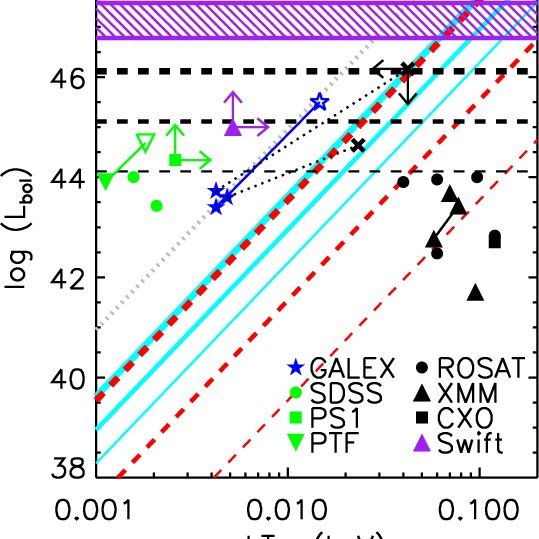
This particular black hole is estimated to be about 5 million times the mass of our Sun and lies some 665 million light-years from Earth. That’s far enough that it poses no danger to us — but close enough that our most advanced telescopes can observe it in impressive detail.
Black Hole’s Sudden Energy Burst: What Actually Happened?
Here’s the simplified breakdown:
- A star drifted too close to a black hole.
- The black hole’s gravity ripped the star apart — literally stretched it into filaments.
- Some of that stellar material got swallowed.
- The rest formed an accretion disk, a swirling ring of gas spiraling into the black hole.
- Out of this chaos, the black hole ejected a high-energy jet — a focused blast of particles and radiation moving at nearly the speed of light.
What’s bizarre is that this jet hasn’t faded, as most do. It’s actually gotten significantly brighter over time, leading scientists to rethink everything they assumed about these cosmic events.
Why the “Superweapon” Comparison?
Let’s be clear: there’s no actual weapon involved here. The comparison to a sci-fi superweapon — think Star Wars’ Death Star or Marvel’s planetary lasers — is metaphorical, meant to give a sense of scale.
Astrophysicists estimate the total energy output of this black hole’s jet is roughly equivalent to a trillion Death Star blasts. That kind of output, sustained over time, is almost beyond comprehension.
When asked to explain it in accessible terms, many astronomers likened the power of the event to something out of fiction — because there simply is no real-world equivalent. It’s not about fear — it’s about awe.
Why Is This Black Hole’s Sudden Energy Burst Different?
Most Tidal Disruption Events follow a predictable pattern:
- A brief flare of light,
- Followed by fading over weeks or months,
- And eventually silence as the black hole finishes its “meal.”
But this case has flipped the script.
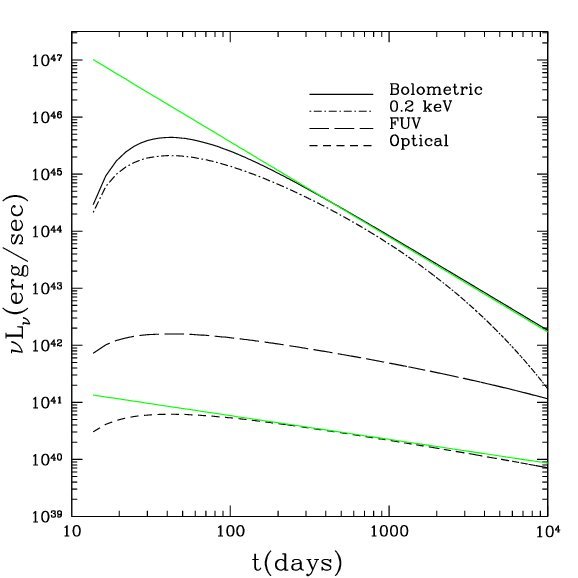
This black hole’s jet became 50 times brighter than when it was first spotted. It’s the most powerful and long-lasting jet ever observed from a TDE. That tells scientists two big things:
- Our current models of black hole physics are incomplete.
- Magnetic fields and accretion processes may be more complex than we thought.
Some researchers believe the black hole is tapping into a powerful reservoir of magnetic energy, converting it into a tightly focused beam of radiation using processes similar to those seen in pulsars or quasars — but far more intense.
What Tools Were Used to Spot This?
The data comes from a collaboration of major observatories:
- MeerKAT Radio Telescope (South Africa)
- Very Large Array (VLA) in New Mexico
- Zwicky Transient Facility (ZTF) at Palomar Observatory, California
- ATCA (Australia Telescope Compact Array)
Each instrument captured data in different wavelengths — from radio to X-rays — helping create a complete timeline of the event. Thanks to these tools, we’re seeing the most detailed black hole jet evolution ever recorded.
What Black Hole’s Sudden Energy Burst Means for the Future of Astronomy?
The implications go beyond this single event. Here’s how this discovery affects the broader field:
A New Class of Black Hole Events
If more of these long-lived jets are discovered, they might represent an entirely new class of astrophysical events, distinct from known quasars or standard TDEs.
Better Black Hole Models
Astrophysicists use simulations to predict how black holes behave. The fact that this real-world event deviates so dramatically from theory means those simulations need updating — fast.
Implications for Gravitational Waves
These types of extreme mass interactions may also be associated with gravitational wave signals — ripples in spacetime that are already being tracked by LIGO and other observatories. Though this event wasn’t accompanied by a known wave, future ones might be.
Influence on Galaxy Evolution
Supermassive black holes like this one live at the centers of galaxies. Their feeding and jet activity can directly impact star formation, gas distribution, and galaxy structure. In short, how a black hole behaves might shape the entire galaxy around it.
Historical Context: Similar Events
This isn’t the first black hole to cause a stir, but it might be the most puzzling.
| Event | Year | Key Trait |
|---|---|---|
| ASASSN-14li | 2014 | A textbook TDE, faded over months |
| Swift J1644+57 | 2011 | Produced a powerful jet, but only for about a year |
| AT2021lwx | 2021 | One of the brightest explosions ever, thought to be a TDE lasting 3 years |
| Current Event | 2026 | Ongoing jet 6+ years after disruption; brightness still increasing |
This timeline shows just how rare — and extraordinary — the current black hole jet really is.
Matteo Paz Makes History: High Schooler Discovers 1.5 Million Hidden Space Phenomena
A Startup Wants to Light Up Earth’s Nights With Space Mirrors — Astronomers Are Alarmed