
Airport Security Is About to Feel Very Different: Airport security has been a part of air travel for decades, but if you’re flying in 2026, you’re about to notice something very different at checkpoints across the United States. Airport security is about to feel very different — TSA’s 2026 shift at 50 U.S. airports is ushering in a new era of touchless biometric screening that promises smoother, faster, and more convenient processing for eligible passengers. This change comes as the Transportation Security Administration (TSA) expands its TSA PreCheck Touchless ID program to more airports, ultimately aiming for roughly 65 participating U.S. airports by Spring 2026. If you’ve ever stressed about losing your ID or felt rushed fumbling through your wallet at security, this new tech could be a game‑changer. In this article, we’ll break down everything you need to know, from how it works to who it helps, plus practical advice for travelers and insiders alike.
Table of Contents
Airport Security Is About to Feel Very Different
By Spring 2026, airport security in the U.S. is going to feel very different for millions of travelers. With TSA PreCheck Touchless ID expanding to roughly 65 airports, the focus is on speed, convenience, and modern identity verification that reduces the need to swap physical IDs at checkpoints. Combined with options like TSA ConfirmID and the continued importance of REAL ID compliance, this shift represents a balanced approach to modernizing travel security. Whether you’re a family heading on vacation or a frequent business flyer, understanding how these changes work will help you move through airports more confidently and efficiently than ever before.
| Feature | Detail/Stat |
|---|---|
| Program Name | TSA PreCheck Touchless ID |
| Expansion To | ~65 U.S. airports by Spring 2026 |
| Technology Used | Biometric facial recognition |
| Who Can Use | TSA PreCheck members with Known Traveler Number + linked passport |
| TSA ConfirmID Fee | $45 (temporary ID verification) |
| Real ID Requirement | Still required for standard travel |
What Is TSA PreCheck Touchless ID?
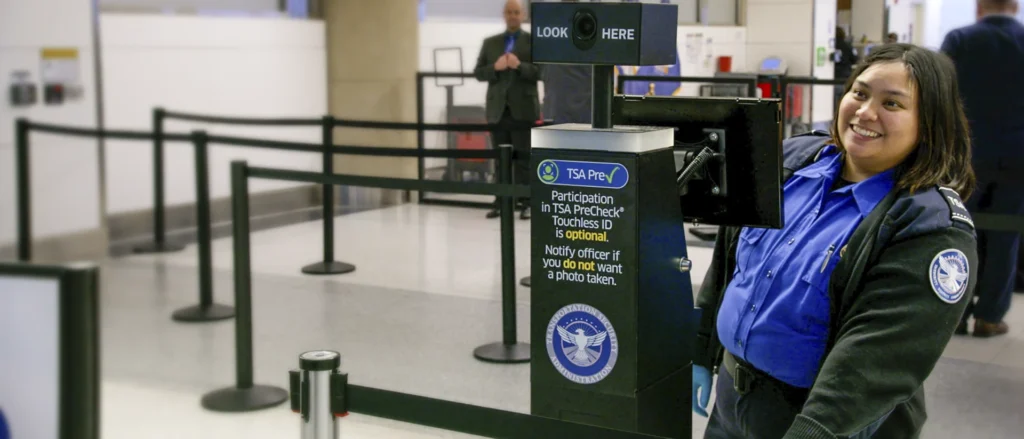
The TSA PreCheck Touchless ID system allows eligible travelers to verify their identity at security checkpoints without physically showing a driver’s license, REAL ID, passport, or boarding pass. Instead, a biometric scan of your face is used to confirm who you are, letting you move through the PreCheck line with less fuss and fewer delays.
That means no reaching into wallets, no handing over cards, and no scanning printed or mobile boarding passes at certain checkpoints — at least at participating airports.
Under the new system:
- You approach the checkpoint and stand in front of a camera.
- The system compares your live facial image to the biometric information linked to your known traveler profile.
- If verified, you continue through security.
The aim is clear: speed up processing times and reduce handling of physical documents, which has both convenience and public health benefits.
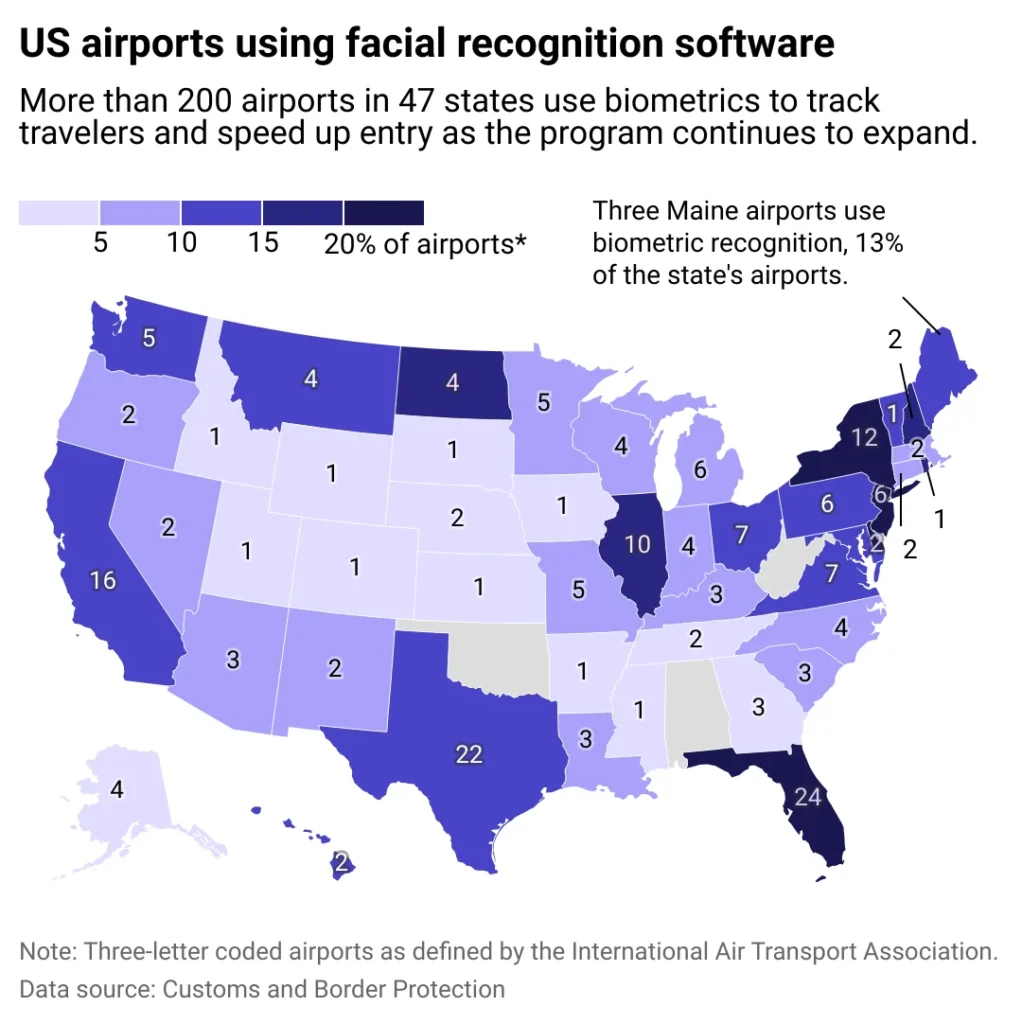
This technology isn’t brand new — it’s been used in pilot programs at about 15 airports — but the 2026 plan expands it nationally to roughly 65 airports across the U.S., including major hubs and regional airports.
Why Airport Security Is About to Feel Very Different Matters Now (And What’s Changing in 2026)?
There are three big reasons the TSA is moving fast with this system:
1. Efficiency and Shorter Wait Times
Security lines are a major headache for travelers, especially during peak periods like holidays, summer vacations, or major events. Touchless ID helps reduce the time each traveler spends at the checkpoint.
According to travel technology analysts, using biometric screening can reduce identity verification time by up to 80% compared with traditional document checks, meaning lines move faster overall.
2. Major Events on the Horizon
The United States is hosting large international events — including the 2026 FIFA World Cup — that will bring millions of international visitors. Airports want to be ready with faster, scalable security options that can handle increased passenger volume efficiently.
3. Modernizing Post‑9/11 Security
Air travel security evolved dramatically after 9/11. The industry and government have steadily introduced more advanced technologies, with biometrics now positioned as a major next step. While traditional IDs will always play a role, the addition of facial recognition in pre‑screened lanes is one more layer designed to improve both convenience and safety.
Who Qualifies for Touchless ID?
Not everyone will instantly see this tech on every trip. To use Touchless ID, you must:
- Be a TSA PreCheck member (or be enrolled in Global Entry, NEXUS, or SENTRI with PreCheck benefits).
- Have a Known Traveler Number (KTN) that’s linked to your airline reservation.
- Link your passport information or other compatible government ID in the airline profile so the biometric system has a reference point.
Since the biometric scan needs something to match against, the system works best when your passport and PreCheck credentials are already connected in airline and government databases.
This means last‑minute travelers who haven’t set up these links may still go through the regular PreCheck process.
Step‑by‑Step: How Touchless ID Works at the Airport
Here’s a clear sequence of what happens when you arrive for a flight at an airport with Touchless ID:
Step 1: Confirm Your Eligibility Before You Fly
Check your airline app or profile to ensure:
- Your passport is linked.
- Your Known Traveler Number is entered.
- Your boarding pass shows “Touchless ID” eligibility.
Step 2: Head to the Touchless Security Lane
Instead of presenting documents, walk toward the designated Touchless PreCheck lane.
Step 3: Look at the Camera
You’ll stand briefly in front of a camera that captures your facial image.
Step 4: Identity Match
The live image is compared to your stored reference data, and if verified, you’re cleared to continue through the checkpoint.
Step 5: Proceed Through Security
Once cleared, you put your belongings through X‑ray like usual and go on your way.
This isn’t science fiction — the process is already live at many airports and designed to feel intuitive, like scanning a face to unlock your phone.
What Happens If You Don’t Have PreCheck?
If you aren’t enrolled in PreCheck, you won’t be able to use the Touchless ID lanes. But here’s something new for 2026 that may help:
TSA ConfirmID: A New Option for People Without REAL ID
Starting February 1, 2026, the TSA introduced a service called TSA ConfirmID. It’s a temporary solution for people who arrive at security without an acceptable ID, such as a REAL ID or passport.
Key points:
- Cost: $45 for a 10‑day verification window.
- Purpose: To verify a traveler’s identity at the checkpoint without traditional ID.
- Limitations: It does not guarantee boarding approval — it simply verifies identity so TSA can proceed with screening.
ConfirmID is especially helpful for people who have unexpected ID issues — lost wallet, expired driver’s license, or other problems — but still need to catch a flight. However, it’s not free, and traditional ID is always the recommended option.
REAL ID Enforcement and What You Need
You’ve probably heard of REAL ID before. It’s a federal standard for state‑issued driver’s licenses and IDs that the TSA began enforcing at airport security checkpoints on May 7, 2025.
Under REAL ID rules:
- Standard state IDs that aren’t REAL ID compliant won’t be accepted at TSA checkpoints for domestic flights.
- You must either have a REAL ID, passport, or other acceptable document.
This means that while biometric touchless options are growing, having proper government identification is still essential for most air travel.
Privacy, Security, and Tech Concerns
Biometric screening has sparked questions — and rightly so. Facial recognition is powerful technology, and airlines, governments, and passengers want to know how it’s used.
Here’s what’s important:
- Data Storage: TSA states that biometric images used for Touchless ID are only used for immediate identity verification and are not stored long‑term in TSA systems. This is designed to protect traveler privacy.
- Consent: You must opt‑in by linking your passport or other qualifying ID. You aren’t automatically enrolled just because you qualify for PreCheck.
- Security: Facial recognition systems compare a live image to the reference data stored in secure government identity systems, not a public database.
Real World Examples and Airport Experiences of Airport Security Is About to Feel Very Different
Several major U.S. airports have already implemented Touchless ID on a trial basis. Passengers at airports like Boston Logan International (BOS) and San Jose International (SJC) have shared that the experience feels smoother and more intuitive. Some frequent flyers describe it as “walking through security like you’re on the express lane.”
Passengers appreciate:
- Fewer document exchanges
- Less waiting around
- Lower stress getting through checkpoints
Of course, it’s important to remember that tech is an aid, not a magic bullet. Traditional ID checks and security measures remain in place for those who prefer or require them.
Practical Tips for Travelers (Pro Advice)
If you travel even occasionally, these tips will help you take full advantage of the new system:
1. Enroll in TSA PreCheck Early
It’s not free (application and background screening required), but if you fly more than once or twice a year, the time savings are worth it.
2. Link Your Passport Before You Fly
Make sure your passport is in your airline profile so Touchless ID can work properly.
3. Double‑Check Eligibility Before You Go
Airline apps often tell you whether your boarding pass is Touchless ID‑compatible.
4. Always Carry a Backup ID
Even with Touchless ID, never travel without a REAL ID or passport.
5. Plan Extra Time for ConfirmID If Needed
It’s great to have as an option, but if you plan to use ConfirmID, give yourself extra time at the airport.
Poor Brushing Habits Are Wrecking America’s Smiles—42% Already Have Gum Disease
The End of Recharging? This Diamond Battery Lasts Longer Than Civilisation Itself
The Human Skull Discovery That Challenges the Out of Africa Theory