
The Arctic was once one of the quietest places left on the planet. Beneath the ice, sound traveled through cold water uninterrupted, allowing marine life to thrive in an environment shaped by silence. Today, that quiet is fading. Narwhals Are Going Silent As Human Noise Takes Over The Arctic, and scientists are increasingly worried about what this change means for one of the region’s most iconic species.
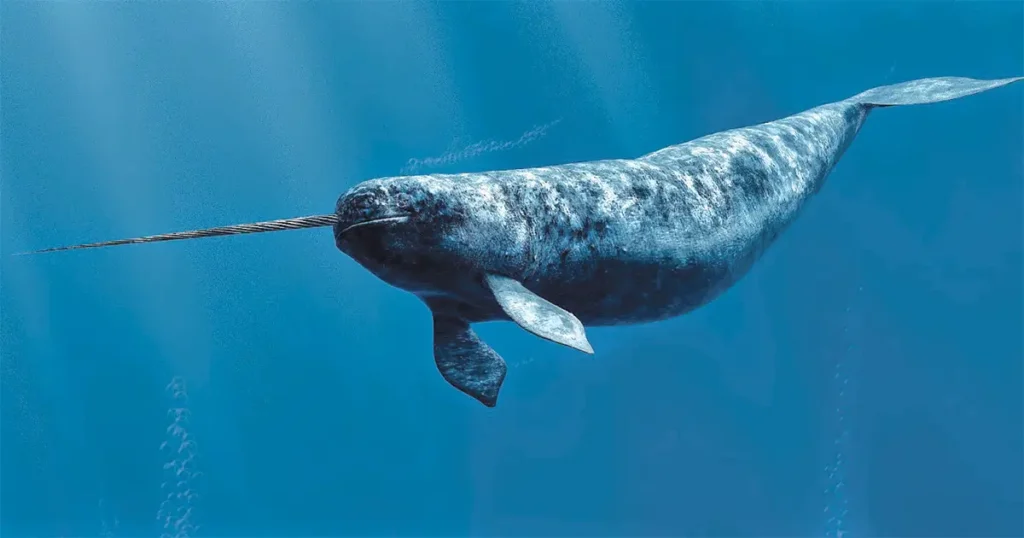
Narwhals depend on sound more than almost any other marine animal. Their clicks, pulses, and calls help them hunt in pitch-dark waters, navigate beneath ice sheets, and stay connected with their pods. But as shipping routes expand and industrial activity pushes farther north, underwater noise is becoming impossible to ignore. The growing evidence shows that Narwhals Are Going Silent as Human Noise Takes Over the Arctic, not because they have adapted, but because they are being overwhelmed.
When researchers say Narwhals Are Going Silent As Human Noise Takes Over The Arctic, they are describing a clear behavioral shift backed by years of acoustic data. Narwhals are not adjusting their calls to be louder or more frequent. Instead, they are reducing their vocal activity or stopping it entirely when exposed to ship engines, icebreakers, or other human-made sounds. This response is unusual compared to other whales and dolphins. Many marine mammals try to compensate for noise by changing pitch or volume. Narwhals do the opposite. They withdraw acoustically. Scientists believe this silence may be a stress response or a way to avoid perceived danger. However, silence comes with serious consequences. Without sound, narwhals lose their primary tool for feeding and communication, making survival much harder in an already extreme environment.
Table of Contents
Narwhals Are Going Silent as Human Noise Takes Over the Arctic
| Key Aspect | Information |
|---|---|
| Species Affected | Narwhal |
| Core Issue | Increasing underwater noise |
| Main Noise Sources | Ships, icebreakers, industrial activity |
| Behavioral Response | Reduced or stopped vocalization |
| Region | Arctic Ocean |
| Main Risk | Impaired feeding and communication |
The message coming from the Arctic is clear. Narwhals Are Going Silent As Human Noise Takes Over The Arctic, and this silence is not harmless. It reflects stress, disruption, and a shrinking margin for survival. As human activity continues to expand northward, choices made today will shape the future of Arctic ecosystems. Protecting narwhals does not mean halting progress. It means recognizing limits and acting responsibly. Preserving the Arctic’s natural soundscape may be one of the most important steps we can take to ensure that narwhals, and the life that depends on them, continue to thrive rather than fade into silence.
Sound Is Central to Narwhal Survival
Life in the Arctic ocean is shaped by darkness. For much of the year, sunlight barely reaches the water, especially under thick ice. Narwhals have evolved to rely on sound rather than sight. They produce rapid clicking sounds that bounce off objects, allowing them to locate fish and squid deep below the surface. These echolocation clicks are incredibly precise. Narwhals can detect prey hundreds of meters away, even in complete darkness. Beyond hunting, sound allows narwhals to communicate with one another. Calls help maintain pod structure, guide movement during migration, and support social bonds. When noise disrupts this system, narwhals lose access to the sensory world they depend on most.
The Rising Noise of the Arctic Ocean
- Climate change is transforming the Arctic faster than almost anywhere else on Earth. As sea ice melts earlier and forms later, human access to the region increases. Shipping companies now use Arctic routes to shorten global trade journeys. Cruise tourism is growing, and research and military presence is expanding.
- Each ship adds continuous low-frequency noise to the water. Unlike natural Arctic sounds, such as cracking ice or distant storms, ship noise does not fade quickly. It can dominate large areas for long periods. This constant background noise overlaps with narwhal communication frequencies, reinforcing the concern that Narwhals Are Going Silent As Human Noise Takes Over The Arctic is no longer a future problem but a present one.
How Narwhals Respond To Human Noise
Studies using underwater microphones have revealed a consistent pattern. When ships approach narwhal habitats, vocal activity drops sharply. In some recorded cases, echolocation clicks nearly disappear while vessels are nearby. Narwhals appear to choose silence instead of competition. While this may reduce stress in the moment, it severely limits their ability to hunt. Feeding becomes less efficient, and group coordination weakens. Over time, repeated disruptions can affect growth, reproduction, and survival. This reaction shows that silence is not a solution, but a symptom of disturbance.
Stress And Energy Costs
- Noise pollution affects more than just hearing. Prolonged exposure to loud or unpredictable sound increases stress levels in marine mammals. Elevated stress hormones can weaken immune systems and interfere with reproduction. For narwhals, which already face food scarcity and harsh environmental conditions, additional stress can be dangerous.
- Avoiding noise also requires energy. Narwhals may dive deeper, swim longer distances, or abandon familiar feeding grounds to escape disturbance. These actions increase energy use while reducing feeding success. Over time, this imbalance can lead to poorer health and lower survival rates, especially for young or older individuals.
A Species with Limited Flexibility
- Narwhals are highly specialized animals. They evolved in cold, ice-covered waters with minimal human presence. Their physiology, behavior, and migration patterns are tightly linked to Arctic conditions. Unlike some whales that inhabit a wide range of environments, narwhals have limited ability to adapt quickly.
- This lack of flexibility makes them especially vulnerable to rapid change. As noise levels rise year after year, narwhals have fewer options to adjust. Their silence reflects the limits of their resilience. It is one reason conservation scientists view the current trend as a serious warning rather than a temporary challenge.
Why This Silence Matters
When animals go quiet, it often signals deeper ecological stress. For narwhals, reduced vocalization affects every part of life. Hunting becomes harder, social bonds weaken, and navigation grows riskier. Silence may help narwhals cope momentarily, but it undermines their long-term survival. Narwhals also play an important role in Arctic ecosystems. As predators, they help regulate fish populations and contribute to ecological balance. Many Indigenous Arctic communities also maintain strong cultural and subsistence connections to narwhals. A decline in narwhal populations would have ecological and cultural consequences far beyond the species itself.
The Need For Quieter Arctic Policies
- Reducing underwater noise is possible without stopping all Arctic activity. Slower ship speeds significantly lower noise levels. Rerouting shipping lanes away from key narwhal habitats can reduce disturbance. Seasonal restrictions during migration and feeding periods offer additional protection.
- Advances in ship design are also promising. Quieter engines and improved hull designs can reduce noise at the source. Combined with careful monitoring and international cooperation, these measures could help restore some balance to Arctic soundscapes.
FAQs on Narwhals Are Going Silent as Human Noise Takes Over the Arctic
Why Are Narwhals So Dependent On Sound
Narwhals live in dark waters where vision is limited. Sound allows them to hunt, navigate, and communicate effectively.
What Human Activities Create The Most Noise
Commercial shipping, icebreaking, industrial exploration, and military operations are the main contributors.
Do Narwhals Ever Get Used to Noise
Current research suggests narwhals do not adapt well and instead reduce vocal activity when disturbed.
How Does Noise Affect Narwhal Feeding
Without echolocation clicks, narwhals struggle to locate prey efficiently, reducing feeding success.