
Detailed Antarctica Map: A Detailed Antarctica Map Is Exposing Mountains and Valleys Hidden Under Ice and honestly, it’s one of the most jaw‑dropping discoveries about our planet in decades. Imagine peeling back a thicker‑than‑a‑mile blanket and finding a rugged world of peaks, valleys, deep canyons and ancient landscapes — landscapes that were totally invisible to us until now. That’s exactly what scientists have done through the most detailed mapping effort ever beneath the Antarctic Ice Sheet. We knew Antarctica was cold. We knew it was icy. But most of us had no idea just how dramatic its hidden terrain is. More importantly, this new map is a serious game changer for understanding climate change, sea‑level rise, and even the evolution of Earth’s landscapes over millions of years. Now let’s break this down in a clear, human‑friendly way — whether you’re a curious kid, a science enthusiast, or someone working in climate or Earth sciences.
Table of Contents
Detailed Antarctica Map
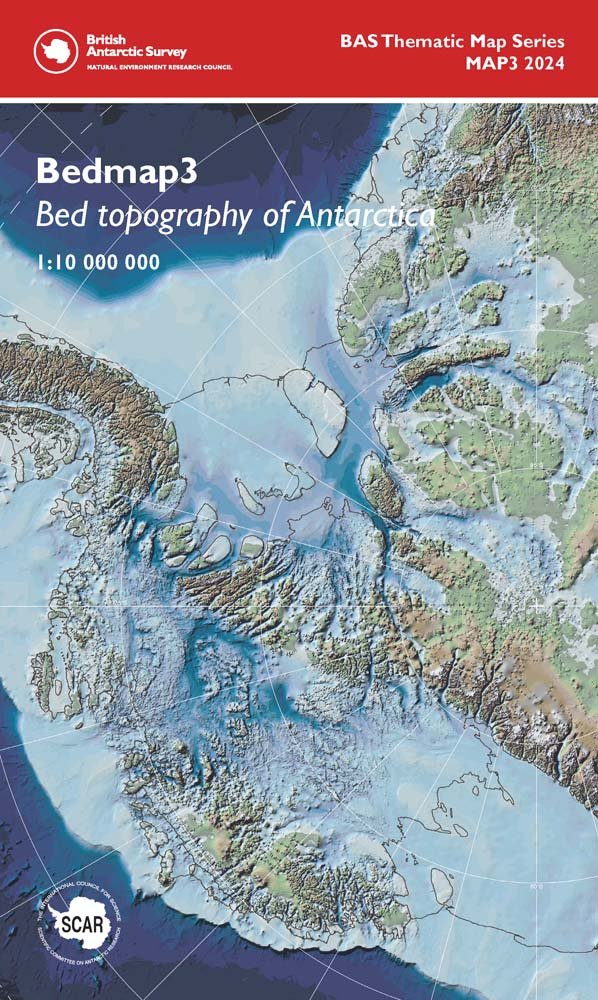
A Detailed Antarctica Map Is Exposing Mountains and Valleys Hidden Under Ice — and it’s about time. This map pulls back the curtain on one of Earth’s last unseen frontiers. And it’s not just a cool science story — it’s a tool that will shape how we prepare for the future, understand our planet’s past, and make better decisions in the present. This is a defining moment in polar science. A chance to understand the unknown, predict the unpredictable, and maybe — just maybe — stay one step ahead of the biggest environmental challenges of our time.
| Topic | Details / Stats |
|---|---|
| New Map Name | Bedmap3 — Antarctica’s most detailed subglacial map |
| Technology Used | Satellite, radar, airborne geophysics & modeling |
| New Features Identified | Tens of thousands of hills, valleys, deep channels |
| Biggest Channel Discovered | ~400 km long hidden valley |
| Why It Matters | Better ice dynamics & sea‑level predictions |
| Official Dataset | Bedmap3 public data |
What’s Under the Ice? A Hidden World Emerges
Antarctica has long been one of the least understood regions on Earth. While satellites have given us images of its icy surface for decades, what lies beneath that surface was mostly a mystery. That’s now changing in a big way.
Here’s what the new mapping efforts have revealed:
Mountain Ranges Beneath the Ice
Long-concealed mountain ranges have been found buried beneath the Antarctic ice sheet. Some are as high as the Alps. These mountains are part of an ancient geological story, possibly dating back hundreds of millions of years, before the continent was locked under ice. Unlike the mountains we see on other continents, these are cloaked in silence, unseen by the naked eye — until now.
Deep Subglacial Valleys and Canyons
The new map uncovered massive valleys and canyons — one of which is nearly 400 kilometers long. These troughs were likely carved by ancient rivers before the onset of large-scale glaciation. Scientists now believe some valleys acted as conduits for past ice flows, determining how the ice spread during previous glacial periods.
Tens of Thousands of Hidden Hills and Ridges
Incredibly, researchers discovered more than 70,000 previously unknown landforms that are at least 50 meters (165 feet) high. These range from gentle undulations to steep ridges and provide a vastly more detailed picture of the terrain. Some may have influenced ice sheet behavior for millennia.
Basins and Ice Traps
The map also reveals low-lying basins and geological depressions that act as “ice traps.” These basins collect ice and snow, shaping how the ice sheet forms and flows above them. In a warming world, understanding these basins is essential to predicting ice sheet collapse or stability.
The Tech Behind the Discovery: How Detailed Antarctica Map Is Showed
Unveiling a hidden world under miles of ice isn’t as easy as digging a hole — it takes cutting-edge technology and decades of data collection.
Satellite Remote Sensing
Satellites use a mix of radar and optical data to monitor the surface of Antarctica. These readings include changes in surface elevation, ice velocity, and even gravitational shifts. From this data, scientists can make educated predictions about what lies beneath.
Ice Flow Modeling
By analyzing how ice moves over time, scientists infer the topography underneath. When ice speeds up, slows down, or changes direction, it often means it’s passing over a hill, sliding into a valley, or squeezing through a narrow ridge. This modeling method, known as Ice Flow Perturbation Analysis (IFPA), allows researchers to virtually “see” under the ice.
Airborne Geophysics
Aircraft equipped with radar, gravimeters, and magnetometers have crisscrossed Antarctica for decades. These instruments send radio waves or gravity signals into the ice and record what bounces back. These measurements help calibrate satellite data and fill in areas where satellites can’t see.
Data Integration into Bedmap3
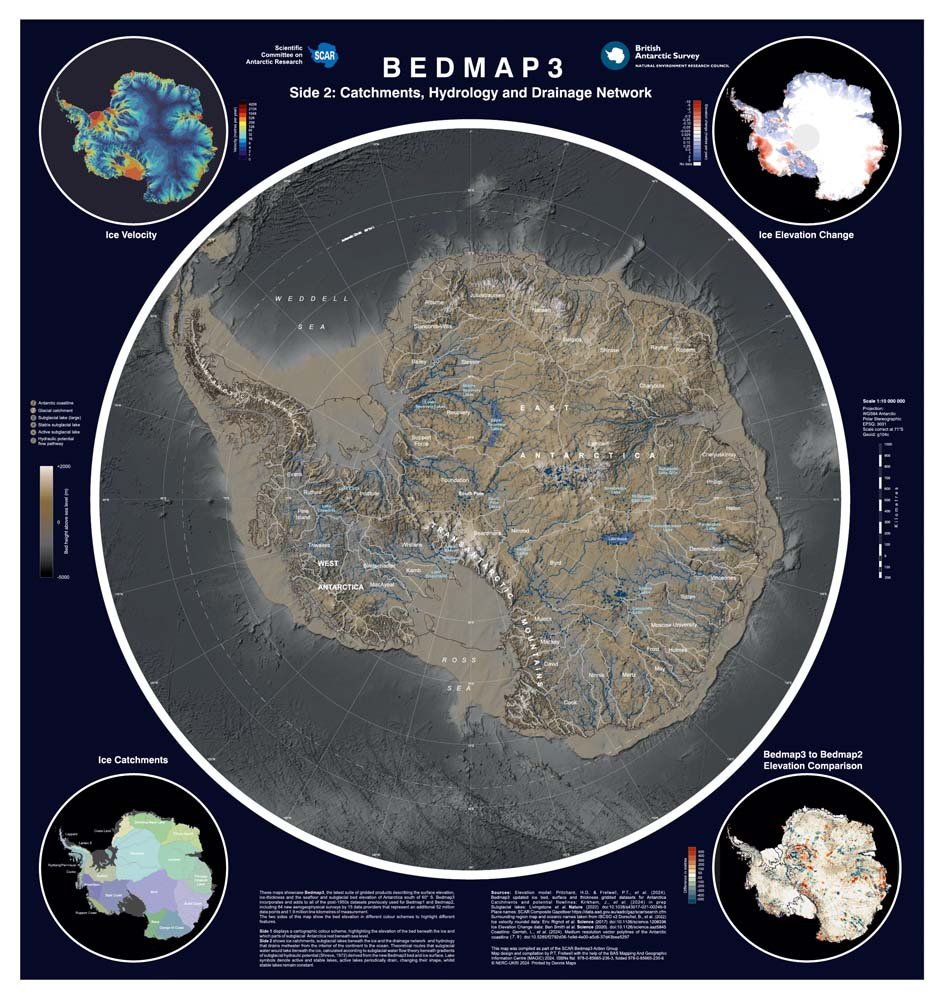
All of this data — from satellites, aircraft, ground expeditions, and modeling — is compiled into a single high-resolution digital terrain model known as Bedmap3. It’s the successor to earlier versions (Bedmap1 and Bedmap2) and offers far greater coverage, accuracy, and resolution.
Historical Perspective: Why This Is Such a Big Deal
Just a few decades ago, our knowledge of Antarctica’s bedrock was limited to a handful of cross-sections from early radar flights and speculative maps based on sparse data. Even by 2001, Bedmap1 had large gaps in the terrain, with areas completely unmapped.
Bedmap2 in 2013 filled in many of those blanks, but scientists still lacked a full, detailed image of what Antarctica looked like without its ice.
Now with Bedmap3, we have a near-complete view of the continent’s true geological character. It’s like flipping a light switch in a dark room. Suddenly, features we couldn’t imagine are not only visible — they’re mapped with unprecedented precision.
Why Detailed Antarctica Map Matters: Real-World Impacts of the New Map
This isn’t just a scientific curiosity. The new map has real consequences for people, cities, and ecosystems around the globe.
More Accurate Sea-Level Rise Forecasts
Antarctica holds about 60% of the planet’s fresh water — all locked in ice. If that ice melts, it could raise sea levels by more than 190 feet. But it won’t all melt at once — different regions will respond to warming in different ways, depending on what’s underneath them.
Knowing the exact shape of the land beneath helps scientists determine how fast ice sheets can flow and where warm ocean water might infiltrate and accelerate melting.
Better Climate Change Models
Earth system models — which guide everything from policy decisions to engineering designs — rely on accurate data. The more we know about Antarctica’s landscape, the more reliable our climate predictions become.
This matters to everyone: from a homeowner buying property in a coastal city, to a national government planning flood defenses, to international negotiators working on climate policy.
Understanding Earth’s Past
These valleys, basins, and ridges tell a story not just about the future — but about the past. Many of these features were carved millions of years ago, when Antarctica was ice-free. Studying them offers insights into how the continent has changed over geologic time and how ice ages have shaped global landscapes.
Professional Applications: Who Uses This Data and Why
The new map of Antarctica isn’t just for glaciologists. Professionals across various industries and disciplines use this data for high-stakes decision-making.
- Urban Planners & Engineers: Use sea-level projections influenced by Antarctic ice data to design infrastructure.
- Insurance Companies: Assess long-term flood risks and property values.
- Policymakers: Inform international agreements like the Paris Accord or Antarctic Treaty discussions.
- Shipping and Logistics Firms: Monitor potential changes in ice sheet behavior that might affect global trade routes.
- Environmental NGOs: Plan conservation strategies for sensitive polar ecosystems.
In short — if your work touches climate risk, Earth systems, ocean modeling, or global economics, this map is a tool worth tracking.
A Startup Wants to Light Up Earth’s Nights With Space Mirrors — Astronomers Are Alarmed
What Travelers May Notice First as TSA Rolls Out New Security Changes in 2026
Not the Nile or the Amazon — Scientists Identify Australia’s Finke River as the Oldest on Earth