

American agriculture is entering a turning point. For the past few years, many farmers experienced relatively strong earnings as global demand, supply disruptions, and high commodity prices worked in their favor. Now the outlook is shifting, and Farm Income In The U.S. May Fall In 2026 Despite Strong Government Support is becoming a real concern across rural communities.
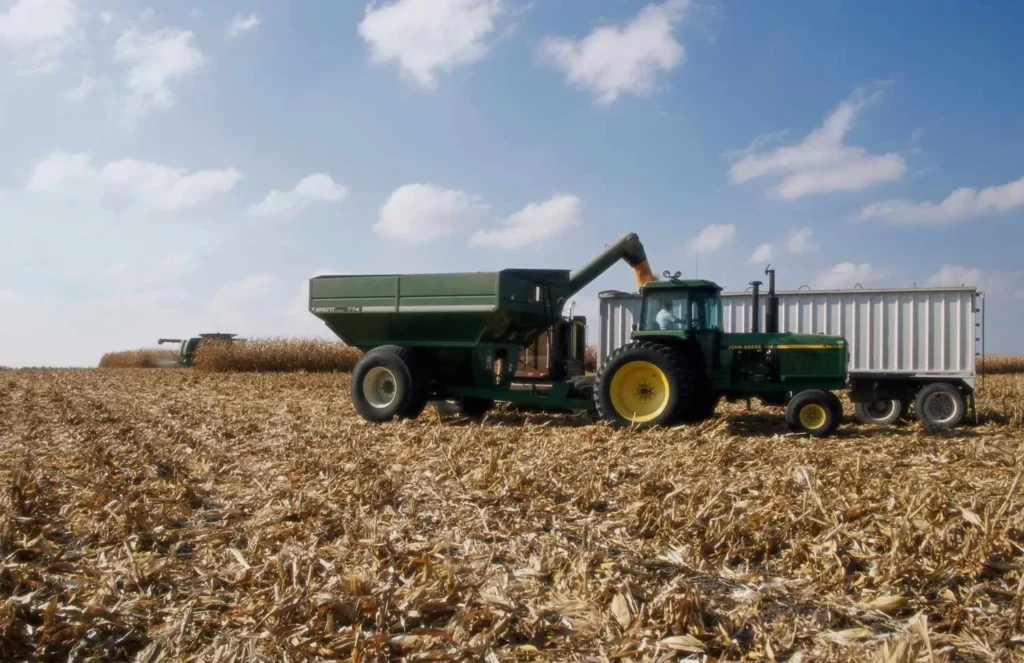
Financial advisers, lenders, and farm cooperatives are all discussing the same issue because Farm Income In The U.S. May Fall In 2026 Despite Strong Government Support signals tighter margins rather than falling production. The situation can feel confusing to people outside agriculture. Grocery stores remain full, harvests are expected to be solid, and American farming technology continues to improve. Yet farm profitability depends not only on how much food is produced but also on the relationship between prices and costs. When selling prices decline while expenses remain high, earnings fall quickly. That is exactly the environment many producers are preparing for in 2026.
This outlook reflects a classic agricultural cycle. Commodity markets are cooling after a period of elevated prices, while expenses such as fertilizer, machinery maintenance, labor, and financing remain expensive. Government payments, crop insurance subsidies, and conservation incentives are expected to help stabilize cash flow but not restore earlier profit levels. Economists anticipate a moderate national decline in net farm income, with grain producers likely feeling the largest impact. Farmers are already adjusting by postponing equipment purchases, tightening budgets, and focusing on efficiency rather than expansion.
Table of Contents
Farm Income in the U.S. May Fall in 2026
| Factor | 2026 Expectation | Practical Impact |
|---|---|---|
| Crop prices | Lower than previous seasons | Reduced revenue per acre |
| Livestock markets | Uneven | Profits vary by sector |
| Interest rates | Elevated | Expensive borrowing |
| Input costs | Still high | Narrow margins |
| Government programs | Ongoing | Financial safety net |
| Export demand | Slower growth | Pressure on prices |
| Land values | Stable but leveling | Harder expansion |
The broader message is straightforward. Farm Income in the U.S. May Fall In 2026 Despite Strong Government Support because market forces currently outweigh policy assistance. Federal programs will help stabilize farm finances, but they cannot fully counter lower commodity prices, elevated operating expenses, and higher borrowing costs. The broader message is straightforward. Farm Income In The U.S. May Fall In 2026 Despite Strong Government Support because market forces currently outweigh policy assistance. Federal programs will help stabilize farm finances, but they cannot fully counter lower commodity prices, elevated operating expenses, and higher borrowing costs. Food supplies will remain secure, and farming will continue to play a central role in the national economy. However, profitability will be harder to achieve, and many producers will operate with tighter margins until markets strengthen again.
Falling Commodity Prices
- One of the primary reasons Farm Income in the U.S. May Fall In 2026 Despite Strong Government Support is the steady drop in commodity prices. During earlier years, disruptions in global supply chains and strong international demand pushed prices for corn, soybeans, and wheat higher. Farmers benefited from those markets, often locking in profitable contracts.
- Now the global supply picture has changed. Other major producing regions have expanded acreage and improved yields. When global supply increases, markets naturally adjust downward. Farmers may harvest the same number of bushels but earn less money for each one.
- This matters because farming profitability depends heavily on price per unit, not just total production. A grower who harvests a large crop at a low price can still struggle financially. Many producers purchased inputs months earlier at higher costs, meaning they are selling into weaker markets while paying last year’s elevated expenses.
Rising Operating Costs
Another important factor behind why Farm Income in the U.S. May Fall In 2026 Despite Strong Government Support is persistent operating expenses. Although some input prices have stabilized, they remain far above historical averages. Fertilizer continues to be one of the biggest cost burdens. Nitrogen-based products are particularly expensive and essential for corn production. Fuel is another significant expense. Tractors, irrigation systems, and transportation all depend on diesel or electricity, both of which remain costly. Labor shortages have also reshaped farm budgets. Many farms now offer higher wages and better conditions to attract reliable workers. The cost of repairs and replacement parts for modern machinery has climbed sharply as equipment has become more advanced. When all these expenses combine, the total cost per acre increases substantially. Even a small change in commodity prices can wipe out profits under these conditions.
Government Payments Provide a Cushion
- Federal agricultural programs exist to stabilize farming during uncertain times. Crop insurance subsidies help farmers recover from weather disasters. Conservation programs reward practices that protect soil and water. Emergency relief programs assist after extreme conditions such as droughts or floods.
- These payments are one reason the statement Farm Income in the U.S. May Fall In 2026 Despite Strong Government Support includes the word despite. Support is significant and helps many farms maintain operations.
- However, government programs are designed as risk protection rather than income replacement. They can cover part of a financial shortfall but cannot recreate high market prices. In other words, the safety net prevents severe financial collapse but does not guarantee strong profitability.
Interest Rates and Farm Debt
- Higher interest rates are quietly becoming one of the most serious pressures in agriculture. Farming relies heavily on credit. Loans are used to purchase seed, fertilizer, land, and machinery before any crops are sold.
- When borrowing costs rise, farm expenses rise immediately. Payments on operating loans, equipment financing, and mortgages increase. This is a major contributor to why Farm Income in the U.S. May Fall In 2026 Despite Strong Government Support is expected even without major weather disasters.
- Young farmers face a particularly difficult situation. Land prices remain strong, making entry expensive. At the same time, interest rates increase the cost of financing that land. As a result, expansion plans are slowing nationwide.
Export Demand And Global Markets
American agriculture is deeply connected to international trade. A large portion of soybeans, corn, and meat products are exported overseas. Global economic conditions strongly influence farm income. When global economies slow, demand for imported food weakens. Currency exchange rates also matter. A strong dollar makes American agricultural goods more expensive for foreign buyers, giving competitors an advantage. Large harvests in other countries further pressure prices. Even if U.S. production remains stable, worldwide abundance can reduce earnings. This global competition is another reason Farm Income in the U.S. May Fall In 2026 Despite Strong Government Support is widely anticipated.
Regional Differences
- The impact will not be identical across all regions. Midwest grain producers are most sensitive to falling corn and soybean prices. Ranchers may experience stronger cattle markets because herd sizes remain limited after recent droughts.
- Fruit and vegetable growers face different challenges. They rely heavily on labor availability and consumer purchasing behavior. Specialty crop producers sometimes maintain steadier prices but deal with higher operating costs.
- Overall national averages may decline even if certain sectors perform well. That is typical during agricultural cycles.
The Outlook For 2026
- The coming year appears to be a period of adjustment rather than crisis. Production remains strong, and demand for food continues. The change is in profitability, not productivity.
- Farmers are adapting quickly. Many are adopting precision agriculture technologies to apply fertilizer more efficiently. Others are negotiating input contracts earlier to control costs. Some are diversifying income through leasing land for renewable energy projects or enrolling acres in conservation programs.
- Careful financial management will matter more than expansion. Efficiency, planning, and cost control will likely determine success in 2026.
FAQs on Farm Income in the U.S. May Fall in 2026
1. Why is farm income declining if harvests are strong?
Farm income depends on profit, not just production. Prices for crops are falling while operating costs remain high, reducing earnings.
2. Will government programs prevent financial losses?
They will reduce risk and stabilize cash flow but cannot fully replace income lost from lower market prices.
3. Are farmers facing bankruptcy nationwide?
No. Most farms are expected to remain stable, though they may earn less profit than in recent years.
4. Which sectors are most affected?
Grain producers growing corn and soybeans are likely to see the biggest income pressure due to falling commodity prices.