

The Arctic is often imagined as the last place humans could have explored without modern equipment. Ice, freezing winds, and long winter darkness make it seem like a region only recent explorers could handle. Yet recent archaeological findings tell a very different story. Around 4,500 years ago, people were already traveling across polar waters in small boats.
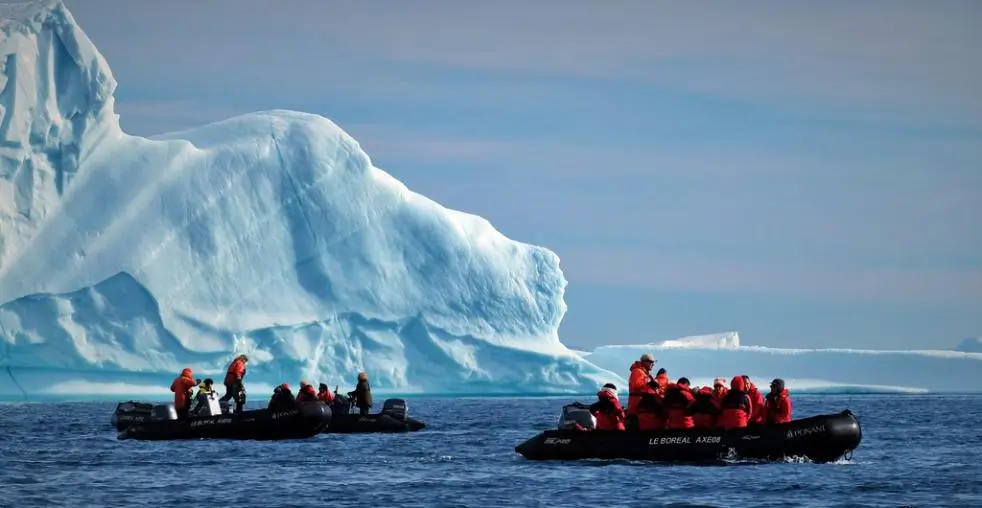
The discovery of the earliest high-latitude sailors shows that advanced seafaring did not begin in warm oceans alone. In fact, the earliest high-latitude sailors were navigating one of the harshest environments on Earth thousands of years before metal ships or navigation tools existed. This new understanding changes how we think about early human movement. For a long time, historians believed ancient populations only migrated when land routes opened, especially during the Ice Age. But the evidence now suggests humans were not just following land they were using the sea intentionally. These Arctic travelers planned journeys, followed coastlines, and relied on experience rather than maps. They were not simply survivors pushed by climate; they were explorers who understood their world deeply.
The phrase earliest high-latitude sailors refer to Paleo-Inuit communities that moved through Arctic coastal waters around 2500 BCE. Archaeological discoveries show these people likely began in northeastern Siberia and gradually traveled east through Alaska, Arctic Canada, and eventually Greenland. Instead of walking across frozen land, they depended heavily on the ocean. Their movement wasn’t accidental. They built skin-covered boats and repeatedly traveled across icy channels to hunt and relocate. The earliest high-latitude sailors understood seasonal sea ice, marine animal behavior, and ocean currents. That knowledge allowed them to treat the Arctic coastline like a navigable route. Rather than a dangerous barrier, the ocean became their road.
Table of Contents
4500-Year-Old Arctic Voyage
| Key Detail | Information |
|---|---|
| Time Period | Around 2500 BCE (4,500 years ago) |
| Culture | Paleo-Inuit Arctic Communities |
| Route | Siberia to Alaska to Arctic Canada to Greenland |
| Travel Method | Skin-covered boats and coastal navigation |
| Evidence | Stone tools, marine animal remains, driftwood boat frames |
| Scientific Dating | Radiocarbon and isotopic analysis |
| Key Conclusion | Humans intentionally sailed Arctic waters far earlier than once believed |
| Historical Significance | Oldest known organized maritime travel in polar regions |
Tracing A 4,500-Year-Old Arctic Voyage
The story began when archaeologists compared artifacts discovered in different Arctic regions. Stone tools uncovered in Alaska looked almost identical to those found far away in northern Canada and Greenland. The blades, scrapers, and spear points were made using the same techniques. The precision of the similarities could not be explained by coincidence. Researchers realized the objects showed a pattern of human movement. Each settlement appeared slightly later in time than the previous one, forming a clear eastward progression. Instead of isolated populations, the sites represented a connected migration route. People were moving along the coast step by step. Walking across sea ice alone would not explain the distribution. Many stretches of water are simply too wide and unpredictable. The logical conclusion was water travel. The earliest high-latitude sailors were traveling by boat, hugging coastlines and stopping at seasonal camps. Radiocarbon dating confirmed the timeline. The oldest sites appeared in Alaska. Later ones appeared farther east. Finally, human presence reached Greenland. The evidence created a continuous travel corridor stretching thousands of kilometers.
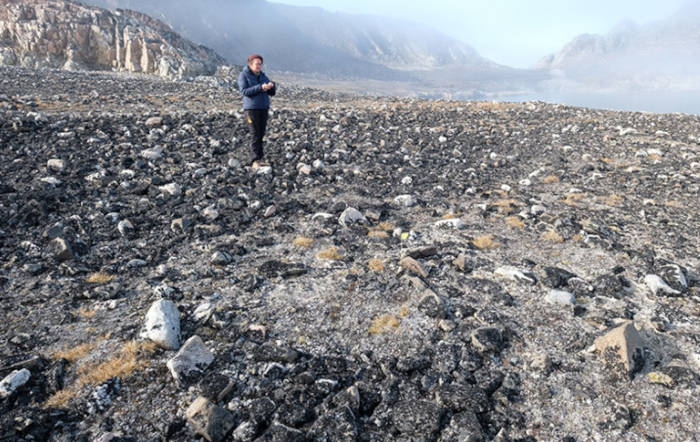
Evidence In Driftwood And Sealskin Boats
- One of the most fascinating clues came from wood fragments. The High Arctic has almost no trees, yet researchers found carved wooden pieces at early settlements. These were not random debris. They showed shaping, cutting, and fitting. Scientists believe these pieces formed boat frames. Since trees did not grow locally, ancient builders collected driftwood carried by ocean currents from distant forests. The wood would be carefully reused because it was extremely valuable.
- The frames were likely covered with stitched seal skins. Seal hide was ideal waterproof, flexible, and durable. A properly constructed skin boat could glide through icy water and survive contact with floating ice. Animal bones strengthened the argument. Many bones came from seals, walrus, and other marine mammals hunted offshore. These animals are difficult to capture from land. The hunters had to travel into open water regularly. That meant boating was a routine part of life for the earliest high-latitude sailors.
How Researchers Reconstructed the Route
Modern science played a major role in confirming the migration. Archaeologists combined several methods to build the full picture. Artifact comparison showed identical tool styles across vast distances. Isotope analysis of bones revealed diets dominated by marine animals. Settlement spacing matched realistic paddling distances between safe landing points. Ocean current modeling showed a natural eastward pathway along the Arctic coastline that ancient travelers could have followed. Each piece alone might not have proven the case. Together, they formed a clear narrative. A connected maritime culture existed across the Arctic long before recorded history. The earliest high-latitude sailors were not lost wanderers. They were experienced navigators moving intentionally across a known route.
Why High-Latitude Sailing Matters
- This discovery reshapes maritime history. For decades, historians believed early seafaring developed mainly in temperate climates like the Mediterranean or Pacific islands. Warm water and predictable weather seemed necessary for boat travel. The Arctic example proves otherwise. Innovation often appears where survival demands it. Coastal Arctic waters were full of seals, whales, and fish. Hunting them from shore was difficult. Boats offered access to dependable food sources.
- The ocean became central to daily life. Instead of fearing it, these communities learned to read it. They watched ice patterns, wind direction, and bird movements. Knowledge replaced technology. The earliest high-latitude sailors probably navigated by observation sun position during long summer days, star patterns during dark winters, and even animal migration paths. Generations of experience became their navigation system.
Implications For Human Adaptation
- Living in the Arctic required more than endurance. It required organization. Boat travel meant teamwork. Paddlers, hunters, and navigators had defined roles. Cooperation was essential because mistakes in freezing water were often fatal.
- This suggests social structure. Knowledge was likely shared carefully. Safe routes, landing sites, and hunting areas would be taught to younger members. Cultural memory acted as a survival tool.
- The findings also show how flexible humans can be. Rather than waiting for easier climates, these communities adapted technology to match their environment. Waterproof clothing, insulated shelters, and specialized tools supported their lifestyle.
- The earliest high-latitude sailors were not merely surviving harsh conditions. They had mastered them.
What Comes Next
Researchers believe many ancient coastal camps are now underwater. Sea levels have risen significantly since ancient times, submerging former shorelines. Marine archaeology may uncover preserved harpoons, tools, or even boat remains beneath sediment. Genetic studies may also connect populations across Siberia, Alaska, and Greenland. If DNA links match the archaeological timeline, the migration path will become even clearer. New technology such as underwater scanning and sediment analysis is expected to reveal additional evidence in the coming years.
A New View of Early Exploration
- This Arctic journey forces a reconsideration of exploration itself. Exploration did not begin with famous expeditions of the last few centuries. Long before recorded history, small communities were already navigating dangerous seas with handmade boats and environmental knowledge.
- The earliest high-latitude sailors were pioneers. They crossed icy waters without maps, metal tools, or engines. Their achievements depended on observation, skill, and cooperation. The Arctic was not the end of the world for them. It was part of their home and a pathway to new opportunities. Their story reminds us that human curiosity and adaptability are ancient traits. Wherever food existed and survival was possible, humans found a way to reach it.
- Today, modern technology allows ships to cross polar routes in days. Yet thousands of years ago, people accomplished similar journeys using only natural materials and shared experience. Their legacy is quiet but powerful. They proved that exploration is not defined by advanced tools. It is defined by determination and knowledge passed from one generation to the next.
FAQs on Earliest High-Latitude Sailors
1. Who were the earliest high-latitude sailors?
They were Paleo-Inuit Arctic communities who lived about 4,500 years ago. Archaeological evidence shows they traveled along the Arctic coastline from Siberia through Alaska and Canada to Greenland using small skin-covered boats.
2. How did they travel across icy Arctic waters without modern equipment?
They relied on seal-skin boats built over wooden driftwood frames. Navigation came from environmental knowledge observing sea ice movement, wind patterns, bird migration, and the position of the sun and stars rather than maps or compasses.
3. Why did these early sailors move through the Arctic?
The primary reason was survival. Marine mammals such as seals and walrus provided reliable food, clothing material, and tools.
4. What proof do scientists have that they used boats?
Researchers found shaped driftwood pieces believed to be boat frames, marine animal bones showing offshore hunting, and identical stone tools across distant regions.