
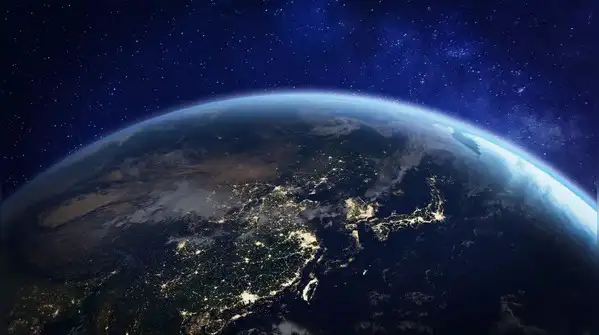
Scientists say Earth’s rotation is gradually slowing and the length of a day could Stretch Toward 25 Hours due to gravitational interaction with the Moon. The change is measurable today but extremely small — only milliseconds per century. Researchers emphasize the effect unfolds across hundreds of millions of years and poses no threat or disruption to human civilization.
Table of Contents
Earth’s Day Could Gradually Stretch Toward 25 Hours
| Key Fact | Detail/Statistic |
|---|---|
| Day length change | About 1.7 milliseconds longer per century |
| Main cause | Tidal friction caused by lunar gravity |
| Future projection | Around 200 million years for a 25-hour day |
| Moon’s distance | Moving away ~3.8 cm per year |
Scientists say the gradual slowing of Earth’s spin shows that planets are dynamic systems shaped by gravity and time. As Dr. Green summarized, “From the human perspective the day is constant, but in cosmic terms Earth is evolving toward a future where the day may indeed Stretch Toward 25 Hours.”
What Scientists Mean by “Stretch Toward 25 Hours”
Earth rotates once every 24 hours, but the speed is not perfectly fixed. Astronomers measure the rotation using telescopes, satellites, and atomic clocks. These observations confirm a slow deceleration.
“The Earth is losing rotational energy over time,” said Dr. Matthew Green, a geophysicist at the University of Newcastle. “Ocean tides convert rotational motion into heat through friction along the seabed.”
This process is known as tidal braking. The gravitational pull of the Moon creates tidal bulges in Earth’s oceans. As water moves across the ocean floor and continental margins, friction dissipates energy and slows the planet’s spin.
According to the International Earth Rotation and Reference Systems Service (IERS), the day lengthens by a few milliseconds every century — a change invisible to humans but measurable with precision instruments.
The Moon’s Critical Role in the Stretch Toward 25 Hours
The Moon’s gravitational force drives the phenomenon. It pulls ocean water into two tidal bulges — one facing the Moon and another on the opposite side of Earth.
Because Earth rotates faster than the Moon orbits, the bulges shift slightly ahead of the Moon. Gravity between the bulges and the Moon transfers energy outward.
NASA’s Lunar Laser Ranging experiment shows the Moon is moving away from Earth at about 3.8 centimeters per year. As it gains orbital energy, Earth loses rotational energy.
“The Earth–Moon system behaves like a spinning skater extending their arms,” explained Dr. Norman Murray, astrophysicist at the Canadian Institute for Theoretical Astrophysics. “When mass moves outward, rotation slows.”
Evidence From Ancient Rocks
Scientists did not discover the slowing of Earth’s spin only through modern instruments. Geological formations preserve ancient tidal cycles.
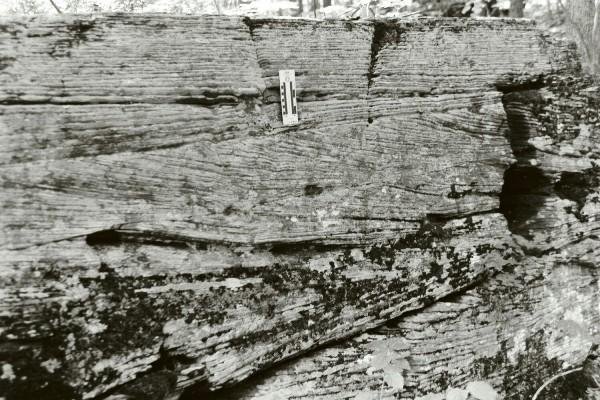
Layered sediment deposits called tidal rhythmites record daily, monthly, and yearly patterns from prehistoric oceans.
Analysis of rocks in Australia and China shows:
- 1.4 billion years ago: a day lasted about 18–19 hours
- 400 million years ago: about 22 hours
- Today: 24 hours
This evidence confirms the ongoing trend toward a day that will eventually Stretch Toward 25 Hours.
Why Humans Will Never Notice the Change
Although the idea sounds dramatic, the timescale is immense.
At the present rate, Earth would need roughly 200 million years to gain one additional hour in its daily rotation period.
That is longer than:
- The age of the Himalayas
- The existence of mammals as dominant land animals
- The likely lifespan of human civilization
Scientists stress this is a geological evolution, not a near-future event.
Leap Seconds: When Physics Meets Timekeeping
Even tiny changes matter for clocks.
Earth’s rotation determines astronomical time, while atomic clocks measure atomic time. Because Earth’s spin fluctuates slightly, international timekeepers occasionally add a leap second.
The National Institute of Standards and Technology (NIST) states leap seconds keep civil time aligned with Earth’s position relative to the Sun. Without them, sunrise and sunset times would slowly drift over centuries.
The slowing rotation linked to the eventual Stretch Toward 25 Hours is the reason leap seconds exist.
Other Forces Affecting Earth’s Rotation
Climate Change
Melting glaciers redistribute mass toward the equator, slightly slowing rotation.
NASA research indicates modern ice loss measurably lengthens days by microseconds.
Earthquakes
Large earthquakes shift Earth’s mass distribution. The 2011 Japan earthquake shortened the day by approximately 1.8 microseconds.
Atmospheric Winds
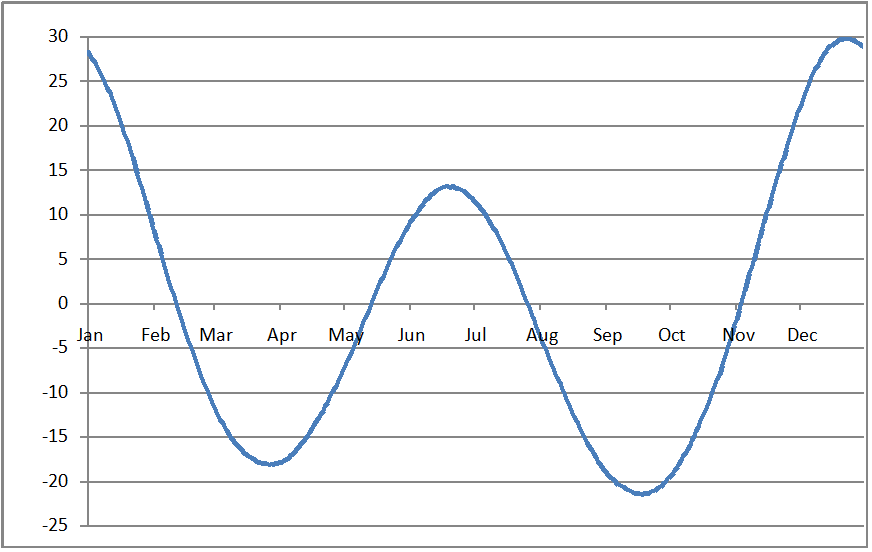
Changes in global wind circulation also influence rotational speed. Seasonal atmospheric patterns can make days slightly longer or shorter.
How Scientists Measure a Millisecond
Measuring Earth’s spin requires extraordinary precision.
Researchers combine three techniques:
- Atomic clocks — measure time to billionths of a second
- Radio telescopes — track distant quasars as fixed reference points
- Satellite laser ranging — monitors Earth’s orientation in space
The U.S. Naval Observatory maintains official Earth rotation data used for navigation and satellite communication.
“If Earth’s rotation were ignored, GPS positioning errors would grow rapidly,” the observatory notes in technical documentation.
Implications for Space Exploration
Understanding rotational change matters beyond Earth.
Planetary scientists compare Earth with Mars and Venus:
- Venus rotates extremely slowly — one day longer than its year
- Mars has a day similar to Earth, about 24.6 hours
Studying Earth’s future Stretch Toward 25 Hours helps researchers understand planetary evolution and orbital mechanics across the solar system.
It also helps predict the distant future. Billions of years from now, Earth and the Moon could become tidally locked, meaning the same side of Earth would always face the Moon — just as the Moon already shows one face to Earth.
How Earth’s Day Affects Life
Earth’s 24-hour cycle shapes biological rhythms called circadian rhythms. Humans, plants, and animals rely on light-dark cycles for sleep, metabolism, and behavior.
Researchers say any real biological adaptation to a longer day would require evolutionary timescales.
“Life evolved under a rotating planet,” said chronobiology researchers in multiple sleep studies. “Organisms adapt slowly over millions of years, not centuries.”
Therefore, the gradual Stretch Toward 25 Hours would not affect current ecosystems.
Why This Research Matters
The study of Earth’s rotation supports:
- satellite navigation
- telecommunications timing
- astronomy observations
- climate modeling
- space missions
Accurate timekeeping underpins financial networks and internet data synchronization as well.
Modern banking systems rely on timestamps accurate to fractions of a second. Even a millisecond error could disrupt high-frequency trading systems.
FAQs About Earth’s Day Could Gradually Stretch Toward 25 Hours
Will humans ever live with a 25-hour day?
No. The change requires hundreds of millions of years.
Is Earth slowing quickly?
No. Only milliseconds per century.
Will calendars change?
Not in any foreseeable future.
Could the Moon leave Earth?
No. It is moving away slowly but will remain gravitationally bound.