
Space discoveries usually expand our knowledge little by little. Occasionally, though, astronomers stumble upon something that forces them to rethink the basic rules they have trusted for decades. That is exactly what happened when scientists confirmed the existence of a lemon-shaped planet orbiting a distant star.
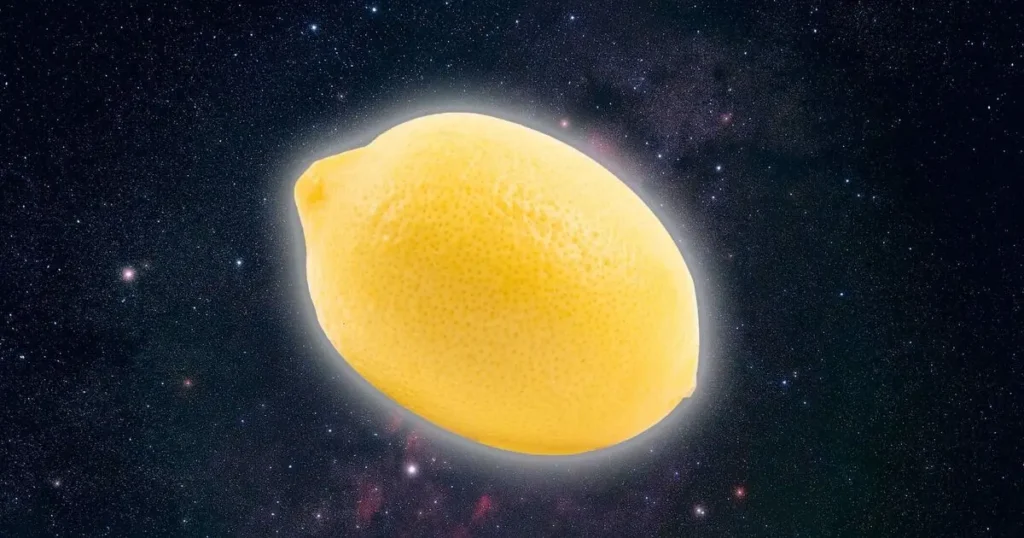
For years we have been taught that gravity naturally pulls matter into a sphere, shaping planets into round worlds like Earth or Jupiter. This newly observed lemon-shaped planet breaks that expectation in a very visible way. The discovery matters not because the planet looks unusual, but because it reveals how powerful stellar forces can physically reshape a world. Instead of a perfect globe, the planet appears stretched along one axis, with bulging sides and tapered ends. It is not a trick of perspective or a computer error. Researchers have carefully measured its light pattern and confirmed the shape is real. In simple terms, this is a planet being pulled apart by its own star while still managing to survive.
The phrase lemon-shaped planet may sound almost humorous, yet it describes a serious astrophysical situation. This exoplanet is a gas giant similar in size to Jupiter, but its orbit is incredibly tight. It circles its host star in less than two Earth days. At that distance, gravity becomes uneven across the planet’s surface. One side constantly faces the star, a condition called tidal locking. The star’s gravity pulls strongly on that side, while the far side experiences a weaker pull. The difference stretches the planet into an elongated form. The effect is similar to ocean tides on Earth, except here the entire planet is the ocean.
Table of Contents
Astronomers Identify a Lemon-Shaped Planet
| Feature | Details |
|---|---|
| Planet Category | Hot Jupiter gas giant |
| Shape | Tidal elongated, lemon-like |
| Distance From Earth | About 850 light-years |
| Orbital Period | Roughly 1–2 days |
| Surface Temperature | Around 2,500–3,000 Kelvin |
| Main Cause | Extreme tidal forces from host star |
| Atmosphere | Expanded and slowly escaping |
| Detection Method | Transit light curve analysis |
| Scientific Importance | Challenges spherical planet assumptions |
The discovery of a lemon-shaped planet reminds us that the universe often refuses to follow our neat expectations. What seemed a simple rule, planets are round, turns out to depend on environment. Under powerful stellar gravity and intense heat, a world can stretch into an entirely different form. Beyond its strange appearance, the planet offers a valuable lesson about cosmic extremes. It shows how stars influence their planets, how atmospheres can escape, and how planetary lifetimes can be shorter than we once thought. Each observation like this brings astronomy closer to understanding how diverse planetary systems truly are.
Discovery and Observation
- Astronomers discovered the strange world while studying a routine planetary transit. Normally, when a planet passes in front of its star, the brightness drops in a predictable curve. A round planet creates a smooth and symmetrical dimming. In this case, the brightness dip was uneven. At first, researchers suspected measurement noise. But repeated observations showed the same pattern every orbit. After detailed modeling, they realized they were observing a lemon-shaped planet.
- Modern telescopes can measure extremely small changes in starlight. Scientists compare brightness levels before, during, and after the transit. Subtle differences in the curve allowed them to estimate the planet’s outline. Instead of a circle, the profile looked stretched. The key evidence came from multiple viewing angles. As the planet moved around the star, different sides became visible. Each phase produced slightly different light reflections, revealing its true geometry.
Why The Planet Looks Like A Lemon
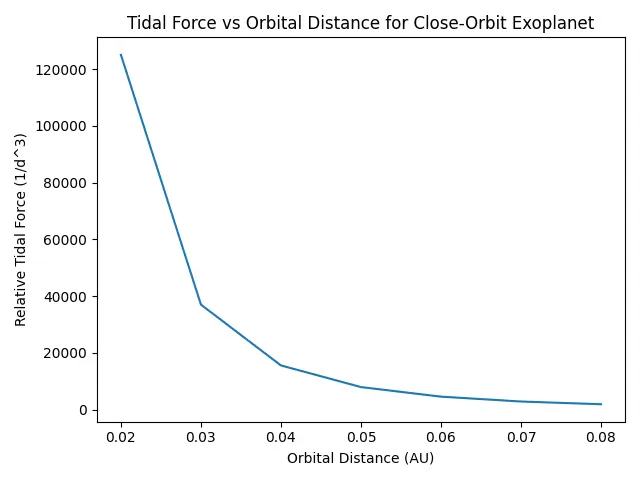
- The primary reason the lemon-shaped planet exists is tidal distortion. When a planet orbits very close to a star, gravitational forces vary across its body. The near side feels a stronger pull than the far side.
- On Earth, the Moon creates tides in our oceans. Here, the effect is magnified thousands of times. Instead of water moving, the entire gas giant stretches. The planet sits near what astronomers call the Roche limit. This is the distance at which a star’s gravity nearly tears a planet apart.
- Because the planet rotates at the same speed as its orbit, the same hemisphere always faces the star. The stretching remains constant, locking the world into its elongated shape. Over time, the planet stabilizes in this distorted configuration.
Extreme Heat and Atmospheric Expansion
- Heat plays an equally important role in shaping the lemon-shaped planet. The star-facing side experiences relentless radiation. Temperatures climb high enough to melt metals and vaporize many elements.
- This heating causes the atmosphere to expand outward. Gases become less tightly held by gravity, swelling the planet’s size. When tidal forces pull on this expanded atmosphere, the deformation becomes even more noticeable.
- Scientists estimate winds on this planet may exceed several thousand kilometers per hour. These winds attempt to carry heat to the night side, but the day side remains far hotter. The atmosphere never truly cools, keeping the planet inflated.
A Planet Being Slowly Destroyed
- Observations indicate the lemon-shaped planet is gradually losing its atmosphere. Ultraviolet radiation from the star strips away hydrogen and helium. The escaping gas forms a faint trailing cloud behind the planet.
- This process is called atmospheric escape. Over millions of years, the planet could shrink dramatically. Some astronomers believe it may eventually become a smaller rocky core, or disappear completely.
- The discovery provides direct evidence that certain planets live unstable lives. Unlike Earth, which enjoys a safe orbital distance, this world exists in a constant gravitational struggle with its star.
How Scientists Measured Its Shape
- Measuring the shape of a distant planet is a remarkable achievement. Researchers combined several observation methods. First, they studied transit timing and light curves. Second, they examined brightness variations throughout the orbit. Finally, they analyzed infrared heat emissions.
- Computers simulated thousands of possible shapes. Only an elongated model matched the data accurately. This confirmed the object was truly a lemon-shaped planet.
- The technique represents a major step forward in astronomy. Scientists can now do more than detect planets. They can infer structure, temperature distribution, and atmospheric behavior.
What This Means For Planetary Science
- The discovery forces astronomers to reconsider long-standing assumptions. For years, planetary models relied on hydrostatic equilibrium, meaning gravity naturally produces spheres. The lemon-shaped planet proves that rule applies only under moderate conditions.
- Extreme gravitational environments create new planetary physics. Gas giants behave more like fluid droplets than rigid bodies. Internal pressure, temperature, and rotation interact in unexpected ways.
- This finding also helps explain the diversity of exoplanets. The galaxy contains many star systems very different from ours. Studying them improves our understanding of planetary formation and survival.
Comparing It to Planets in Our Solar System
- Nothing in our solar system resembles the lemon-shaped planet. Jupiter, the largest planet here, is slightly flattened due to its rapid rotation but remains nearly spherical. Saturn shows a mild equatorial bulge yet still looks round.
- The difference comes down to distance from the star. Our planets orbit far enough from the Sun to avoid extreme tidal forces. Mercury, the closest planet to the Sun, still maintains a stable shape because its orbit is relatively safe compared to this exoplanet. The comparison highlights how unique our solar system may actually be.
Implications For Future Discoveries
- Astronomers now believe many close-orbit gas giants could be distorted. Improved telescopes and observation techniques will likely reveal more examples. The lemon-shaped planet may simply be the first clearly confirmed case.
- Future missions will measure atmospheric composition and wind patterns in detail. Some scientists hope to map temperature variations across distant worlds, something unimaginable just a generation ago.
- As technology advances, planetary astronomy is shifting from detection to characterization. Researchers are beginning to study planets as real places rather than distant points of light.
FAQs on Astronomers Identify a Lemon-Shaped Planet
What Is a Lemon-Shaped Planet
It is a gas giant whose shape is stretched by intense gravity from its nearby star, making it elongated rather than spherical.
Why Does the Planet Not Break Apart
The planet is close to destruction but still held together by its own gravity. It exists near the limit where tidal forces almost overcome internal gravity.
Is The Planet Habitable
No. Temperatures are extremely high, and the atmosphere is mostly hydrogen and helium. Conditions are far beyond what life could tolerate.
Will More Such Planets Be Found
Very likely. As telescopes improve, astronomers expect to detect many distorted worlds orbiting close to their stars.