
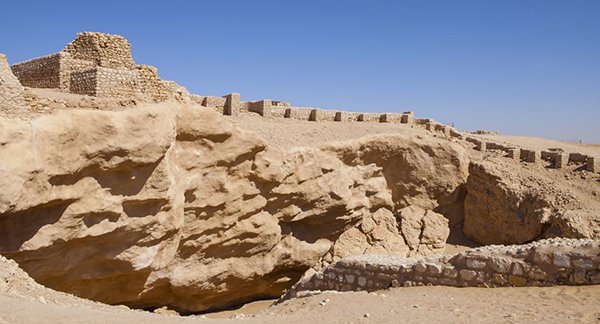
The long search for the Lost City of Ubar, central to the Mystery of the Lost City, has moved from folklore into scientific inquiry as archaeologists, geologists, and satellite researchers revisit a remote site in southern Oman. First linked to ancient trade routes and sacred texts, the location continues to generate debate because evidence suggests Ubar may not have been a city at all, but part of a wider desert trade network.
Table of Contents
The Mystery of the Lost City of Ubar
| Key Fact | Detail |
|---|---|
| Location | Excavated site at Shisr oasis, Oman |
| Historical link | Associated with “Iram of the Pillars” in early Islamic texts |
| Modern discovery | Satellite radar mapping identified caravan tracks |
Field surveys continue across the Empty Quarter desert, where shifting dunes may still conceal related settlements. Archaeologists believe future discoveries could further clarify caravan economies in ancient Arabia. For now, the Mystery of the Lost City remains not a single solved puzzle, but an evolving scientific investigation into how history, environment, and human storytelling intersect.
Understanding the Mystery of the Lost City and the Ubar Question
The name “Ubar” appears in medieval Arabic literature and oral Bedouin tradition, often described as a wealthy desert center destroyed suddenly. Many accounts connect it with Iram, a powerful community referenced in early Islamic scripture.
For centuries travelers searched for it. British explorer Bertram Thomas in the 1930s reported hearing Bedouin guides speak of a buried city swallowed by sand dunes in the Empty Quarter. His travel writings helped bring international attention to the legend.
For decades, explorers believed the story referred to a large buried metropolis. Modern research has complicated that assumption.
“People imagined towers rising out of the sand,” said Dr. Juris Zarins, an archaeologist who worked on excavations in Oman. “What we found instead was a trading settlement — important, but much smaller than legend.”
Scholars now debate whether Ubar was:
- a physical city
- a caravan oasis
- or a regional trade territory
That uncertainty lies at the center of the Mystery of the Lost City.
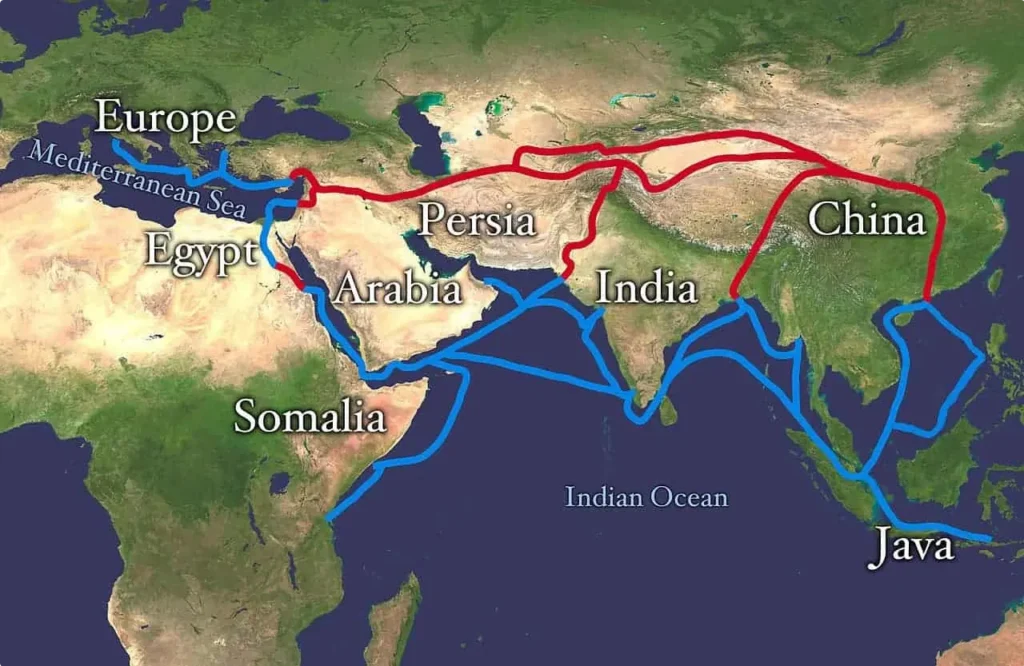
The Frankincense Trade and Ancient Economy
Long before petroleum transformed the Arabian Peninsula, southern Arabia controlled one of the ancient world’s most valuable commodities: frankincense resin.
The resin came from Boswellia trees growing mainly in Oman and Yemen. It was burned in temples in ancient Egypt, Greece, and Rome and used in perfumes, medicine, and funeral rituals. Roman records describe caravans carrying tons of incense northward every year.
Historians estimate the trade flourished from roughly 1000 BCE to 300 CE. The routes were dangerous, crossing hundreds of miles of desert. Water and protection were essential.
According to historical trade analysis by Near Eastern economic historians, caravans stopped at fortified oases where merchants could water animals, repair equipment, and exchange goods.
Shisr, the site linked to Ubar, sits exactly where several ancient caravan tracks intersect.
“Trade routes leave patterns, and those patterns converge at oasis nodes,” a NASA remote-sensing report noted. “Shisr was one of those nodes.”
The 1990s Discovery Using Satellite Technology
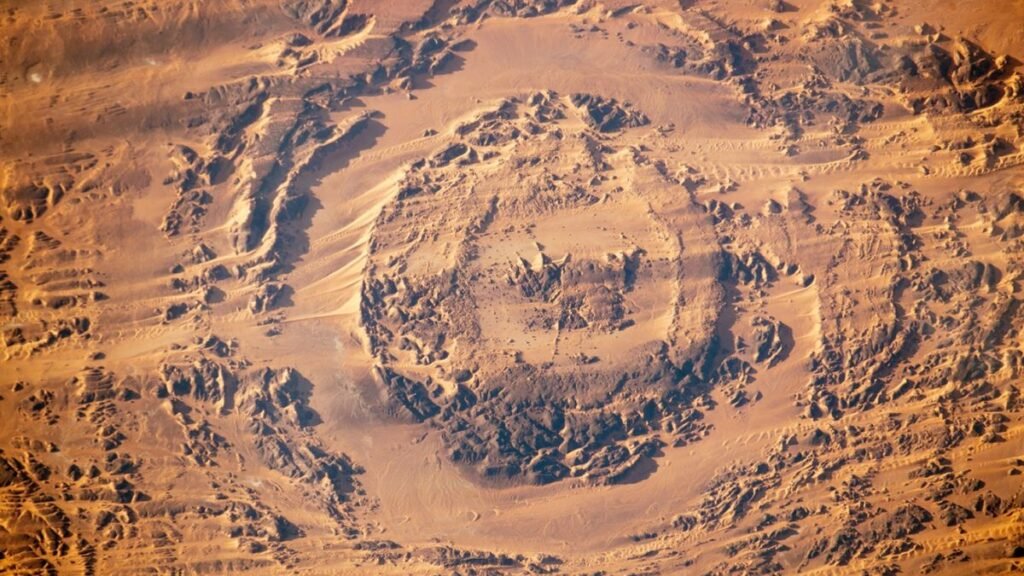
In the early 1990s, researchers applied space-borne radar imaging originally designed for geological surveys. The technology could penetrate dry sand and reveal hidden surface features.
A team including NASA scientists and explorer Nicholas Clapp analyzed radar images of the Empty Quarter desert. They saw faint linear patterns beneath the dunes.
Those lines turned out to be caravan tracks.
All of them converged at one point — a small oasis called Shisr.
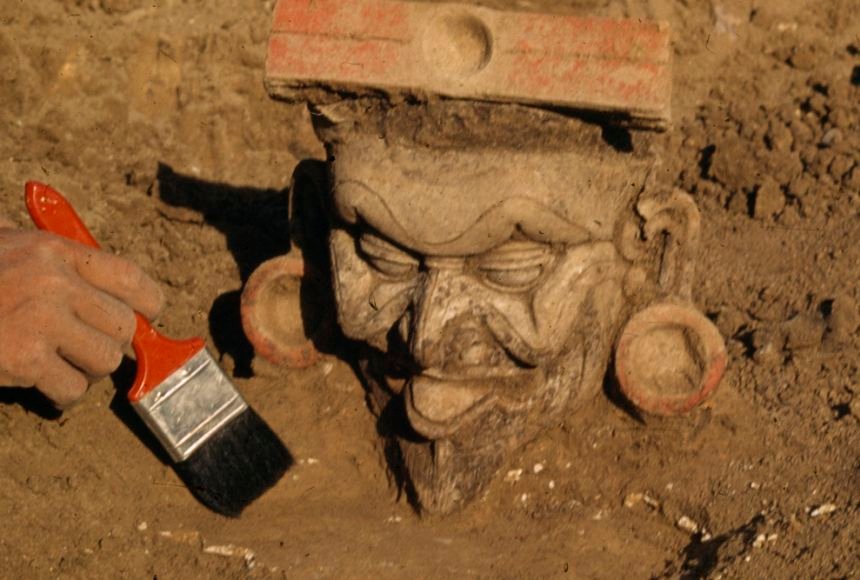
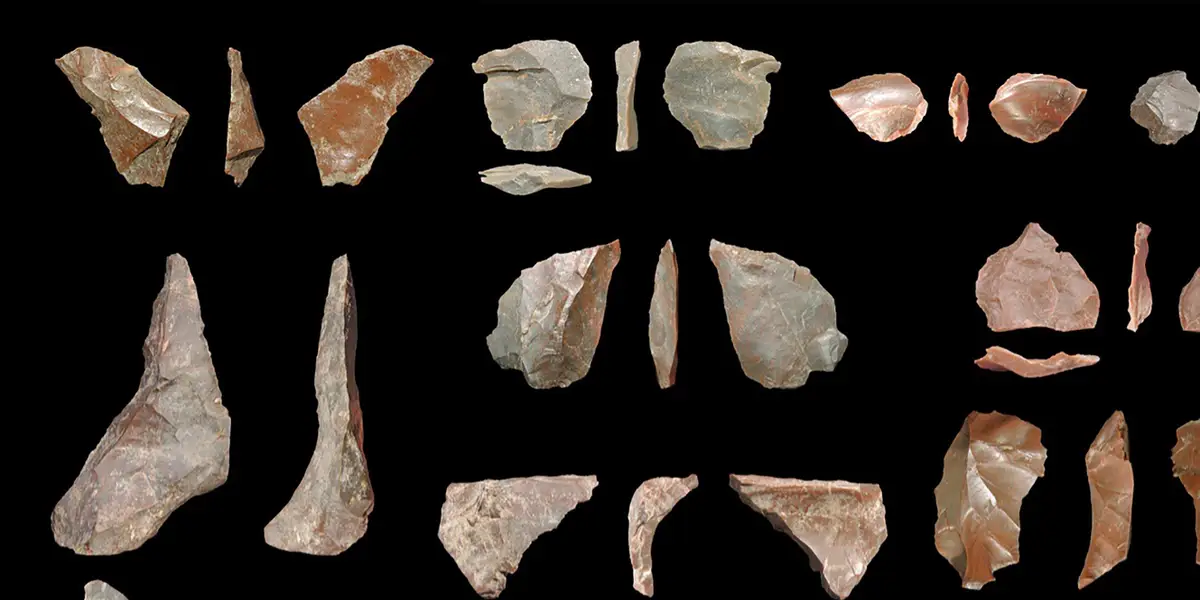
Archaeologists excavated the site and discovered:
- an octagonal fortress
- defensive towers
- pottery fragments
- imported goods
- a massive central well
The findings confirmed a major trading hub.
NASA researchers concluded the site represented “a significant caravan center that flourished during the early centuries of the Common Era.”
Why Many Experts Disagree It Was a “Lost City”
Initial media coverage announced the legendary city had been found. But as more scientists studied the evidence, doubts grew.
The settlement covered only a few acres. Population estimates suggested dozens or hundreds of inhabitants — not thousands expected for a legendary metropolis.
Archaeologists concluded it was a fortified trading post.
Geologists then discovered why it vanished. Beneath the site lay a limestone cavern system. Continuous water extraction weakened the ground.
Eventually the surface collapsed into a sinkhole.
Parts of the fortress likely fell inward, forcing abandonment. Climate change may have worsened conditions as desertification intensified around 300 CE.
Climate Change and Environmental Collapse
New research adds another layer to the Mystery of the Lost City: environmental history.
Climate scientists studying ancient Arabian sediments found evidence of decreasing rainfall around the time the settlement was abandoned. Shrinking water supplies would have devastated caravans dependent on wells.
At the same time, maritime trade expanded in the Red Sea and Indian Ocean. Ships began transporting incense more efficiently than camel caravans.
The combination proved fatal:
- less water
- fewer traders
- declining economic value
The settlement gradually lost importance before disappearing from memory.
Myth, Memory, and Historical Geography
Historians increasingly believe the Ubar story reflects collective memory rather than a literal buried metropolis.
A prosperous oasis vanished. Travelers told stories. Over generations, oral tradition expanded it into a moral narrative about wealth and downfall.
Anthropologists note similar processes worldwide. When physical ruins disappear, stories often preserve the memory in symbolic form.
The research value of the Mystery of the Lost City now lies less in locating a city and more in understanding how cultures remember geography.
Cultural and Religious Significance
The legend also holds importance beyond archaeology. References to a powerful ancient people appear in Islamic tradition describing a society destroyed after rejecting prophetic warnings.
Many scholars caution against equating scripture directly with a specific archaeological site. However, they agree the story may reflect real ancient communities in southern Arabia.
This overlap between text and archaeology is one reason the subject continues to attract attention across disciplines.
Why the Research Keeps Returning
Ubar repeatedly reappears in scientific studies because new technology keeps changing the interpretation.
Earlier explorers relied on travel accounts.
Later researchers used aerial photography.
Satellite radar revealed trade routes.
Modern climate science explains collapse patterns.
Today researchers use:
- ground-penetrating radar
- isotopic soil analysis
- digital terrain modeling
Each tool produces new evidence.
The Mystery of the Lost City has become a teaching example in archaeology courses about how interdisciplinary science reshapes historical understanding.
Current Scholarly Consensus
Most specialists agree on a cautious interpretation: the site at Shisr was real and historically significant, but likely not the grand city described in literature.
Instead, it was a vital logistics hub within a network supporting one of the ancient world’s most valuable trade systems.
Additional surveys across Oman and Saudi Arabia are ongoing. Researchers suspect other connected settlements remain buried beneath dunes.
“The lesson is not that the legend was false,” a regional historian said. “It is that stories preserve memory — but rarely geography with precision.”
FAQs About The Mystery of the Lost City of Ubar
Was Ubar ever found?
A site connected to it was excavated in Oman in the 1990s, though scholars debate whether it was a city or a trading outpost.
Why is Ubar important?
It helps historians understand ancient Arabian trade networks, economic systems, and climate effects on civilization.
Why does it keep appearing in research?
New scientific tools continually reinterpret the same archaeological evidence.