
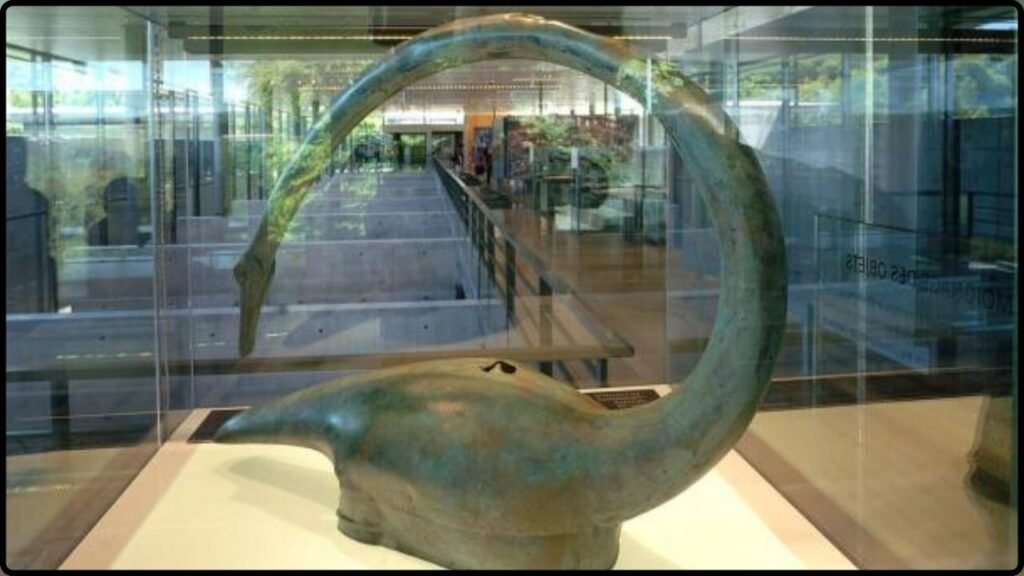
Ancient Swan Helmet Unearthed At Tintignac: that phrase isn’t just a catchy headline. It describes one of the most unusual archaeological discoveries ever made in Europe: a carefully crafted Gaulish bronze helmet shaped like a swan found buried in a sacred site in southwestern France. When archaeologists revealed it to the public in 2004, scholars around the world realized they were looking at something that changed how we understand Iron Age people. I’ve spent years reading excavation reports and museum publications, and I’ll put it plain and simple — this object proves the ancient Gauls weren’t just warriors swinging swords. They were artists, engineers, and spiritual thinkers. Imagine finding a cowboy hat from the Old West carved into the shape of a bald eagle and decorated with symbolic meaning — you’d instantly know it represented identity, pride, and belief. That’s exactly what the swan helmet did over 2,000 years ago.
Table of Contents
Ancient Swan Helmet Unearthed
The Ancient Swan Helmet Unearthed At Tintignac Shows Remarkable Gaulish Design Mastery because it reveals a sophisticated society blending art, religion, and identity. Instead of confirming old stereotypes about primitive warriors, it shows a culture capable of advanced engineering and symbolic thinking. The Gauls weren’t just fighters — they were storytellers using metal as their language. The helmet stands today as proof that creativity and belief shaped human history long before modern nations existed.
| Category | Information |
|---|---|
| Artifact | Gaulish ceremonial swan-shaped helmet |
| Discovery Year | 2004 |
| Location | Tintignac-Naves, Corrèze, France |
| Cultural Period | Late Iron Age (approx. 4th–1st century BCE) |
| Materials | Bronze alloy metalwork |
| Archaeological Context | Ritual sanctuary hoard with weapons and war trumpets |
| Cultural Significance | Religious and warrior symbolism |
| Research Field | Archaeology, Anthropology, Ancient History, Museum Studies |
| Official Reference | https://tintignac.wixsite.com/tintignac-naves/english |
The Ancient Swan Helmet Unearthed Discovery That Stopped Archaeologists in Their Tracks
Tintignac isn’t a random patch of land. It is an ancient sanctuary complex — basically a religious center — used by the Gauls centuries before the Roman Empire conquered the region. Archaeologists uncovered a deep ritual pit containing hundreds of objects, including swords, shields, spearheads, and the famous carnyx war trumpets.
The swan helmet was found among them. That context matters a lot.
When artifacts appear on a battlefield, they tell a war story. When they appear in a sacred pit, they tell a belief story.
Researchers concluded these objects were intentionally buried as offerings. The Gauls likely believed they were giving prized possessions to their gods. If you think about it in modern American terms, it would be like placing military medals inside a church altar as a sacred tribute — not because they’re useless, but because they’re meaningful.
The site itself dates from roughly the 3rd century BCE through the Roman occupation period.
Ancient Swan Helmet Unearthed: Understanding the Gauls (They Were Not “Barbarians”)
Let’s clear something up. For centuries, Roman writers described the Gauls as wild fighters. That stereotype stuck around in textbooks, movies, and pop culture. But archaeology keeps proving something different.
The Gauls were part of the La Tène culture, an Iron Age civilization spread across much of Europe. Their art style featured flowing curves, nature motifs, and symbolic animals. They were skilled metalworkers who could:
- Forge complex swords
- Cast decorated shields
- Produce musical instruments
- Create wearable sculptures
The swan helmet fits perfectly into that tradition. It required advanced knowledge of casting molten bronze, shaping thin sheets of metal, and balancing weight so it could actually be worn.
For comparison, medieval European armor often weighed 45–60 pounds. The Gauls needed their ceremonial gear to be wearable while still impressive. That means the helmet was engineered carefully, not just artistically.
What the Ancient Swan Helmet Unearthed Looks Like and How It Was Built?
The helmet features a bird — a swan — rising from the top of the headpiece. The long neck curves forward and then arches backward above the wearer’s head. The metal isn’t crude. It’s smooth and shaped deliberately.
This matters because bronze casting is tricky. To make something like this, ancient metalworkers had to:
- Heat copper and tin to over 1,700°F
- Pour molten metal into molds
- Hammer and finish the surface
- Balance the weight distribution
That’s real engineering. Even today, blacksmiths and reenactors who attempt similar reconstructions report that making balanced ceremonial headgear without modern tools takes serious skill.
So when we say remarkable Gaulish design mastery, we’re not exaggerating. The helmet proves the presence of specialized craftsmen — probably professional artisans working for elite warriors or priests.
Why a Swan?
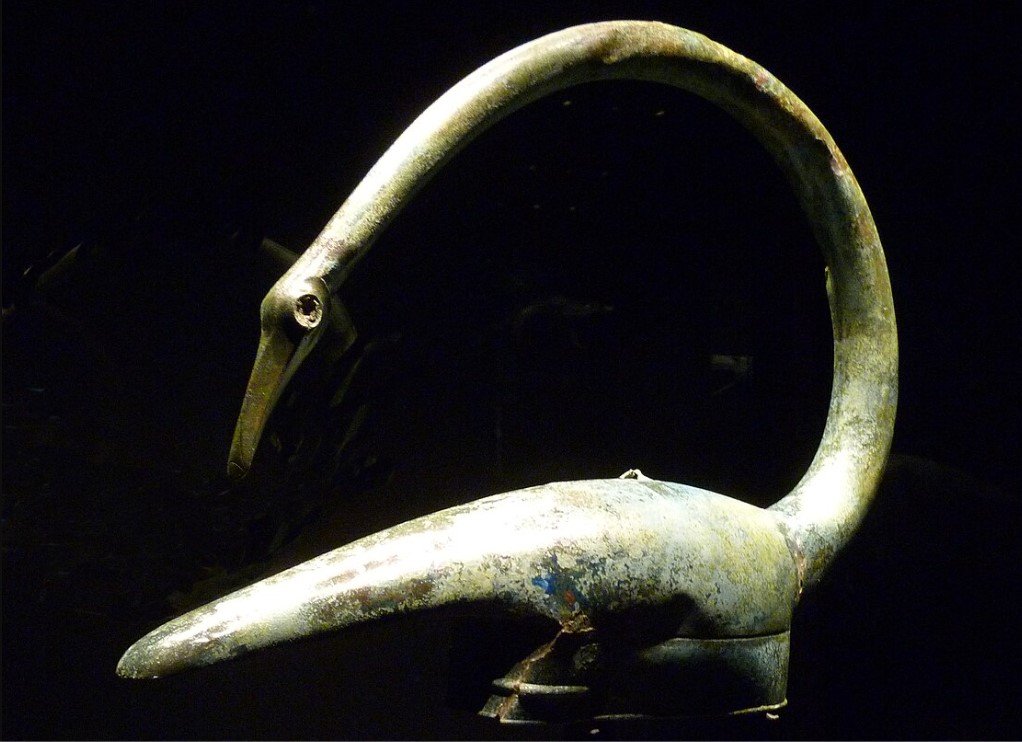
Here’s where culture comes in.
Across ancient Europe, swans symbolized transition — the connection between the human world and the spirit world. Celtic myths frequently described magical beings transforming into birds. In later Irish and Welsh folklore, swans appear as messengers, guides, or enchanted humans.
The helmet wasn’t random decoration. It likely represented:
- spiritual transformation
- protection from supernatural forces
- elite social status
- religious authority
Think of it like a Native American ceremonial headdress or a military dress uniform — it shows identity, not just protection.
The Carnyx Connection
One of the most fascinating finds at Tintignac was the carnyx, a long vertical war trumpet with an animal-shaped head.
Roman historians wrote that these instruments made terrifying sounds during battle. The trumpets amplified noise across the battlefield and were meant to intimidate enemies psychologically. The swan helmet being buried alongside these instruments suggests ceremonies involved sound, movement, and visual symbolism — basically a ritual performance.
In modern American culture, think halftime marching bands at football games combined with military honors ceremonies. The Gauls used spectacle to inspire their people and intimidate opponents.
Was It Ever Used in Combat?
Most archaeologists believe the helmet was ceremonial rather than practical. Here’s why:
- The extended bird neck would obstruct combat
- The metal thickness is decorative, not defensive
- It was found in a ritual deposit, not a fort or battlefield
However, ceremonial does not mean unimportant. In ancient societies, ceremonies were serious business. Ritual displays reinforced social hierarchy and warrior prestige. Wearing the helmet may have signaled a high-ranking individual — possibly a chieftain, war leader, or religious specialist.
How Archaeologists Study Objects Like This?
People often imagine archaeology as treasure hunting. In reality, it’s careful science. Researchers used several methods to understand the helmet.
Contextual Analysis
They studied the surrounding objects and soil layers to determine the time period.
Metallurgical Study
Scientists examined the bronze composition to learn about metal sources and production methods.
Comparative Study
They compared the design to other Celtic art styles found across Europe.
Conservation Work
The helmet had to be stabilized in a lab so it wouldn’t corrode when exposed to air after centuries underground.
Why Ancient Swan Helmet Unearthed Matters Today?
This discovery changes how history is taught. For a long time, ancient Europe was described as a place where civilization started with Rome and Greece. But the Tintignac helmet proves advanced artistry existed outside classical civilizations.
It also helps professionals in multiple fields:
Archaeologists
They gain insight into Iron Age religion and ritual practice.
Historians
They better understand social hierarchy among Celtic peoples.
Museum curators
They learn how ceremonial artifacts communicate identity.
Educators
They get concrete examples to teach kids about ancient cultures.
Even designers study artifacts like this. Believe it or not, modern fashion, gaming, and film costume departments regularly consult archaeological references.
Practical Lessons We Can Learn
The swan helmet teaches something surprisingly modern.
Culture matters as much as technology.
The Gauls had iron weapons and farming tools, but they also invested time into symbolic art. Human beings everywhere — ancient Europe, Native America, or modern USA — express identity through symbols.
Professional takeaway:
Organizations today still use symbolism — uniforms, logos, mascots, badges — to create belonging. The Gauls did the same thing 2,000 years ago.
This Mysterious Human Skull Could Rewrite the Out of Africa Theory
Mysterious Underground Tunnel In A German Tomb Sparks Fresh Debate On Medieval Rituals