
History rarely keeps secrets for long, yet one ancient ceremony managed to guard its mystery for almost two thousand years. The Eleusinian Mysteries were not just another Greek religious festival. They were considered the most profound spiritual experience in the ancient world.
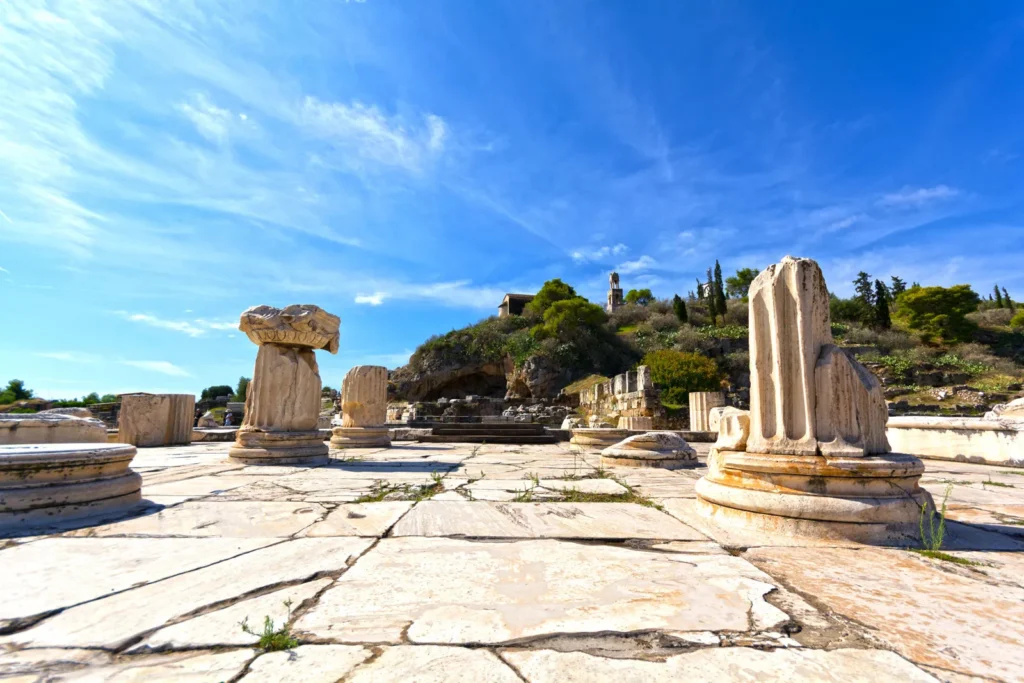
Philosophers, generals, poets, and even Roman emperors walked the dusty road to Eleusis hoping to witness it. Today, scholars studying the Eleusinian Mysteries believe the ritual’s power came from something tangible, not just symbolic storytelling. The Eleusinian Mysteries may have offered participants a real, deeply personal encounter that permanently changed how they viewed death and existence. What makes this even more fascinating is how inclusive the ceremony was. The Eleusinian Mysteries were open to men and women, citizens and non-citizens, and even enslaved people. In ancient Greece, that level of access was extremely unusual. Yet despite thousands of initiates over many centuries, almost no one revealed what happened inside the sanctuary. Ancient writers spoke about transformation, peace, and loss of fear toward death, but they avoided describing the actual moment.
That silence is one of the strongest clues historians have. Whatever the initiates experienced was powerful enough that words felt inadequate. When historians discuss the Kykeon hypothesis, they are trying to understand why the reports from initiates sound less like watching a play and more like living through a revelation. Ancient texts repeatedly mention a ritual drink consumed before the ceremony’s climax. Researchers now suspect this drink was carefully prepared and may have contained naturally occurring psychoactive compounds derived from barley fungus. The priests were not experimenting blindly. Evidence suggests they understood preparation methods and timing. Combined with fasting, chanting, darkness, and emotional anticipation, the beverage could guide participants into a controlled visionary state. Rather than chaos, the experience was structured, meaningful, and carefully managed.
Table of Contents
Substance in the Eleusinian Mysteries
| Key Element | Details |
|---|---|
| Location | Eleusis, Greece |
| Active Period | Approx. 1500 BCE – 392 CE |
| Central Myth | Demeter and Persephone |
| Ritual Drink | Kykeon made from barley and mint |
| Suspected Compound | Ergot-derived alkaloids |
| Purpose | Remove fear of death and promise renewal |
| Notable Participants | Plato, Cicero, Roman emperors |
| End of Rituals | Outlawed during the late Roman Empire |
What Were The Eleusinian Mysteries
- The rituals centered on the myth of Demeter and her daughter Persephone. According to Greek belief, Persephone was taken into the underworld by Hades. Demeter’s grief caused famine across the earth until a compromise allowed Persephone to return for part of the year. The myth explained the cycle of seasons. Crops died in winter and returned in spring. For initiates, this story also carried a personal meaning. Human life followed a similar cycle.
- The ceremony unfolded over several days. Participants purified themselves in the sea near Athens and then joined a long procession to Eleusis. They carried torches, sang hymns, and followed sacred objects transported by priests. After reaching the sanctuary, they fasted and prepared mentally. The final initiation occurred inside a massive hall called the Telesterion. Ancient writers hinted that initiates did not merely observe something. They experienced it. Many returned convinced death was not the end but a transition.
The Sacred Drink
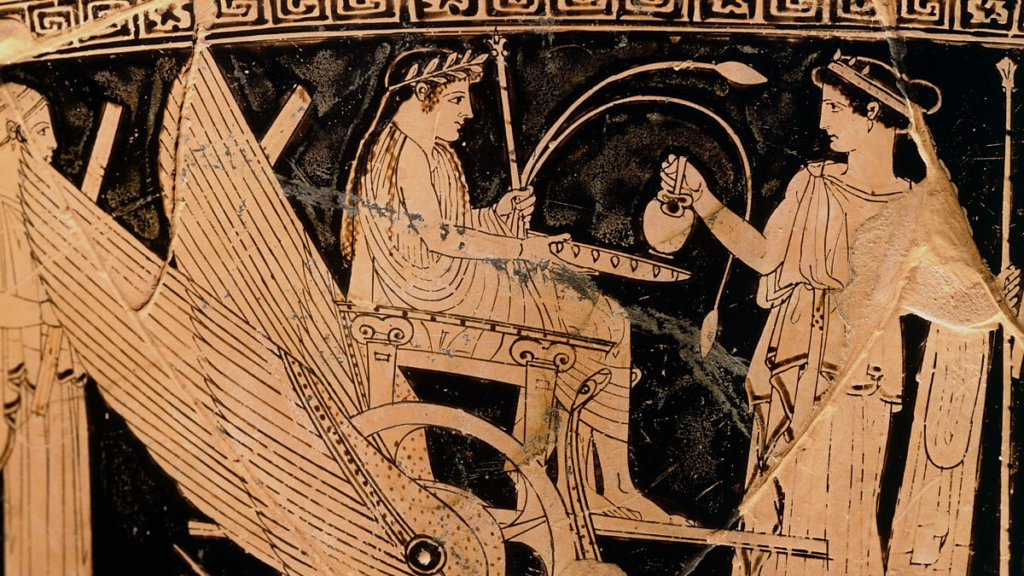
- At the center of modern investigation is a simple beverage called kykeon. Ancient descriptions say it contained barley meal, water, and pennyroyal mint. On its surface, it sounds ordinary. But barley can naturally host a fungus known as ergot. This fungus produces alkaloids capable of altering human perception.
- Researchers believe priests may have used a careful preparation method. Raw ergot can be toxic, yet filtering or processing can remove harmful effects while leaving milder psychoactive compounds. That possibility explains why initiates reported clarity, awe, and emotional insight rather than illness.
- Fasting played an important role. After days without food, the body becomes more sensitive. Combined with darkness and chanting, even a mild psychoactive effect would feel intense. The drink alone did not create the experience. The ritual environment shaped how participants understood what they felt.
The Ergot Hypothesis
- The ergot hypothesis gained attention when chemists examined ancient reports alongside modern neuroscience. Initiates described light, encounters with divine presence, and a sense of unity. Modern studies of certain psychoactive compounds show very similar reactions.
- Scientists now understand that some compounds reduce activity in the brain’s fear centers while increasing emotional processing. People often report acceptance of mortality and a sense of meaning. Ancient authors such as Cicero specifically wrote that initiates lost their fear of death after the ceremony.
- The important point is context. This was not casual intoxication. The environment guided interpretation. The initiate believed they were witnessing a sacred truth, not hallucinating. The psychological result was lasting because it was tied to belief, story, and shared community.
The Ritual Experience
Inside the Telesterion, initiates stood in darkness illuminated only by torchlight. Silence built anticipation. Sacred objects were revealed at specific moments. Priests recited words passed down through generations. Music and chanting surrounded the participants. Then came the revelation. Ancient writers never explained exactly what occurred, but they consistently described certainty. Initiates did not claim they saw impressive illusions. Instead, they said they understood life differently. Some scholars believe participants symbolically followed Persephone’s journey into darkness and return to light. The experience was participatory. The initiate became part of the myth rather than an observer. Emotional immersion combined with sensory effects created a moment that felt personal and real. This explains why the ceremony remained respected for nearly two thousand years.
Criticisms And Alternative Theories
- Not every scholar agrees with the psychoactive explanation. Some argue the experience could have come from dramatic staging. Hidden lights, reflective surfaces, or mechanical devices might have produced awe.
- Others suggest fasting and emotional expectation alone could create altered perception. Intense rituals in many cultures produce powerful experiences without substances.
- There are also proposals involving different plants or mushrooms. However, the barley-ergot theory fits agricultural evidence and the timing of harvest festivals. It also explains why a specific drink was required before initiation.
Why Secrecy Was Essential
The vow of silence surrounding the ceremony was absolute. Breaking it could lead to exile or severe punishment. This was not merely religious tradition. It protected both safety and meaning. If preparation methods became public, people might attempt to recreate the drink incorrectly. Without guidance, the experience could become frightening rather than enlightening. The ritual worked because priests controlled every step. Secrecy also preserved emotional impact. Anticipation increased the psychological effect. Each initiate approached the ceremony with reverence and expectation, strengthening the final moment.
Why It Matters Today
- Modern research into mental health has unexpectedly brought attention back to ancient practices. Studies involving guided therapeutic experiences now show reduced anxiety in patients facing terminal illness. Participants often report peace and acceptance of death. Ancient writers described almost the same outcome after initiation at Eleusis. This parallel suggests the Greeks understood human psychology deeply. They created a structured ritual combining story, environment, and possibly chemistry to help people cope with mortality. Rather than superstition, the ceremony may represent an early form of emotional healing. The priests did not use scientific language, but they recognized that experience changes belief more than instruction.
- The Eleusinian sanctuary eventually closed in the fourth century when the Roman Empire adopted Christianity and banned pagan rites. The buildings fell silent, and the knowledge faded. Yet the memory survived in literature and philosophy. Today, archaeologists, historians, and scientists continue trying to understand what happened there. The mystery may never be completely solved. Still, the evidence points toward a remarkable conclusion. The ceremony was not simply storytelling. It was an immersive experience designed to confront the deepest human fear. The initiates did not just hear that death was part of life. They felt it. And once they returned to ordinary life, they carried a sense of reassurance that stayed with them forever.
FAQs About Substance in the Eleusinian Mysteries
What were the Eleusinian Mysteries
They were secret religious initiation ceremonies in ancient Greece honoring Demeter and Persephone and offering hope about life after death.
What was kykeon
Kykeon was a ritual drink made from barley and mint consumed before the initiation.
Did the ritual include a psychoactive substance
Researchers believe it may have contained ergot-derived compounds that created a guided visionary experience, although absolute proof remains debated.
Why did participants keep it secret
Secrecy protected the sacred meaning and prevented misuse outside trained supervision.