
Human evolution has never been a finished story. Every decade, new discoveries reshape what scientists thought they already understood about where we came from and how we spread across the planet. Recently, researchers re-examined several ancient skull fossils discovered in central China and arrived at a startling conclusion: these remains are significantly older than previously believed.

The new dating places them far earlier in human history, suggesting that early human relatives reached East Asia much sooner than traditional models proposed. Instead of a slow expansion from Africa into Eurasia, the evidence now points to a rapid and complex movement of early humans across continents.
The implications are profound because these fossils do not neatly match known human groups. Anthropologists have long categorized early human species based on physical features and timelines, but the revised age and anatomy of the remains challenge these classifications. Rather than confirming existing theories, the new research opens questions about how many human lineages existed and how they interacted. What was once seen as a simple migration pattern is becoming a complicated narrative involving multiple populations and overlapping evolutionary paths.
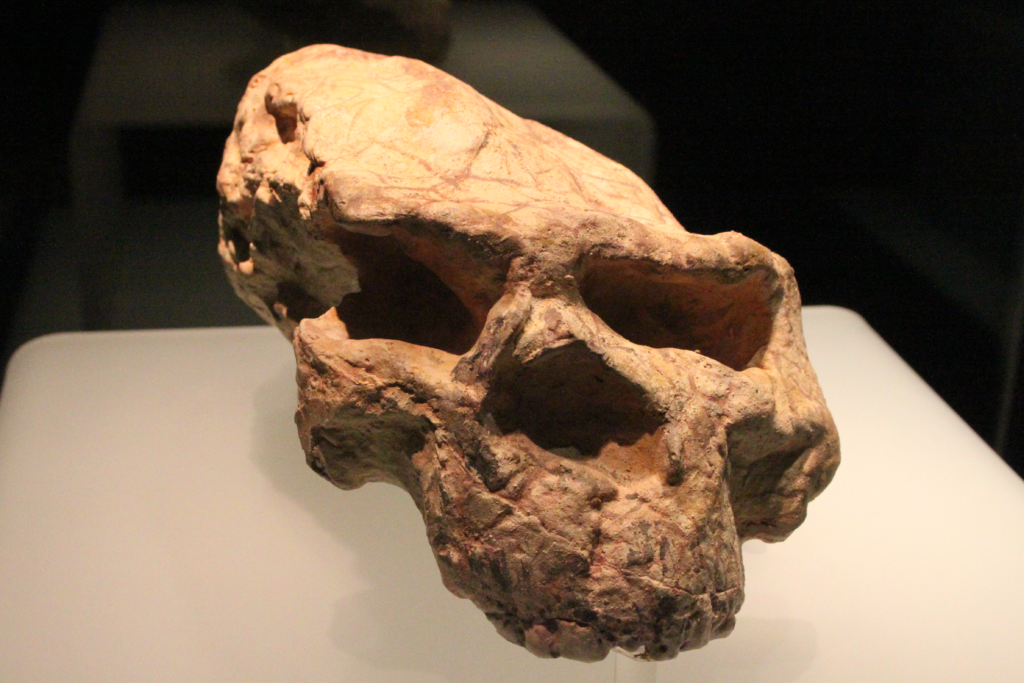
The Yunxian fossil skulls from Hubei Province represent one of the most important paleoanthropological finds in recent years. Scientists applied modern geological dating techniques to the surrounding sediment and determined that the skulls are about 1.77 million years old. Earlier estimates had placed them around one million years old, meaning the new findings push human presence in East Asia back by roughly 600,000 years. This discovery suggests that early humans moved out of Africa much earlier than researchers had assumed and reached Asia surprisingly quickly.
Table of Contents
Reanalysis of Chinese Fossil Skulls
| Key Detail | Information |
|---|---|
| Location | Yunxian, Hubei Province, China |
| Fossils Found | Three hominin skulls |
| Previous Age Estimate | About 1 million years |
| Revised Age | Approximately 1.77 million years |
| Dating Method | Cosmogenic nuclide burial dating of sediments |
| Possible Species | Early Homo erectus or related lineage |
| Scientific Impact | Oldest known hominin fossils in East Asia |
| Main Implication | Earlier human migration from Africa |
| Controversy | May represent an unknown human branch |
The Discovery: Skulls are Much Older than Scientists Thought
For decades, the Yunxian fossils were important but not revolutionary. They were considered evidence that early humans eventually reached China, fitting comfortably within accepted timelines. The new dating changed everything. Using advanced geological techniques that analyze isotopes trapped in buried sediments, researchers concluded the fossils are nearly 1.8 million years old.
This shift dramatically alters the timeline of human migration. If early humans were already living in East Asia at that time, they must have left Africa soon after emerging there. Previously, scientists believed it took hundreds of thousands of years for humans to expand so far east. Now it appears the movement happened relatively quickly in evolutionary terms.
The fossils now represent the earliest confirmed human presence in East Asia, predating many other sites once considered the first evidence of human settlement in the region.
Why this Shocked Anthropologists
The traditional model of human migration followed a simple path: early humans evolved in Africa, gradually moved into the Middle East, spread into Europe, and only later reached Asia. The Yunxian findings challenge this order.
Instead, the new timeline suggests that Asia may have been one of the earliest destinations outside Africa rather than a late one. Early humans might have dispersed across Eurasia rapidly, possibly following animal herds or favorable climates. This means human adaptability developed earlier than previously believed.
It also raises another important question: if humans arrived in Asia this early, did they evolve differently in separate regions? Some researchers now think multiple populations developed simultaneously across different parts of the world.
The Second Surprise — they may not be Ordinary Homo Erectus
The age was not the only shock. The skulls themselves display a mix of features. Some characteristics resemble Homo erectus, the well-known early human species that lived across Africa and Asia. However, other features appear more advanced or unusual.
This combination has led scientists to suspect the fossils may belong to a previously unidentified human population or a close relative. Some researchers link them to a mysterious group connected to Denisovans, an extinct human lineage known mostly from DNA rather than complete fossils.
If correct, this would mean several human groups were already distinct more than a million years ago. Instead of a single evolving species, the early human family tree may have contained multiple branches existing at the same time.
Why the Headline Says “Predate Known Human Groups”
The phrase “predate known human groups” reflects a classification problem. Scientists typically place fossils into categories such as Neanderthals, Denisovans, or modern humans. The Yunxian fossils do not fit comfortably into any of these.
They are older than Neanderthals and far older than modern humans. Even their relationship to Homo erectus remains uncertain. Essentially, they represent a population that existed before the groups most people learn about in school.
This means the origins of later human species may stretch back much further than current genetic models suggest.
Does this overturn the Out of Africa theory?
The discovery does not reject the idea that humans originated in Africa. Evidence still strongly supports African origins for the human lineage. However, it changes how scientists understand what happened after that origin.
Rather than a single migration wave, there may have been several migrations over hundreds of thousands of years. Different populations could have left Africa at different times and followed separate paths across Eurasia. Some groups may have disappeared, while others contributed to later human species.
In this revised view, human evolution becomes a network of populations interacting and occasionally interbreeding rather than a straight line of descent.
Why the Study is Controversial
Not all scientists agree on the interpretation. Genetic studies suggest later divergence between human species than the fossils imply. If the Yunxian fossils truly belong to a separate lineage, genetic timelines may need revision. Alternatively, the fossils could represent an unusual variation of Homo erectus.
Another challenge is the limited number of specimens. With only a few skulls, researchers must be cautious before redefining the human evolutionary tree. More discoveries and DNA evidence will be needed to confirm the conclusions.
Conclusion
The reanalysis of the Chinese fossil skulls marks a turning point in the study of human origins. By pushing the human presence in East Asia back nearly 600,000 years, the discovery forces scientists to rethink migration patterns, timelines, and even species classifications. What once seemed like a simple journey out of Africa now appears to be a complex series of movements involving multiple populations.
Rather than presenting a clear answer, the Yunxian fossils introduce new questions: how many human species existed, how they interacted, and which eventually led to modern humans. The human story is no longer a neat progression from primitive to modern. Instead, it resembles overlapping chapters written across continents, with many characters still unknown.