
Archaeologists and historians say a naturally occurring petroleum substance served as a Durable Building Material that allowed ancient Mesopotamian cities to survive floods, erosion, and centuries of environmental stress. Beginning around 3500 BCE in what is now Iraq, builders used bitumen to strengthen mud bricks, waterproof temples, and seal trade vessels, laying the foundation for the world’s earliest urban civilization.
Table of Contents
Bitumen in Ancient Mesopotamia
| Key Fact | Detail |
|---|---|
| Construction use | Bitumen functioned as mortar and waterproof sealant |
| Major deposits | Significant natural seeps near Hit along the Euphrates River |
| Urban impact | Enabled permanent architecture and monumental temples |
| Trade evidence | Chemical analysis links bitumen to long-distance trade networks |
What Was Bitumen and Why It Mattered
In the fertile plains between the Tigris and Euphrates rivers, early settlers faced a structural challenge. Stone was scarce. Timber was limited. Clay was abundant but structurally weak.
Mud bricks alone could not withstand heavy rains or seasonal flooding. Without reinforcement, walls collapsed quickly.
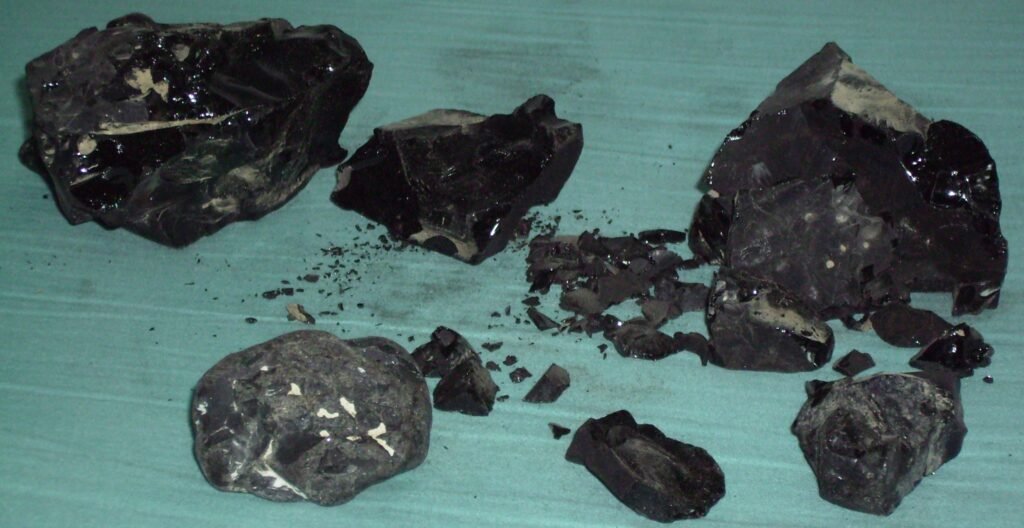
Bitumen — a thick, sticky form of natural asphalt — changed that equation. The material seeps naturally from underground petroleum deposits and becomes pliable when heated.
“Bitumen was the technological bridge between temporary settlement and permanent city,” said Dr. Augusta McMahon, an archaeologist at the University of Cambridge who specializes in Mesopotamian urban development.
Once heated and applied between bricks, bitumen hardened into a water-resistant adhesive. This made it a highly effective Durable Building Material, particularly in flood-prone regions.
Geologists describe Mesopotamian bitumen as unrefined petroleum residue. Unlike modern asphalt, it required no industrial processing beyond heating and application.
Durable Building Material in Ancient Urban Construction
Mortar for Monumental Buildings
Cities such as Uruk, Ur, and Babylon built massive temples, palace complexes, and defensive walls from sun-dried bricks. Bitumen acted as mortar, binding these bricks together and protecting them from moisture damage.
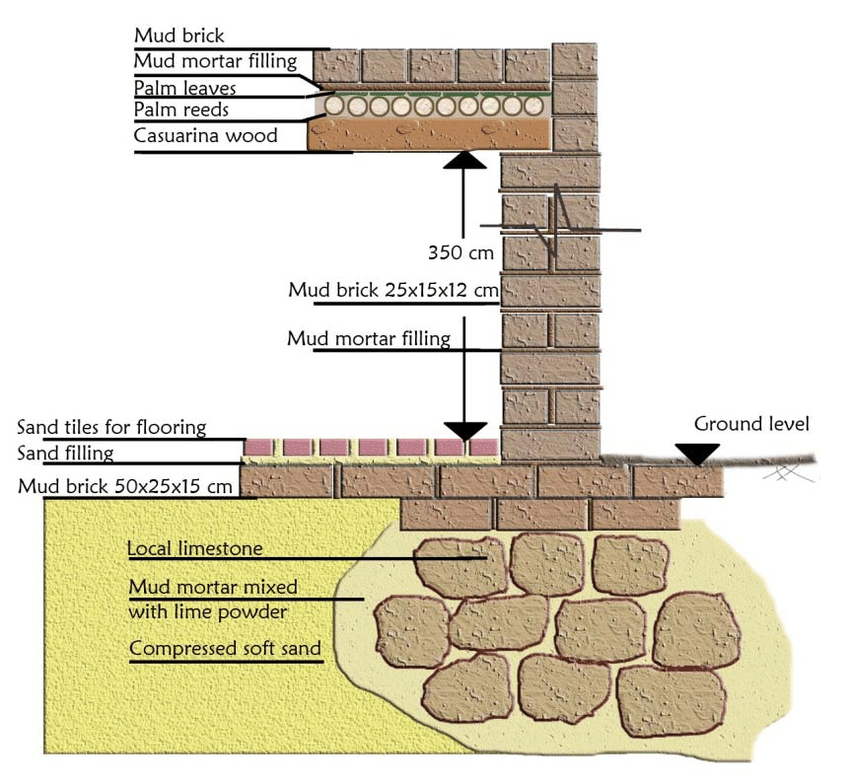
Excavations at Babylon reveal black bituminous mortar still visible between bricks more than 2,500 years after construction, according to research from the British Museum.
Greek historian Herodotus, writing in the fifth century BCE, described Babylon’s walls as constructed using “hot asphalt.” Most historians interpret this as a direct reference to bitumen.
Dr. Mark Altaweel of University College London said the adhesive qualities of bitumen were critical. “Without a binding agent, large-scale brick construction would have been structurally unstable,” he explained.
Waterproofing Foundations and Flood Protection
Seasonal flooding shaped life in Mesopotamia. Rivers enabled agriculture but threatened settlements.
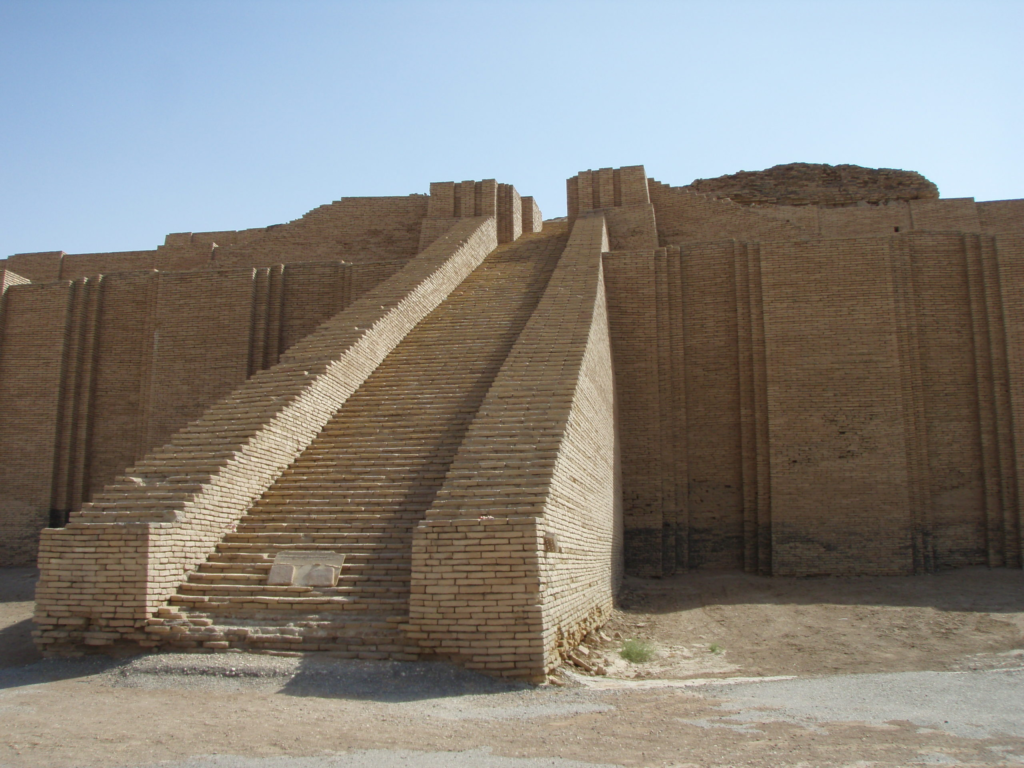
Builders applied bitumen to foundations, terraces, drainage channels, and retaining walls. Ziggurats — stepped temple towers dedicated to deities — often incorporated bitumen layers to protect lower levels from groundwater.
According to researchers at the University of Pennsylvania Museum, waterproofing allowed temples to endure repeated flood cycles.
“Flood management and architecture were deeply connected,” Altaweel said. “Bitumen was an early environmental adaptation strategy.”
Beyond Architecture: Expanding the Uses of a Durable Building Material
River Trade and Maritime Technology
Bitumen extended beyond buildings. It played a decisive role in transportation.
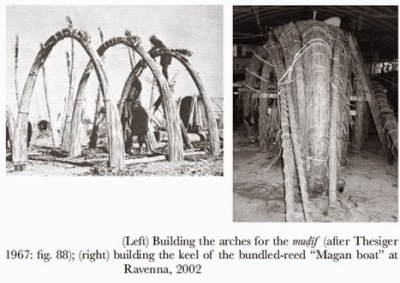
Ancient Mesopotamians built round reed boats known as quffas. These vessels were coated with bitumen to make them waterproof, enabling safe travel along rivers and canals.
Archaeological and textual evidence indicates trade networks linking Mesopotamia to the Persian Gulf and the Indus Valley. Geoarchaeological analysis has identified bitumen traces in distant settlements, confirming its role in regional commerce.
According to research published in the journal Geoarchaeology, chemical fingerprinting of bitumen samples allows scientists to trace materials back to specific natural seeps.
This suggests organized supply chains as early as the third millennium BCE.
Beyond Architecture: Expanding the Uses of a Durable Building Material
River Trade and Maritime Technology
Bitumen extended beyond buildings. It played a decisive role in transportation.
Ancient Mesopotamians built round reed boats known as quffas. These vessels were coated with bitumen to make them waterproof, enabling safe travel along rivers and canals.
Archaeological and textual evidence indicates trade networks linking Mesopotamia to the Persian Gulf and the Indus Valley. Geoarchaeological analysis has identified bitumen traces in distant settlements, confirming its role in regional commerce.
According to research published in the journal Geoarchaeology, chemical fingerprinting of bitumen samples allows scientists to trace materials back to specific natural seeps.
This suggests organized supply chains as early as the third millennium BCE.
Industrial and Domestic Applications
Bitumen was also used to seal storage jars, waterproof baskets, and line irrigation canals. These applications demonstrate how this Durable Building Material supported daily life, not just monumental architecture.
Archaeologists argue that widespread bitumen use represents one of the earliest examples of systematic engineering innovation.
Scientific Evidence and Modern Analysis
Molecular Archaeology and Trade Routes
Modern chemical testing has deepened understanding of bitumen’s role in ancient economies.
Scientists analyze biomarker compounds within bitumen samples to determine their geological origin. Studies show that bitumen found at archaeological sites across the Near East often originated from known seeps near Hit, Iraq.
Dr. Jennifer Black, a geoarchaeologist at the University of Manchester, explained that these chemical signatures reveal trade networks spanning hundreds of miles.
“This was not random resource collection,” she said. “It was organized extraction and distribution.”
Environmental Adaptation and Urban Planning
The development of bitumen-based waterproofing reflects deliberate environmental adaptation.
Urban planners in ancient Mesopotamia positioned buildings strategically and integrated drainage systems. Bitumen reinforced these systems.
Scholars at the Oriental Institute of the University of Chicago describe this as early hydraulic engineering.
By reinforcing canals and embankments, cities minimized flood damage and maintained agricultural productivity.
Comparative Context: Mesopotamia and Other Civilizations
While Egypt relied heavily on stone construction, southern Mesopotamia depended on clay. Bitumen allowed Mesopotamian cities to compete architecturally despite material limitations.
In the Indus Valley, evidence suggests some limited use of bitumen for waterproofing baths and drains. However, no region appears to have used it as extensively as Mesopotamia.
Historians say this widespread application demonstrates adaptive innovation rather than technological inferiority.
Cultural and Religious Significance
Bitumen’s importance extended into symbolic realms. Temples coated in dark sealant may have conveyed permanence and divine authority.
Cuneiform tablets reference bitumen in construction records and administrative inventories. These texts indicate it was treated as a valuable commodity.
In some cases, bitumen was used in burial practices to preserve bodies or seal tombs, highlighting its perceived protective qualities.
The Economic Dimension of a Durable Building Material
The extraction and transport of bitumen created economic activity. Workers harvested the material from natural seeps, shaped it into transportable blocks, and shipped it along waterways.
According to economic historians, this represents one of the earliest documented examples of resource-based regional trade specialization.
Standardized bitumen bricks found in archaeological contexts suggest regulated production.
“Resource control is a hallmark of state formation,” McMahon noted. “Bitumen likely played a role in centralizing economic authority.”
Technological Legacy
Modern asphalt roads and roofing materials are chemically similar to ancient bitumen applications.
Although refined petroleum products are now industrially processed, the underlying material properties remain consistent: adhesion, flexibility, and water resistance.
Engineers view Mesopotamian use of bitumen as an early example of applied materials science.
Why It Changed Civilization
Permanent architecture supports governance, taxation, religion, and record keeping. Mesopotamia is widely regarded as the birthplace of urban civilization, writing, and codified law.
Durable structures allowed institutions to develop and endure.
“Urban life depends on structural permanence,” McMahon said. “Bitumen provided that permanence.”
Without a reliable Durable Building Material, the world’s earliest cities might have remained temporary settlements.
Ongoing Research and Future Discoveries
Archaeologists continue to analyze newly excavated sites in Iraq and neighboring regions. Improved dating techniques and molecular analysis may reveal previously unknown trade connections.
Political instability has limited excavation in some areas, but international collaborations continue.
Researchers believe that further study of bitumen samples could refine timelines of urban expansion and economic integration in the ancient Near East.
Looking Ahead
As archaeological science advances, bitumen continues to provide insight into ancient urban resilience. What once served as a practical adhesive now serves as evidence of early engineering sophistication.
Researchers say this Durable Building Material not only built cities but also shaped the development of civilization itself.
FAQs About Bitumen in Ancient Mesopotamia
Why didn’t Mesopotamians rely on stone?
Southern Mesopotamia lacked significant stone quarries. Clay was abundant and easier to access.
Is bitumen identical to modern asphalt?
Modern asphalt is a refined form of natural bitumen, processed through petroleum distillation.
How did they transport bitumen?
It was shaped into blocks and moved along rivers using waterproofed boats.
Did bitumen affect trade relations?
Yes. Chemical analysis shows organized long-distance trade networks centered around bitumen extraction sites.