
Every once in a while, nature surprises us in a way that feels almost unreal. After a series of intense storms and heavy flooding swept through central Texas, park staff walking along a riverbed noticed something unusual. As the water levels dropped, the ground revealed patterns in stone that didn’t belong to cattle, hikers, or construction vehicles. They belonged to creatures that lived more than 100 million years ago.
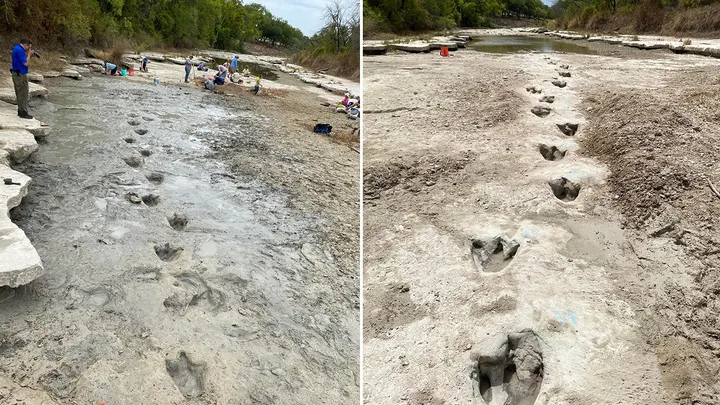
These Texas dinosaur tracks slowly appeared as layers of mud and sand were washed away, and the newly exposed Texas dinosaur tracks quickly became one of the most fascinating natural discoveries in recent years. There’s something powerful about footprints. A skeleton in a museum tells you what an animal looked like. A footprint tells you where it actually stood. People visiting the area weren’t just seeing fossils. They were standing where a massive predator once walked across soft coastal mud. Scientists, photographers, and curious families all rushed to the site, knowing discoveries like this never stay visible forever. Wind, sun, and water eventually reclaim them, which makes the moment even more special.
The recently uncovered Texas dinosaur tracks offer scientists something rare, a behavioral record rather than just bones. Found inside Dinosaur Valley State Park near Glen Rose, the trackways show how multiple species moved across a prehistoric shoreline during the Early Cretaceous period. Researchers believe at least two dinosaurs walked across the muddy flats, a giant meat-eating predator and a towering long-necked plant eater. The spacing between the prints reveals walking speed, body size, and direction of travel. Several paths even intersect, suggesting the animals used the same routes at different times. These Texas dinosaur tracks are helping scientists better understand migration patterns, habitat use, and environmental conditions in ancient North America.
Table of Contents
Texas Storms Uncovered a Large Set of Ancient Dinosaur Tracks
| Key Detail | Information |
|---|---|
| Location | Dinosaur Valley State Park, Glen Rose, Texas |
| Geological Period | Early Cretaceous around 113 million years ago |
| Exposure Cause | Floodwaters removed sediment from riverbed |
| Predator Identified | Acrocanthosaurus |
| Herbivore Identified | Sauroposeidon |
| Track Formation | Mud impressions preserved in limestone |
| Track Size | Up to 2 feet long for theropods and much larger for sauropods |
| Scientific Use | Study of movement, speed, and behavior |
| Preservation Status | Temporary exposure subject to erosion |
| Research Methods | Mapping, photography, and 3D scanning |
How The Storms Revealed The Tracks
The Paluxy River usually flows calmly across the park, slowly depositing sand and gravel along its bed. Over centuries those sediments built a natural blanket covering the limestone underneath. The storms changed everything. Fast-moving floodwater carved into the riverbed and carried away loose material downstream. Instead of burying the ground, the river excavated it. As the debris cleared, long rows of three-toed impressions appeared. Rangers initially thought they might be erosion marks, but the repeating shapes were too precise. The toes were distinct, and some even showed claw tips. The Texas dinosaur tracks stretched across the exposed rock surface in straight lines, clearly created by walking animals rather than random natural patterns. An earlier drought helped the discovery too. Low water levels allowed sediment to dry and crack. When flooding returned, the material broke apart easily and washed away. Without that combination of drought followed by storms, the prehistoric ground might have stayed hidden for many more years.
What Scientists Found
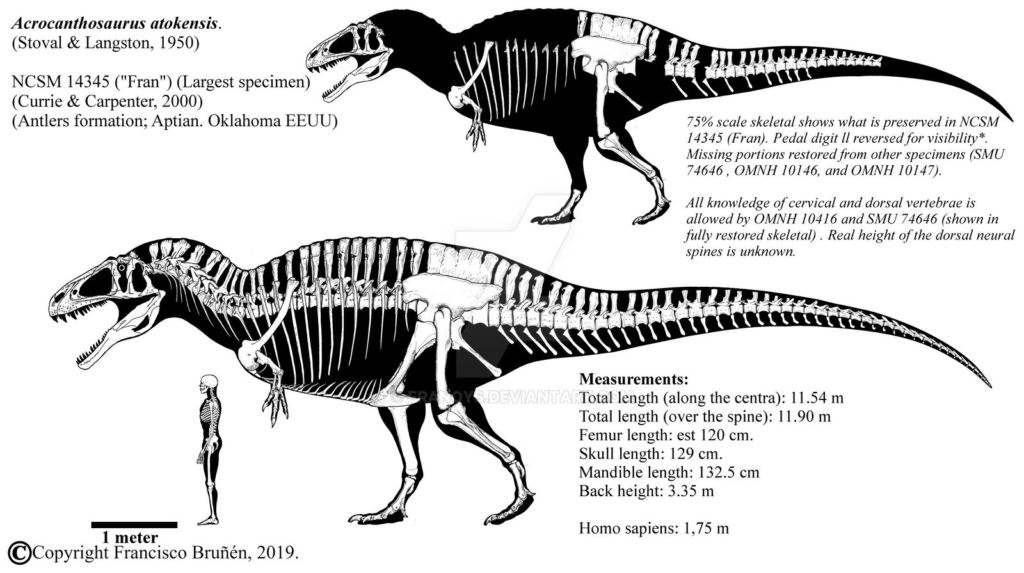
- Researchers quickly began documenting the site before natural erosion could damage it. The clearest prints came from a large predator known as Acrocanthosaurus. Its footprints show three long toes and deep impressions indicating a heavy two-legged animal. By measuring the distance between steps, scientists estimated the dinosaur was walking calmly rather than running. It likely stood about fifteen feet tall at the hip and stretched more than thirty feet in length.
- Another group of impressions belonged to a massive herbivore called Sauroposeidon. These prints were rounded and enormous, some appearing like shallow basins in the rock. The animal that made them may have weighed more than several elephants combined.
- What fascinates scientists most is the overlapping trackways. The predator and herbivore used the same area but not at the same moment. The Texas dinosaur tracks show a shared habitat, a muddy coastal shoreline where dinosaurs came to drink, feed, and travel. It paints a picture of daily life rather than a single dramatic event.
Why The Tracks Survived So Long
Footprints rarely fossilize because they disappear quickly under normal conditions. For preservation, several things must happen almost perfectly. First, the ground needs to be soft enough to record a clear impression. Then the footprint must be covered before weather erases it. In this case, dinosaurs stepped into lime-rich coastal mud along an ancient shoreline. Soon after, new sediment covered the impressions, protecting them. Over millions of years, pressure transformed the mud into limestone rock. The rock layer stayed relatively undisturbed beneath the river, allowing the Texas dinosaur tracks to remain intact. Unlike bones, footprints reveal behavior. From them scientists can estimate leg length, walking speed, and posture. The stride distance suggests the predator was patrolling territory while the herbivore moved steadily, possibly following a migration route.
Challenges Of Preservation
- The moment a fossil track is exposed, it begins to change. Sunlight dries the rock, rain fills the depressions, and temperature swings slowly weaken the stone. Limestone is not extremely hard, so repeated wet and dry cycles soften the edges.
- Park staff now monitor the Texas dinosaur tracks carefully. They photograph every footprint and use 3D scanning equipment to create digital models. Even if erosion eventually damages the original impressions, researchers will still have accurate records.
- Visitors are sometimes allowed near the site, but direct stepping inside the prints is restricted. Even a small amount of pressure can wear away edges that survived for more than 100 million years. Ironically, burial under sediment is actually protective. When the river eventually covers the tracks again, they may be preserved for future generations to rediscover.
What The Discovery Teaches About Dinosaur Life
This discovery shows dinosaurs were not randomly wandering across the landscape. They followed specific routes. Herbivores likely came to the shoreline to drink water and feed on vegetation. Predators followed similar paths because prey animals gathered there. The Texas dinosaur tracks also help scientists calculate speed. Using stride length and footprint size, researchers concluded the carnivore was walking slowly, not chasing. The herbivore prints display consistent spacing, suggesting steady travel rather than panic.Environmental clues appear in the rock as well. The firmness of the mud indicates alternating wet and dry seasons. The area probably resembled a coastal plain near a shallow inland sea. Instead of desert terrain many people imagine, dinosaurs here lived near water with vegetation and seasonal flooding.
Public Interest and Scientific Value
When news spread, visitors traveled from across the country. Seeing a real dinosaur footprint creates a connection no museum display can match. Children place their hands next to the impressions and instantly understand how massive the animals were. For scientists, the Texas dinosaur tracks provide valuable behavioral information rarely preserved in fossils. Bones reveal anatomy, but footprints reveal activity. Universities and researchers are already using digital scans to study movement patterns and build models for educational programs. The site also reminds people that important discoveries still happen today. Not all paleontology occurs in remote deserts or overseas locations. Sometimes a local state park becomes one of the most significant scientific sites of the year.
What Happens Next
- Nature never stops reshaping the landscape. Future floods may uncover additional trackways, while others disappear beneath sediment. Researchers will continue mapping and scanning whenever conditions allow.
- The Texas dinosaur tracks will not stay visible forever, but their scientific importance will last. Digital models, photographs, and measurements ensure the data remains useful even after the river hides them again.
- For a brief period, a storm did more than change the weather. It opened a window into Earth’s distant past. Standing beside those impressions, you realize the ground beneath your feet once carried giants, and for a moment, time feels far less distant than we usually imagine.
FAQs About Texas Storms Uncovered a Large Set of Ancient Dinosaur Tracks
1. Where Are the Texas Dinosaur Tracks Located
They are located inside Dinosaur Valley State Park near Glen Rose, Texas, along the Paluxy River.
2. How Old Are the Tracks
The tracks are approximately 113 million years old and date to the Early Cretaceous period.
3. What Dinosaurs Made the Footprints
Scientists believe the prints were created by the predator Acrocanthosaurus and the massive herbivore Sauroposeidon.
4. Why Were the Tracks Discovered Recently
Floodwaters removed layers of sediment covering the limestone surface, exposing the prehistoric footprints that are usually underwater.