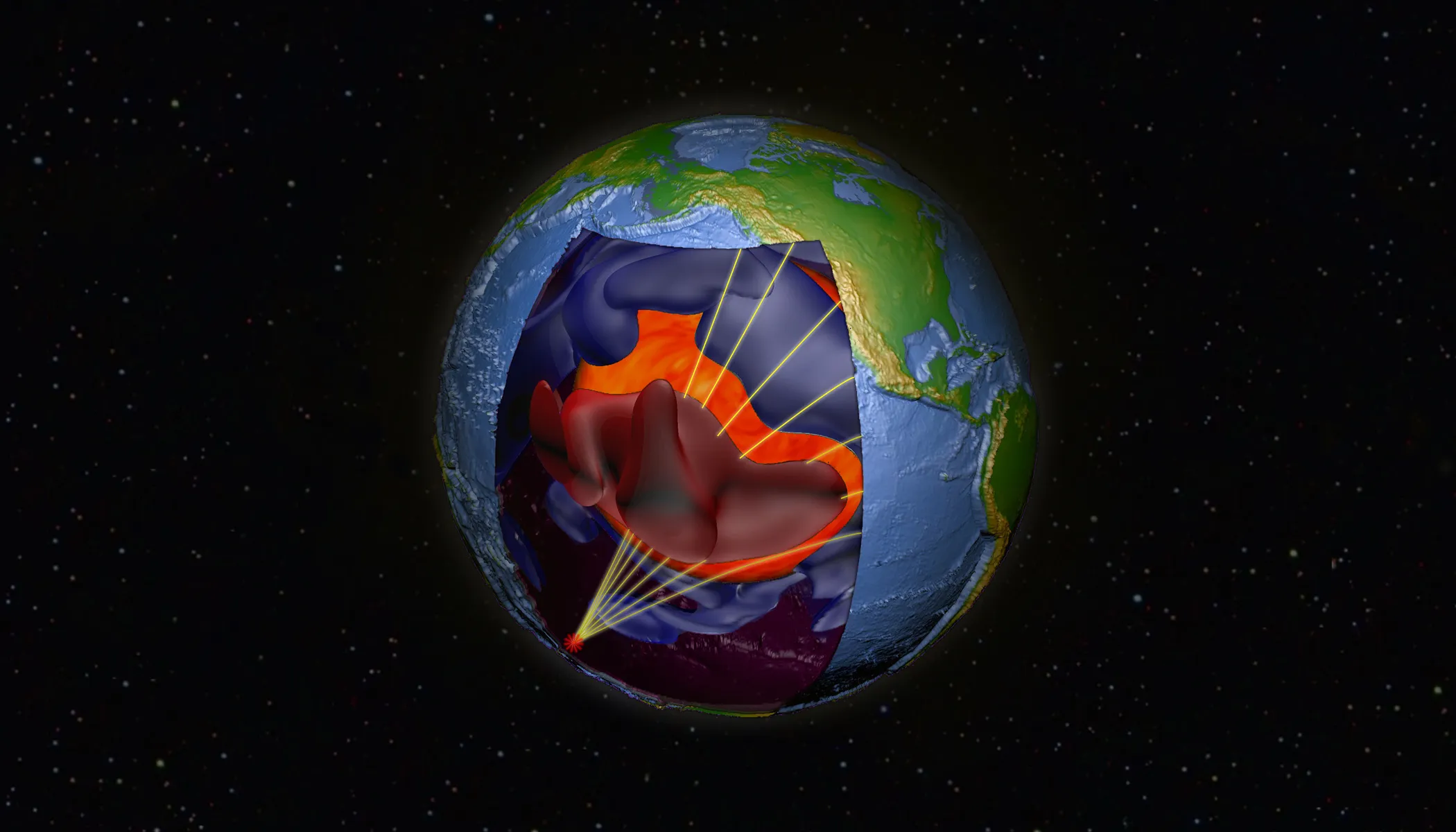

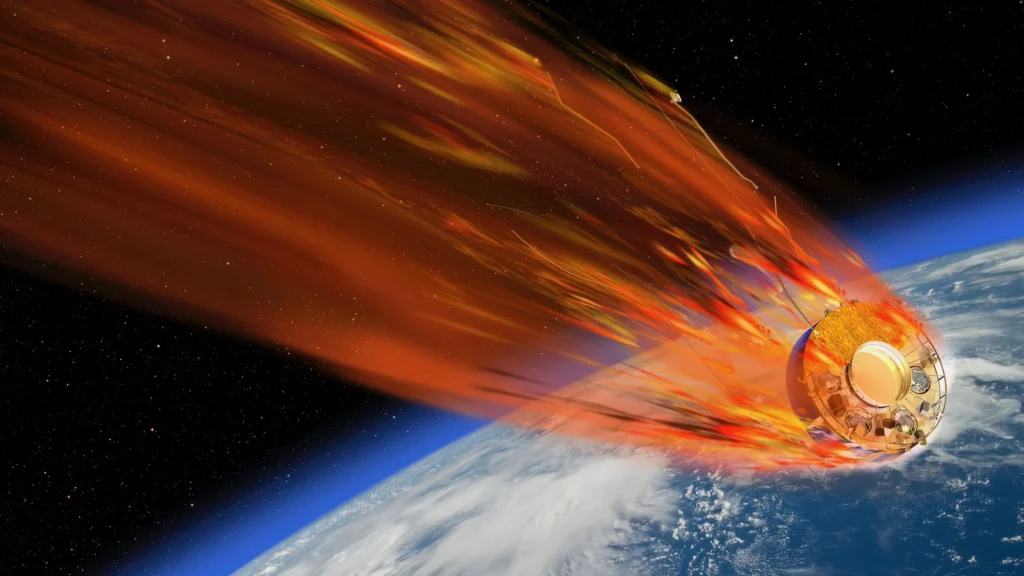
The increasing number of Starlink Reentries — satellites deliberately burned up in Earth’s atmosphere after completing service — is attracting global scientific scrutiny. Researchers say the rapid expansion of low-Earth orbit broadband networks may introduce new atmospheric pollutants and influence ozone chemistry, prompting governments and regulators to study how the growing space economy interacts with Earth’s environment.
Table of Contents
Frequent Starlink Reentries
| Key Fact | Detail |
|---|---|
| Satellite lifetime | About 5 years before controlled deorbit |
| Reentry frequency | Often one or more per day globally |
| Environmental concern | Aluminum oxide and metallic particles in upper atmosphere |
What Are Starlink Reentries?
The SpaceX Starlink constellation provides global internet service using thousands of small satellites operating in low-Earth orbit (LEO), roughly 550 kilometers above Earth. The system is designed to expand broadband access in remote and underserved regions.
After several years of operation, each spacecraft is guided back toward Earth. Atmospheric drag increases as it descends, and intense heating during entry causes the satellite to disintegrate.
To observers on the ground, Starlink Reentries appear as fast-moving artificial meteors.
Astronomers emphasize that this is not an accident.
“Controlled reentry is a responsible debris-mitigation strategy,” said Dr. Jonathan McDowell of the Harvard-Smithsonian Center for Astrophysics, who maintains a widely used satellite tracking catalog. “The alternative would be abandoned satellites remaining in orbit for decades.”
The difference today is scale.
Humanity has never operated so many satellites simultaneously.
Why Scientists Are Concerned
A New Type of Pollution
Unlike natural meteors composed mostly of rock and iron, satellites contain engineered materials — primarily aluminum alloys, lithium batteries, copper wiring, and electronic components.
When a spacecraft burns up, it vaporizes into microscopic particles rather than simply disappearing.
Scientists classify this as upper-atmospheric pollution, a category rarely studied before the modern commercial space era.
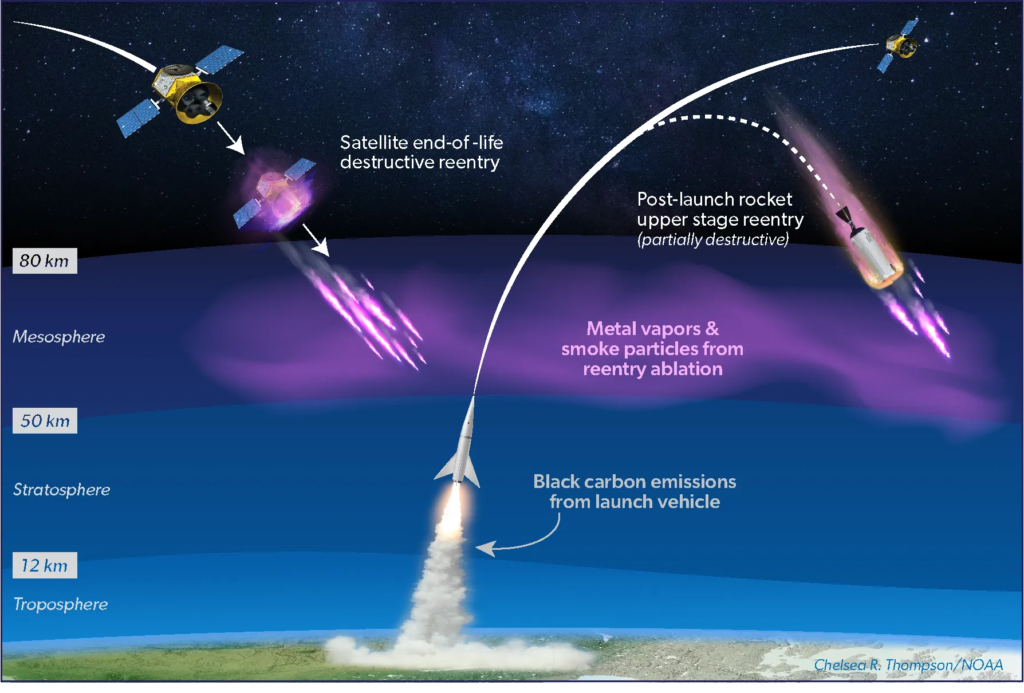
These particles form metallic aerosols in the mesosphere and stratosphere, regions critical to atmospheric chemistry and temperature balance.
Possible Effects on the Ozone Layer
Researchers are studying how these aerosols interact with ozone molecules. Laboratory and modeling studies indicate aluminum oxide surfaces can facilitate chemical reactions that break down ozone.
The ozone layer absorbs ultraviolet radiation from the Sun, reducing risks of skin cancer and protecting ecosystems.
“Small chemical changes at high altitude can have global consequences,” said Dr. Martin Ross, an atmospheric researcher specializing in rocket emissions. “The issue is not one satellite — it’s thousands every year.”
A single spacecraft may release tens of kilograms of compounds during reentry.
With mega-constellations, the yearly amount could become measurable on a planetary scale.
The Scale of Satellite Constellations
Commercial satellite networks are expanding rapidly as companies compete to provide global connectivity.
Other planned systems include:
- OneWeb (international broadband network)
- Amazon’s Project Kuiper
- National communications constellations operated by governments
This creates a continuous operational cycle:
launch → operate → deorbit → replace
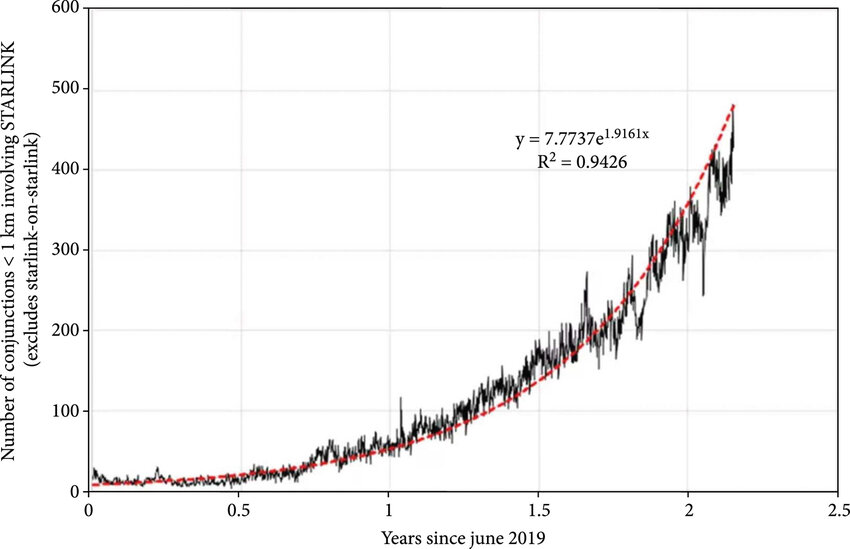
The number of operational satellites today is several times higher than in 2015, and forecasts suggest it may multiply again within a decade.
Space Industry Response
SpaceX says planned deorbiting prevents long-term orbital debris and reduces collision risk.
Regulators generally support controlled reentry. The Federal Aviation Administration (FAA) and international space agencies consider debris avoidance essential to sustainable space operations.
The company has already redesigned satellite surfaces to reduce brightness after astronomers complained about interference with telescope observations — an example of how operational practices are evolving.
The environmental debate is now extending beyond astronomy into atmospheric science.
Economic Importance of the Space Economy
The debate surrounding Starlink Reentries also reflects the rapid growth of the commercial space sector.
According to space industry economic assessments, satellite internet networks are expected to support:
- remote education
- disaster communications
- aviation connectivity
- maritime navigation
- military communications
- rural healthcare telemedicine
For many isolated regions, satellite broadband is the only practical option for internet access.
“Connectivity from orbit is becoming part of critical infrastructure,” telecommunications analysts note in industry policy discussions.
This creates a policy dilemma: balancing environmental caution with technological and economic benefits.
Effects on Astronomy
Astronomers were among the first to raise concerns about satellite constellations.
Optical telescopes detect streaks across long-exposure images when satellites pass overhead. Radio telescopes can also receive interference from transmissions.
While mitigation measures have reduced brightness, the sheer number of spacecraft still complicates deep-space observations.
Some observatories have adjusted observation schedules or developed software filters to remove satellite trails from data.
This issue, often called satellite interference, remains separate from atmospheric concerns but highlights how a single technology can affect multiple scientific fields.
Broader Context: Space and Earth’s Environment
Environmental regulation historically focused on ground-level pollution and aviation emissions. Space operations introduce activity in atmospheric layers between 50 and 100 kilometers altitude — regions previously influenced mostly by natural meteors.
Rockets already deposit exhaust gases such as water vapor and nitrogen oxides into high altitudes. Now satellite reentries add metallic particles.
Scientists say this represents the emergence of space environmental science, a field that did not exist a generation ago.
Are People in Danger?
Experts consistently state the immediate safety risk is extremely low.
Most satellites burn up completely before reaching lower atmosphere levels. Large fragments are rare and usually fall into oceans or uninhabited areas.
The concern instead focuses on long-term planetary effects.
Policy and Regulation Debate
Governments are beginning to discuss whether space activities require environmental impact assessments similar to those for aviation or industrial projects.
Potential policy options include:
- monitoring emissions from launches and reentries
- international reporting standards
- satellite material design guidelines
- coordination through the United Nations Committee on the Peaceful Uses of Outer Space (COPUOS)
Because satellites orbit globally, the issue is inherently international. No single country controls the entire orbital environment.
Possible Technological Solutions
Researchers and aerospace engineers are already studying mitigation strategies.
Proposed solutions include:
Cleaner-burning materials: Using alloys that produce fewer reactive particles during reentry.
Higher orbits: Longer-lasting satellites requiring fewer replacements, though this increases debris risks.
Reusable satellites: Repairable spacecraft that remain in orbit longer.
Active removal systems: Future spacecraft designed to collect and recycle defunct satellites.
These ideas remain experimental but illustrate how engineering may adapt to environmental findings.
Looking Ahead
Satellite constellations are expected to grow significantly as governments and companies expand communications networks. Researchers say understanding Starlink Reentries now is critical for responsible space development.
“We’re at the beginning of a new industrial activity,” Dr. McDowell said in public remarks. “Like aviation in the early 20th century, we’re learning the environmental effects while the technology is already operating.”
Scientists emphasize that current research has not confirmed catastrophic impacts, but they say early study allows informed policy before large-scale consequences occur.
FAQs About Frequent Starlink Reentries Are Drawing Attention From Scientists
Why do satellites burn up instead of landing?
Landing requires fuel, guidance systems, and landing facilities. Controlled atmospheric burn-up prevents long-term orbital debris and reduces collision risk.
Can debris reach populated areas?
Extremely rarely. Nearly all satellites disintegrate at high altitude.
Is ozone damage confirmed?
No. Scientists are studying potential cumulative effects, but measurable global damage has not yet been verified.
Will Starlink Reentries stop?
No. As long as satellite constellations operate, replacement cycles will continue. Future designs may reduce environmental impact.