
Researchers have identified the cause of the Noise From Peeling Tape, revealing that the sharp screech heard when opening packages comes from microscopic cracks racing along adhesive glue. Laboratory experiments using ultra-high-speed cameras show peeling tape generates rapid pressure waves in the air, linking a familiar household sound to fracture physics, vibration, and material failure.
Table of Contents
Physics Behind the Noise From Peeling Tape
| Key Fact | Detail |
|---|---|
| Sound mechanism | Repeated stick-slip fracture events in adhesive |
| Crack speed | Microscopic fractures move near or above sonic speed in the material |
| Additional effects | Tape peeling can create electrical charge and light |
Researchers say continued studies could help engineers design quieter machines and safer infrastructure. By analyzing ordinary sounds such as the Noise From Peeling Tape, scientists gain insight into how materials crack, fail, and ultimately how catastrophic failures might be prevented.
The Physics Behind the Noise From Peeling Tape
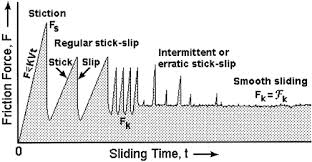
Scientists say peeling adhesive tape is not a smooth motion. Instead, the glue alternates between gripping and releasing the surface. This behavior is known as stick-slip friction.
“When the tape suddenly detaches, stored elastic energy is released abruptly,” explained materials scientists studying adhesive fracture. Each release produces a small pressure disturbance in the surrounding air.
High-speed cameras, capturing hundreds of thousands of frames per second, revealed that the adhesive does not separate uniformly. Thin detachment lines sweep across the tape’s edge, forming moving microscopic cracks.
Because these events happen thousands of times each second, the ear does not hear individual bursts. Instead, it perceives a continuous tearing tone — the Noise From Peeling Tape.
A Microscopic Earthquake on a Desk
The repeated bursts resemble small seismic events. The tape stretches as tension builds, storing energy in the flexible backing material. When adhesive bonds fail, the energy releases suddenly.
Each break produces vibration and sound waves. Together they create the recognizable screech.
Researchers compare the process to earthquakes:
- surfaces stick due to friction
- stress accumulates
- sudden slip occurs
- vibrations propagate
Here, the “fault line” is the boundary between glue and cardboard. The similarity helps scientists study fracture mechanics safely in a laboratory.
Shock Waves and Supersonic Cracks
In controlled experiments, scientists recorded discrete sound pulses whenever a moving crack reached the tape edge. Surprisingly, the cracks traveled extremely fast.
In certain conditions, they approached or exceeded the speed of sound within the adhesive material. When they stopped at the tape edge, they created weak shock waves in air.
Physicists call this acoustic emission — sound produced by sudden structural change. The same process occurs when metals fatigue or when bridges develop microscopic fractures.
“Each detachment behaves like a tiny impact,” researchers reported. The sound is therefore not continuous tearing but a rapid series of microscopic pressure spikes.
Why Tape Can Also Produce Light and Electricity
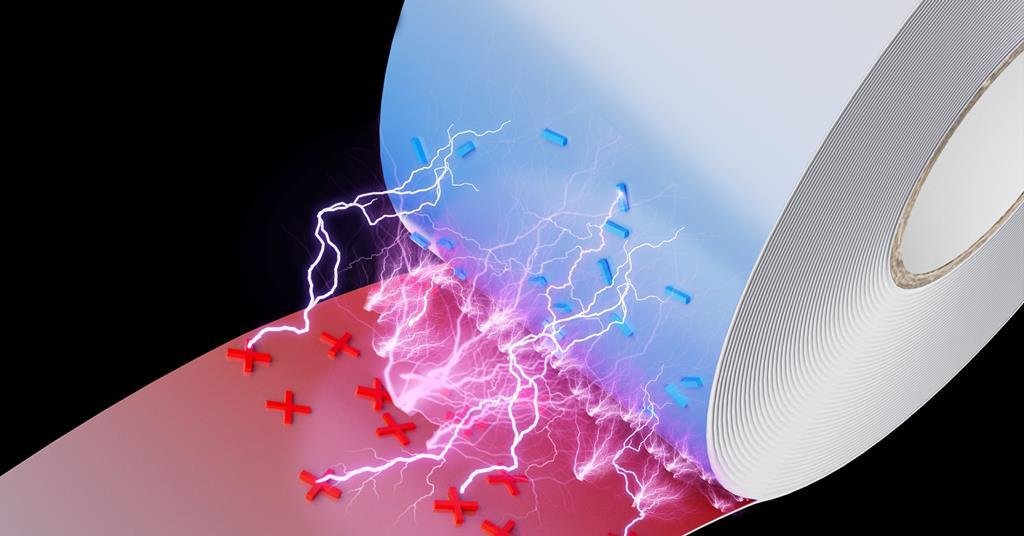
When adhesive bonds separate, electrical charges accumulate on opposite surfaces. This creates a strong electric field.
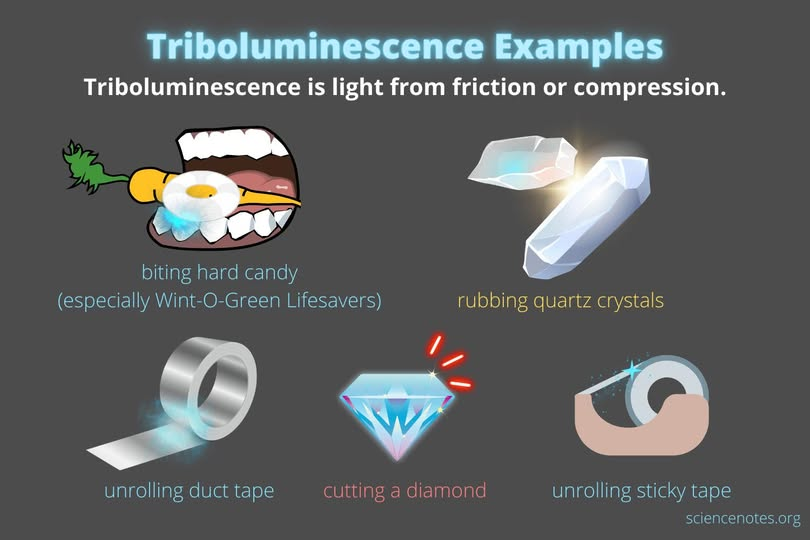
That field can ionize surrounding air molecules. In darkness, a faint blue glow appears — a phenomenon known as triboluminescence.
Under low-pressure conditions, experiments have even detected small X-ray emissions from peeling tape. The effect occurs because rapidly separating charges accelerate electrons.
This shows a simple action — opening a package — simultaneously produces:
- sound
- vibration
- electricity
- light
Why the Research Matters
Although ordinary, the Noise From Peeling Tape provides a controlled model for studying material failure.
Stick-slip friction appears in many systems:
- brake squeal in cars
- drilling equipment vibration
- earthquake motion
- mechanical wear in machinery
Engineers want to predict when materials fail. Because tape peeling is repeatable and measurable, it allows precise experiments that are impossible during real structural failures.
A Link to Musical Instruments
The same physics also explains sound production in string instruments.
When a violin bow moves across a string, friction alternates between sticking and slipping. The string snaps back and vibrates, producing musical tones. This is identical in principle to the Noise From Peeling Tape, but controlled to create harmony instead of screeching.
Physicists note that without stick-slip friction, bowed instruments would not work. In both cases, sound comes from periodic release of stored energy.
Industrial and Engineering Applications
Researchers believe acoustic emission from adhesives could become an early warning system in engineering.
Sensors might detect characteristic sounds from:
- weakening bridges
- aircraft components
- pipelines
- rotating machinery
Before catastrophic failure occurs, materials often produce microscopic cracking sounds similar to tape peeling. Monitoring these signals could improve safety inspections.
Some aerospace engineers already study acoustic emission to detect fatigue in aircraft fuselages.
Scientific Context
The research connects multiple fields:
- fracture mechanics
- acoustics
- tribology (study of friction and wear)
- electrostatics
The advantage of tape is scale. Earthquakes are unpredictable and dangerous. Peeling tape recreates similar physics safely on a tabletop, allowing precise measurement.
Scientists can control speed, angle, humidity, and temperature — variables impossible to control in natural disasters.
A History of Scientific Curiosity
The strange sound of peeling tape has puzzled researchers for decades. Early studies in the 1960s focused on adhesive strength rather than sound.
Later, physicists realized the noise carried information about fracture behavior. Modern high-speed cameras finally allowed direct observation of the moving cracks responsible for the sound.
The problem demonstrates how scientific discoveries often begin with ordinary observations.
Why Some Tape Sounds Louder
The Noise From Peeling Tape changes depending on conditions:
Peeling speed: faster pulling increases pitch
Angle: steep angles produce louder sound
Material: rubber-based adhesives are noisier
Temperature: cold tape becomes brittle and louder
Surface: rough cardboard amplifies vibration
Humidity also plays a role. Moist air weakens static charge buildup, sometimes reducing noise and triboluminescence.
Everyday Observations Explained
Many people notice tape sounds different at night. In quiet environments, higher-frequency components become noticeable. The ear detects vibrations between about 20 Hz and 20,000 Hz. Tape peeling produces a wide band of frequencies within this range.
The sharpness of the sound comes from rapid repetition of small pulses, not a single continuous tone.
Broader Implications
Scientists say ordinary experiences can reveal complex physics. The Noise From Peeling Tape demonstrates how small-scale experiments help understand large-scale natural phenomena.
By studying crack growth in adhesives, researchers refine models used to predict structural collapse and mechanical wear.
Understanding fracture behavior is critical in designing safer buildings, transportation systems, and industrial equipment.
Looking Ahead
Researchers are now testing whether adhesive acoustic signals can serve as structural health monitors. Future materials may contain sensors that listen for specific vibration patterns indicating early damage.
Such technology could warn engineers long before visible cracks appear.
As one materials scientist summarized, everyday sounds can contain detailed scientific information. Even a strip of tape can act as a laboratory experiment.
FAQs About Physics Behind the Noise From Peeling Tape
Why does tape make a squealing noise instead of ripping?
Because the adhesive releases repeatedly rather than continuously. Thousands of tiny fracture events merge into a single tone.
Is the sound coming from the tape or air?
The fracture occurs in the adhesive, but the audible sound forms when pressure waves travel through air.
Why do some tapes sound louder?
Adhesive composition, temperature, and peeling speed determine how much energy releases during each stick-slip cycle.
Can tape really produce light?
Yes. Charge separation during peeling creates triboluminescence, producing faint flashes in darkness.