

Electron Behavior During a Chemical Reaction: Scientists Capture Electron Behavior During a Chemical Reaction is more than just a flashy science headline — it’s a historic leap in how we understand the invisible forces that shape our world. For the first time ever, researchers have directly observed how a single electron behaves during an active chemical reaction. Not through guesswork. Not through indirect measurement. But by capturing real-time snapshots at the scale of femtoseconds — that’s one quadrillionth of a second. This achievement was made possible at the Linac Coherent Light Source (LCLS) at the SLAC National Accelerator Laboratory in California. Backed by the U.S. Department of Energy, this facility houses one of the most powerful X-ray free-electron lasers on Earth. Scientists used it to track the motion of a valence electron — the outermost electron responsible for chemical bonding — during a molecular reaction. That may sound like advanced quantum physics (and it is), but we’ll break it down in plain American English so anyone from a middle school student to a seasoned chemist can understand what’s at stake.
Table of Contents
Electron Behavior During a Chemical Reaction
Scientists Capture Electron Behavior During a Chemical Reaction represents a defining moment in quantum chemistry and ultrafast physics. For the first time, humanity has directly observed a valence electron moving during an active chemical reaction. Using the powerful Linac Coherent Light Source at SLAC National Accelerator Laboratory, researchers have opened a new window into the fundamental processes that govern chemistry, materials science, and energy technology. This breakthrough strengthens theoretical models, improves reaction design, and reinforces America’s leadership in scientific innovation. Whether you’re a student, a professional chemist, or just someone fascinated by how the universe works, this discovery marks a powerful step forward in understanding the invisible forces shaping our world.
| Topic | Details |
|---|---|
| Scientific Breakthrough | First direct imaging of a valence electron during a chemical reaction |
| Research Facility | SLAC National Accelerator Laboratory (California, USA) |
| Technology Used | Linac Coherent Light Source (LCLS) X-ray Free-Electron Laser |
| Time Scale Observed | Femtoseconds (10⁻¹⁵ seconds) |
| Molecule Studied | Ammonia (NH₃) |
| Energy & Industry Relevance | Catalysis, clean energy, pharmaceuticals, quantum materials |
| Median Chemist Salary (U.S.) | $81,810 per year (BLS 2023) |
| Official Website | https://www6.slac.stanford.edu |
Understanding Electron Behavior During a Chemical Reaction
Let’s keep it real simple.
When chemicals react — whether it’s gasoline burning in your truck, a battery powering your phone, or your body digesting a cheeseburger — electrons are doing the heavy lifting. They move between atoms. They break bonds. They form new ones. They decide how molecules rearrange themselves.
Atoms are like houses. Electrons are like the wiring that connects everything. If the wiring shifts, the whole system changes.
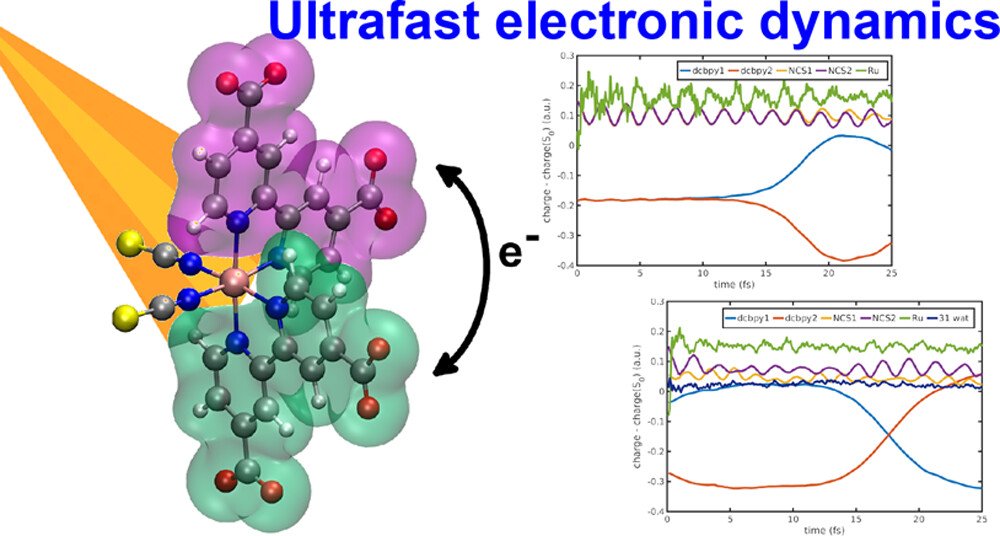
For over 100 years, scientists have understood that electrons drive chemical reactions, but we couldn’t actually see them move during the reaction itself. Why? Because electrons move unimaginably fast and are governed by the strange rules of quantum mechanics.
A femtosecond — the time scale captured in this experiment — is 0.000000000000001 seconds. To give you perspective, there are more femtoseconds in one second than there are seconds in about 31 million years.
That’s the speed we’re dealing with.
How Scientists Finally Captured the Electron Behavior During a Chemical Reaction?
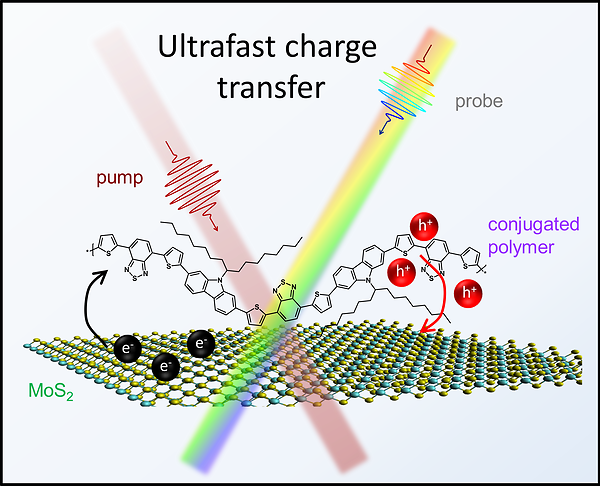
The research team used a technique known as a “pump-probe” experiment.
First, a laser pulse (the pump) triggered a reaction in an ammonia molecule (NH₃). Then, almost instantly afterward, an X-ray pulse from LCLS (the probe) struck the molecule and recorded the distribution of its electrons.
By repeating this sequence over and over — adjusting the timing by mere femtoseconds — scientists built a sequence of frames. It’s like making a flipbook, except instead of cartoon drawings, they captured quantum states.
According to the official announcement from the SLAC National Accelerator Laboratory, the Linac Coherent Light Source produces X-ray pulses billions of times brighter than traditional sources and short enough to resolve ultrafast electron dynamics.
That brightness matters. Without it, the signal from a single electron would be drowned out.
Why Electron Behavior During a Chemical Reaction Matters for Professional Science?
Now let’s talk practical implications.
Catalysis and Industrial Chemistry
The U.S. industrial sector accounts for roughly 33% of total U.S. energy consumption, according to the U.S. Department of Energy. Much of that energy goes into chemical processes.
Catalysts — substances that speed up reactions — rely heavily on electron rearrangement. If scientists can precisely observe electron movement during bond breaking and formation, they can design catalysts that:
- Use less energy
- Produce fewer byproducts
- Increase reaction efficiency
That means cleaner fuels, better fertilizers, and more sustainable manufacturing.
Pharmaceutical Development
Drug design depends on electron interactions between molecules. When a drug binds to a target protein, it’s electron clouds interacting — not just atoms touching.
Real-time electron imaging helps:
- Improve reaction pathway modeling
- Refine quantum chemical simulations
- Enhance predictive accuracy in computational drug discovery
That’s real money, real impact, and potentially life-saving medicine.
Quantum Materials and Electronics
Electrons define the behavior of semiconductors, superconductors, and advanced materials. Understanding ultrafast electron movement helps validate quantum mechanical models used in designing:
- Microchips
- Solar panels
- Quantum computing hardware
And if you’re thinking about Silicon Valley — yep, this connects directly.
The Quantum Science Behind the Scenes
For the professional reader, this experiment pushes the boundaries of time-resolved X-ray spectroscopy and ultrafast electronic structure mapping.
Historically, chemists relied on the Born-Oppenheimer approximation, which separates nuclear motion from electronic motion. But in reality, electrons and nuclei can interact in non-adiabatic ways during transitions.
By observing a valence electron during bond dissociation, researchers validated predictions from advanced quantum dynamic simulations.
This bridges experimental spectroscopy with theoretical quantum chemistry — a gap that has challenged scientists for decades.
Why It Took So Long?
You might wonder: if we’ve sent astronauts to the moon and built supercomputers, why couldn’t we see electrons before?
Two reasons:
- Speed – Electrons move on femtosecond or even attosecond scales (10⁻¹⁸ seconds).
- Size – Electrons don’t behave like solid particles; they exist as probability clouds governed by Schrödinger’s equation.
Only in recent decades have we developed X-ray free-electron lasers capable of producing pulses short and bright enough to resolve this behavior.
The LCLS facility is one of only a few in the world capable of this level of precision.
Career Opportunities in Ultrafast Science
If you’re a student reading this, here’s the straight talk: this field is growing.
According to the U.S. Bureau of Labor Statistics, the median annual wage for chemists and materials scientists is about $81,810.
Fields connected to ultrafast spectroscopy include:
- Physical Chemistry
- Laser Physics
- Materials Science
- Quantum Computing Research
- Computational Chemistry
Advanced roles often require:
- Ph.D. in Chemistry or Physics
- Expertise in spectroscopy
- Programming in Python or MATLAB
- Data modeling and simulation skills
Federal labs like SLAC, Lawrence Berkeley National Laboratory, and Argonne National Laboratory frequently recruit specialists in these domains.
Broader Impact on American Innovation
Let’s be honest — America leads the world in advanced physics research largely because of Department of Energy national laboratories.
Facilities like SLAC don’t just conduct experiments; they train the next generation of scientists, collaborate with universities, and partner with private industry.
When breakthroughs like this happen, they ripple outward into:
- Energy innovation
- Aerospace engineering
- Defense technologies
- Consumer electronics
Understanding electron behavior isn’t just academic — it fuels economic competitiveness.
Real-World Example: Cleaner Energy
Consider hydrogen fuel production. Splitting water into hydrogen and oxygen requires precise electron transfer processes.
If we better understand electron motion during bond breaking, we can design catalysts that:
- Lower activation energy
- Reduce electricity input
- Increase hydrogen yield
That supports clean energy initiatives and reduces carbon emissions.
Frequent Starlink Reentries Are Drawing Attention From Scientists
Scientists Discover a Pacific Creature with Unusual Leaf-Shaped Fangs
Scientists Use Dinosaur Eggshell Fragments to Improve Fossil Dating Methods
The Future of Electron Imaging
Scientists are already pushing toward attosecond-scale imaging — that’s one thousand times faster than femtoseconds.
If achieved routinely, this would allow:
- Direct observation of electron correlation effects
- Mapping of charge migration in biomolecules
- Real-time study of photosynthesis
We’re moving toward what some researchers call “attomicroscopy” — imaging at the atomic and electronic level simultaneously.
That’s frontier science.