
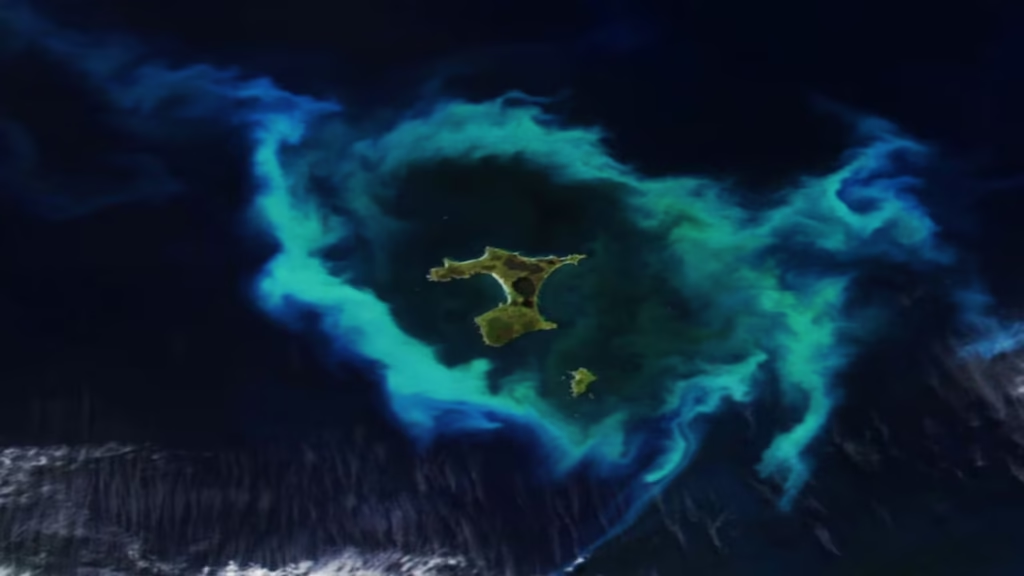
Scientists are examining Color Patterns Near Remote Islands captured by Earth-monitoring satellites near the Chatham Islands in the South Pacific, where vast turquoise rings appeared around the islands in January 2026. Researchers say the phenomenon, visible from orbit, was caused by a massive bloom of microscopic marine organisms fueled by nutrient-rich waters rising from the deep ocean.
Table of Contents
Unusual Ocean Color Patterns
| Key Fact | Detail |
|---|---|
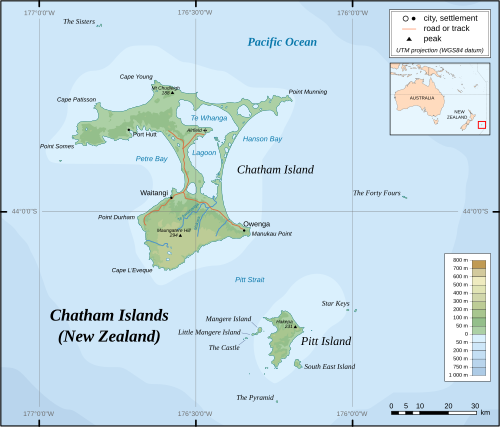
| Location | Chatham Islands, about 800 km east of New Zealand |
| Cause | Large phytoplankton bloom triggered by nutrient upwelling |
| Importance | Indicates ecosystem productivity and environmental change |
Researchers say continuous monitoring will help predict fisheries productivity, understand the carbon cycle, and identify environmental change earlier. With improved satellite technology, scientists expect to track even subtle biological signals across the oceans in coming years.
What Scientists Saw From Space
The swirling bands of color formed a near-circular halo stretching hundreds of kilometers across open ocean. The imagery was recorded by the National Oceanic and Atmospheric Administration weather satellite NOAA-20, part of a global system that continuously tracks atmosphere and ocean conditions.
Oceanographers explained that satellites do not directly see marine organisms. Instead, instruments measure reflected sunlight from the ocean surface.
Phytoplankton contain chlorophyll, a pigment that absorbs blue wavelengths and reflects green. When populations surge, the change becomes dramatic enough to be detected from orbit.
“Changes in ocean color allow us to track biological activity across the planet,” researchers involved in satellite monitoring programs explained during a public Earth observation briefing. “In some regions, it’s the only practical way to observe marine ecosystems.”
Why the Ocean Changed Color
Phytoplankton bloom explained
Phytoplankton are microscopic algae floating in the sunlit surface of the ocean. Though tiny individually, collectively they form one of Earth’s most important life systems. They support fish populations, whales, seabirds, and global oxygen production.
The waters near the Chatham Islands sit above an underwater ridge called the Chatham Rise. There, cold water rich in nitrogen and phosphorus rises from deep ocean layers — a process known as upwelling.
When sunlight, nutrients, and stable surface conditions combine, phytoplankton reproduce rapidly.
Marine ecologists say the sudden population increase explains the striking Color Patterns Near Remote Islands seen by satellites.
“These blooms are essentially marine meadows,” said coastal ecosystem researchers studying the South Pacific. “They feed entire food webs.”
Why Satellites Monitor Ocean Color
The study of changing sea color is known as ocean color remote sensing. Scientists analyze the light spectrum reflected by water to estimate biological productivity and ocean health.
This data helps scientists monitor:
- fishery productivity
- oxygen production
- carbon dioxide absorption
- risk of harmful algal blooms
Phytoplankton are a major component of Earth’s carbon cycle. During photosynthesis they remove carbon dioxide from the atmosphere and store it in organic matter.
Researchers estimate marine phytoplankton produce nearly half of the oxygen humans breathe.
Not Pollution — But Scientists Still Care
The Color Patterns Near Remote Islands sparked speculation online about chemical contamination or oil spills. Scientists quickly ruled that out.
Unlike pollution, phytoplankton blooms follow ocean current structures and seasonal nutrient cycles.
However, researchers still consider the event scientifically significant.
Satellite observations over two decades show portions of the world’s oceans gradually shifting color. Some areas are becoming greener, others bluer.
Oceanographers say this may indicate changing marine ecosystems.
“Ocean color is a sensitive biological indicator,” climate researchers reported in marine ecosystem studies. “Small changes in temperature or nutrient flow can reorganize entire food webs.
Climate Connections
Climate scientists believe warming oceans influence ocean circulation changes — the large-scale movement of water masses across the planet.
When surface water warms, it becomes lighter and prevents deeper nutrient-rich water from rising. In other cases, storms intensify mixing and increase blooms.
The Chatham Islands bloom may help researchers gives clues about regional climate behavior.
Scientists compare satellite records with past data to determine whether blooms are becoming more frequent, larger, or longer-lasting.
Such changes could affect fisheries, biodiversity, and even weather patterns.
Historical Perspective: This Has Happened Before
While dramatic, the phenomenon is not unprecedented.
Scientists have documented similar large blooms in:
- the North Atlantic spring bloom
- the Arabian Sea
- the Southern Ocean near Antarctica
However, the ring-shaped formation near the Chatham Islands was unusually clear and geometrically structured. Oceanographers say rotating currents, called eddies, likely shaped the bloom into a circular band.
These eddies act like slow underwater whirlpools, trapping nutrients and plankton inside.
The result is a natural biological laboratory visible from space.
Economic and Fisheries Impact
The region surrounding the Chatham Islands supports important commercial fisheries. Fish species such as hoki, squid, and hoki-feeding seabirds depend on plankton-rich waters.
Large blooms can increase fish populations months later because plankton feed small organisms, which feed larger fish.
Fisheries scientists often use satellite ocean-color data to predict productive fishing areas.
“This is essentially a forecast of future marine life abundance,” fisheries researchers have explained in marine resource assessments.
However, there is also risk. Some blooms can evolve into harmful algal blooms, producing toxins affecting fish, shellfish, and human health. Authorities monitor the area carefully when major blooms occur.
How Satellites Actually Detect Life
Modern satellites carry spectroradiometers, instruments that measure reflected light in dozens of wavelengths.
They detect chlorophyll concentration using precise spectral signatures.
The process works like this:
- Sunlight hits ocean surface
- Phytoplankton absorb blue light
- Green wavelengths reflect back to space
- Satellites measure intensity differences
- Scientists calculate biomass
This allows researchers to estimate marine life across oceans covering 70% of the planet — something impossible using ships alone.
Why Remote Islands Matter Scientifically
Remote islands play an outsized role in ocean ecology. Because they interrupt currents, they cause nutrient mixing. Scientists call this the “island mass effect.”
Water moving around an island slows, circulates, and rises from deeper layers, bringing nutrients upward.
As a result, even small islands can create massive biological hotspots visible from orbit.
The Color Patterns Near Remote Islands are therefore not just local events. They reveal how geography shapes global ocean biology.
What Happens Next
Scientists will continue monitoring the region to determine whether similar blooms occur more frequently. Fisheries agencies and climate researchers are analyzing the data for ecological implications.
Future satellite missions scheduled for launch later this decade will measure ocean color in greater detail than ever before.
Oceanographers say the event highlights the importance of long-term monitoring.
“From space, the oceans show us how Earth’s life-support system is functioning,” a marine observation scientist said during a satellite briefing. “Color patterns are one of the earliest warning signals we have.”
FAQs About Unusual Ocean Color Patterns
Are Color Patterns Near Remote Islands dangerous?
Usually no. Most blooms are natural and beneficial, though rare harmful algal blooms can occur.
Why are they visible from space?
Chlorophyll in phytoplankton changes reflected sunlight, allowing satellites to detect biological activity.
Do they indicate climate change?
They can. Long-term changes in ocean color may reveal shifting ecosystems or warming oceans.