
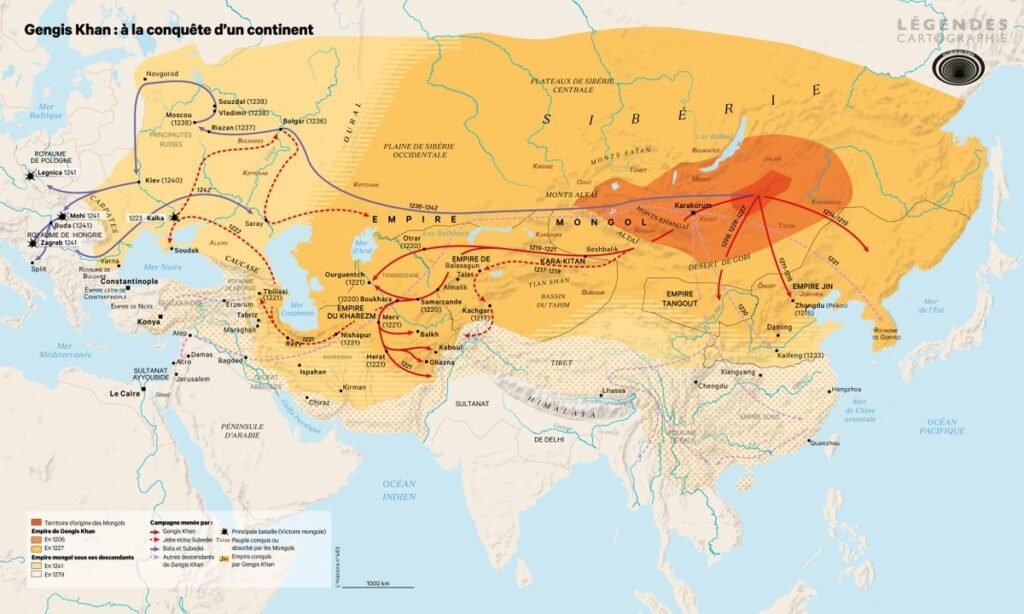
Claim of Widespread Descent From Genghis Khan: that’s the headline, and it’s a doozy. For decades, the story has been circulating like wildfire: that millions of men alive today are the direct male-line descendants of one of history’s most famous conquerors. But like any good story, the truth is more complex, nuanced, and way more interesting than the legend itself. Genghis Khan, born in 1162 in the steppes of Mongolia, wasn’t just a historical figure — he was a phenomenon. He built the largest contiguous empire in world history, stretching from East Asia all the way into Europe. Along the way, his armies conquered vast populations, and his personal life left a legendary mark: historical accounts suggest he fathered many children, and as the saying goes, “he spread his seed far and wide.” This set the stage for a story that, until recently, seemed like it could be true: millions of men today might carry a genetic echo of Genghis Khan himself.
But science isn’t about legends. Scientists went digging into the DNA, literally following the traces left in the male Y-chromosome passed from father to son. And what they found has both confirmed part of the story and challenged another part. It turns out that the narrative of Genghis Khan’s widespread genetic legacy is fascinating but not as simple as headlines suggested.
Table of Contents
Claim of Widespread Descent From Genghis Khan
The tale of millions of men descending from Genghis Khan is a captivating mix of history, legend, and science. The original 2003 study revealed an intriguing genetic pattern, suggesting the spread of a Y-chromosome lineage across Central Asia and beyond. But modern evidence tells a more nuanced story: the lineage likely predates Genghis Khan, no direct DNA has been confirmed, and the spread could reflect a broader population trend rather than one individual’s progeny. This story illustrates the power of genetics, the importance of careful interpretation, and the ever-evolving nature of science. While the legend may have been exaggerated, the underlying discoveries offer valuable insights into human migration, ancestry, and the legacy of historical empires. Understanding these nuances makes us not just better informed but more connected to our shared human story.
| Topic | Details |
|---|---|
| Claim | That ~0.5% of men worldwide share a Y‑chromosome lineage attributed to Genghis Khan’s male line. |
| Original Study | 2003 research suggested a “star cluster” Y‑chromosome lineage linked to Mongol expansion, especially across Central Asia. |
| New Evidence | Later studies show the lineage may predate Genghis Khan (~800–1,000+ years earlier). |
| Confirmed DNA? | No verified ancient DNA from Genghis Khan’s remains has been identified. |
| Accurate Resources | National Library of Medicine (PubMed) — https://pubmed.ncbi.nlm.nih.gov/ |
| Wikipedia Reference | Genetic descent from Genghis Khan — https://en.wikipedia.org/wiki/Genetic_descent_from_Genghis_Khan |
| Main Takeaway | The link is interesting, but not proven. Genetic signals may reflect broader population history. |
The 2003 Study That Started It All: Claim of Widespread Descent From Genghis Khan
The story began with a 2003 study conducted by a group of geneticists led by a researcher named Tatiana Zerjal. They analyzed Y-chromosome DNA from thousands of men across Central Asia and discovered a highly unusual pattern: a cluster of related Y-chromosomes appearing at very high frequencies in Mongolia and surrounding regions. The researchers called this pattern a “star-like cluster” because, in genetic terms, it looked like one lineage had rapidly radiated into many descendants over a short period.
Here’s what they reported:
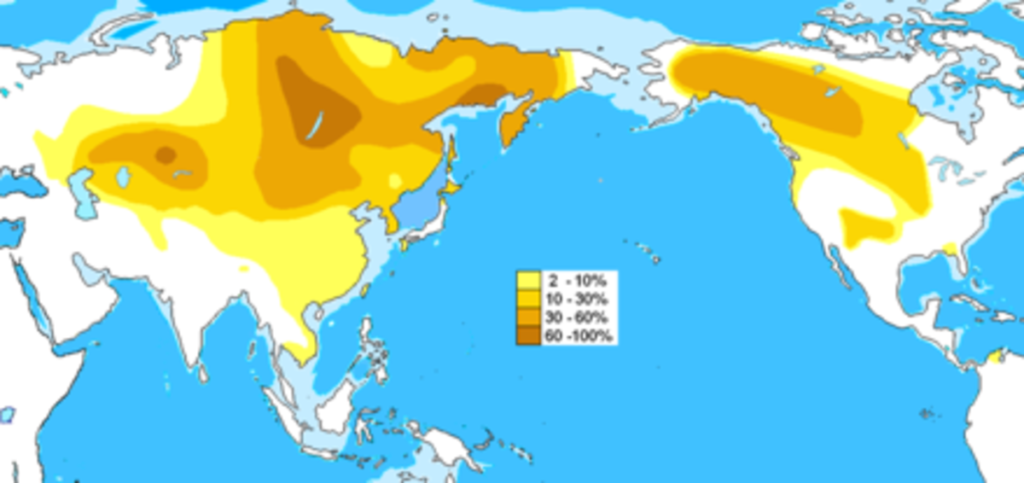
- About 8% of men in Central Asia carried this lineage.
- Roughly 0.5% of men worldwide, translating to around 16 million men today, carried it.
- The lineage appeared to have originated roughly 1,000 years ago, which roughly corresponded with the era of Genghis Khan.
Given what history tells us about Genghis Khan — his power, mobility, and alleged fertility — it was tempting to say: “This is Genghis Khan’s genetic fingerprint!” The story spread like wildfire. Textbooks, documentaries, and news articles began reporting that millions of men might be direct descendants of this Mongol conqueror.
Reexamining the Claim of Widespread Descent From Genghis Khan: What the Science Says Now
Science is always moving, and genetics is no exception. Subsequent studies, using larger datasets, more precise dating methods, and refined statistical models, have shown that the picture is more nuanced.
1. The Lineage May Be Older Than Genghis Khan
Later genetic analysis suggests the “star cluster” may have existed centuries before Genghis Khan was born. This means the high-frequency Y-chromosome could reflect a broader male lineage in Mongolia, not a single famous individual. It could have originated from a prominent clan or a group of closely related men, rather than the empire’s legendary founder.
This is an important distinction: while Genghis Khan may have amplified the lineage through his descendants, he was not necessarily the original source of it. In other words, the genetic signature predates him, meaning the story of millions of men directly descending from him may be more myth than fact.
2. No Confirmed Ancient DNA From Genghis Khan
Another key limitation: scientists have never found the confirmed remains of Genghis Khan, meaning we have no Y-chromosome from him to compare. Without that, there’s no way to definitively say that modern men carrying the “star cluster” are descended from him. It’s like trying to trace a river’s source without actually finding the spring. You can follow the flow, but you can’t be 100% certain of its origin.
3. The Cluster Could Reflect Broader Historical Trends
High-frequency male lineages don’t always belong to one individual. They can also reflect social and historical factors, such as:
- Dominant clans producing more offspring
- Polygamy being common in certain cultures
- Rapid population growth within certain groups
In the Mongol context, the “star cluster” could represent a combination of successful males across several generations, magnified by the empire’s reach.
Understanding the Y-Chromosome and Human History
So, what exactly is the Y-chromosome, and why does it matter in this discussion?
The Y-chromosome is passed from father to son, largely unchanged except for occasional mutations. That makes it an excellent tool for tracing patrilineal ancestry — the male line across generations. Scientists can measure mutations to estimate when a particular lineage started, giving clues about historical population movements.
In this case, researchers used the Y-chromosome to trace the rapid expansion of a male lineage across Eurasia, which coincided with the rise of the Mongol Empire. While the lineage’s age might predate Genghis Khan, its geographic distribution does reflect the historical spread of Mongol populations, showing how human genetics can illuminate history.
Why Claim of Widespread Descent From Genghis Khan Matters Today?
People are fascinated by ancestry, especially when it involves famous historical figures. Tools like 23andMe and AncestryDNA allow individuals to explore broad genetic ancestry and see connections to regions, tribes, and sometimes family branches. But these tests cannot confirm a direct line to a specific individual from 800+ years ago.
From a professional perspective, this story is important because it highlights the limits of genetic inference. While we can identify broad patterns and regional connections, claiming specific personal ancestry — particularly to a legendary figure — requires much more evidence.
Moreover, the case shows how genetics intersects with history. It can help explain population movements, social structures, and cultural influence. For example:
- The rapid expansion of certain Y-chromosome lineages mirrors the Mongol Empire’s military conquests.
- Genetic studies complement archaeological and historical records, giving a more complete picture of the past.
A Step-By-Step Guide to Evaluating Historical Genetic Claims
Let’s break down how you can assess claims like these, whether you’re a curious reader, a professional, or just someone interested in genetics.
Step 1: Identify the Claim
Ask yourself: What is being claimed? For example, “Millions of men are descendants of Genghis Khan.”
Step 2: Examine the Evidence
Look for peer-reviewed studies. Check sample size, methodology, and statistical confidence.
Step 3: Look for Direct Proof
Is there direct evidence, like ancient DNA, or is the conclusion inferred from patterns?
Step 4: Consider Historical Context
Does the genetic data align with historical records? Could other explanations account for the pattern?
Step 5: Reevaluate Over Time
Science evolves. Stay updated on follow-up studies and refinements.
Following these steps ensures you approach bold claims critically, without dismissing the fascinating insights genetics can provide.
Reanalysis of Chinese Fossil Skulls Suggests They Predate Known Human Groups
Genetic Research Sheds Light on the Ancestry of Papua New Guinea Communities
Scientists Use Dinosaur Eggshell Fragments to Improve Fossil Dating Methods