
The decades-long scientific quest to detect Life Beyond Earth is entering a more cautious phase. While modern telescopes now identify chemical gases in distant planetary atmospheres, researchers say many signals once viewed as evidence of extraterrestrial life may also form naturally. New studies and observations are forcing astronomers to rethink how discovery might actually happen — and how long it may take.
Table of Contents
Early Hopes for Life Beyond Earth
| Key Fact | Detail/Statistic |
|---|---|
| Confirmed exoplanets | More than 5,000 discovered orbiting other stars |
| Biosignature challenge | Oxygen and methane can arise without biology |
| Major telescope | James Webb Space Telescope studies alien atmospheres |
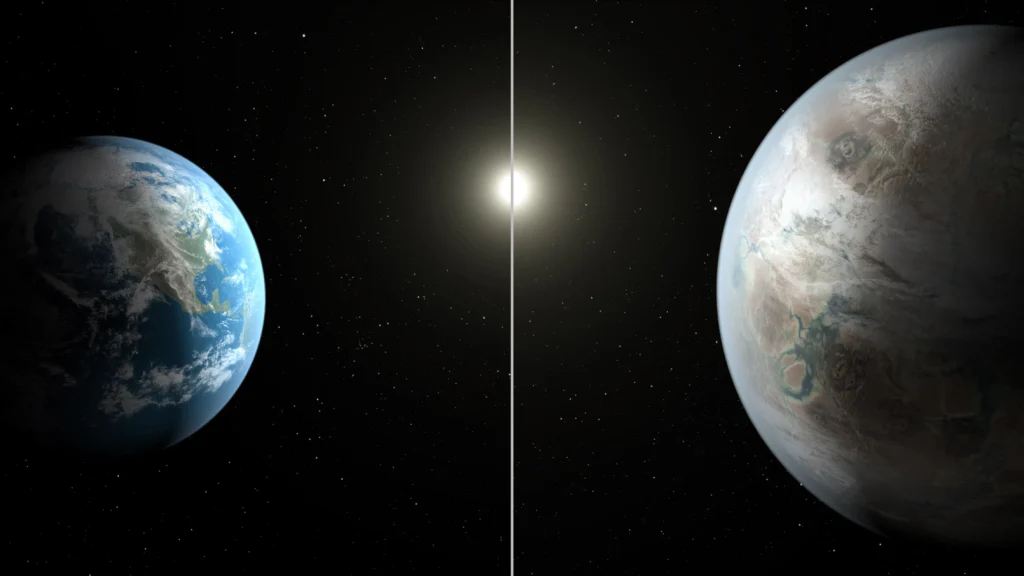
| Nearest potentially habitable world | Proxima Centauri b is 4.2 light-years away |
Astronomy is shifting from excitement to patience. Scientists still consider life elsewhere plausible, but verification will require years of observation and careful analysis. As many researchers emphasize, the discovery of Life Beyond Earth may not arrive as a single dramatic announcement, but as accumulating evidence that eventually leaves no alternative explanation.
What Changed in the Search for Life Beyond Earth
For much of the late 20th century, scientists expected the discovery of extraterrestrial life to come suddenly — a clear signal from a distant planet that could not be explained by physics or chemistry alone.
Astronomers believed the detection of certain atmospheric gases would serve as proof. The idea was based on Earth itself. Our planet’s oxygen-rich atmosphere exists largely because living organisms continuously replenish it.
This led researchers in astrobiology — the study of life in the universe — to search for similar chemical fingerprints, known as biosignatures, on exoplanets.
“We once assumed that if we found the right gas combination, the case would be straightforward,” said Dr. Lisa Kaltenegger of Cornell University in academic presentations describing modern exoplanet research. “We now understand nature can produce similar signals without biology.”
The discovery of the first confirmed exoplanet around a Sun-like star in 1995 dramatically accelerated this research field. Since then, thousands of worlds have been detected using both space telescopes and ground observatories.
The Rise of Powerful Space Telescopes
The launch of the James Webb Space Telescope (JWST) marked a major technological turning point. Orbiting about 1.5 million kilometers from Earth, the observatory can analyze the chemical composition of alien atmospheres with unprecedented sensitivity.
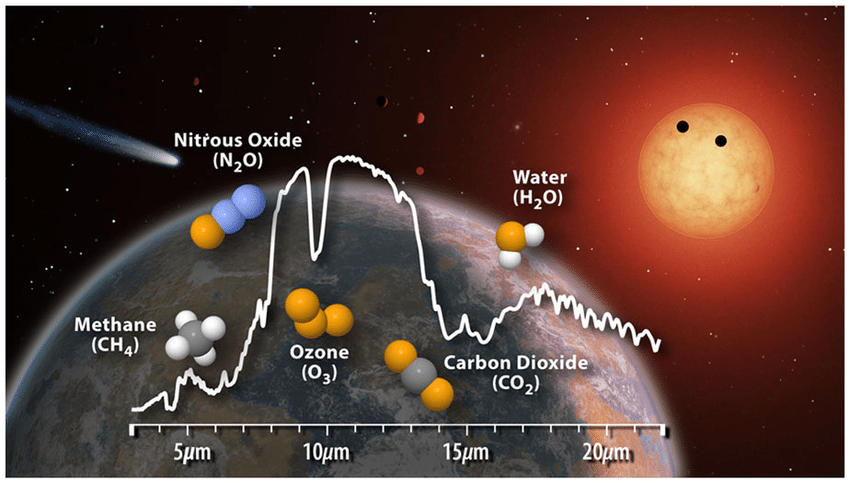
Scientists use a technique called transit spectroscopy. When a planet crosses in front of its star, a tiny fraction of starlight passes through the planet’s atmosphere before reaching the telescope.
Each chemical leaves a specific spectral fingerprint. By analyzing those patterns, astronomers can identify water vapor, methane, carbon dioxide, and other molecules.
However, greater sensitivity has revealed a new problem: interpreting those signals is extremely complex.
The Biosignature Problem: Nature Imitates Life
Researchers discovered that many supposed indicators of extraterrestrial life may not be biological at all.
Scientists refer to misleading detections as “false positives.”
Oxygen Is Not Always Evidence
On Earth, oxygen is produced by photosynthesis in plants, algae, and bacteria. For decades it was considered the strongest proof of biology.
But planetary modeling now shows stars can break apart water molecules using ultraviolet radiation. Hydrogen escapes into space, leaving oxygen behind — even on a lifeless world.
Certain planets orbiting red dwarf stars may accumulate large amounts of oxygen despite having no organisms.
Methane’s Uncertain Meaning
Methane was also considered a promising biosignature because microbes produce it on Earth.
Yet methane can form through volcanic activity, hydrothermal vents, or chemical reactions between rock and water deep underground.
“Chemistry alone can reproduce what we once interpreted as biological,” said NASA planetary scientist Dr. Giada Arney in published research discussions on planetary atmospheres.
The challenge means a single molecule can no longer be treated as proof.
Conflicting Signals From Observations
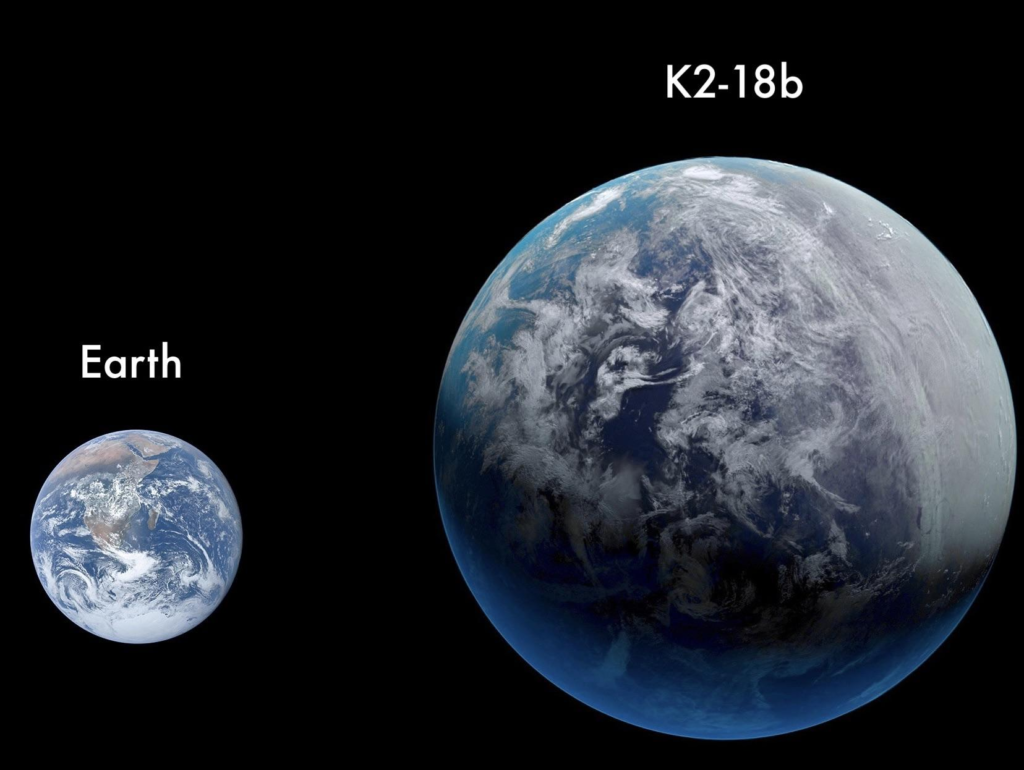
Recent observations demonstrate the difficulty. Measurements of the planet K2-18b, located about 120 light-years away, suggested organic molecules in its atmosphere.
Initial reports generated global headlines about possible life.
Soon afterward, independent teams questioned whether the detection was statistically reliable. Some researchers argued the signal may have resulted from modeling assumptions or instrument limitations rather than real atmospheric chemistry.
The episode highlighted the importance of scientific verification. Astronomers typically require multiple independent observations before accepting extraordinary claims.
Why Proof of Life Is So Difficult
Distance Limits Evidence
Even nearby exoplanets lie trillions of miles away. No current spacecraft can reach them within a human lifetime.
Astronomers must rely entirely on indirect data carried by faint light signals.
Planetary Diversity
Planets vary dramatically in temperature, pressure, atmospheric chemistry, and radiation levels. Many have no equivalent in the solar system.
As a result, scientists cannot assume alien worlds behave like Earth.
Strict Scientific Standards
NASA introduced a “confidence of life detection” framework requiring several levels of confirmation. Researchers must rule out contamination, instrument errors, and non-biological chemistry.
This conservative approach reflects lessons from past false alarms in science.
Historical Context: Why Expectations Were High
Interest in Life Beyond Earth has deep roots in science and culture.
In the 19th century, astronomers believed canals on Mars were artificial structures built by intelligent beings. Later spacecraft revealed they were optical illusions.
In 1976, NASA’s Viking landers conducted experiments on Martian soil that produced puzzling chemical reactions initially interpreted as possible microbial activity. Later research suggested chemical oxidation reactions explained the results.
The history has made modern researchers cautious.
The Role of Mars and Ocean Moons
While distant exoplanets attract attention, some scientists believe the best chance of finding life may exist within our own solar system.
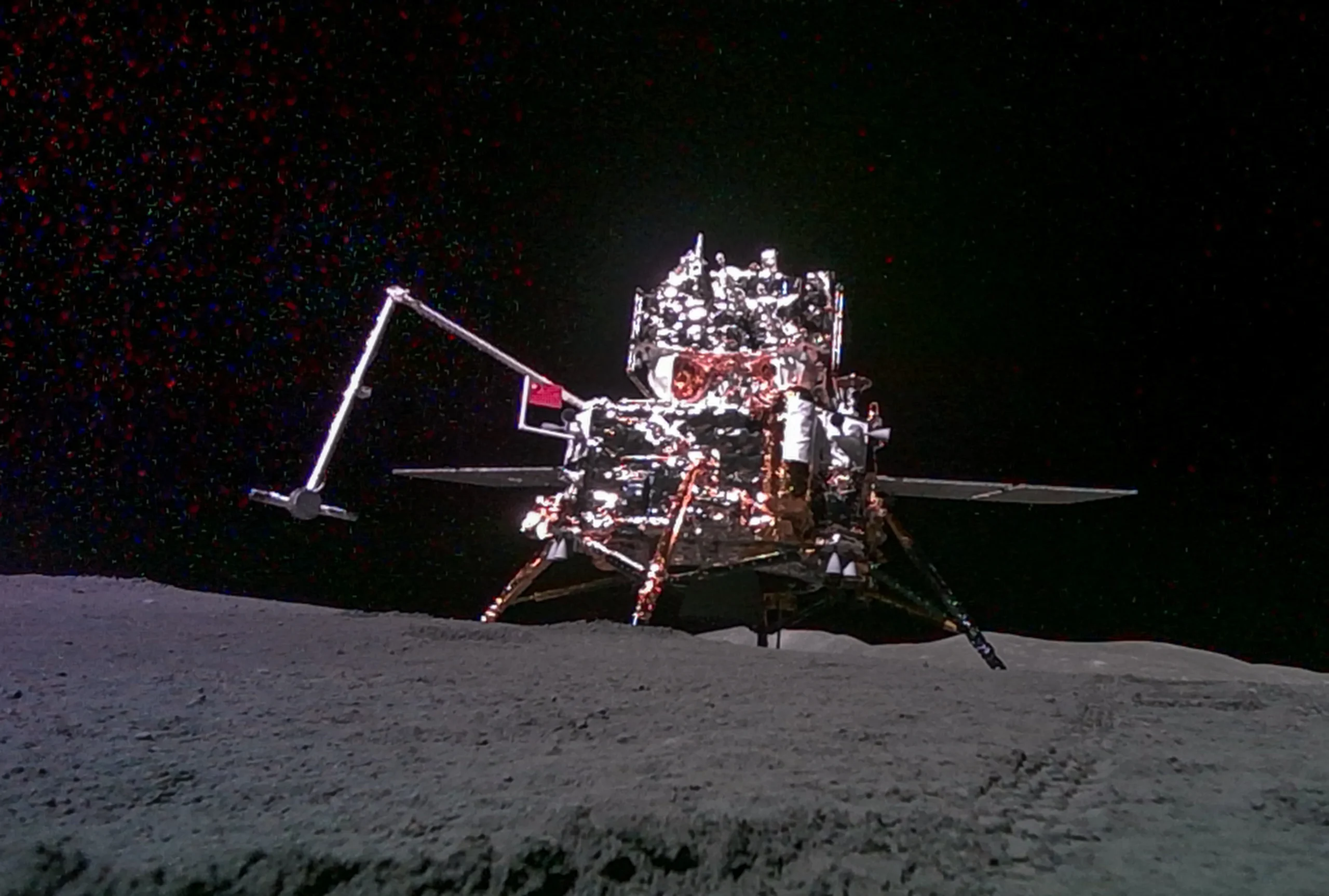
Mars once had rivers and lakes. Rovers such as NASA’s Perseverance are collecting rock samples that may be returned to Earth in the 2030s.
Meanwhile, Jupiter’s moon Europa and Saturn’s moon Enceladus contain subsurface oceans beneath thick ice shells. Spacecraft have detected water plumes erupting into space.
These locations may host microbial life protected from radiation and extreme temperatures.
SETI and Radio Searches
Another approach to extraterrestrial life involves radio astronomy rather than atmospheric chemistry.
The Search for Extraterrestrial Intelligence (SETI) uses radio telescopes to scan for artificial signals from advanced civilizations.
Despite decades of monitoring millions of stars, no confirmed technological signal has been detected.
Scientists say this absence does not prove we are alone. Instead, it may indicate intelligent civilizations are rare, short-lived, or use communication methods humans do not yet understand.
Global Scientific Efforts
The search is international. Agencies in the United States, Europe, Japan, China, and India all contribute.
India’s space agency, the Indian Space Research Organisation (ISRO), has expanded planetary exploration and supports astronomy programs studying stellar systems.
Ground-based observatories in Chile, Hawaii, and the Canary Islands also play critical roles by analyzing star brightness variations to detect exoplanets.
Future telescopes, including the Extremely Large Telescope under construction in Chile, will allow more detailed atmospheric analysis.
What the Reality Check Means
The phrase Life Beyond Earth now represents a long scientific investigation rather than a near-term discovery.
Early optimism assumed a clear signal would appear quickly once technology improved. Instead, new data revealed how complex planetary chemistry can be.
Researchers now expect the first confirmed detection to require several independent methods — atmospheric gases, environmental conditions, and possibly seasonal changes consistent with biology.
Scientific and Philosophical Implications
The question extends beyond astronomy.
Discovering life elsewhere would affect biology, philosophy, and religion. It would also reshape understanding of Earth’s place in the universe.
If life proves common, scientists would conclude biology emerges easily under the right conditions. If rare, Earth may represent an unusual case.
Either outcome carries profound implications for humanity.
Future Missions
Several proposed projects aim to address the uncertainty.
The planned Habitable Worlds Observatory would directly image Earth-like planets and analyze their atmospheres more precisely than current telescopes.
Meanwhile, sample-return missions from Mars may provide the first definitive evidence of past microbial life beyond Earth — or confirm its absence.
FAQs About Early Hopes for Life Beyond Earth
Are scientists close to finding alien life?
Researchers say technology is improving rapidly, but confirmation may still take decades.
Why can’t telescopes simply photograph aliens?
Current telescopes cannot resolve surface features of distant planets. They only measure atmospheric chemistry.
What evidence would confirm extraterrestrial life?
Scientists would need multiple biosignatures plus environmental conditions incompatible with non-biological chemistry.