
The landscape is pure white in every direction, and the sunlight doesn’t just shine it bounces off the ice straight into your eyes. Within a short time, your vision blurs, your eyes sting, and opening them becomes painful. For the people who lived in the Arctic thousands of years ago, this wasn’t a rare event. It was daily life. The story behind Ancient Arctic Goggles Made from Walrus Tusk Reveal Early Snow Protection shows how early northern communities solved a serious environmental danger using only natural materials and careful observation. In fact, Ancient Arctic Goggles Made from Walrus Tusk Reveal Early Snow Protection is one of the clearest examples of survival technology created long before modern science explained ultraviolet light. For Arctic hunters, eyesight was everything. Traveling across sea ice required reading the landscape noticing wind patterns, cracks in the ice, and small breathing holes where seals surfaced. Losing vision even temporarily could mean starvation, injury, or death. These communities did not have glass lenses, metals, or industrial tools. Yet they developed a reliable method to protect their eyes and continue hunting safely.
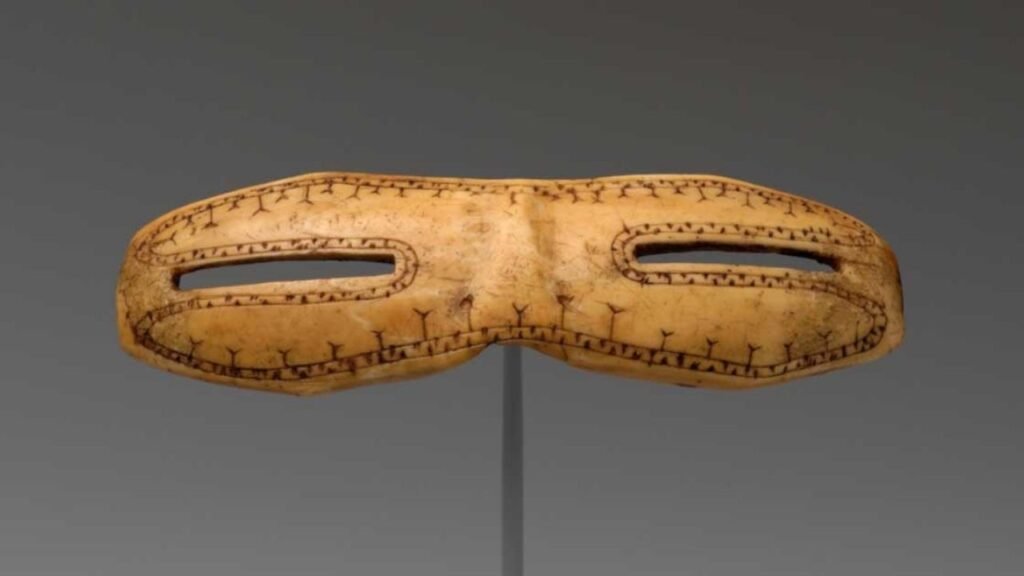
The term Ancient Arctic Goggles Made From Walrus Tusk Reveal Early Snow Protection refers to protective eyewear carved by Indigenous Arctic peoples using walrus tusk ivory, bone, and occasionally driftwood. These goggles were shaped to sit closely on the face and featured narrow horizontal slits instead of lenses. The slits controlled the amount of sunlight entering the eyes and prevented snow blindness caused by intense glare. Archaeological discoveries in Alaska, Greenland, and northern Canada show that this design was widely used. What makes the invention remarkable is its effectiveness. Without understanding UV radiation scientifically, Arctic communities still created a practical optical solution. The design worked on the same principle used by modern snow goggles: reducing brightness while preserving clear visibility across bright snowfields.
Table of Contents
Ancient Arctic Goggles
| Feature & Aspect | Details |
|---|---|
| Object Type & Use | Protective snow goggles for hunters and travelers |
| Primary Materials & Sources | Walrus tusk ivory, animal bone, driftwood |
| Geographic Regions & Sites | Alaska, Greenland, Northern Canada |
| Estimated Age & Period | Several hundred to over 2,000 years old |
| Design & Structure | Curved faceplate with narrow viewing slits |
| Attachment Method & Fit | Leather or sinew straps tied around head |
| Main Function & Benefit | Prevent snow blindness and reduce glare |
| Scientific Principle & Effect | Limits light exposure entering the eye |
| Cultural Role & Importance | Essential survival equipment in Arctic travel |
| Archaeological Evidence & Dating | Excavated from hunting camps and coastal settlements |
The invention of Arctic snow goggles represents human creativity shaped by necessity. Early hunters faced intense reflected sunlight that could disable them quickly. Using walrus ivory and careful craftsmanship, they created reliable eye protection. The Ancient Arctic Goggles Made from Walrus Tusk Reveal Early Snow Protection story highlights a powerful lesson. Innovation does not begin in laboratories. It begins with observation, experience, and the need to solve real problems. Thousands of years later, the solution remains elegant and effective. These goggles were not primitive — they were precisely suited to the environment. They allowed hunters to travel safely, hunt efficiently, and return home. In a world without modern technology, that small piece of carved ivory protected something priceless: the ability to see.
Discovery of The Arctic Eye Protection
The first discoveries of these goggles came from frozen coastal settlements preserved beneath permafrost. Archaeologists initially assumed the carved ivory pieces were decorative. However, closer examination revealed polished inner surfaces and wear marks where the nose and cheekbones would rest. The placement of the finds was even more revealing. They were discovered alongside hunting tools such as harpoons, sled components, and food preparation implements. This showed they were not ceremonial objects but working equipment. The Ancient Arctic Goggles Made From Walrus Tusk Reveal Early Snow Protection findings strongly indicate they were part of standard hunting gear. Many examples were located near seasonal seal-hunting areas. Hunters traveled long distances across reflective sea ice, and these goggles allowed them to keep their eyes open in blinding conditions. The objects were practical tools, carried and used daily rather than stored as prized possessions.
How The Goggles Worked
Snow blindness occurs when bright reflected sunlight damages the surface of the eye. In snowy regions, sunlight reflects intensely because snow acts like a mirror. Without protection, exposure can inflame the cornea, causing extreme pain and temporary loss of vision. The Ancient Arctic Goggles Made from Walrus Tusk Reveal Early Snow Protection design worked through a simple physical principle: limit incoming light. Instead of covering the eyes with dark material, the goggles narrowed the field of light using thin slits. This allowed enough light for clear vision but blocked overwhelming brightness. The effect is similar to squinting on a bright day. However, squinting for hours strains eye muscles. The goggles performed that function constantly without discomfort, allowing hunters to travel for long periods under intense sunlight.
Materials And Craftsmanship
Walrus ivory was chosen for good reason. It was strong, smooth, and resistant to cracking in freezing temperatures. Arctic craftspeople carved the outer shape to match facial contours, sealing the sides to prevent stray light. Some examples show soot rubbed inside the goggles. The darkened interior absorbed extra reflected light and improved visual clarity. Soft padding made from fur or moss was occasionally added for comfort. The straps were made from animal sinew or leather. These materials remained flexible in freezing weather, unlike many modern materials that become brittle. The careful construction demonstrates that the Ancient Arctic Goggles Made from Walrus Tusk Reveal Early Snow Protection innovation resulted from long-term refinement rather than experimentation by chance.
Protection Against Snow Blindness
Snow blindness is not a minor irritation. Symptoms include burning eyes, swelling, tearing, and temporary vision loss that can last for days. In Arctic conditions, blindness could prevent a hunter from returning home. The slit design dramatically reduced glare while preserving contrast. Hunters could still detect shadows, snowdrifts, and seal breathing holes. This made hunting possible even during bright daylight hours. The Ancient Arctic Goggles Made From Walrus Tusk Reveal Early Snow Protection method worked so well that similar slit-style goggles were later adopted by early polar explorers before modern sunglasses became available.
Cultural Significance
These goggles were more than equipment; they were knowledge passed through generations. Similar designs appeared across multiple Arctic cultures, showing shared environmental understanding. Young hunters likely learned to carve and wear them early in life. The ability to protect eyesight meant contributing to the community’s survival. The Ancient Arctic Goggles Made from Walrus Tusk Reveal Early Snow Protection tradition reflects cooperation and teaching within families and tribes. In harsh climates, tools carried meaning. These goggles represented preparedness, experience, and respect for natural forces.
Archaeological Dating And Evidence
Dating the goggles relied on associated materials found nearby. Animal bones, hearth charcoal, and camp remains helped establish approximate timelines. Some artifacts are over a thousand years old. Permafrost preservation allowed remarkable detail. Scratches around the eye slits and worn nose bridges show repeated use. These marks confirm the goggles were used regularly rather than occasionally. The Ancient Arctic Goggles Made from Walrus Tusk Reveal Early Snow Protection discoveries also help researchers understand migration patterns and seasonal hunting routes.
What They Teach Us About Early Engineering
Early Arctic communities practiced practical science through observation. They noticed eye injuries after exposure to bright snow and experimented with solutions until the design worked reliably. This represents applied engineering. The solution was simple but effective. Modern sunglasses rely on lenses and coatings, yet the core concept is unchanged: control light exposure. The Ancient Arctic Goggles Made From Walrus Tusk Reveal Early Snow Protection example shows that advanced thinking does not require modern technology. Careful observation and repeated testing can produce powerful innovations.
Preservation And Study Today
Today these artifacts are preserved in museums and research collections. Scientists study carving techniques, wear patterns, and regional variations. They provide insight into adaptation strategies and sustainable use of natural materials. Researchers also compare them to modern outdoor equipment. Many modern glacier goggles operate on the same glare-reduction principle. The Ancient Arctic Goggles Made from Walrus Tusk Reveal Early Snow Protection design continues to influence understanding of survival gear.
FAQs
1. What Materials Were Used to Make Arctic Snow Goggles?
They were mainly carved from walrus tusk ivory, though bone and driftwood were also used depending on available resources.
2. How Did the Goggles Prevent Snow Blindness?
The narrow horizontal slits reduced the amount of sunlight entering the eyes while still allowing clear vision.
3. Who Used These Goggles?
Indigenous Arctic hunters and travelers, including Inuit and related northern communities, relied on them during long hunting journeys.
4. Are They Similar to Modern Snow Goggles?
Yes. Modern glacier and mountaineering eyewear use the same principle of controlling glare and reducing light exposure.