
Bees Failed To Stop Sahara Desert Expansion: The headline “Bees Failed To Stop Sahara Desert Expansion Until Scientists Turned To A Geometry Trick” might sound like something out of a science documentary, but it’s actually a real story about innovation, persistence, and how a simple idea can tackle one of the world’s biggest environmental challenges. The Sahara Desert expansion, also known as desertification, threatens millions of people across Africa’s Sahel region. Scientists initially believed that boosting biodiversity—especially through pollinators like bees—could restore plant life and slow desert growth.
But here’s the thing: nature sometimes needs a little engineering help. When early ecological efforts struggled, researchers and local farmers turned to a surprisingly simple concept rooted in geometry and land design. Instead of relying only on biology, they began reshaping the land itself to trap water and revive soil. That clever move changed everything. This article breaks down how this approach works, why the bee-based restoration attempts fell short, and how simple crescent-shaped pits—called half-moon basins—are helping communities restore land and livelihoods across the Sahel.
Table of Contents
Bees Failed To Stop Sahara Desert Expansion
The story behind “Bees Failed To Stop Sahara Desert Expansion Until Scientists Turned To A Geometry Trick” reminds us that environmental restoration isn’t always about adding more life—it’s often about fixing the conditions that support life in the first place. By reshaping the land with simple half-moon water harvesting basins, farmers and scientists have created a practical, scalable solution to desertification. The results are restoring ecosystems, boosting crop yields, and improving livelihoods across the Sahel. Sometimes the smartest solution isn’t complicated science—it’s just a clever twist of geometry and a deep respect for how nature works.
| Topic | Details |
|---|---|
| Main Issue | Expansion of the Sahara Desert due to climate change and soil degradation |
| Original Idea | Use bees and pollination to restore ecosystems |
| Problem | Soil crust prevented water absorption and plants couldn’t grow |
| Breakthrough Solution | Half-moon shaped pits (water-harvesting geometry) |
| Water Improvement | Up to 70% increased water infiltration in soil |
| Erosion Reduction | Around 50% less soil erosion |
| Regions Using the Method | Burkina Faso, Niger, Mali, Northern Nigeria |
| Global Initiative | Part of the Great Green Wall effort |
| Official Reference | https://www.greatgreenwall.org |
Understanding the Sahara Desert Expansion
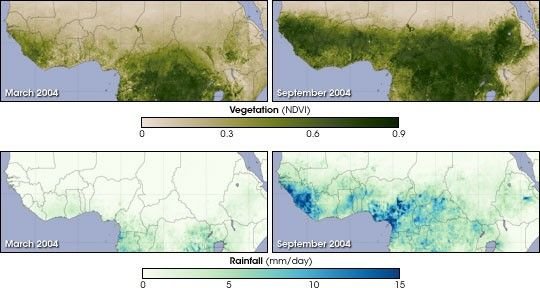
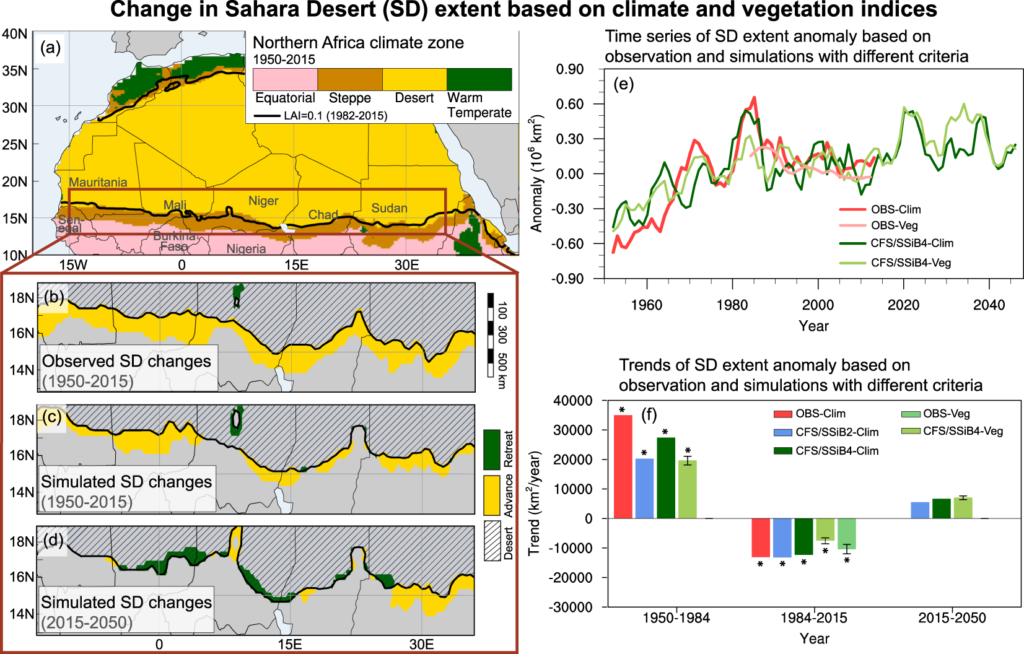
The Sahara Desert expansion is one of the most pressing environmental issues affecting northern Africa and the Sahel region. According to the U.S. National Aeronautics and Space Administration (NASA), the Sahara has grown about 10% since 1920, largely due to climate change and land degradation.
When land loses vegetation and moisture, it becomes dry and compacted. Once that happens, rainfall doesn’t soak into the ground—it simply runs off the surface. Over time, this process turns fertile land into desert.
Here’s the kicker: millions of farmers rely on these lands for food production.
Without intervention, desertification can lead to:
- Crop failures
- Food insecurity
- Migration and economic instability
The United Nations Convention to Combat Desertification (UNCCD) estimates that over 500 million people worldwide are affected by desertification.
Why Scientists Initially Turned to Bees?
At first glance, the idea made perfect sense. Bees are vital pollinators and essential for healthy ecosystems.
The logic went like this:
- Introduce bees to encourage pollination.
- Pollinated plants grow stronger.
- Stronger plant systems restore soil and vegetation.
According to the U.S. Department of Agriculture (USDA), pollinators contribute to about 75% of flowering plant species worldwide.
So scientists hoped that increasing pollinator activity would help restore plant life in degraded regions of the Sahel.
But reality had other plans.
Why Bees Failed To Stop Sahara Desert Expansion?
Here’s where things got tricky.
The core problem wasn’t pollination—it was soil structure.
The land in many parts of the Sahel had become hard and crusted, almost like baked clay. When rain fell, it simply ran across the surface instead of soaking in.
That meant:
- Seeds couldn’t germinate
- Plants couldn’t get water
- Bee colonies had little vegetation to support them
Even worse, extreme surface temperatures sometimes exceeded 150°F (65°C), which can damage beehives and weaken colonies.
So despite the ecological logic behind the plan, the environment itself needed repair before biological systems could recover.
That’s when researchers realized the solution might not be biological—it might be geometrical.
Bees Failed To Stop Sahara Desert Expansion: The Geometry Trick That Changed Everything
Instead of trying to force plants to grow in damaged soil, scientists and farmers began reshaping the land itself.
Their solution: Half-Moon Water Harvesting Basins.
These are crescent-shaped pits dug into the soil, designed to capture rainwater and allow it to soak slowly into the ground.
Think of them as tiny reservoirs built directly into farmland.
How the Half-Moon System Works?
Each basin typically measures:
- 2–4 meters wide
- 20–30 cm deep
- Open toward uphill slopes
When rain falls:
- Water flows downhill.
- The crescent wall slows it down.
- Water collects in the basin.
- Moisture seeps into the soil.
This creates small pockets of fertile ground where seeds can grow.
Pretty clever, right?
Real-World Results From the Sahel
This approach has already transformed thousands of acres of degraded land.
Research supported by organizations like the World Bank and FAO (Food and Agriculture Organization) shows dramatic improvements.
Farmers using half-moon basins reported:
- 70% higher water retention
- Increased crop yields
- Reduced soil erosion by up to 50%
Over time, grasses appear first, followed by shrubs and eventually trees.
Once vegetation returns, bees and other pollinators naturally come back.
So ironically, bees still play a role—but only after the land is restored.
The Connection to the Great Green Wall
This geometry-based technique now supports one of the world’s most ambitious environmental projects:
The Great Green Wall Initiative
Led by the African Union, this project aims to restore 100 million hectares of degraded land across Africa by 2030.
Goals include:
- Capturing 250 million tons of carbon
- Creating 10 million green jobs
- Improving food security
Half-moon water harvesting pits have become one of the most effective tools used in the project.
Step-by-Step Guide: How Farmers Use the Half-Moon Method
Let’s break it down in plain terms.
Step 1: Identify Degraded Land
Farmers start by selecting land where water runoff is high and vegetation is sparse.
Step 2: Mark Crescent Shapes
Using simple tools, they mark half-circle shapes facing uphill.
Step 3: Dig Basins
Each pit is dug about 25 centimeters deep.
Step 4: Add Organic Material
Farmers often place:
- Compost
- Manure
- Crop residue
This improves soil fertility.
Step 5: Plant Seeds
Seeds are planted directly inside the basin.
Step 6: Let Nature Do Its Thing
Rain fills the basin, moisture builds, and plants begin to grow.
Over time, these basins create islands of vegetation that slowly expand outward.
Practical Lessons for Land Restoration Worldwide
Now here’s the takeaway for environmental planners around the world.
The Sahel’s success story proves something powerful:
Fix the physical landscape before expecting ecosystems to recover.
This principle applies everywhere—from American farmlands to drought-stricken regions in Australia.
Simple land design changes can dramatically improve:
- Water retention
- Soil health
- Crop productivity
Sometimes the most effective solutions aren’t high-tech—they’re smart, practical, and rooted in understanding nature’s patterns.
Scientists Capture Electron Behavior During a Chemical Reaction
Frequent Starlink Reentries Are Drawing Attention From Scientists