
March 2026 Social Security Payment Dates: The March 2026 Social Security payment dates are an essential piece of information for millions of Americans who rely on monthly benefits to cover everyday expenses. From retirees and disabled workers to families receiving survivor benefits, Social Security payments help people pay for groceries, housing, healthcare, and other necessities. Knowing exactly when your Social Security payment arrives in March 2026 helps you plan your finances, avoid late bills, and stay financially stable. Across the United States, more than 71 million Americans receive Social Security benefits every month, according to the Social Security Administration. That makes Social Security one of the largest federal programs in the country. Because so many people depend on these payments, the government uses a structured payment schedule based on birth dates and eligibility categories. Understanding how this system works ensures you know when your money is coming and what to expect in March 2026.
Table of Contents
March 2026 Social Security Payment Dates
The March 2026 Social Security payment dates follow the standard monthly distribution system used by the Social Security Administration. SSI recipients will receive their payment early on February 27, while most Social Security beneficiaries will receive payments on March 3, March 11, March 18, or March 25, depending on their birth date and eligibility category. Understanding the schedule helps millions of Americans plan their finances, manage bills, and maintain financial stability.

| Topic | Details |
|---|---|
| Program | Social Security Retirement, SSDI, Survivor Benefits, and SSI |
| Beneficiaries | Over 71 million Americans |
| SSI March 2026 Payment | February 27, 2026 (because March 1 is Sunday) |
| Social Security Early Payment | March 3, 2026 |
| Birthdays 1–10 | March 11, 2026 |
| Birthdays 11–20 | March 18, 2026 |
| Birthdays 21–31 | March 25, 2026 |
| Estimated Average Retirement Benefit (2026) | About $1,900 monthly |
| Maximum Possible Benefit (2026 est.) | Around $3,800–$4,000 depending on earnings |
| Official Website | https://www.ssa.gov |
Understanding How Social Security Payments Are Scheduled
The Social Security payment schedule is designed to distribute payments smoothly across the month. Instead of sending checks to millions of people on the same day, the SSA spreads payments out based on birth dates.
This system was introduced in 1997 to reduce processing pressure on banks and federal systems. Before that, most beneficiaries received payments on the 3rd day of each month, which caused heavy banking traffic and occasional delays.
Today, the payment system works like this:
- People who started receiving benefits before May 1997 still receive their payment on the 3rd of each month.
- Everyone else receives their payments on Wednesdays, depending on their birth date.
- Supplemental Security Income (SSI) payments usually arrive on the first day of the month.
By dividing payments across several dates, the SSA can distribute billions of dollars every month without overwhelming the system.
March 2026 Social Security Payment Dates
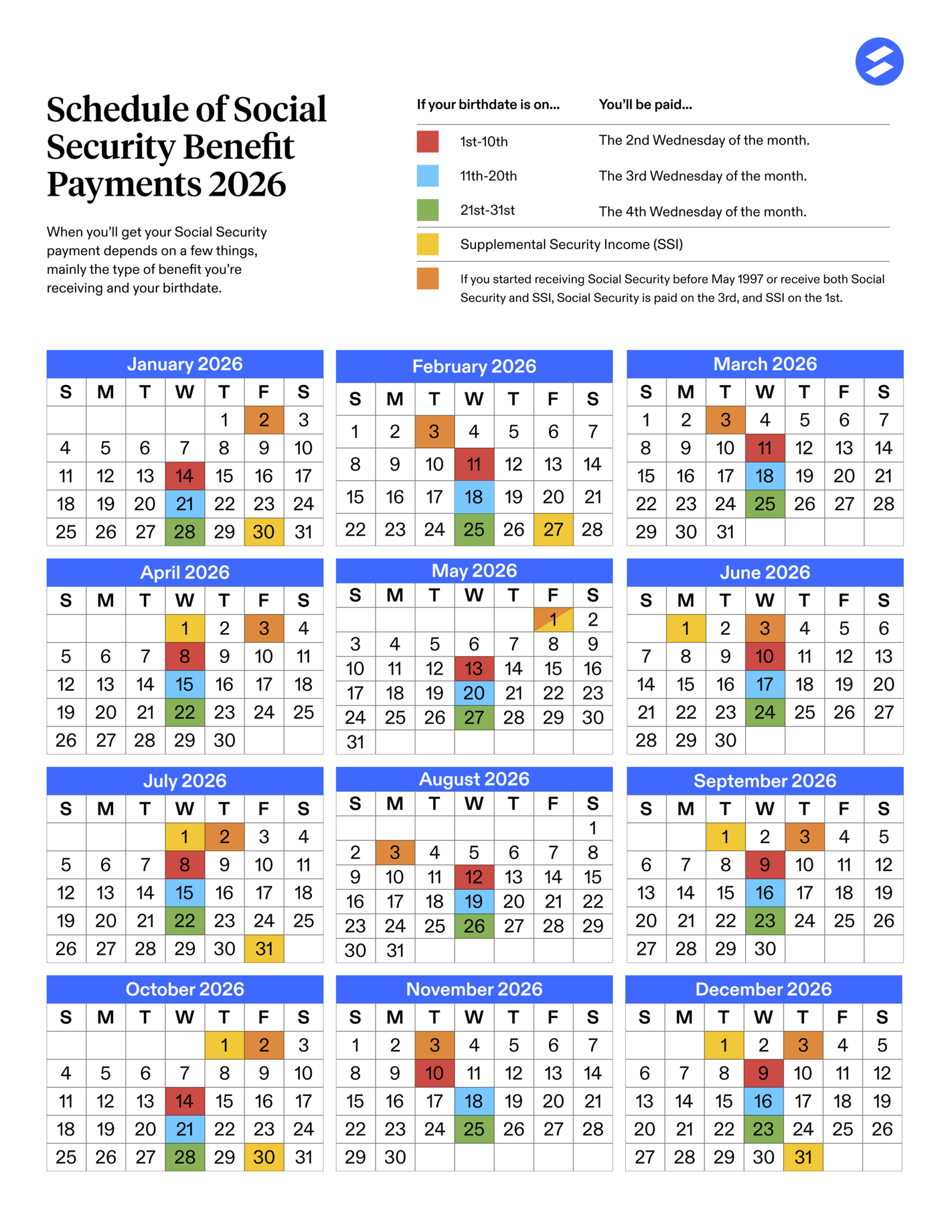
The March 2026 Social Security payment schedule follows the standard monthly system, but there is one small adjustment involving SSI payments.
Below is a detailed breakdown of every payment date in March 2026.
Supplemental Security Income (SSI) Payment — February 27, 2026
People receiving Supplemental Security Income (SSI) normally receive their benefits on the first day of the month.
However, March 1, 2026 falls on a Sunday. Because government payments cannot be issued on weekends or federal holidays, the SSA moves the payment to the previous business day.
That means the March 2026 SSI payment will be sent on Friday, February 27, 2026.
It’s important to understand that this is not an extra payment. It simply arrives earlier than usual.
Key points for SSI recipients:
- The February 27 deposit covers the March benefit.
- There will not be another SSI payment during March.
- The next regular SSI payment will arrive April 1, 2026.
SSI benefits are generally designed for low-income seniors, disabled adults, and disabled children who have limited income and resources.
Social Security Payment — March 3, 2026
The March 3 payment date applies to specific groups of Social Security beneficiaries.
You will receive your payment on March 3, 2026 if:
- You started receiving Social Security before May 1997
- You receive both SSI and Social Security benefits
- Your Medicare premiums are paid by the state
- You live outside the United States
These recipients follow the legacy payment schedule, which still uses the 3rd day of the month as the standard payment date.
Second Wednesday Payment — March 11, 2026
For most beneficiaries, Social Security payments are tied to birthdays.
If your birthday falls between:
1st and 10th of any month
Your March 2026 Social Security payment will arrive on Wednesday, March 11, 2026.
This payment includes benefits for:
- Retired workers
- Disabled workers (SSDI)
- Survivors receiving benefits from a deceased spouse or parent
Because most Americans now receive payments via direct deposit, many recipients will see the funds available in their bank account early in the morning on the payment date.
Third Wednesday Payment — March 18, 2026
If your birthday falls between:
11th and 20th
Your payment will arrive on:
Wednesday, March 18, 2026
The third Wednesday group represents a large portion of Social Security recipients. Payments are processed automatically by the SSA and deposited electronically.
Fourth Wednesday Payment — March 25, 2026
If your birthday falls between:
21st and 31st
Your Social Security payment date for March 2026 will be:
Wednesday, March 25, 2026
This is the final Social Security payment issued for the month.
Estimated March 2026 Social Security Payment Amounts
The amount someone receives from Social Security depends on:
- Lifetime earnings
- Age when benefits start
- Work history
- Cost-of-living adjustments
In 2026, the average retirement benefit is expected to be about $1,900 per month.
Estimated averages include:
| Benefit Type | Average Monthly Amount |
|---|---|
| Retired Workers | ~$1,900 |
| Disabled Workers (SSDI) | ~$1,537 |
| Survivor Benefits | ~$1,500 |
| SSI Average | ~$700–$800 |
The maximum Social Security benefit can reach around $3,800 to $4,000 per month for workers who earned high wages throughout their careers and retire at full retirement age.
These numbers change every year because of the Cost-of-Living Adjustment (COLA), which increases benefits to keep up with inflation.
How the COLA Increase Affects Social Security Payments?
The Cost-of-Living Adjustment, commonly known as COLA, is applied annually to protect the purchasing power of Social Security benefits.
COLA increases are based on the Consumer Price Index for Urban Wage Earners and Clerical Workers (CPI-W).
For example:
- In 2023, COLA increased benefits by 8.7%
- In 2024, the increase was 3.2%
- In 2025, estimates suggested around 2–3%
Although the exact 2026 COLA depends on inflation trends, economists expect a modest increase.
Even a small increase can help retirees keep up with rising costs such as:
- Food
- Housing
- Healthcare
- Prescription medications
How to Check Your March 2026 Social Security Payment Date Status?
If you want to confirm when your March 2026 Social Security payment will arrive, there are several easy ways to check.
Create a My Social Security Account
The easiest way to monitor benefits is through the My Social Security online portal.
This account allows users to:
- Check payment dates
- View benefit statements
- Update banking details
- Download tax forms
- Track application status
Creating an account takes only a few minutes and provides secure access to your information.
Check Direct Deposit Information
According to the U.S. Department of the Treasury, more than 99% of Social Security beneficiaries receive payments electronically.
Electronic payments are:
- Faster
- More secure
- Less likely to be delayed or stolen
If your bank account information changes, you should update it through your SSA account immediately.
Wait Three Business Days Before Reporting a Missing Payment
If your payment doesn’t show up on the scheduled day, the SSA recommends waiting three business days before contacting them.
Sometimes banks take extra time to process deposits, especially during busy financial periods.
If your payment still hasn’t arrived after that time, you can contact the SSA at 1-800-772-1213.
Practical Budgeting Advice for Social Security Recipients
Many households depend heavily on Social Security benefits. Proper financial planning can help make these payments stretch further throughout the month.
Prioritize Essential Bills
Start by paying fixed expenses such as:
- Rent or mortgage
- Utilities
- Insurance
- Prescription medications
Handling these expenses first helps avoid late fees and service interruptions.
Build a Small Emergency Fund
Even setting aside $20–$50 per month can create a small emergency cushion over time.
Unexpected expenses like medical bills or car repairs are easier to manage when you have some savings.
Take Advantage of Senior Discounts
Many businesses offer special discounts for seniors, including:
- Grocery stores
- Restaurants
- Pharmacies
- Travel services
- Entertainment venues
These savings may seem small individually but can add up to hundreds of dollars per year.
Use Community Assistance Programs
Local organizations and government programs can help with:
- Heating bills
- Food assistance
- Prescription costs
- Housing support
Programs like Medicare Extra Help and the Low Income Home Energy Assistance Program (LIHEAP) are designed to support seniors and disabled individuals.
First March Social Security Administration Payments Arrive In Just Seven Days
Early Social Security Administration Payments Scheduled For Some Beneficiaries in February and March
How the 2.8% COLA Adjustment Will Reshape Social Security Payments in 2026