
Roman-Era Tombs Discovered: Roman-era tombs discovered beneath a hospital construction site have sparked major interest among historians, archaeologists, and everyday readers who love stories about the ancient world. What started as a routine construction project unexpectedly turned into a major archaeological discovery that sheds light on how people lived, traded, and honored the dead nearly 1,700 years ago during the Roman Empire. When construction crews began preparing land for a hospital project in Constanța, Romania, they likely expected to uncover the usual mix of soil, rock, and maybe a few modern artifacts. Instead, they stumbled upon something extraordinary—a burial ground containing dozens of Roman tombs and ancient artifacts buried beneath the modern city.
Discoveries like this remind us that history isn’t always locked away in museums or books. Sometimes it’s literally under our feet. For archaeologists and historians, this site offers a rare chance to study a well-preserved Roman necropolis, providing insights into ancient trade networks, burial traditions, and daily life in one of Rome’s important Black Sea port cities. In today’s world, where cities continue to expand and construction projects are happening everywhere, discoveries like this highlight an important truth: modern development often sits on top of thousands of years of human history.
Table of Contents
Roman-Era Tombs Discovered
The discovery of Roman-era tombs beneath a hospital construction site offers an incredible glimpse into a world that existed nearly two thousand years ago. These tombs reveal not only how Romans honored their dead but also how connected their society was through trade, military service, and cultural traditions. For archaeologists and historians, each artifact uncovered at the site helps fill gaps in our understanding of Roman provincial life. For the rest of us, discoveries like this serve as a reminder that history is never truly gone—it’s simply waiting beneath layers of time to be rediscovered. As cities continue to grow and construction projects expand across the world, we can expect more moments where the modern world meets the ancient past in surprising and fascinating ways.
| Topic | Details |
|---|---|
| Discovery | 34 Roman-era tombs uncovered during hospital construction |
| Location | Constanța, Romania (ancient city of Tomis) |
| Time Period | 3rd–4th century CE |
| Age of Site | Approximately 1,600–1,700 years old |
| Artifacts Found | Jewelry, coins, amphorae, glass vessels, shield fragment |
| Historical Importance | Reveals Roman burial practices and Mediterranean trade |
| Professions Involved | Archaeologists, historians, anthropologists, conservation specialists |
| Official Cultural Heritage Reference | https://whc.unesco.org |
A Surprising Discovery Beneath Modern Construction
Construction projects frequently uncover historical artifacts, especially in parts of the world where civilizations have existed for thousands of years. However, finding a complete burial site with dozens of tombs is rare and extremely valuable to researchers.
When workers began digging at the hospital construction site, they noticed unusual stone structures and pottery fragments. These early signs prompted authorities to pause construction and call in professional archaeologists to investigate the area.
This process is called preventive archaeology, a practice used across Europe and North America to ensure historical sites are protected during urban development.
According to the National Geographic Society, preventive excavations help researchers document historical sites before construction alters them permanently.
Once archaeologists arrived at the site, they quickly realized they were standing on top of a Roman necropolis, which is a large burial ground located outside the boundaries of an ancient city.
The Ancient City Beneath Constanța
The modern Romanian city of Constanța sits on top of the ancient settlement known as Tomis, which was originally founded by Greek colonists around the 6th century BCE. Later, the city became part of the vast Roman Empire.
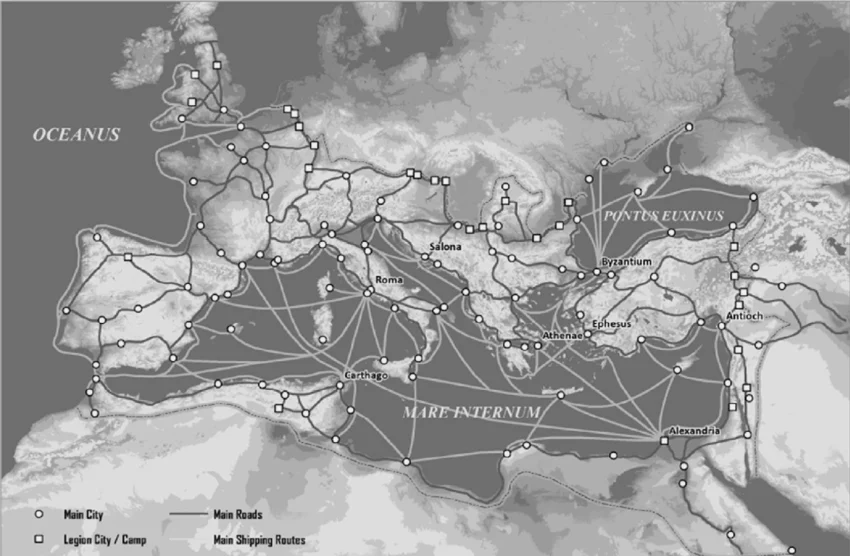
Tomis served as an important port along the Black Sea trade routes, connecting the Roman world with regions of Eastern Europe, Asia Minor, and the Mediterranean.
One of the most famous historical figures connected to Tomis is the Roman poet Ovid, who was exiled there by Emperor Augustus in 8 CE. Ovid spent the remainder of his life in the city and wrote several works describing life in the distant Roman province.
Because Tomis played such a vital role in regional trade and politics, archaeologists have long suspected that large sections of the ancient city still lie hidden beneath modern Constanța.
What Archaeologists Found at the Roman-Era Tombs Discovered?
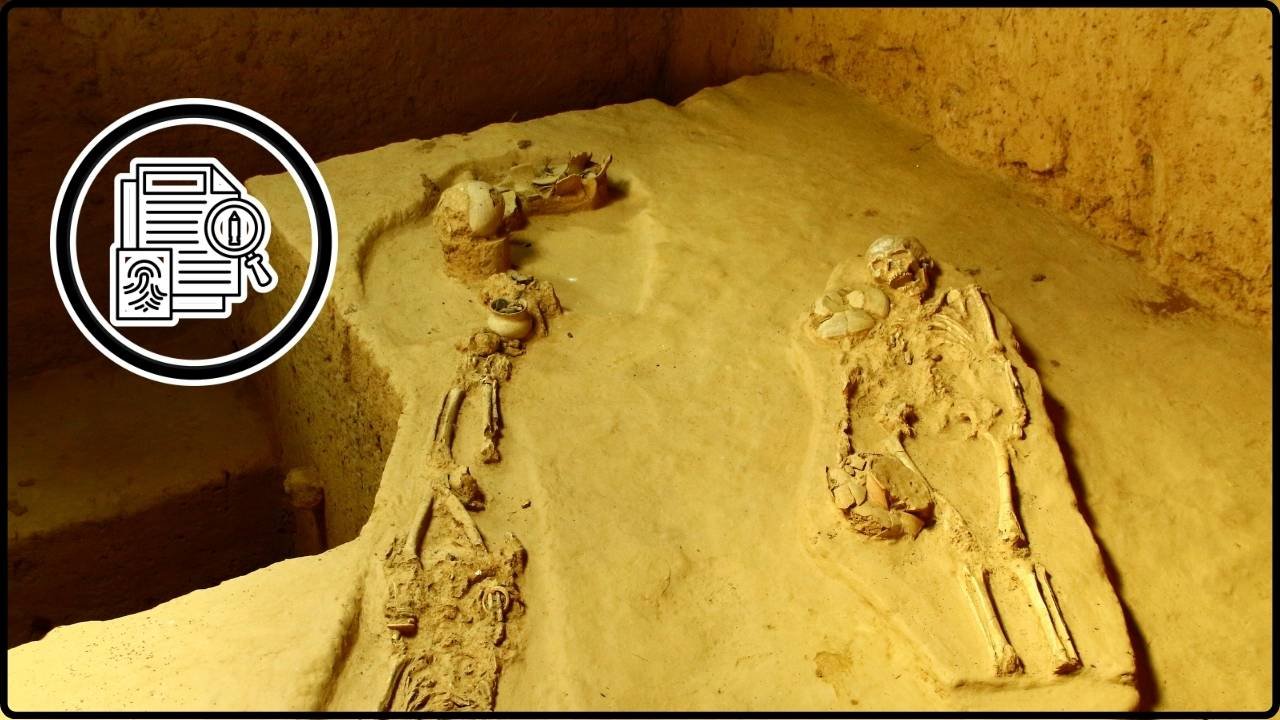
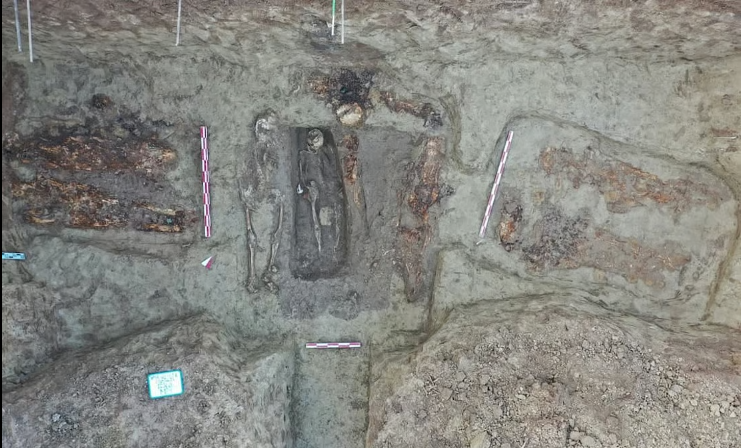
During the excavation, archaeologists uncovered 34 tombs, many of which were surprisingly well preserved. Some graves were simple pits, while others were more complex burial chambers built using stone and brick.
These tombs were part of a necropolis used between the 3rd and 4th centuries CE, a time when the Roman Empire was undergoing political and cultural changes.
Several graves contained multiple burials, suggesting they were used by families over generations.
Inside the tombs, researchers found a variety of objects placed alongside the deceased. These items were likely meant to accompany the individual into the afterlife.
Some of the most significant discoveries include:
- Roman coins
- Glass vessels used for perfumes or oils
- Jewelry and decorative ornaments
- Ceramic amphorae used for storing wine or olive oil
- Pottery containers
- A rare metal shield umbo, the central boss of a Roman shield
The presence of these objects tells researchers a lot about Roman life.
For example, amphorae discovered at the site originated from North Africa, demonstrating the existence of large trade networks linking the Black Sea with distant parts of the Roman Empire.
Roman Burial Traditions and Beliefs
To understand why these objects were placed in tombs, we need to look at Roman funeral traditions.
Romans believed that the deceased required certain items in the afterlife. Burial goods were therefore included to ensure the individual could continue their journey beyond death.
Common Roman burial customs included:
- Placing a coin in the mouth or hand of the deceased as payment to the mythical ferryman Charon, who transported souls across the river Styx.
- Including personal items such as jewelry or clothing.
- Burying family members in shared tombs.
- Marking graves with inscriptions or monuments.
Roman law required burials to take place outside city walls, which is why necropolises were usually located along roads leading out of ancient cities.
These burial practices were common throughout the Roman world, from Britain to the Middle East.
A Rare Military Artifact
One of the most fascinating discoveries at the site was a shield umbo, a metal piece placed at the center of a Roman shield.
Shield umbos served both practical and symbolic purposes. They protected the soldier’s hand during combat and could also be used to strike opponents.
However, finding a shield component in a burial context is unusual.
Researchers believe this particular artifact may have belonged to a ceremonial parade shield, used during military events or public displays rather than in battle.
The discovery suggests that the individual buried in the tomb may have had a military role or social status connected to the Roman army.
The Roman military played a major role in maintaining order across the empire, and soldiers often settled in provincial cities like Tomis after completing their service.
Trade Networks in the Roman World
The amphorae discovered in the tombs provide valuable evidence of long-distance trade during the Roman era.
These large clay containers were used to transport goods such as:
- Wine
- Olive oil
- Fish sauce (garum)
- Grain
- Honey
Each amphora had a distinct shape that identified where it was produced.
Archaeologists can trace trade routes by studying these shapes and the chemical composition of the clay.
For example, amphorae found at the Constanța site indicate trade connections with North Africa and the eastern Mediterranean.
This shows that even cities on the edge of the Roman Empire were integrated into a vast economic network.
Roman-Era Tombs Discovered: The Archaeological Excavation Process
Discoveries like this require careful handling to avoid damaging fragile artifacts or human remains.
When archaeologists excavate a burial site, they follow several important steps.
First, the site is mapped and photographed to document the location of each tomb.
Next, soil layers are removed slowly using small tools such as brushes and trowels.
Every artifact is labeled and recorded before being transported to a laboratory for analysis.
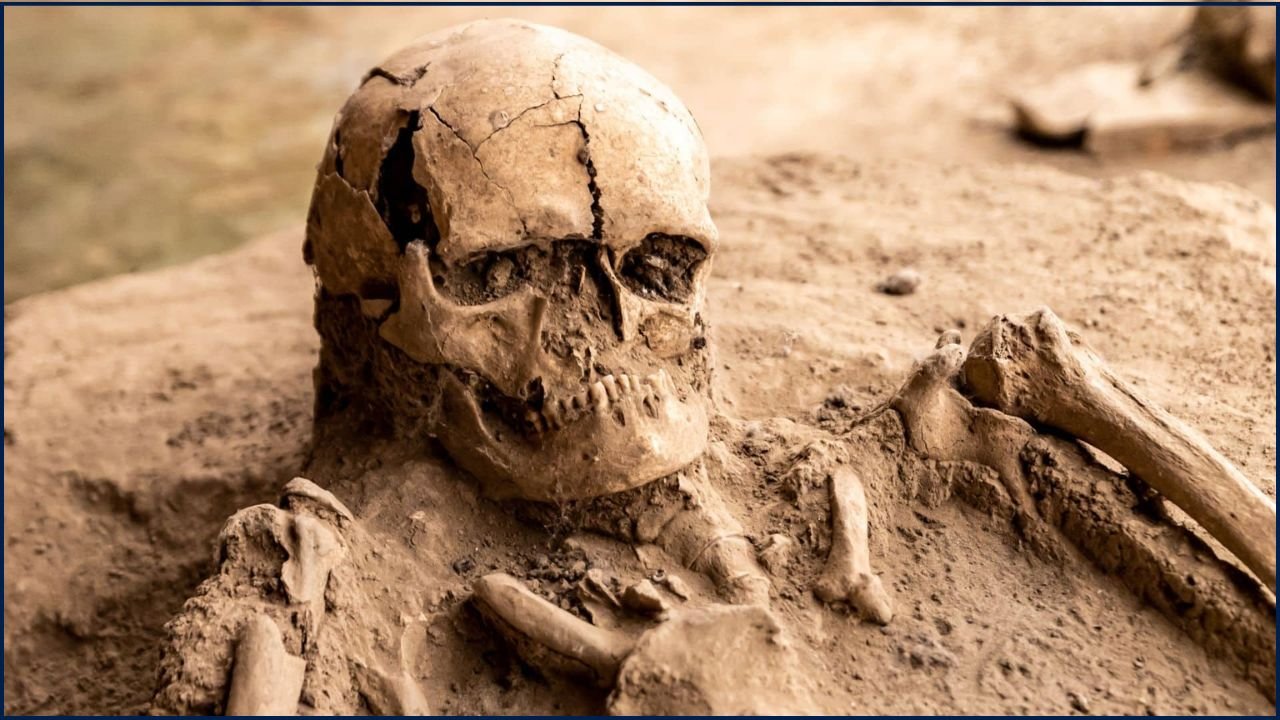
Human remains are examined by specialists known as bioarchaeologists, who study bones to learn about the health, diet, and lifestyle of ancient populations.
The entire process can take months or even years depending on the complexity of the site.
Organizations such as the Archaeological Institute of America promote responsible excavation practices worldwide.
Careers in Archaeology and Cultural Heritage
Discoveries like the Roman tombs in Constanța highlight the important work done by professionals who study and preserve human history.
Several career paths are involved in projects like this.
Archaeologists conduct excavations and analyze artifacts.
Anthropologists study human remains to understand ancient populations.
Museum curators preserve artifacts and present them to the public.
Conservation specialists restore fragile objects to prevent deterioration.
Cultural resource managers work with governments and construction companies to protect historical sites.
According to the U.S. Bureau of Labor Statistics, the median salary for archaeologists and anthropologists in the United States is around $63,800 per year, though experienced professionals can earn significantly more.
Balancing Development With Heritage Protection
Urban development is essential for modern societies, but it also presents challenges when historical sites are discovered.
Many countries have laws that require construction companies to pause development if archaeological remains are found.
In the United States, the National Historic Preservation Act protects sites that hold cultural or historical significance.
This approach allows archaeologists to document discoveries while still allowing projects such as hospitals, roads, and buildings to move forward responsibly.
The discovery in Constanța is a great example of how modern infrastructure and historical preservation can coexist.
Wales Finds Rare Roman Lead Ingots and Grants Them Official Treasure Protection
The Truth Behind Cleopatra’s Legendary Pearl Tale: Historians Revisit The Roman Account
Chemical Study Suggests Bath Water in Pompeii Was Poorly Maintained