

The center of the Milky Way has always been one of the most mysterious regions in our galaxy. Packed with dense star clusters, swirling gas clouds, and powerful gravitational forces, it is a place where extreme cosmic events occur regularly. Over the past decade, astronomers studying this region have noticed something unusual — a faint but persistent glow of high-energy radiation.
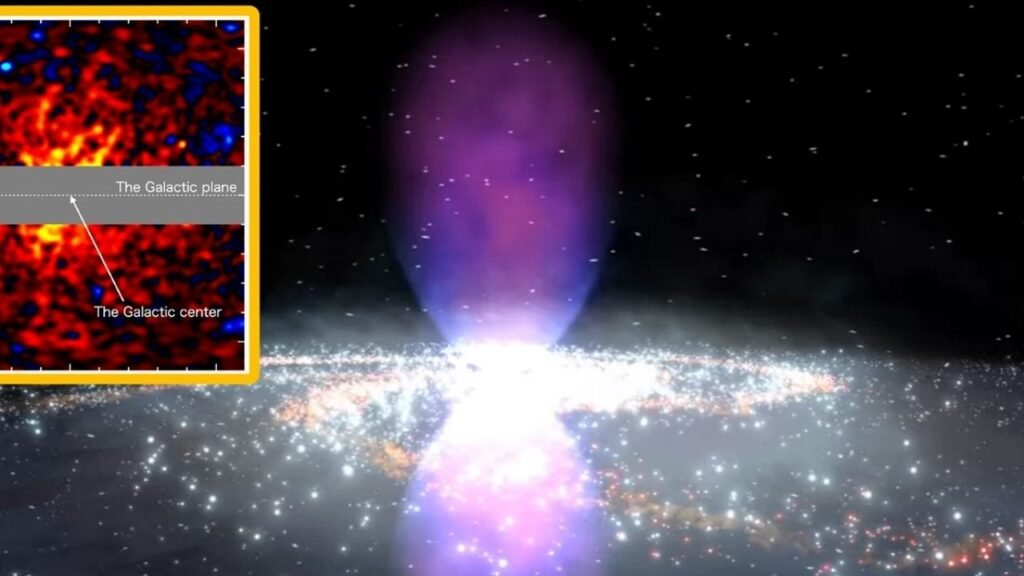
This mysterious signal, detected through advanced space telescopes, has sparked intense debate among scientists. Some researchers believe the glow could reveal new insights about dark matter, the invisible substance believed to make up a large portion of the universe. Others argue that the phenomenon may have a more conventional explanation linked to known cosmic objects.
The discovery has drawn attention because it may provide clues to one of the biggest unsolved puzzles in astrophysics. Despite decades of research, dark matter has never been directly observed. Scientists only know it exists because of the gravitational effects it produces on galaxies and cosmic structures. The strange radiation emerging from the Milky Way’s center might offer indirect evidence about the nature of this elusive material. While the data is still being studied and debated, the unusual glow has opened a new window into understanding the structure and hidden components of our galaxy.
Table of Contents
Strange Glow at the Milky Way’s Center That May Hint at Dark Matter
| Key Aspect | Details |
|---|---|
| Discovery | Detected through observations of gamma rays near the Milky Way’s center |
| Instrument | Fermi Gamma-ray Space Telescope |
| Phenomenon Name | Galactic Center Gamma-ray Excess |
| Radiation Type | Gamma rays (high-energy electromagnetic radiation) |
| Possible Cause 1 | Dark matter particle interactions |
| Possible Cause 2 | Population of millisecond pulsars |
| Region Observed | Central area of the Milky Way galaxy |
| Importance | Could provide clues about the nature of dark matter |
| Future Research | Observations from upcoming advanced telescopes |
Galactic Center Gamma-Ray Excess
The unusual signal observed near the heart of our galaxy is often referred to by scientists as the Galactic Center gamma-ray excess. This term describes an unexpected concentration of gamma rays — the most energetic form of electromagnetic radiation — coming from the central region of the Milky Way. Astronomers detected this glow using space-based instruments designed to observe high-energy cosmic radiation. The signal appears brighter than what researchers initially predicted based on known astronomical sources.
Scientists have been studying the pattern, intensity, and distribution of this gamma-ray emission to determine its origin. The glow appears to extend outward from the galactic center in a roughly spherical shape. This feature has made researchers consider several explanations, including the possibility that dark matter particles may be interacting with each other in ways that produce gamma rays.
What Exactly Is the Strange Glow?
The mysterious glow consists of gamma rays, which are extremely energetic forms of light produced during powerful cosmic events. These rays can be generated in environments where particles are accelerated to very high energies, such as near black holes, supernova explosions, or neutron stars. When scientists examined the center of the Milky Way using gamma-ray observatories, they found more radiation than expected.
This surplus radiation appears to spread across a wide region around the galactic center rather than originating from a single source. Such a distribution has made it difficult to pinpoint the exact origin. The pattern of the glow suggests that it might be connected to a widespread process occurring throughout the central region of the galaxy.
Researchers have carefully analyzed years of observational data to understand the properties of the signal. Although many natural sources can produce gamma rays, the intensity and symmetry of this glow have made it stand out as an unusual phenomenon.
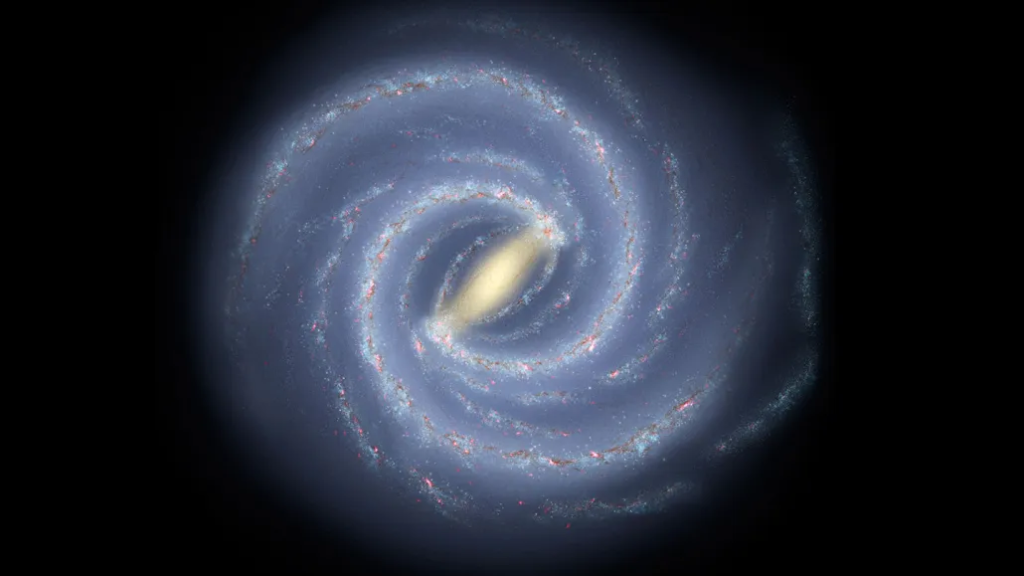
Why Do Scientists Think It Might Be Dark Matter?
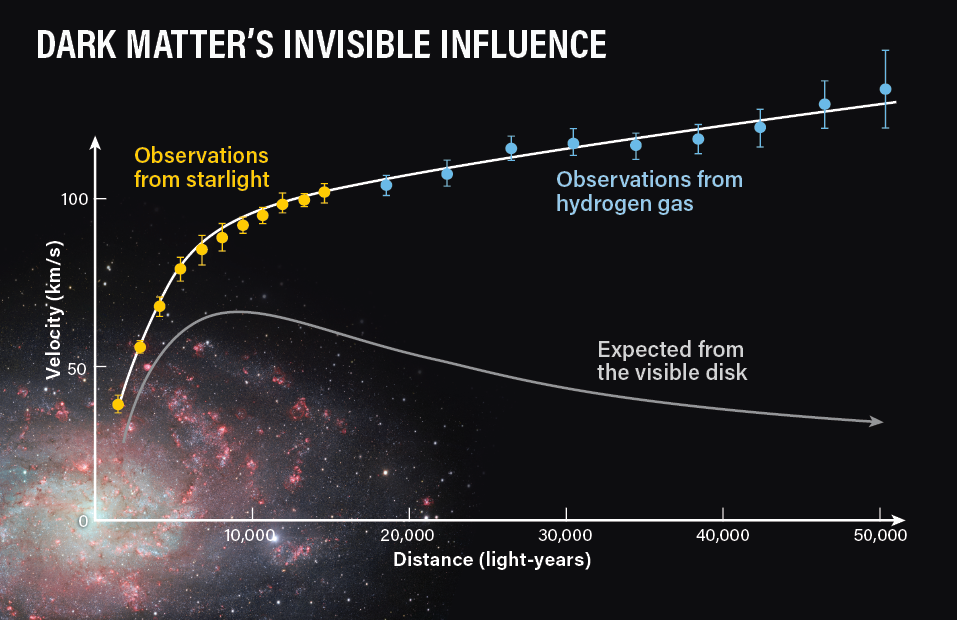
One of the most intriguing explanations for the strange glow involves dark matter. Dark matter is believed to make up a significant portion of the universe’s total mass, yet it does not emit or reflect light, making it invisible to traditional telescopes. Scientists infer its presence through the gravitational effects it has on galaxies and cosmic structures.
According to certain theoretical models, dark matter particles could occasionally collide or annihilate when they interact with one another. When such interactions occur, they might release energy in the form of gamma rays. If large amounts of dark matter are concentrated near the center of the Milky Way, these interactions could produce a detectable glow.
The observed gamma-ray signal matches some predictions about how dark matter might behave in dense regions of space. The roughly spherical shape of the radiation surrounding the galactic center also aligns with theoretical models of how dark matter is distributed within galaxies. For these reasons, the possibility that the glow represents indirect evidence of dark matter has generated significant interest in the scientific community.
But It Might Not Be Dark Matter
Despite the excitement surrounding the dark matter explanation, astronomers remain cautious. Scientific investigations require multiple lines of evidence, and many researchers believe there may be more conventional explanations for the gamma-ray excess.
One alternative theory suggests that the glow could be produced by a large number of millisecond pulsars. Pulsars are rapidly spinning neutron stars that emit beams of radiation as they rotate. When these objects spin extremely quickly, they can release high-energy gamma rays detectable by telescopes.
The central region of the Milky Way contains a dense population of stars, making it a possible location for numerous pulsars. If many faint millisecond pulsars are clustered there, their combined emissions could produce the observed gamma-ray glow. Because individual pulsars in this region may be too dim to detect separately, their signals might blend together to create what appears to be a smooth, widespread glow.
Recent studies and simulations have shown that both explanations — dark matter interactions and pulsar populations — could potentially account for the observations. As a result, the debate remains ongoing.
Why This Discovery Matters
The mystery of the gamma-ray glow is important because it touches on one of the most fundamental questions in modern astrophysics: the true nature of dark matter. Scientists estimate that dark matter makes up roughly a quarter of the universe, yet its composition remains unknown.
If the glow from the Milky Way’s center turns out to be linked to dark matter interactions, it would represent one of the first indirect observations of dark matter particles. Such a discovery would significantly advance our understanding of the universe and could lead to new theories about particle physics and cosmic evolution.
Even if the glow is eventually explained by pulsars or other known phenomena, the research still contributes valuable knowledge. Studying the high-energy environment at the center of the galaxy helps scientists better understand how stars evolve, how radiation behaves in extreme conditions, and how matter is distributed across the cosmos.
What Will Happen Next
Astronomers continue to collect and analyze data in order to solve the mystery of the strange glow. Future telescopes with more advanced technology will provide clearer and more detailed observations of the galactic center.
New observatories are expected to measure gamma-ray signals with greater accuracy and detect faint astronomical objects that current instruments cannot easily observe. These improved capabilities may help scientists determine whether the glow originates from dark matter interactions or from a hidden population of pulsars.
As researchers continue their investigations, the center of the Milky Way remains a natural laboratory for studying some of the universe’s most fascinating phenomena. Whether the strange glow reveals new physics or simply deepens our understanding of known cosmic objects, it highlights how much there is still to discover about the universe we inhabit.