
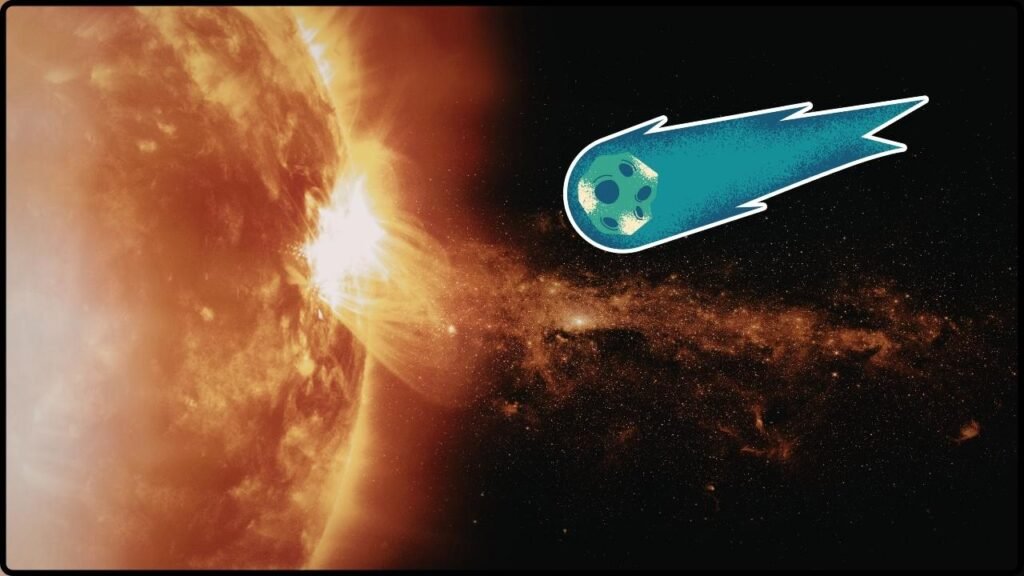
A Newly Found Comet Will Make Its Closest Solar Pass: In an exciting celestial twist, a newly discovered comet — officially named C/2026 A1 (MAPS) — is expected to make its closest solar pass on April 4, 2026. While comets are common visitors to our solar system, this one is grabbing headlines for its potentially dramatic visibility, scientific importance, and its classification as a sungrazing comet, which means it will pass incredibly close to the Sun — possibly brightening enough to be seen from Earth.Whether you’re a backyard skywatcher, a classroom teacher, a pro astronomer, or just someone curious about space, this event is a great chance to connect with the cosmos. Let’s break down what makes this comet so important, what you can expect to see, and how this event ties into the broader story of our solar system.
Table of Contents
A Newly Found Comet Will Make Its Closest Solar Pass
The upcoming close approach of Comet C/2026 A1 (MAPS) offers a rare window into the inner workings of our solar system. As it races toward the Sun for a daringly close flyby on April 4, 2026, it brings the potential for a remarkable skywatching event and an opportunity for scientific discovery. Whether it becomes the next big “comet of the decade” or simply a fascinating case study for astronomers, MAPS is already making its mark. Stay tuned, keep your telescopes ready, and don’t miss this cosmic visitor’s spectacular journey through our solar system.
| Topic | Details |
|---|---|
| Comet Name | C/2026 A1 (MAPS) |
| Discovery Date | January 13, 2026 |
| Comet Type | Kreutz sungrazing comet |
| Closest Approach (Perihelion) | April 4, 2026 |
| Perihelion Distance | Approx. 0.0054 AU from the Sun |
| Discovery Team | MAPS (Moving Object and Planetary Search) program, Chile |
| Visibility Forecast | Potential naked-eye or even daylight visibility if the comet survives perihelion |
| Where to Learn More | NASA Solar System: https://solarsystem.nasa.gov/comets/ |
What Exactly Is Comet C/2026 A1 (MAPS)?
C/2026 A1 (MAPS) is what scientists call a long-period comet, meaning it comes from the outer reaches of the solar system — possibly the Oort Cloud, a distant shell of icy objects encircling the Sun. This particular comet was discovered relatively far from the Sun, giving astronomers a rare opportunity to observe it over a long period before it reaches perihelion (its closest point to the Sun).
The “MAPS” in its name comes from the Moving Object and Planetary Search program, an international sky survey that tracks small solar system objects, including asteroids and comets.
This early detection gives researchers more time to study the comet’s orbit, composition, and brightness trajectory. It’s also significant because most Kreutz-family sungrazing comets are typically detected much later, often just days before their closest solar approach.
What Makes This Newly Found Comet Will Make Its Closest Solar Pass Unique?
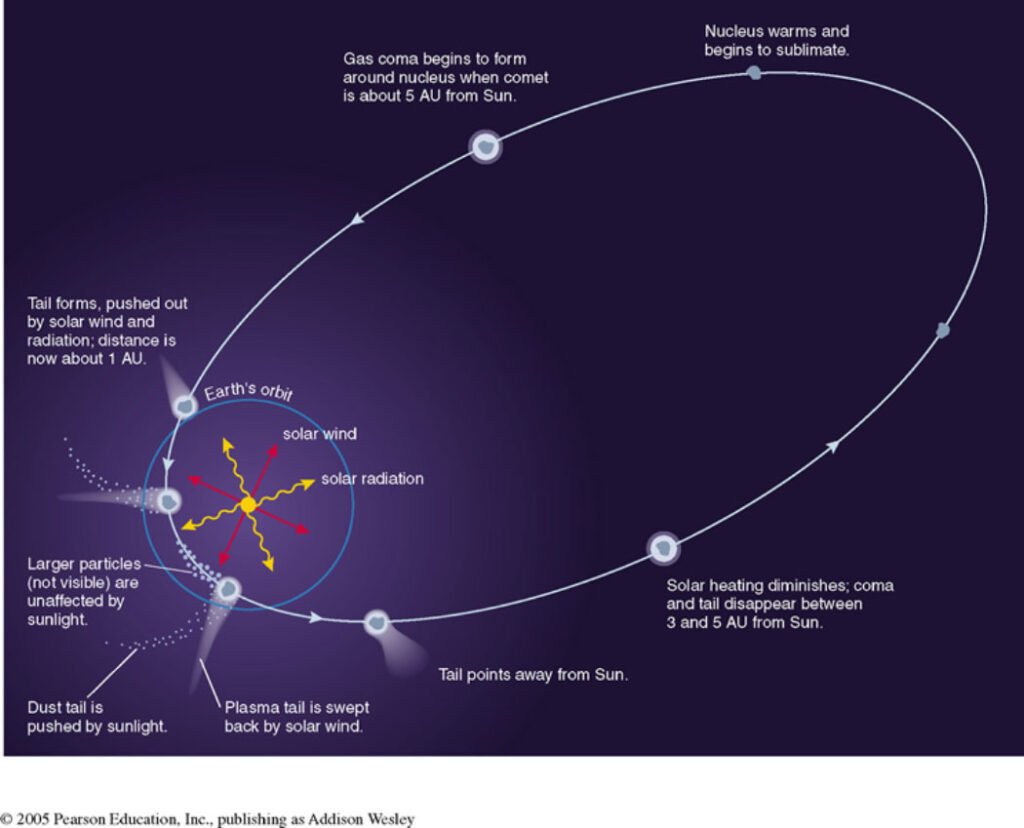
Sungrazers are a specific group of comets with orbits that bring them exceptionally close to the Sun, often within a few solar radii. These comets typically experience extreme solar heating, which causes rapid sublimation (ice turning into gas) and potentially violent disintegration.
What’s interesting about C/2026 A1 (MAPS):
- It belongs to the Kreutz family — a group of comets believed to be fragments of a giant comet that broke up around the 12th century.
- It may pass so close to the Sun that it enters the Sun’s corona (outer atmosphere), enduring extreme heat and tidal forces.
- Depending on how it reacts to this encounter, it may flare up dramatically, becoming bright enough to see in broad daylight, or it may disintegrate entirely before we can spot it.
Historically, some Kreutz sungrazers have become spectacular sky shows (like Comet Ikeya-Seki in 1965), while others faded into the solar glare or broke apart early. This unpredictability adds to the excitement and scientific intrigue.
When and Where Will the Newly Found Comet Will Make Its Closest Solar Pass?
The comet’s perihelion is predicted for April 4, 2026, but visibility will depend on:
- Its brightness increase as it nears the Sun.
- Earth’s position relative to the comet’s orbit.
- Local sunset/sunrise times, since it will appear close to the Sun in our sky.
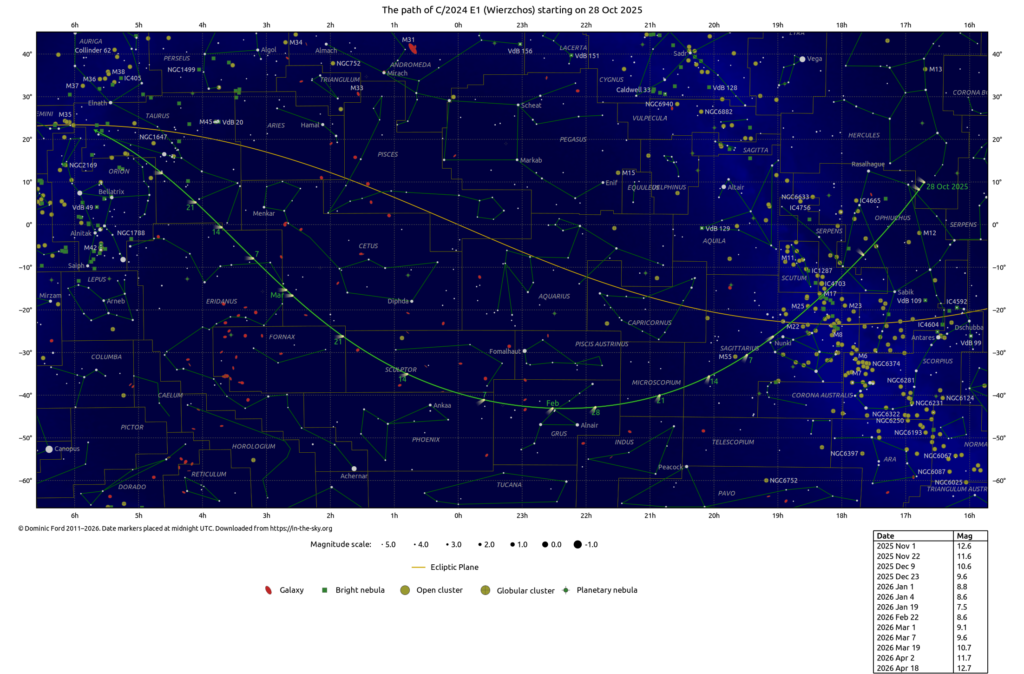
Visibility Timeline:
- March 2026: Telescope and binocular viewing for experienced observers. It may reach magnitude +7 to +8, meaning it’s still faint.
- Late March to Early April 2026: If the comet survives its solar encounter, it may brighten to magnitude 0 or brighter, possibly even visible in daylight when close to the Sun.
- Mid-April 2026: If the comet remains intact and swings away from the Sun, it could produce a long, bright tail visible during dawn or dusk.
Where to Look:
- Look for the comet near the horizon just before sunrise or just after sunset.
- Use astronomy apps to track its sky path. The comet’s proximity to the Sun may make daytime visibility possible — a rare and remarkable event.
- Observers in the Southern Hemisphere are likely to get the best views, especially during its outbound journey after perihelion.
Scientific Value: Why Astronomers Are Paying Close Attention
Studying comets like MAPS isn’t just about pretty sky shows. These icy bodies are time capsules from the early solar system — made of unaltered material from 4.6 billion years ago.
Here’s what scientists can learn:
- Comet Composition: As the Sun’s heat vaporizes the surface, telescopes can analyze the released gases (like water vapor, CO2, ammonia, and more) to better understand the comet’s makeup.
- Solar Interaction: The close approach offers a natural experiment in how extreme solar radiation and gravity affect fragile celestial bodies.
- Survivability Factors: Not all comets survive perihelion. By studying which ones do, scientists gain insights into their structure and density.
- Space Weather Effects: A sungrazing comet creates an opportunity to monitor how solar winds and magnetic fields interact with a comet’s ion tail in real-time.
Comet Sightings Through History
Comets have a long, dramatic history of appearing in Earth’s skies — sometimes interpreted as omens, sometimes remembered as awe-inspiring natural events. Here’s a quick trip down memory lane:
- Comet Hale-Bopp (1997): One of the most viewed comets of the 20th century, visible for 18 months.
- Comet NEOWISE (2020): A surprise performer, clearly visible with the naked eye and a camera.
- Comet Ikeya-Seki (1965): Another Kreutz sungrazer, visible in broad daylight and considered one of the brightest comets in history.
Each of these examples helped improve our understanding of comet behavior — and set the bar for how exciting a cometary encounter can be.
Educational Opportunities of A Newly Found Comet Will Make Its Closest Solar Pass
Teachers, students, and amateur astronomers can turn this celestial event into a learning opportunity. Here’s how:
- Science Projects: Track the comet’s progress, build simple brightness charts, or simulate its orbit using classroom tools.
- Community Events: Astronomy clubs and observatories can host viewing parties or livestreams.
- Citizen Science: Amateur astronomers can contribute real-time observations, photos, and data to global projects.
Even if MAPS doesn’t live up to the “fireball in the sky” hype, the lead-up offers a prime moment to teach orbital mechanics, solar radiation, space weather, and the history of astronomy.
Potential Risks: Is This Comet Dangerous?
In short — no.
Although comets can raise concern when they appear to come close to Earth, C/2026 A1 (MAPS) is not on a collision course. Its path will take it close to the Sun, but not near our planet. However, astronomers always monitor new comet orbits closely to ensure there’s no unexpected deviation.
What’s more interesting is how close the comet gets to the Sun — not us. That’s where the action is.
How to Prepare for Viewing The Newly Found Comet Will Make Its Closest Solar Pass?
If you want the best chance of seeing the comet:
- Get familiar with your horizon: Find an open spot with a clear view toward sunrise or sunset.
- Use apps like Stellarium, SkySafari, or TheSkyLive to track the comet’s location by date.
- Start watching early — March 2026 is when astronomers expect it to become detectable.
- Have binoculars handy: Even if it’s not bright enough to see with the naked eye, basic binoculars can help.
- Follow live updates: Keep an eye on NASA and astronomy sites for brightness forecasts and survival status after perihelion.
The 2026 NASA Missions That Could Make Space History
China Faces a Space Crisis as Top Astronauts Remain Stuck in Orbit
Matteo Paz Makes History: High Schooler Discovers 1.5 Million Hidden Space Phenomena