
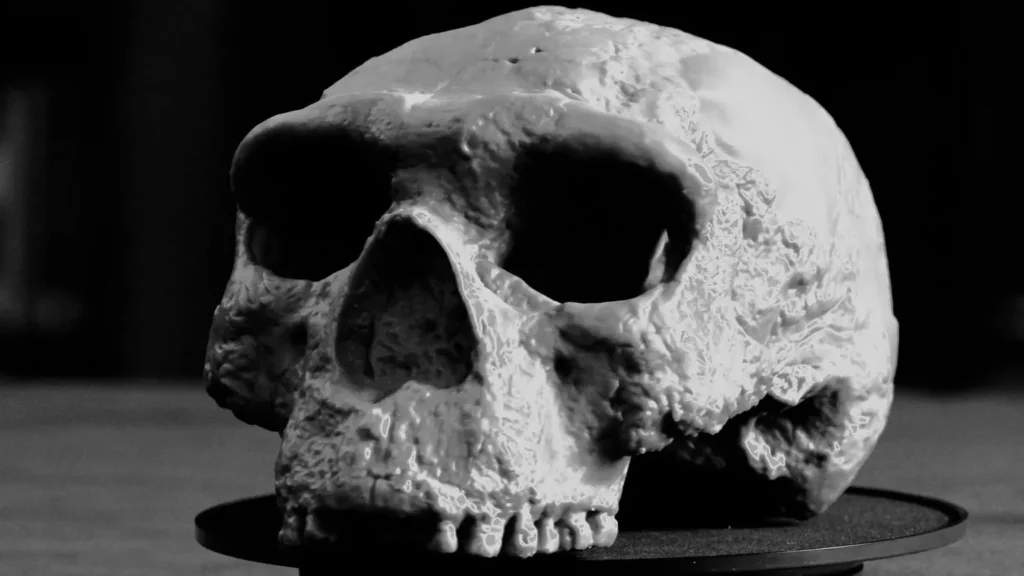
An Ancient China Skull discovery is reshaping scientists’ understanding of early humans after new research linked a 146,000-year-old fossil from northeastern China to a mysterious human population. Researchers say the nearly complete cranium, nicknamed “Dragon Man,” likely belonged to Denisovans — an extinct human relative — offering the clearest physical evidence yet of a group previously known mainly through DNA.
Table of Contents
Ancient China Skull Discovery
| Key Fact | Detail/Statistic |
|---|---|
| Fossil Age | About 146,000 years old |
| Location | Harbin, Heilongjiang Province, China |
| Significance | Most complete Denisovan-related fossil yet |
Researchers say the Ancient China Skull is unlikely to be the last major discovery. With new technology and expanding excavations, more evidence of ancient human relatives may soon emerge. Each find adds detail to humanity’s shared past — a story scientists now see as complex, interconnected, and still unfolding.
What Scientists Found
The fossil was discovered during bridge construction in the 1930s in the Harbin region. According to researchers, a laborer recognized its importance and hid it in a well during wartime occupation to prevent confiscation. The skull remained hidden for decades until relatives turned it over to scientists in 2018.
Unlike most early human remains, which consist of partial bones, the Ancient China Skull is remarkably complete. The fossil preserves the face, upper jaw, eye sockets, and braincase.
Researchers immediately noticed unusual characteristics: an enormous brow ridge, a large cranial capacity comparable to modern humans, and a wide, flat face.
“This skull combines primitive and modern human features in a way we have never seen before,” said Dr. Qiang Ji, a paleontologist at Hebei GEO University and one of the scientists who first described the fossil.
The team initially classified the specimen as a new species, Homo longi (“Dragon Man”).
How DNA Solved the Mystery
Evidence from Ancient Proteins
Later research used improved molecular analysis techniques. Scientists extracted proteins and microscopic genetic material trapped in dental plaque on the fossil’s teeth.
The molecular signature matched Denisovans — an extinct human population first identified in 2010 after a finger bone and molar were found in Denisova Cave in Siberia.
“Until recently, Denisovans were almost ghosts in the fossil record,” said Dr. Chris Stringer, a human evolution expert at the Natural History Museum in London. “Now we may finally know what they looked like.”
This means the Ancient China Skull is likely the first near-complete Denisovan skull ever found.
Who Were the Denisovans?
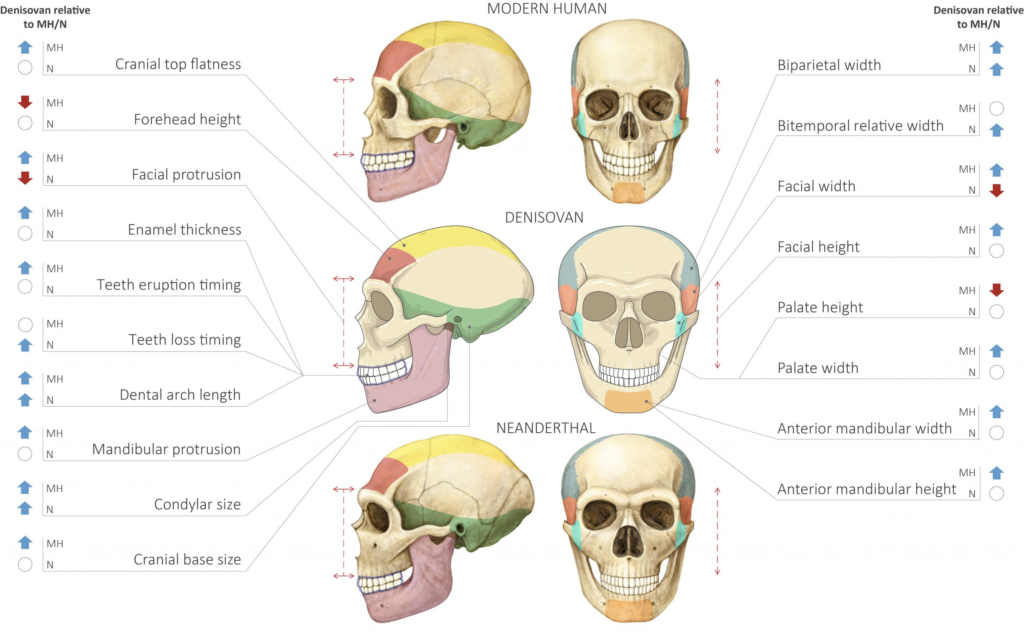
Denisovan humans were closely related to Neanderthals but evolved separately, probably after populations migrated from Africa hundreds of thousands of years ago.
Scientists believe they inhabited large parts of Asia, including Siberia, Tibet, and Southeast Asia.
Modern genetics confirms they interbred with early Homo sapiens. Today, people in East Asia, Melanesia, and Indigenous Australian populations carry small amounts of Denisovan DNA.
One inherited gene variant helps people survive low oxygen levels at high altitudes. Tibetan populations possess this Denisovan-derived adaptation.
Not Alone on Earth
For most of prehistory, Earth hosted multiple human species simultaneously:
- Homo sapiens
- Neanderthals
- Denisovan humans
Rather than replacing each other instantly, these groups interacted and interbred.
Anthropologists now describe human evolution as a braided stream rather than a single line.
Why Asia Matters in Human Evolution
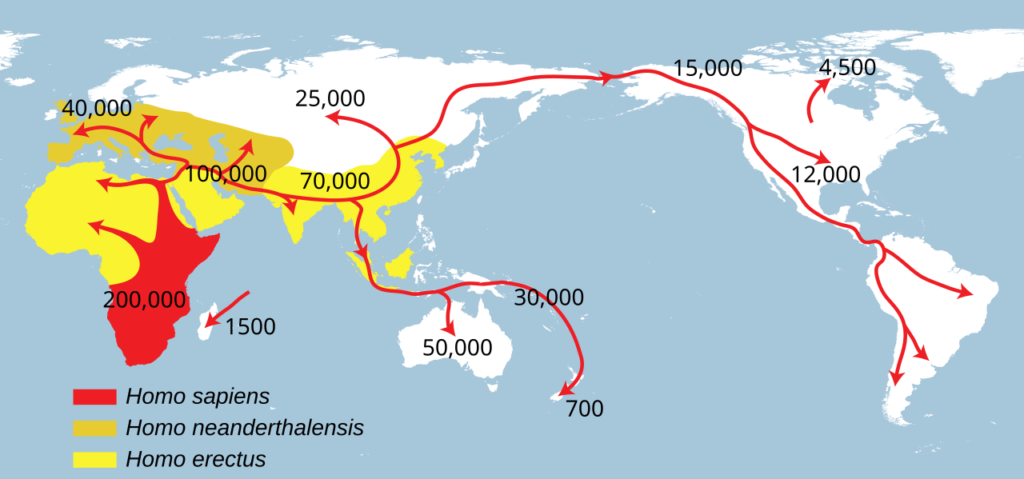
For decades, Africa and Europe dominated evolutionary studies. The Ancient China Skull supports a growing body of research suggesting Asia was a major center of human evolution.
Additional fossils from the Yunxian site in central China — dated to nearly one million years old — show multiple human populations lived in the region across long periods.
“Asia was not just a migration route,” researchers note. “It was a region where human groups diversified and adapted.”
This finding reshapes migration models taught for generations.
Scientific Debate Continues
Researchers still debate whether Homo longi is a separate species or simply the physical form of Denisovans.
Some scientists argue species labels in human evolution can be misleading because ancient humans frequently interbred. Others say classification helps track evolutionary relationships.
Either way, the Ancient China Skull changes the broader narrative: modern humans did not evolve in isolation.
Instead, genetic evidence shows interconnection among ancient populations.
What the Skull Reveals About Daily Life
Anthropologists are studying the fossil to infer lifestyle. The large nasal opening suggests adaptation to cold environments, indicating Denisovans survived harsh Ice Age climates.
The robust jaw implies a tough diet, likely including raw plants, nuts, and uncooked meat.
Wear patterns on teeth suggest heavy chewing and possibly the use of teeth as tools, a behavior observed in other prehistoric humans.
Researchers also believe Denisovans used stone tools and possibly controlled fire, based on associated archaeological sites across Asia.
Climate and Survival
The fossil dates to a period of dramatic climate shifts during the Middle Pleistocene. Ice ages advanced and retreated repeatedly, transforming habitats.
Human populations that survived required adaptability.
“The Denisovans appear to have been ecological generalists,” said evolutionary researchers in related studies. “They lived in cold mountains, temperate forests, and possibly tropical regions.”
This wide adaptability may explain why modern humans inherited useful genes from them.
Broader Implications
The discovery affects genetics, medicine, and anthropology.
Medical researchers study Denisovan genes because inherited DNA influences immune response, metabolism, and altitude tolerance. Some studies suggest ancient DNA affects how populations respond to certain diseases.
The Ancient China Skull also helps scientists calibrate evolutionary timelines. Knowing what Denisovans looked like allows researchers to re-examine other fossils that were previously misclassified.
Experts believe additional undiscovered human populations may still exist in the fossil record.
Future Research
Technological advances are accelerating discoveries. Improved radiometric dating, CT scanning, and protein analysis now allow scientists to identify species from tiny traces.
Researchers are currently surveying caves and river valleys across China, Mongolia, and Central Asia. These regions may preserve additional Denisovan remains.
Many scientists believe Asia may hold one of the least explored chapters of human evolution.
Timeline of Key Discoveries
| Year | Discovery |
|---|---|
| 1933 | Skull discovered near Harbin |
| 2010 | Denisovans identified from Siberian cave DNA |
| 2018 | Skull donated to scientists |
| 2021–2023 | Studies connect fossil to Denisovan lineage |
Ethical and Cultural Importance
The fossil also carries cultural significance. Chinese researchers say the discovery highlights Asia’s contribution to global scientific understanding.
Museums are considering how to display the skull responsibly while preserving it for study.
Scientists stress that human evolution belongs to all humanity. The story crosses national and cultural boundaries.
FAQs About Ancient China Skull Discovery
Did scientists discover a completely new human species?
Possibly. Many researchers now think the fossil represents Denisovans rather than a separate species.
Are Denisovans related to modern humans?
Yes. Many living populations carry small amounts of Denisovan DNA.
Why is the fossil important?
It provides the first complete physical appearance of Denisovan humans.
Where was the skull found?
Harbin, northeastern China.
What does it change?
It shows human evolution in Asia was far more complex than previously believed.