

Bath Water in Pompeii Was Poorly Maintained: and that headline alone challenges the long-standing belief that Roman baths were the pinnacle of ancient cleanliness. For decades, textbooks and documentaries have praised Roman engineering as advanced, organized, and ahead of its time. And in many ways, that reputation is well-earned. But recent chemical research shows that at least in Pompeii’s earliest public bathhouses, the water quality wasn’t exactly sparkling clean.
As someone who has followed environmental science and infrastructure studies for years, I can tell you this: water systems reveal the truth. Pipes, mineral deposits, and chemical traces don’t exaggerate or sugarcoat history. They tell it straight. And in this case, the chemistry suggests that early bath water in Pompeii was stagnant, mineral-heavy, and not refreshed as often as we might expect. This new research, published in the Proceedings of the National Academy of Sciences (PNAS), uses modern scientific tools to answer ancient questions. It bridges archaeology, chemistry, geology, and public health in a way that even a 10-year-old can grasp — dirty water that doesn’t move much gets dirtier.
Table of Contents
Bath Water in Pompeii Was Poorly Maintained
Chemical analysis of Pompeii’s ancient baths reveals that early well-fed bath water was mineral-heavy, contaminated, and infrequently refreshed. The later introduction of aqueduct systems significantly improved water quality. This research reshapes our understanding of Roman sanitation and reinforces timeless public health principles: flowing water is safer water, infrastructure matters, and maintenance determines outcomes. History, backed by chemistry, continues to teach lessons modern cities still rely on today.
| Category | Details |
|---|---|
| Study Focus | Chemical and isotope analysis of mineral deposits in Pompeii’s baths |
| Published In | Proceedings of the National Academy of Sciences (PNAS) |
| Official Journal | https://www.pnas.org |
| Primary Method | Stable isotope & trace element analysis |
| Early Water Source | Deep groundwater wells |
| Later Water Source | Roman aqueduct system |
| Contaminants Found | Lead, zinc, copper, organic residues |
| Professional Relevance | Environmental science, archaeology, public health, engineering |
| Historical Period | 2nd century BCE to 1st century CE |
What the Chemical Study Actually Found?
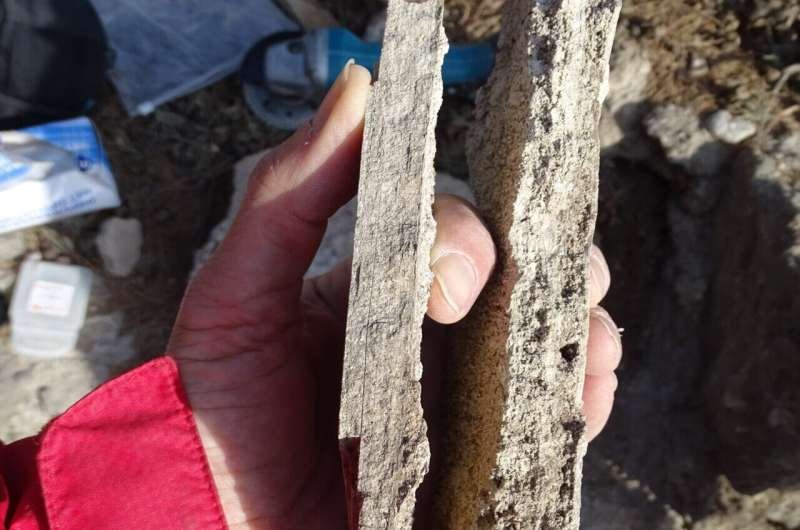
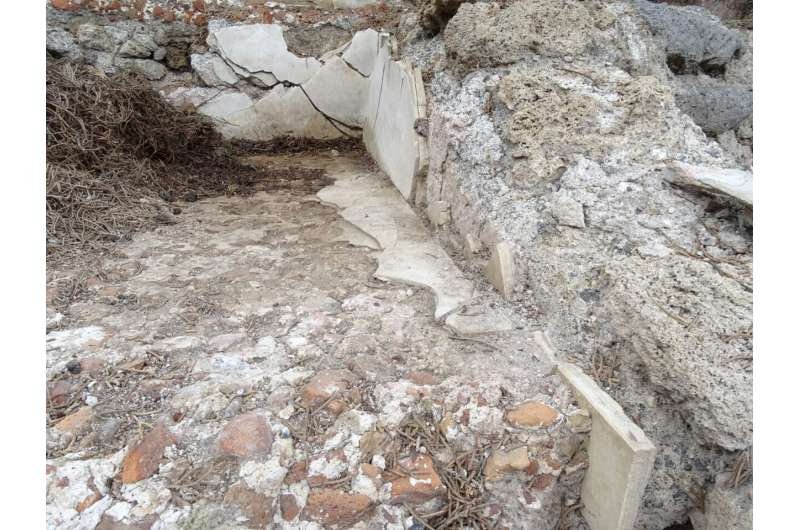
Researchers examined carbonate crusts — the chalky mineral buildup left behind when water evaporates. If you’ve ever seen white crust around a faucet in a hard-water home in Texas or Arizona, you’ve seen something similar.
These crusts formed inside bath pipes, pools, and drainage systems in Pompeii. Scientists carefully removed samples and performed stable isotope analysis and trace element testing. According to the study, early well-fed baths contained:
- Elevated concentrations of lead
- Detectable levels of zinc and copper
- Evidence of organic waste buildup
- Chemical signatures consistent with limited water flow
That last point is key. Water that flows continuously tends to stay cleaner. Water that sits? It accumulates contaminants.
The Well Water Era: Limited Technology, Limited Hygiene
Before Pompeii connected to an aqueduct in the 1st century CE, its public baths relied heavily on groundwater drawn from wells. This water had to be manually lifted using mechanical devices like water wheels or bucket systems.
Let’s be real — that’s labor-intensive. When water is hard to move, it doesn’t get replaced often.
Experts estimate that early bath pools may have been drained and refilled only once per day. Imagine a modern public pool in Florida during July heat, filled with dozens of people, but without chlorine and without a constant filtration system. That’s a fair comparison.
Groundwater in volcanic regions naturally carries more dissolved minerals. Pompeii sat near Mount Vesuvius, which contributed to elevated metal concentrations in the soil and water.
So contamination wasn’t entirely human neglect — part of it was environmental.
Lead Pipes and Metal Exposure
Romans used lead pipes, called fistulae, to distribute water. Modern audiences often react strongly to the word “lead,” and for good reason. The Centers for Disease Control and Prevention (CDC) outlines health risks associated with lead exposure.
The study found lead traces in carbonate deposits, confirming that bath water interacted with metal plumbing. However, mineral buildup inside pipes may have created a protective layer that reduced direct exposure over time.
Still, the presence of heavy metals tells us that bathwater chemistry was far from pristine.
Organic Contamination: The Human Factor
Public baths weren’t just places to rinse off. They were social centers. People exercised, relaxed, talked politics, and spent hours soaking.
Now think about it practically:
- No modern soap formulas
- No filtration systems
- No chlorine
- Dozens of bathers per day
Human sweat, skin cells, oils, and bodily waste entered the water. Without frequent turnover, contamination levels increased.
The CDC’s Model Aquatic Health Code explains that modern U.S. pools must circulate water every 6–8 hours to maintain sanitation standards. Pompeii’s early baths had no such system.
The Aqueduct Upgrade: A Turning Point
When Pompeii connected to a Roman aqueduct in the 1st century CE, water quality improved significantly.
Aqueducts transported spring water from distant sources using gravity. That meant:
- Continuous supply
- Greater water pressure
- More frequent replenishment
- Lower heavy metal concentration
Roman aqueducts remain one of history’s engineering marvels.
The chemical signatures in later bath deposits show reduced contamination compared to the earlier well-water phase.
Infrastructure changed everything.
Why Bath Water in Pompeii Was Poorly Maintained Study Matters for Modern Professionals?
This isn’t just ancient gossip. It offers real-world lessons for today.
Environmental Engineers
Water turnover rate directly affects contamination levels. Pompeii’s early system lacked sufficient flow — a mistake modern systems avoid through mechanical filtration and chlorination.
Public Health Officials
Access to clean, circulating water reduces disease transmission risk. Even today, stagnant water can harbor bacteria such as Legionella.
Archaeologists and Historians
Chemical evidence allows researchers to move beyond written records. Mineral deposits provide objective data that reshapes historical narratives.
Urban Planners
Infrastructure investment has measurable public health benefits. The shift from wells to aqueducts in Pompeii mirrors modern upgrades in municipal systems across the United States.
Breaking It Down: How Stable Isotope Analysis Works
For readers curious about the science, here’s a simple breakdown:
Step 1: Sample Collection
Researchers collect carbonate crusts from ancient pipes.
Step 2: Laboratory Testing
Mass spectrometers measure isotope ratios — essentially the atomic fingerprints of water molecules.
Step 3: Trace Element Mapping
Scientists identify heavy metals embedded in mineral layers.
Step 4: Timeline Reconstruction
Layer thickness and composition reveal how frequently water flowed or stagnated.
This method is widely used today in groundwater studies and climate research.
Comparing Ancient and Modern Standards
Let’s put this in perspective.
Modern U.S. municipal water systems must meet strict federal standards under the Safe Drinking Water Act. The EPA enforces these rules nationwide.
Ancient Pompeii had no federal oversight, no filtration plants, and no chemical testing kits. Yet they built one of the most advanced hydraulic systems of their era.
Relative to their time, Roman baths were impressive. Relative to today? Not even close.
Common Misconceptions
One misconception is that Roman society was universally unhygienic. That’s not accurate. Roman cities had:
- Sewer systems
- Public latrines
- Aqueduct networks
- Organized bathing culture
In fact, compared to medieval Europe centuries later, Roman sanitation was advanced.
But “advanced” does not mean chemically clean by modern standards.
Lessons We Still Apply Today
The findings reinforce four core principles:
Source matters.
Spring-fed water is generally cleaner than mineral-heavy groundwater.
Flow prevents stagnation.
Continuous movement reduces contamination buildup.
Materials influence safety.
Pipe composition affects long-term water chemistry.
Maintenance determines outcomes.
Infrastructure must be actively managed.
These principles guide American cities today, from New York to Los Angeles.
Researchers Investigate a Worm That Temporarily Disables Pain Sensation
Researchers Decode How Macaque Facial Expressions Work Like a Language
New Research Looks at Energy Sources Located Far Below Earth’s Surface
The Bigger Picture
The phrase Chemical Study Suggests Bath Water in Pompeii Was Poorly Maintained isn’t about mocking ancient Romans. It’s about understanding progress.
Two thousand years ago, engineers worked with gravity, stone, and manpower. Today, we use pumps, filtration membranes, ultraviolet disinfection, and federal water regulations.
This study reminds us that infrastructure investments improve lives. Pompeii’s transition from wells to aqueducts shows measurable improvements in water chemistry. That same principle applies when modern cities upgrade aging pipes or expand treatment plants.
Clean water doesn’t happen by accident. It requires planning, science, and consistent oversight.