
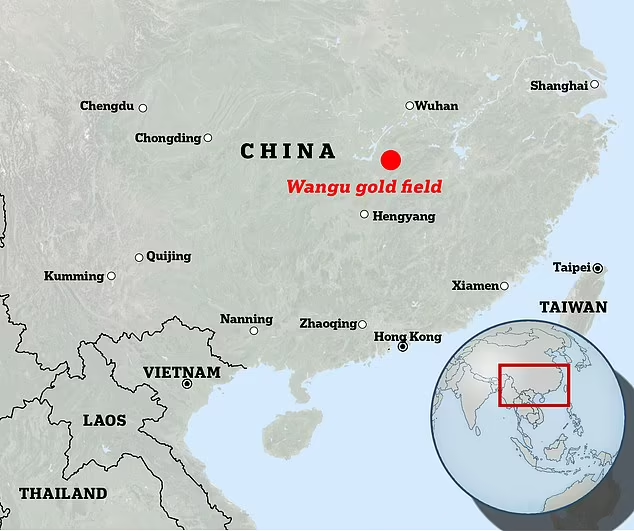
Geological researchers in southern China say China’s Wangu Gold Deposit could contain more than 1,000 metric tons of gold deep underground, according to provincial survey findings released in 2026. Located in Hunan province, the discovery may rank among the largest gold resources identified in decades and could influence long-term global gold supply, although commercial production remains years away.
Table of Contents
China’s Wangu Gold Deposit
| Key Fact | Detail / Statistic |
|---|---|
| Estimated resource | Over 1,000 metric tons of gold |
| Location | Hunan Province, south-central China |
| Discovery method | Deep drilling and 3-D seismic modeling |
| Production timeline | Possible early-mid 2030s |
Further drilling results are expected in coming years. Even before extraction begins, China’s Wangu Gold Deposit is influencing scientific research and exploration strategy, suggesting that major mineral resources may still exist — simply hidden deeper underground than previous generations could reach.
What Researchers Found Beneath Hunan
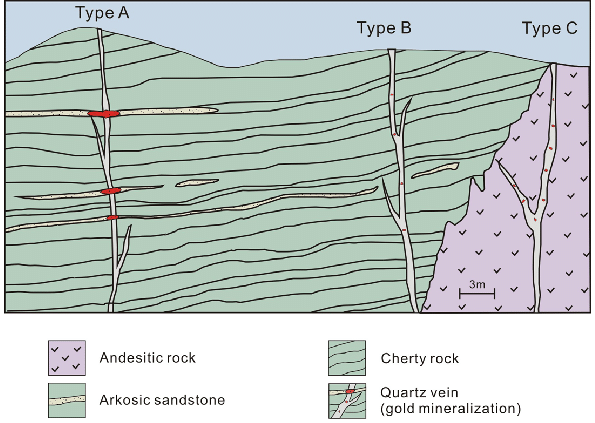
Geologists say China’s Wangu Gold Deposit lies inside the Jiangnan tectonic belt, a mineral-rich geological corridor formed during ancient continental collisions. The region has produced gold before, but the newly identified ore body appears far deeper and significantly larger.
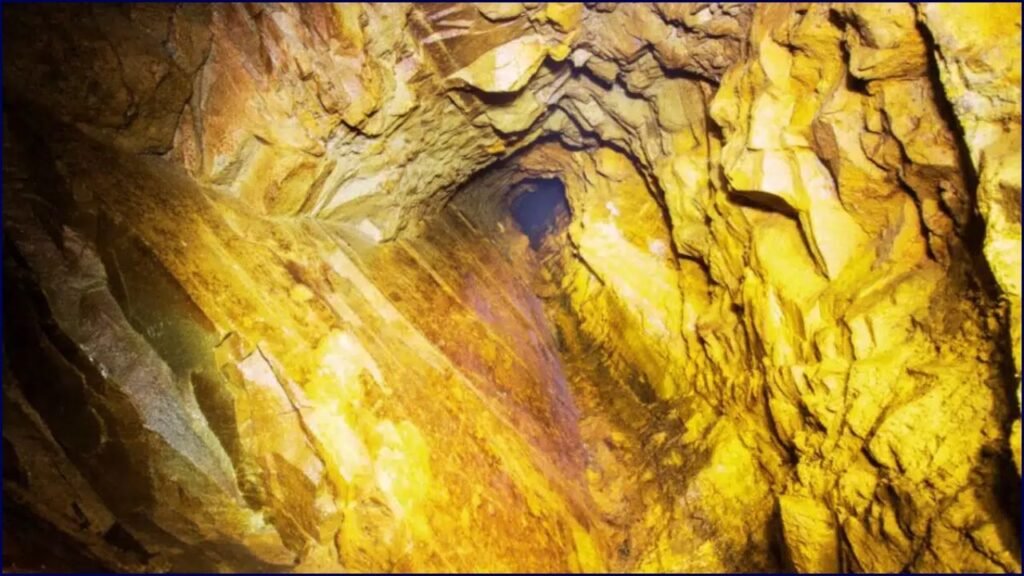
Survey teams drilled more than one kilometer below the surface. Core samples revealed gold-bearing quartz veins extending through fractured metamorphic rock layers.
“This is not a small isolated ore pocket,” a senior exploration engineer from the Hunan Geological Bureau said during a technical briefing summarized by regional media. “The mineralized structure appears continuous at depth.”
Economic geologists explain such formations occur when mineral-rich hydrothermal fluids travel through faults and fractures. As the fluids cool, microscopic gold particles crystallize along quartz veins.
How Large Is 1,000 Tons?
Gold is typically measured in metric tons or troy ounces. A 1,000-ton resource equals roughly 32 million ounces.
For comparison, global mining operations collectively produce about 3,500 tons annually, according to international metals market statistics. Even large mines usually yield only 20 to 50 tons each year.
“If confirmed and economically recoverable, the Wangu deposit qualifies as a world-class discovery,” said a resource economics researcher in a published mining analysis. “Very few discoveries this century exceed 500 tons.”
Why It Was Found Only Recently
The gold lies far below the surface, hidden beneath thick rock layers. Traditional prospecting methods — such as examining river sediments — would not detect it.
Instead, geologists used mineral exploration technology including:
- deep seismic imaging
- 3-D modeling
- geochemical sampling
- predictive algorithms
Mining specialists say future discoveries will increasingly rely on deep-earth mining techniques.
“The easy deposits were found generations ago,” a university mining geology professor wrote in academic research on concealed ore bodies. “Remaining resources are buried.”
Environmental Considerations
Large underground mines require substantial infrastructure. Ventilation systems, water pumping, waste rock disposal, and tailings management are essential.
Environmental analysts say deep mining presents different risks than open-pit operations. Surface disturbance may be smaller, but underground water contamination can occur if not properly managed.
Chinese regulators now require environmental impact assessments before major mine construction. The project would need approval covering:
- groundwater protection
- seismic stability
- tailings storage safety
- land rehabilitation
Mining engineers note modern mines often recycle water and use paste backfill, a technique that returns processed rock underground to stabilize tunnels and reduce surface waste.
Economic and Strategic Implications
China is the world’s largest gold producer and one of the largest consumers. Jewelry demand and investment purchases remain strong, especially during economic uncertainty.
Gold also supports central bank reserves. Governments hold gold as a financial safety asset, especially during currency volatility.
A large domestic mine could reduce import dependence over decades.
However, analysts emphasize timing.
Mining development typically requires:
- resource confirmation
- engineering studies
- permitting
- infrastructure construction
Production would likely begin in the early-to-mid 2030s.
China, Gold, and Monetary Strategy
Central banks worldwide have increased gold purchases in recent years. Financial institutions use gold as a hedge against inflation and geopolitical risk.
Economists say large discoveries matter less for immediate supply and more for long-term strategic planning.
“A reliable domestic source strengthens national financial security,” a metals market strategist wrote in a policy analysis report on gold reserves.
However, the global gold supply is diversified across continents, including mines in Australia, Russia, Canada, and Africa. One deposit alone rarely changes the international market balance.
Will Gold Prices Change?
Commodity economists say the short-term effect on prices will be minimal.
Markets respond to current output, not potential reserves. Even a large mine contributes only a small fraction of annual production.
Gold prices depend more heavily on:
- inflation expectations
- interest rates
- currency strength
- central bank buying activity
“Discovery affects psychology,” one analyst wrote in a financial briefing, “but supply affects price.”
A Shift in Global Mineral Exploration
Geologists say China’s Wangu Gold Deposit reflects a broader transformation in mining.
Historically, prospectors discovered gold at the surface. Modern exploration now targets concealed deposits.
Several recent finds in Australia and West Africa used similar techniques. These discoveries support a new industry theory: major resources still exist, but deeper underground.
This shift could reshape global gold supply forecasts over the next several decades.
Mining Challenges at Depth
Mining deeper than one kilometer presents technical difficulties. Rock temperatures increase with depth, and tunnels must be reinforced to prevent collapse.
Engineers may need:
- refrigeration ventilation systems
- automated drilling equipment
- robotic inspection vehicles
Deep mines also require higher energy consumption, increasing operational costs.
If extraction costs exceed market gold prices, the resource may remain undeveloped despite its size.
What Happens Next
Authorities must confirm the resource through additional drilling. Engineers will evaluate whether the gold can be mined profitably and safely.
Environmental reviews and infrastructure planning would follow. Observers say confirmation matters more than initial estimates.
“A resource becomes meaningful only when it becomes a reserve,” noted a mining consultancy report, referring to economic viability.
FAQs About China’s Wangu Gold Deposit
Is mining already underway?
No. The site remains in the exploration phase.
Could it become the largest gold mine ever?
Probably not larger than historic South African fields, but it could rank among the biggest modern operations.
Will jewelry prices drop?
Experts say no immediate impact is expected.
Why is the discovery important?
It demonstrates the future of deep-earth mineral exploration and long-term resource security.