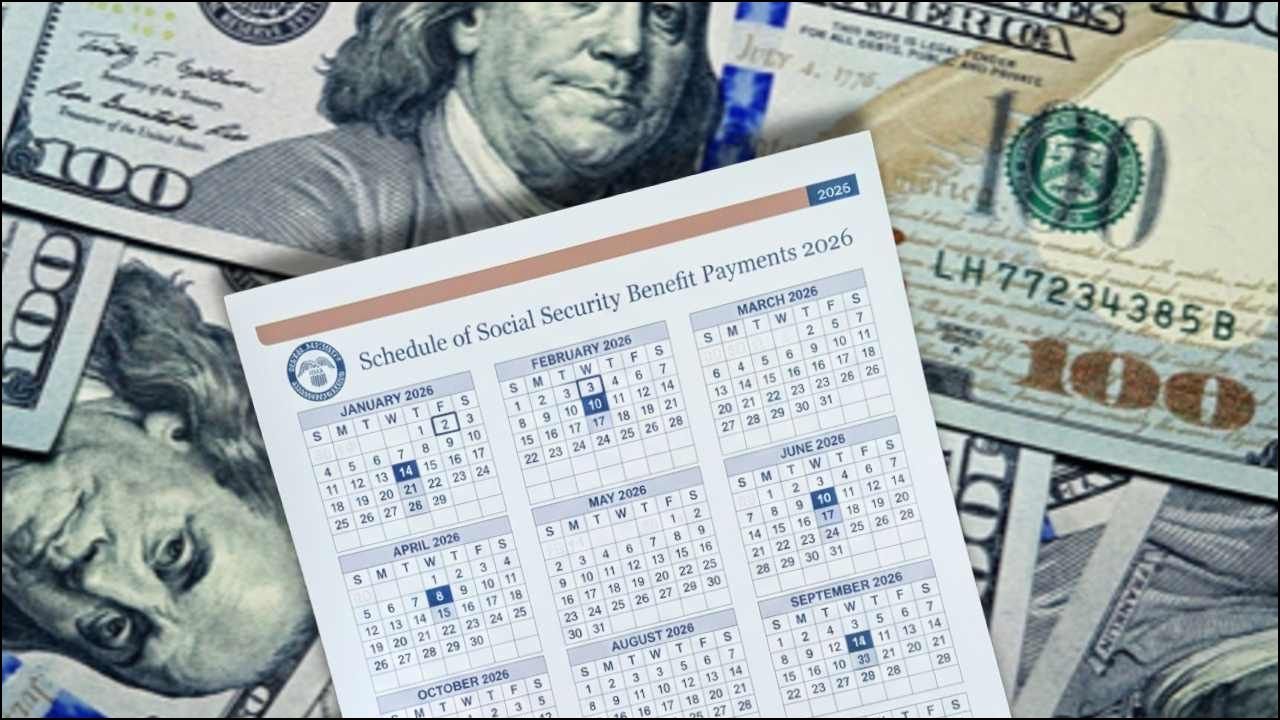


The Early 2027 COLA Estimates are drawing growing attention as preliminary projections suggest only a modest increase in U.S. Social Security benefits. The annual Social Security cost-of-living adjustment (COLA), expected to be announced in October 2026, is tied to inflation data, yet many retirees fear rising healthcare and housing expenses will continue outpacing their monthly payments.
Table of Contents
Early 2027 COLA Estimates
| Key Fact | Detail |
|---|---|
| What COLA is | Annual increase to Social Security benefits tied to inflation |
| Estimated 2027 COLA | Roughly 2%–3% (early forecasts) |
| Official announcement | October 2026 |
| Payment start | January 2027 |
The Early 2027 COLA Estimates will become clearer later in 2026. Until then, retirees, policymakers, and economists will continue monitoring inflation trends, aware that even modest adjustments can significantly affect households dependent on fixed income.
What the Early 2027 COLA Estimates Mean
The Social Security cost-of-living adjustment protects retirees from inflation eroding their purchasing power. The increase is calculated using the Consumer Price Index for Urban Wage Earners and Clerical Workers (CPI-W), measured from July through September each year.
The Social Security Administration (SSA) applies this formula automatically. If inflation rises, benefits increase. If inflation slows, the adjustment becomes smaller.
Economists say cooling inflation across the U.S. economy is the main reason the 2027 increase appears modest.
“COLA reflects past inflation, not future expenses,” said Mary Johnson, policy analyst at The Senior Citizens League. “So even when prices stabilize, retirees may still feel pressure because their bills remain elevated.”
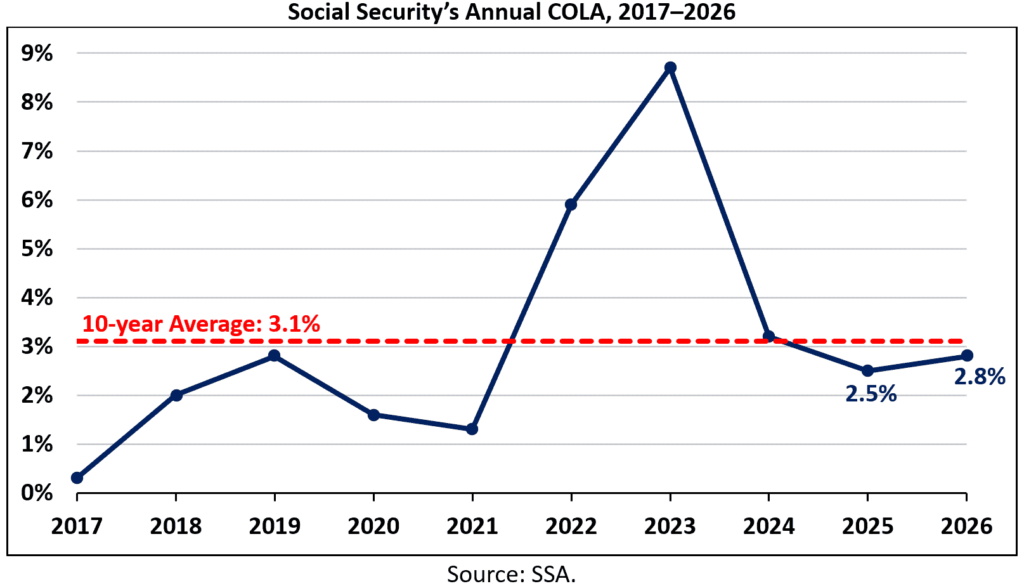
Recent history shows how dramatically the adjustment can shift. Retirees received an 8.7 percent increase in 2023 during the post-pandemic inflation surge. In contrast, later increases dropped closer to historical averages near 2–3 percent.
Why Retirees Are Concerned About Retirement Income
Many Americans rely heavily on Social Security as a retirement income safety net. According to the SSA, about 40 percent of older Americans depend on Social Security for at least half of their income, while roughly 15 percent depend on it for almost all their income.
This dependence makes even small changes significant.
Older households spend a larger share of their income on essentials. Rising prices in groceries, rent, electricity, and insurance have a stronger impact on retirees than on working-age families.
Advocates say the current inflation formula does not accurately reflect retirees’ budgets.
Older Americans spend more on:
- prescription medications
- healthcare insurance
- long-term care
- utilities and housing
Because the CPI-W tracks working households, retirees often experience a higher personal inflation rate than the one used to calculate benefits.
The Medicare Premiums Impact
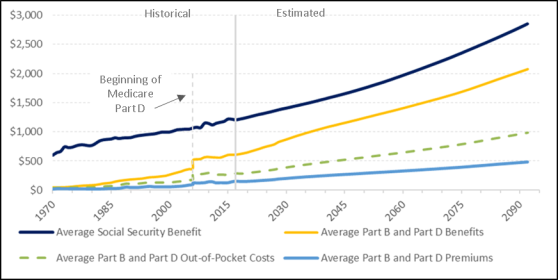
One of the biggest factors behind concerns about the Early 2027 COLA Estimates is Medicare. Most retirees have Medicare Part B premiums automatically deducted from Social Security checks.
If premiums rise faster than COLA, retirees effectively receive little net increase.
In past years, higher medical premiums have consumed large portions of annual benefit increases. Policy researchers at the nonpartisan Center on Budget and Policy Priorities note that healthcare inflation consistently grows faster than overall consumer inflation.
This means a retiree could technically receive a raise but still have less money left after deductions.
The Inflation Adjustment Formula Debate
The current formula has long been debated in Washington policy circles. Some economists believe a different measurement — the Consumer Price Index for the Elderly (CPI-E) — would better capture retiree expenses because it assigns greater weight to healthcare.
Supporters say this would protect retirees’ purchasing power.
Critics warn it would increase long-term costs for the Social Security system, which already faces projected funding challenges in the 2030s unless Congress makes reforms.
A Historical Perspective on Social Security COLA
Social Security benefits were not always adjusted automatically. Before 1975, increases required direct congressional approval. Congress occasionally raised benefits, but the process was unpredictable and often delayed.
Automatic COLA adjustments were introduced to protect retirees from sudden inflation spikes during the 1970s. Since then, annual increases have varied widely depending on economic conditions.
Examples:
- 0% increases occurred in 2010, 2011, and 2016 when inflation was low
- High inflation years produced increases above 5%
- Average long-term COLA is about 2.6%
This historical trend shows the projected 2027 adjustment is not unusual — but retirees today face higher baseline living costs than in previous decades.
Why Inflation Is Falling — And Why It Still Hurts
The U.S. Federal Reserve has raised interest rates to reduce inflation after the pandemic-era surge. As inflation slowed, the COLA formula produced smaller adjustments.
“A lower COLA generally signals inflation is improving,” said Alicia Munnell, director of the Center for Retirement Research at Boston College. “However, retirees feel the lag because many of their expenses, especially medical costs, rarely decline.”
In other words, inflation slowing does not mean prices fall — they simply rise more slowly.
The Housing Factor
Housing costs have become a major issue for retirees. Rent and property taxes have increased across many U.S. regions. Even homeowners face rising insurance premiums and maintenance expenses.
Unlike younger workers, retirees cannot easily offset rising housing costs with higher wages.
This mismatch between fixed income and variable living costs explains much of the concern surrounding the Early 2027 COLA Estimates.
Broader Economic and Policy Debate
The issue goes beyond annual benefit increases. Policymakers are also debating the long-term sustainability of Social Security.
Government trustees have warned the trust fund supporting retirement benefits may face depletion within the next decade without legislative action. If no reforms occur, future benefits could be reduced automatically under current law.
Proposals under discussion include:
- raising payroll taxes
- increasing the retirement age
- adjusting benefit formulas
- changing inflation indexing
No proposal has gained bipartisan agreement.
Global Context
While Social Security is a U.S. program, many developed countries face similar challenges. Aging populations in Europe and Japan have increased pressure on pension systems.
Economists say demographic shifts — longer lifespans and fewer workers — are the core issue.
As populations age, fewer workers support more retirees. This demographic imbalance increases costs and complicates benefit adjustments tied to inflation.
What Happens Next
The official COLA will be calculated after inflation data from July to September 2026 is finalized by the Bureau of Labor Statistics.
Energy prices, housing costs, and medical inflation will all influence the final number.
For now, projections remain estimates and could change significantly if inflation rises unexpectedly.
“Even small inflation changes matter greatly for households living on fixed income,” Munnell said. “The central question is whether benefits keep pace with real expenses.”
FAQ
What is a Social Security COLA?
An annual adjustment that increases benefits to match inflation.
When will the 2027 COLA be announced?
October 2026.
Why might retirees still struggle?
Healthcare, housing, and insurance costs often rise faster than the inflation index used.
Can Social Security payments decrease?
Generally no. Benefits usually stay the same or increase.