

Early 2027 COLA Projections: Early 2027 COLA Projections Prompt Discussion Among Social Security Recipients as millions of retirees, disabled Americans, and Supplemental Security Income (SSI) beneficiaries look ahead and try to figure out what next year’s benefit increase might mean for their wallets. Around kitchen tables from Florida to Montana, folks are asking the same straight-up question: “Will my check keep up with rising prices?” For many households, Social Security benefits aren’t just extra money — they are the main source of income. According to the Social Security Administration (SSA), nearly 67 million Americans receive Social Security benefits, and about 40% of older Americans rely on it for at least half of their income.
Early projections for the 2027 Cost-of-Living Adjustment (COLA) suggest an increase between 1.8% and 2.8%, based on inflation trends so far. That range is far more modest than the historic 8.7% COLA in 2023, which was driven by post-pandemic inflation spikes. But even a smaller adjustment can carry serious consequences for fixed-income households.
Table of Contents
Early 2027 COLA Projections
Early 2027 COLA Projections Prompt Discussion Among Social Security Recipients because even a small percentage shift has real-world consequences. With early estimates pointing toward a 1.8%–2.8% increase, retirees should prepare for a modest adjustment rather than another historic bump. Plan ahead, review your budget, and keep expectations grounded in verified data. A steady, informed approach is the smartest way to navigate what 2027 may bring.

| Category | Details |
|---|---|
| Topic | Early 2027 Social Security COLA Projections |
| Projected COLA Range (2027) | 1.8% – 2.8% (based on early inflation data) |
| Most Recent COLA (2026) | 2.5% |
| Highest Recent COLA | 8.7% in 2023 |
| Number of Beneficiaries | ~67 million Americans |
| Formula Used | CPI-W (Consumer Price Index for Urban Wage Earners and Clerical Workers) |
| Official Source | https://www.ssa.gov/cola/ |
Understanding What COLA Really Is
The Cost-of-Living Adjustment (COLA) exists to help Social Security benefits keep pace with inflation. Inflation means prices rise over time — groceries, rent, medical visits, utilities, gas, and just about everything else.
The SSA calculates COLA using the Consumer Price Index for Urban Wage Earners and Clerical Workers (CPI-W). This inflation measure is published monthly by the U.S. Bureau of Labor Statistics (BLS).
Here’s the key point: the COLA is determined by comparing inflation from July, August, and September of one year to the same period the year before. If prices increased, benefits increase by that percentage. If inflation stays flat or drops, there is no COLA increase.
There’s no political vote each year — it’s a formula written into federal law.
Why Early 2027 COLA Projections Are Lower Than Recent Years?
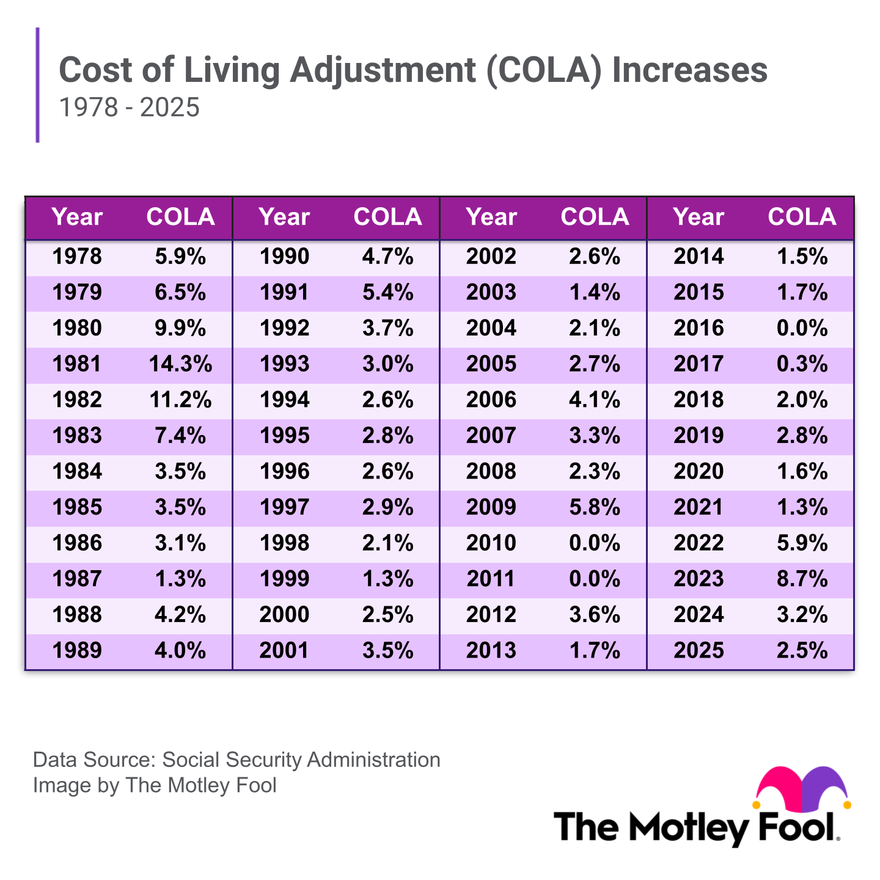
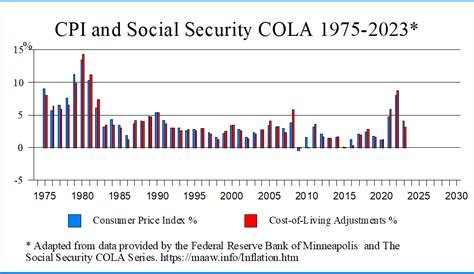
During 2022 and 2023, inflation surged due to supply chain disruptions, labor shortages, and global economic instability. That led to the 8.7% COLA — the highest in over 40 years.
Now, inflation has cooled significantly. According to recent BLS data, annual inflation has been hovering closer to 2%–3%, which aligns more closely with the Federal Reserve’s target rate.
While lower inflation is generally good news for the economy, it naturally results in smaller COLA increases.
That’s why projections for 2027 are currently falling in the 1.8%–2.8% range.
A Deeper Look at the Numbers
To make this crystal clear, let’s compare recent COLAs:
- 2023: 8.7%
- 2024: 3.2%
- 2025: 3.2%
- 2026: 2.5%
The trend shows a steady normalization of inflation after pandemic highs.
If 2027 lands near 2%, that would be consistent with long-term historical averages. Over the past 20 years, the average COLA has been roughly 2.6%.
Real-World Example: What Different COLA Rates Mean
Let’s break it down in everyday terms.
Imagine someone receives $2,000 per month in Social Security benefits.
If the COLA is:
- 1.8% → $36 monthly increase
- 2.5% → $50 monthly increase
- 2.8% → $56 monthly increase
Over a year, that equals between $432 and $672 more annually.
Now here’s where reality kicks in: if Medicare premiums rise by $25–$40 per month, a significant portion of that increase may be absorbed.
The Medicare Connection: Why It Matters
Many retirees don’t realize that Medicare Part B premiums are often deducted directly from Social Security checks.
If Medicare premiums rise faster than the COLA, beneficiaries may see only a modest net increase — or sometimes virtually none.
For example:
- $50 COLA increase
- $30 Medicare premium increase
- Net gain: $20
This is one reason advocacy groups argue that COLA doesn’t always reflect seniors’ true expenses.
The Debate Over CPI-W vs. CPI-E
Currently, COLA uses CPI-W, which measures spending habits of working households. Critics argue that retirees spend differently — especially on healthcare.
Some policymakers have proposed switching to the Consumer Price Index for the Elderly (CPI-E), which tracks spending patterns for Americans aged 62 and older.
Studies suggest CPI-E would have resulted in slightly higher COLAs over time. However, such a change would increase long-term Social Security costs, making it a politically complex issue.
As of now, no changes have been enacted.
Why This Early 2027 COLA Projections Topic Sparks So Much Discussion?
Let’s keep it real — prices went up fast during the pandemic years. Even if inflation slows, prices rarely go back down.
Rent remains high in many states. Home insurance costs have climbed. Grocery bills are still noticeably higher than in 2020.
According to the BLS food index data, grocery prices rose sharply between 2021 and 2023 and have stabilized but remain elevated.
For retirees on fixed incomes, that means:
- A 2% increase may not feel like much relief
- Budget planning becomes more important than ever
- Supplemental income strategies gain importance
Practical Financial Planning Tips for 2027
Here’s what professionals recommend:
Review your budget now. Don’t wait for October. Identify fixed costs (rent, utilities, insurance) and variable costs (food, entertainment, travel).
Build a small emergency buffer if possible. Even setting aside $20–$50 monthly can create breathing room.
Monitor official inflation data monthly via the BLS website.
Consult a fiduciary financial advisor if you have retirement investments tied to market performance.
What Professionals and Advisors Should Know
For financial planners and retirement specialists, the expected moderation in COLA means:
- Fewer dramatic benefit increases
- Continued pressure from healthcare costs
- Greater emphasis on diversified retirement income
Advisors should proactively educate clients about realistic COLA expectations and the impact of Medicare premium adjustments.
Timeline for the Official 2027 COLA Announcement
Here’s how the timeline works:
- July–September 2026: Inflation data collected
- Early October 2026: SSA announces official COLA
- December 2026: Notices mailed to beneficiaries
- January 2027: New benefits begin
How the 2.8% COLA Adjustment Will Reshape Social Security Payments in 2026
Average Social Security Checks by State — What Retirees Receive
February 18 Social Security Checks — Payment Groups and Updated Benefit Amounts
Broader Economic Impact
The COLA doesn’t just affect retirees — it impacts the broader economy. When benefits increase, consumer spending often increases as well, particularly in local communities.
According to SSA data, Social Security benefits inject over $1 trillion annually into the U.S. economy. That spending supports local businesses, healthcare providers, landlords, and service industries.
A moderate COLA reflects economic stabilization, but it also underscores the importance of long-term Social Security trust fund solvency discussions.