
The global energy conversation is changing, and not in the way most people expected. For years, the spotlight stayed on solar panels, offshore wind farms, and electric vehicles. Those technologies remain important, but scientists are now paying serious attention to something much older and much closer the Earth itself.

New Research Looks at Energy Sources Located Far Below Earth’s Surface and it reveals that our planet holds a massive store of natural heat capable of powering cities continuously. Unlike sunlight or wind, underground heat never depends on time of day, season, or weather. Governments and energy planners are interested because New Research Looks at Energy Sources Located Far Below Earth’s Surface offers what renewable energy has long struggled to provide: stability. Solar energy disappears at sunset and wind energy fluctuates hourly. Power grids require a steady base supply to avoid blackouts, and until now fossil fuels filled that role. Deep underground heat could finally replace that dependence.
Deep geothermal energy refers to electricity produced by accessing extremely hot rock layers several kilometers beneath the ground. Instead of relying on natural hot springs, engineers drill deep wells, inject water into heated rock, and bring the hot fluid back to the surface to run turbines. This system creates a continuous cycle: water goes down cool, returns hot, spins generators, and is reused. Because the Earth constantly produces heat, deep geothermal power plants operate day and night without interruption. Energy experts see this technology as a potential backbone of future renewable electricity systems, especially for countries seeking reliable clean power generation.
Table of Contents
Energy Sources Located Far Below Earth’s Surface
| Key Information | Details |
|---|---|
| Typical Depth | 3 km to 10 km underground |
| Heat Source | Naturally heated rock formations |
| Temperature Range | 150°C to over 400°C |
| Technology Used | Advanced drilling and closed water circulation |
| Electricity Availability | Continuous baseload power |
| Carbon Emissions | Extremely low |
| Potential Locations | Most regions worldwide |
| Main Advantage | Reliable renewable energy |
| Main Challenge | High initial drilling investment |
Why Scientists Are Looking Deeper
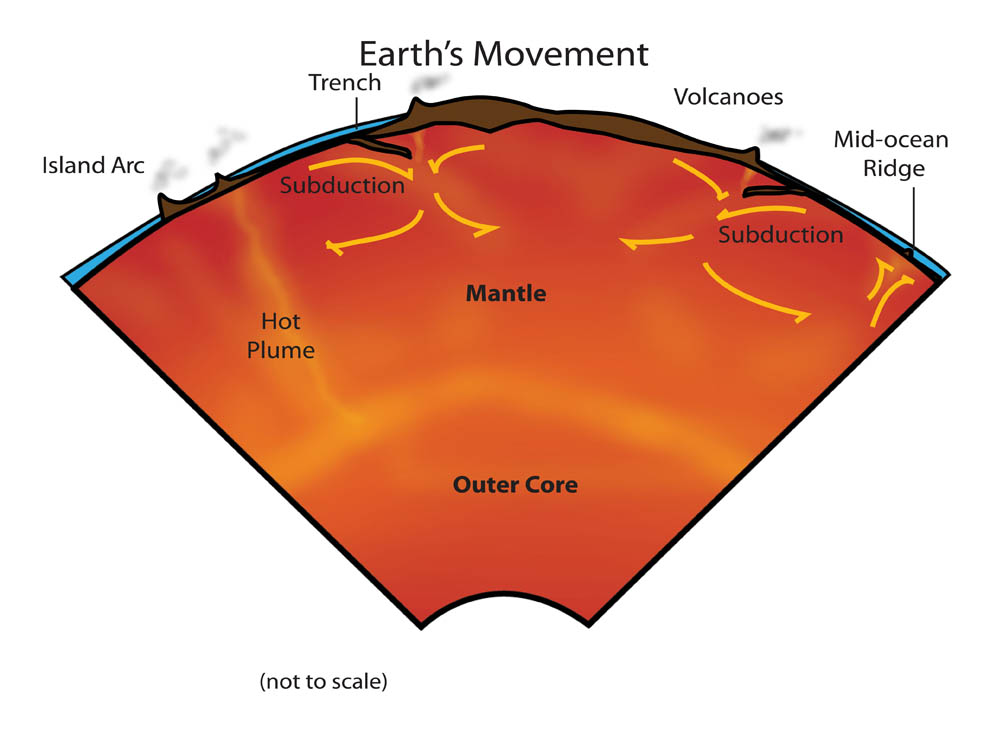
- Energy demand is increasing faster than expected. Expanding cities, artificial intelligence computing centers, and electric transportation are all drawing more electricity than traditional grids were designed to handle. Renewable energy sources help, but their unpredictability complicates grid management. This is why New Research Looks at Energy Sources Located Far Below Earth’s Surface has gained global attention. Underground heat is constant. Every kilometer below ground increases temperature significantly. By about five kilometers deep, rocks can reach temperatures hot enough to boil water instantly.
- Unlike solar and wind, geothermal energy does not depend on geography as strictly as once believed. Earlier geothermal plants required volcanic activity or natural steam reservoirs. New technology allows engineers to create artificial reservoirs, meaning many countries can develop geothermal energy even without hot springs. Another reason scientists are looking deeper is energy independence. Nations that import fuel could instead generate electricity locally, reducing costs and geopolitical vulnerability.
Superhot Rock: A New Frontier
- One of the most exciting developments involves what researchers call superhot rock. At temperatures above approximately 375°C, water changes behavior and enters a supercritical state. It is neither liquid nor gas but something in between, carrying far more energy. A geothermal system operating at these temperatures could produce two to five times more electricity than traditional geothermal plants. In practical terms, one deep well could supply electricity to entire communities.
- During a drilling project in Iceland, engineers unexpectedly encountered such extreme heat. Instead of abandoning the site, they studied it carefully. The results showed that superhot geothermal systems might dramatically improve renewable energy efficiency. This breakthrough explains why New Research Looks at Energy Sources Located Far Below Earth’s Surface is now considered one of the most promising clean energy research areas.
The Technology Making It Possible
For decades, geothermal energy was limited by engineering challenges. Drilling equipment could not withstand extreme underground heat and pressure. That barrier is finally changing due to modern technology.
- Advanced Drill Materials: Modern drill heads use heat-resistant alloys and reinforced cutting surfaces capable of penetrating extremely hard rock formations.
- Closed-Loop Systems: Water travels through sealed pipes rather than mixing with underground fluids. This prevents contamination and allows geothermal plants to operate even in dry regions.
- Directional Drilling: Instead of drilling straight down, wells can bend sideways underground. This allows engineers to access a wider heated area using fewer surface installations.
- Rock Fracturing Techniques: Engineers create tiny fractures in rock to improve heat transfer. These cracks allow circulating water to absorb more heat before returning to the surface.
Because of these innovations, New Research Looks at Energy Sources Located Far Below Earth’s Surface has moved from scientific theory to practical experimentation.
Environmental Benefits
- Deep geothermal energy offers major environmental advantages. It produces almost no greenhouse gas emissions because it does not involve combustion. Unlike coal or natural gas plants, no fuel is burned.
- Land usage is also minimal. A geothermal facility requires a small footprint compared to a large solar farm generating the same electricity. Wildlife disruption is limited because infrastructure stays compact.
- Water usage is carefully managed. Most geothermal plants reuse the same water repeatedly through a closed cycle. There is no need to flood valleys or dam rivers.
- For countries working toward climate targets, these advantages are important. Reliable clean electricity reduces dependence on fossil fuel backup power stations. As a result, New Research Looks at Energy Sources Located Far Below Earth’s Surface is now part of many national climate strategies.
Economic Considerations
The main obstacle remains upfront cost. Drilling deep wells requires specialized equipment and skilled labor. A single exploratory well can cost millions before electricity is produced. However, once operational, geothermal plants become economically attractive. There are no fuel expenses. Maintenance costs are relatively predictable. Plants can operate for decades with steady output. As drilling experience increases, costs typically fall. Similar patterns occurred in solar and wind industries. Early installations were expensive, but mass deployment reduced prices dramatically. Energy economists believe geothermal power may follow the same trend, making New Research Looks at Energy Sources Located Far Below Earth’s Surface increasingly competitive.
Risks And Concerns
Despite its promise, geothermal energy is not without concerns.
- The primary issue is induced seismic activity. Injecting water into deep rock can occasionally trigger small earthquakes. These tremors are usually minor and rarely felt at the surface, but monitoring systems are essential.
- Another concern is equipment durability. High temperatures and mineral-rich fluids can corrode metal components. Researchers are developing advanced coatings and materials to extend equipment life.
- There is also financial risk. Because underground conditions cannot be fully known before drilling, some projects fail to find adequate heat. Governments often support early projects to reduce investor hesitation.
- Even with these challenges, research continues because the long-term benefits appear significant.
What The Future May Hold
Energy experts increasingly see geothermal energy as a complement to solar and wind power. Instead of replacing them, it stabilizes them. A future grid could operate this way: solar produces daytime power, wind adds variable supply, and geothermal provides constant baseline electricity. This combination reduces the need for fossil fuel backup plants. There are also non-electric uses. Underground heat can warm buildings, greenhouses, and industrial facilities directly. Cold regions may benefit greatly from district heating systems connected to geothermal sources. If drilling costs continue to decline, cities worldwide may adopt this technology. Over time, New Research Looks at Energy Sources Located Far Below Earth’s Surface could transform how electricity is generated, moving humanity toward reliable clean power.
FAQs About Energy Sources Located Far Below Earth’s Surface
What Is Deep Geothermal Energy?
It is electricity generated by drilling deep into hot rock layers underground and using heated water or steam to spin turbines.
Is Geothermal Energy Renewable?
Yes. The Earth naturally produces heat continuously through geological processes, making it a long-term renewable resource.
Can Geothermal Power Run All the Time?
Yes. Unlike solar and wind, geothermal plants operate 24 hours a day because underground heat remains constant.
Is It Environmentally Friendly?
It produces very low emissions, requires little land, and recycles water, making it one of the cleanest energy sources available.