
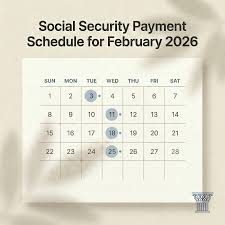
Millions of Americans who rely on federal retirement and disability benefits are tracking the February Social Security Payment Calendar, which determines when payments arrive based largely on beneficiaries’ birth dates and eligibility categories. The schedule, issued by the U.S. Social Security Administration (SSA), shows that the final regular Social Security retirement and disability payment for February will be delivered on February 25, 2026.
Table of Contents
February Social Security Payment Calendar
| Key Fact | Detail |
|---|---|
| Last regular payment | Feb. 25, 2026 |
| Special group payment | Feb. 3 (pre-1997 beneficiaries) |
| Early SSI payment | Feb. 27, 2026 (for March) |
For most Americans receiving federal benefits, the February calendar functions mainly as a planning tool. Payments remain automatic, and officials advise beneficiaries to act only if a deposit fails to appear within several business days. The SSA says maintaining updated bank information remains the best way to avoid disruptions.
How the February Social Security Payment Calendar Works
The Social Security Administration (SSA) distributes benefits to more than 70 million Americans, including retirees, survivors, and disabled workers. Because the program covers nearly one-fifth of the U.S. population, payments are staggered throughout the month to avoid overwhelming banking systems.
According to the agency’s official calendar, recipients are grouped primarily by birth date. The SSA explains in its published guidance: payments are scheduled “to ensure reliable delivery and reduce delays in the nation’s financial network.”
| Birth Date Range | Payment Date |
|---|---|
| Before May 1997 beneficiaries | Feb. 3 |
| 1st–10th | Feb. 11 |
| 11th–20th | Feb. 18 |
| 21st–31st | Feb. 25 |
The February 25 payment represents the last standard monthly Social Security retirement or disability benefit for the month.
Why Payments Are Staggered
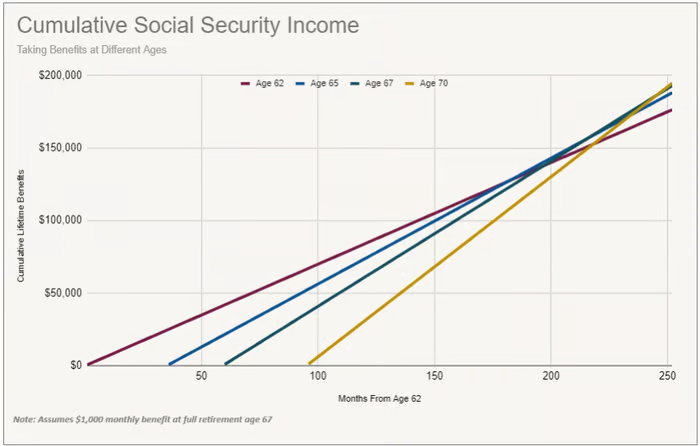
The staggered payment system began in 1997 as part of administrative modernization. Before that reform, millions of checks were mailed simultaneously at the beginning of each month, creating delays and heavy banking traffic.
Policy analysts say the change improved reliability.
“Electronic payments made it possible to process benefits more securely, but staggering the schedule ensured financial institutions could manage transaction volume,” explained retirement policy researchers at the Urban Institute, a Washington-based think tank specializing in federal programs.
Today, over 99% of Social Security beneficiaries receive funds via electronic deposit, according to SSA administrative reports.
Early SSI Payment: Why Some Recipients Receive Two February Deposits
The Supplemental Security Income (SSI) program operates differently from retirement benefits. SSI payments normally arrive on the first day of each month.
However, when the first day falls on a weekend or federal holiday, payments are issued on the previous business day. Because March 1, 2026 falls on a Sunday, the SSA will send the March SSI payment on February 27, 2026.
This causes a common misunderstanding. Some beneficiaries believe they are receiving a bonus payment.
In reality, it is an advance payment. March will have no deposit.
“Early payments are strictly calendar adjustments and do not change benefit amounts,” the SSA states in its beneficiary guidance materials.
Cost-of-Living Adjustment (COLA) and 2026 Benefit Amounts
The February Social Security Payment Calendar is particularly important in 2026 because benefits increased after the annual Cost-of-Living Adjustment (COLA). COLA reflects inflation measured by the Consumer Price Index for Urban Wage Earners and Clerical Workers (CPI-W).
For 2026, beneficiaries are receiving higher monthly checks than the previous year.
Average payments now include:
- Retired workers: about $1,900+ per month (approximate average range)
- Disabled workers: roughly $1,500 monthly average
- SSI individual maximum: about $960 monthly federal benefit
Economists say COLA adjustments help retirees maintain purchasing power.
“Social Security is designed as inflation-protected income,” said a retirement income researcher at Boston College’s Center for Retirement Research. “Without COLA, many older Americans would see their real income fall rapidly during inflationary periods.”
Who Is Affected
Retirees
The largest group of recipients consists of retired workers. Social Security remains a primary income source for older Americans.
According to SSA statistics, roughly 40% of retirees rely on Social Security for at least half their income, and about 1 in 7 rely on it for 90% or more.
Disability Beneficiaries (SSDI)
People receiving Social Security Disability Insurance (SSDI) follow the same birthday-based payment schedule as retirees.
SSI Recipients
SSI serves low-income seniors and disabled individuals who have limited work histories or financial resources. Eligibility depends on income and assets, not employment contributions.
Economic Context: Why the Payment Calendar Matters
The timing of deposits directly affects consumer behavior. Fixed-income households often plan expenses around benefit dates — including rent, prescriptions, utilities, and groceries.
Researchers from the National Bureau of Economic Research (NBER) have documented spikes in retail spending immediately after Social Security payments are deposited, particularly in grocery and pharmacy purchases.
Economists say this pattern reflects the program’s importance.
“Social Security isn’t just a retirement program — it functions as an anti-poverty program for older Americans,” noted a public policy economist familiar with federal benefits analysis.
Banking Delays, Holidays, and Direct Deposit Timing
While the February Social Security Payment Calendar lists official dates, beneficiaries sometimes experience confusion when banks process deposits at different times.
Financial institutions may:
- Post deposits at midnight
- Release funds early
- Hold funds for internal processing
Federal Reserve banking procedures and time-zone differences can also affect posting times.
The SSA recommends waiting three business days before reporting a missing payment.
What to Do If a Payment Does Not Arrive
Beneficiaries should follow these steps:
- Check bank or Direct Express card account
- Confirm the scheduled payment date
- Wait three mailing days
- Contact SSA if still missing
Payments can be verified through the online my Social Security portal or SSA customer service.
Long-Term Outlook for Social Security
The payment calendar operates independently from ongoing political debates about Social Security’s finances.
The Social Security Trustees have projected that the retirement trust fund could face depletion in the 2030s without legislative changes. Even in that scenario, payroll tax revenue would still fund a large portion of benefits.
Policy proposals under discussion in Congress include:
- Raising payroll taxes
- Increasing retirement age
- Adjusting benefit formulas
Despite those debates, the SSA states current benefits continue as scheduled.
“Monthly payments are guaranteed under current law,” agency officials consistently note in public communications.
Practical Budgeting Tips for Beneficiaries
Financial planners often advise beneficiaries to align automatic bill payments with their scheduled deposit dates.
Helpful strategies include:
- Scheduling rent after payment week
- Keeping one-month emergency savings
- Using automatic bill pay
- Monitoring bank notifications
Consumer advocates also recommend enrolling in fraud alerts. Social Security scams, particularly phone impersonation schemes, frequently target older Americans.
The Federal Trade Commission (FTC) has repeatedly warned that scammers may falsely claim benefits are suspended. The SSA rarely contacts beneficiaries by phone demanding payment or personal data.
Looking Ahead
The payment calendar repeats monthly, though dates shift slightly with each year’s calendar and federal holidays. Policymakers continue debating Social Security’s long-term financing, but the distribution system remains unchanged.
An SSA spokesperson has previously emphasized that scheduled payments “continue as required by law,” reassuring beneficiaries that calendar adjustments are administrative rather than benefit reductions.
FAQs About February Social Security Payment Calendar
When is the last Social Security payment in February 2026?
February 25, 2026, for beneficiaries with birthdays between the 21st and 31st.
Why do SSI recipients get two payments in February?
Because the March payment is issued early on February 27 due to March 1 falling on a weekend.
Do early payments mean extra money?
No. It is simply an advance payment for the following month.
Can banks delay a Social Security payment?
Banks may post deposits at different times, but the SSA sends funds on the scheduled date.
Will Social Security stop in the future?
No current law stops benefits. Future reforms may adjust funding, not eliminate the program.