
Greek Inscription Offers New Evidence: Greek Inscription Offers New Evidence in the Elagabalus Temple Debate is more than just an academic headline—it’s a developing story that could reshape our understanding of Roman religion, Middle Eastern archaeology, and the layered history of sacred spaces. When archaeologists reexamined a carved Greek inscription discovered during restoration at the Great Mosque of Homs in Syria, it reopened a decades-long debate about the true location of the ancient Temple of the Sun associated with Emperor Elagabalus. Let’s slow this down and unpack it in a way that’s clear enough for a middle school classroom but still solid enough for a graduate seminar. The question scholars have wrestled with for generations is this: Did the Temple of the Sun in ancient Emesa stand directly beneath the current mosque structure? The newly studied inscription may not close the case entirely, but it adds strong, tangible evidence to one side of the argument—and in archaeology, tangible evidence is gold.
Table of Contents
Greek Inscription Offers New Evidence
Greek Inscription Offers New Evidence in the Elagabalus Temple Debate represents a significant step forward in resolving one of Roman Syria’s most persistent historical questions. The inscription’s language, dating, and location strongly support the theory that the Temple of the Sun once stood where the Great Mosque of Homs now rises. While further investigation is needed, this discovery underscores the enduring importance of epigraphy, responsible restoration, and interdisciplinary research in uncovering our shared past.
| Topic | Details |
|---|---|
| Discovery Location | Great Mosque of Homs, Syria |
| Ancient City | Emesa |
| Emperor Connected | Elagabalus (218–222 CE) |
| Inscription Language | Greek |
| Estimated Date | Early 3rd Century CE |
| Academic Publication | Shedet Journal of Archaeology |
| Roman History Reference | Encyclopaedia Britannica – Elagabalus |
| Preservation Context | Site shows pagan, Christian, and Islamic phases |
| Professional Impact | Archaeology, Epigraphy, Religious Studies, Cultural Heritage Law |
Historical Background: Who Was Elagabalus?
Elagabalus ruled Rome from 218 to 222 CE, but he wasn’t born in Italy. He came from Emesa—modern-day Homs in Syria. Before becoming emperor, he served as a high priest of a local sun god known as Elagabal.
According to Encyclopaedia Britannica, Elagabalus attempted to elevate this Syrian sun deity above Rome’s traditional pantheon. That move caused major political and religious backlash in Rome. His reign was short, turbulent, and ultimately ended in assassination.
Here’s why that matters: Emesa wasn’t just his hometown. It was a center of sun worship long before he ever wore a crown. Ancient sources suggest a monumental temple dedicated to the solar deity existed there. But historians have long debated exactly where that temple stood.
The Site: Great Mosque of Homs
Great Mosque of Homs sits in what was once the heart of ancient Emesa. Over centuries, the site appears to have transitioned through multiple religious phases:
- Pagan temple (Roman period)
- Christian church (Byzantine era)
- Islamic mosque (from 7th century onward)
Layered sacred architecture is common across the Mediterranean and Middle East. UNESCO notes that many heritage sites worldwide reflect continuous religious transformation rather than total replacement.
The big question has always been whether the pagan temple phase existed directly beneath the mosque or somewhere nearby.
The Greek Inscription: What Was Found?
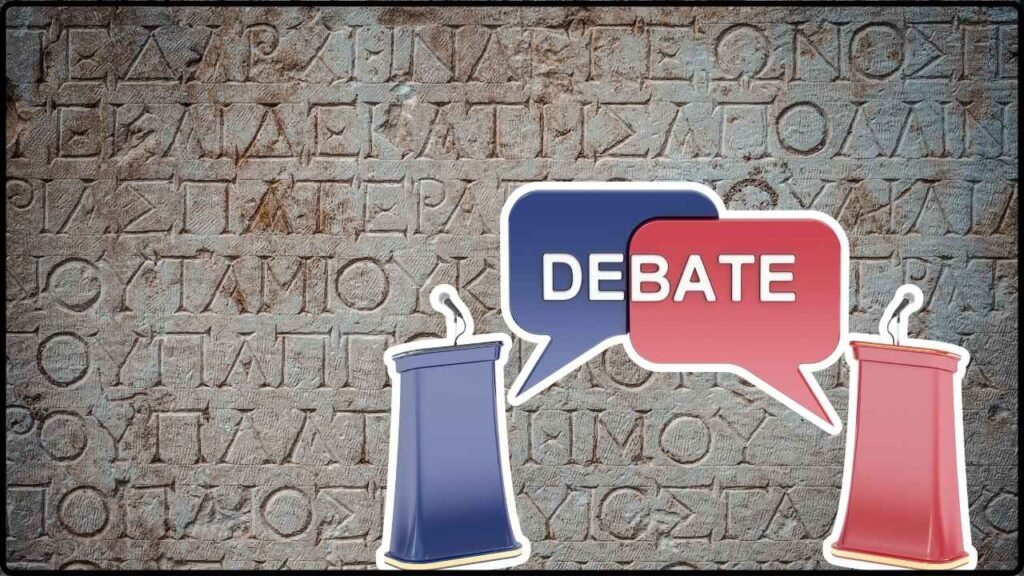
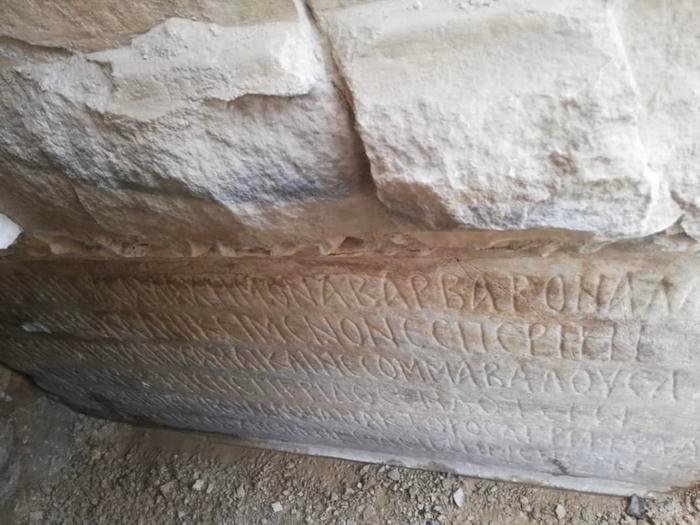
During restoration work—part of broader preservation efforts following regional conflict—workers uncovered a carved Greek inscription embedded in a column base.
Now, inscriptions are not random graffiti. They are often formal, carefully composed texts meant to commemorate events, honor deities, or mark dedications.
Preliminary analysis published in the Shedet Journal indicates the inscription includes:
- Formal royal-style language
- Symbolic references to power and divinity
- Phrasing consistent with temple dedications
Greek was the dominant administrative and cultural language in the eastern Roman Empire. Finding a Greek inscription in 3rd-century Syria is exactly what historians would expect.
But here’s the important part: The inscription appears to have been carved during the Roman imperial period—precisely the era associated with Elagabalus.
Why Greek Inscription Offers New Evidence Discovery Carries Weight?
In archaeology, context is everything. This inscription wasn’t found in a museum drawer or at a secondary site. It was embedded within the structure of the mosque itself.
That raises three professional possibilities:
- The inscription was reused from a nearby temple.
- The mosque stands directly on the original temple footprint.
- The inscription was relocated during earlier construction phases.
Experts lean toward the second or first options, but either way, the proximity strengthens the temple-beneath-mosque argument.
Inscriptions are considered primary evidence. Unlike later historical writings, they were created at the time events occurred. The Archaeological Institute of America emphasizes the reliability of epigraphic evidence in reconstructing ancient religious practices.
Breaking Down the Archaeological Process
For readers new to archaeology, let’s walk through how scholars analyze something like this.
Dating the Stone
Researchers use paleography—the study of ancient writing styles—to estimate dates. Letter shapes change over time, much like fonts today.
They also analyze:
- Tool marks
- Stone sourcing
- Stratigraphic layers (archaeological soil layers)
Translating the Text
Translation requires:
- Expertise in Koine Greek
- Understanding Roman imperial titles
- Familiarity with religious terminology
Small nuances matter. For example, certain honorific titles were only used during specific reigns.
Cross-Referencing Historical Records
Scholars compare the inscription to:
- Roman historical texts
- Coins from Emesa
- Other regional inscriptions
If phrasing matches known temple dedication formats, confidence increases.
Religious Continuity: A Broader Pattern
This isn’t just about one temple. It’s about how communities reuse sacred spaces.
Across the United States, we see churches built on earlier church sites. In Europe and the Middle East, mosques, churches, and temples often share foundations across centuries.
Sacred geography tends to persist. People build where people have always built.
That continuity tells us something about human psychology and community identity. Sacred places anchor memory.
Professional Implications for Cultural Heritage Experts
For preservation professionals, this discovery highlights the importance of restoration oversight.
Restoration projects must:
- Include archaeological supervision
- Document structural phases carefully
- Preserve inscriptions in situ whenever possible
If further research confirms temple foundations beneath the mosque, it could impact:
- Funding allocations
- International heritage designations
- Academic research priorities
Political and Ethical Considerations
Sites with layered religious histories are sensitive. Excavation beneath active religious structures can be controversial.
Scholars must balance:
- Academic curiosity
- Community respect
- Cultural diplomacy
In many cases, non-invasive technologies like ground-penetrating radar are used before excavation.
Professional archaeologists follow ethical standards established by organizations like the Society for American Archaeology.
Why This Topic Is Trending?
Search trends show growing interest in:
- Temple of the Sun Emesa
- Elagabalus discovery
- Greek inscription Syria
Academic debates often stay within universities, but this one intersects with religion, identity, and geopolitics.
When ancient history touches living communities, people pay attention.
Addressing Skepticism
Some scholars caution against overinterpretation.
One inscription alone does not confirm:
- Exact architectural layout
- Complete temple structure
- Direct dedication to Elagabalus himself
More evidence would strengthen the case:
- Additional inscriptions
- Structural remains
- Temple-style foundation patterns
Healthy skepticism is part of science.
10 Archaeology Discoveries So Unusual They Sound Invented
Archaeologists Discover a Chimú Sacred Road and Temple Complex in Peru
Unexpected Inland Whale Fossils Discovered During Mammoth Research
A Professional Reflection
Having worked alongside heritage professionals and studied religious site transitions for years, I can tell you this: inscriptions are among the most powerful forms of evidence we encounter.
They don’t rely on memory. They don’t reinterpret events decades later. They speak from their own time.
When you combine geographic alignment, imperial connection, and inscriptional style, the case becomes compelling.
But scholarship isn’t about hype. It’s about careful, methodical interpretation.
This discovery doesn’t close the book—but it definitely turns the page.