
Life on Earth did not always look the way it does today. Billions of years ago, the planet was dominated by tiny, simple organisms that lived as single cells. These early life forms lacked the complex internal structures that modern cells have.
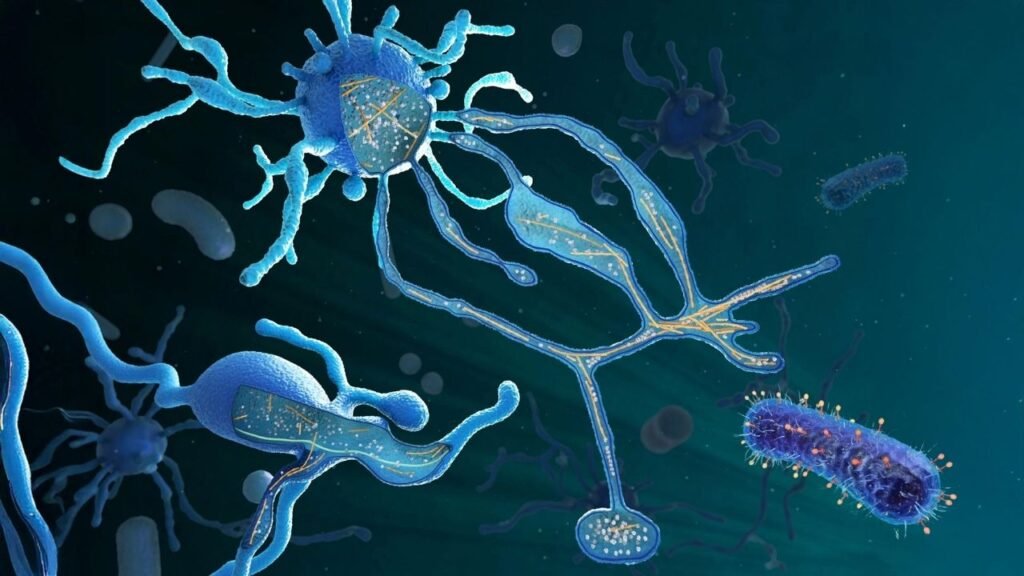
Yet over time, life evolved into incredibly diverse and complicated organisms, from plants and fungi to animals and humans. One of the most fascinating questions in biology has been how simple microbial cells transformed into the complex cells that make up nearly all visible life today.
Recent scientific research has shed new light on this long-standing mystery. By studying ancient microbes and analyzing thousands of microbial genomes, researchers have uncovered clues about how two different microorganisms may have joined together in a remarkable partnership. This collaboration eventually led to the formation of the first complex cells, marking a major turning point in the history of life on Earth.
Table of Contents
How Ancient Microbes Joined to Form Complex Cells
| Key Aspect | Details |
|---|---|
| Main Discovery | Ancient microbes joined together to form the first complex cells |
| Key Microorganisms | Asgard archaea and oxygen-using bacteria |
| Time Period | Approximately 2 billion years ago |
| Biological Process | Endosymbiosis (one organism living inside another) |
| Resulting Cell Type | Eukaryotic cells with internal structures |
| Important Structure Formed | Mitochondria, the energy producers of cells |
| Research Method | Analysis of more than 13,000 microbial genomes |
| Significance | Explains how complex life evolved from simple microbial organisms |
Ancient Microbes Forming Complex Cells
Scientists studying the evolution of life have focused closely on how ancient microbes forming complex cells may have triggered the development of advanced life forms. Evidence suggests that billions of years ago, certain microorganisms began interacting in ways that allowed them to share resources and survive in changing environments. Over time, these relationships became more integrated, eventually leading one microbe to live permanently inside another.
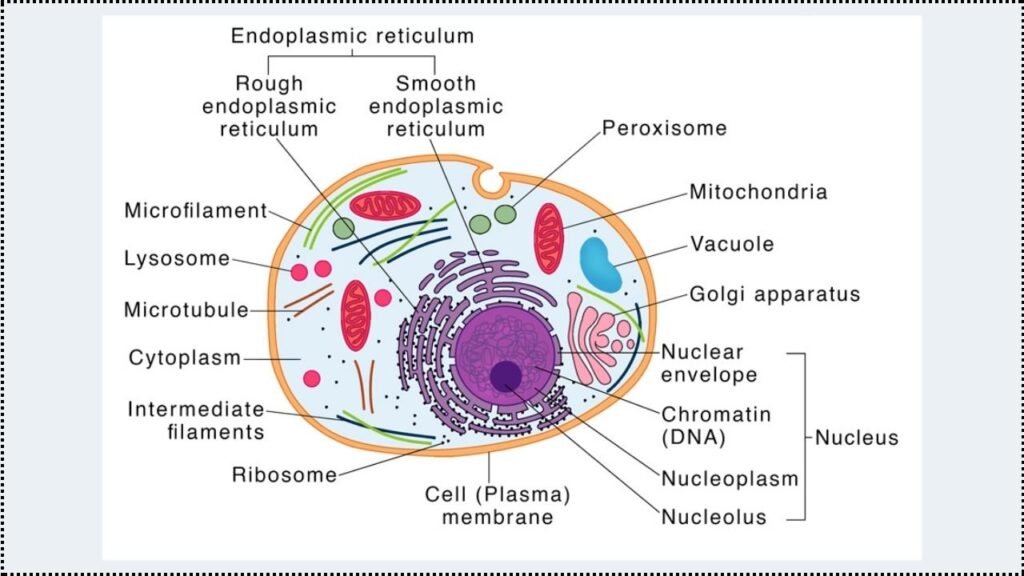
This partnership between microbes laid the foundation for what scientists call eukaryotic cells—cells that contain specialized structures such as a nucleus and mitochondria. These structures allow cells to perform more complicated functions and produce energy more efficiently. The new research indicates that a unique group of microbes known as Asgard archaea played a central role in this transformation, acting as the host cells that partnered with bacteria to form the first complex cells.
The Mystery: How Did Complex Cells Begin?
For many years, scientists have tried to understand how the earliest complex cells evolved. The earliest life forms on Earth were prokaryotes, which include bacteria and archaea. These cells are simple in structure and lack internal compartments. Their DNA floats freely within the cell, and they perform basic functions necessary for survival.
In contrast, eukaryotic cells are much more advanced. They contain internal structures that carry out specialized tasks. For example, the nucleus stores genetic information, while mitochondria generate energy for the cell. These features allow organisms to grow larger, develop specialized tissues, and perform more complex biological processes.
The transition from simple prokaryotic cells to complex eukaryotic cells is considered one of the most important evolutionary events in Earth’s history. However, for decades, scientists struggled to understand exactly how this transition occurred. Fossil evidence alone could not fully explain the process, leaving researchers to rely on genetic studies and microbial analysis.
The discovery of Asgard archaea provided an important piece of the puzzle. These microorganisms appear to share genetic similarities with modern eukaryotes, suggesting they may be closely related to the ancestors of complex cells.
The New Discovery
A recent scientific study examined more than 13,000 microbial genomes, giving researchers a much clearer picture of how early microorganisms lived and interacted. Among these microbes, scientists focused on Asgard archaea, a group of microorganisms discovered in extreme environments such as deep-sea sediments.
What makes Asgard archaea particularly interesting is that they possess genes previously believed to exist only in eukaryotic cells. This suggests that they may represent an evolutionary bridge between simple prokaryotes and complex eukaryotes.
The study also revealed that some Asgard archaea could survive in environments containing oxygen. This finding is important because oxygen played a major role in shaping early life on Earth. As oxygen levels increased in the planet’s atmosphere, many organisms had to adapt or evolve new ways to survive.
Because some Asgard archaea could tolerate oxygen, they likely lived near bacteria that used oxygen for energy production. This proximity allowed the two types of microbes to interact frequently. Over time, these interactions may have led to a deeper biological partnership.
Scientists believe this environment created the perfect conditions for the emergence of complex cells.
The “Microbial Merger” That Created Complex Life
One of the most fascinating aspects of the research is the idea that complex cells emerged from what scientists describe as a microbial merger. Around two billion years ago, an Asgard archaeon likely formed a close relationship with a bacterium.
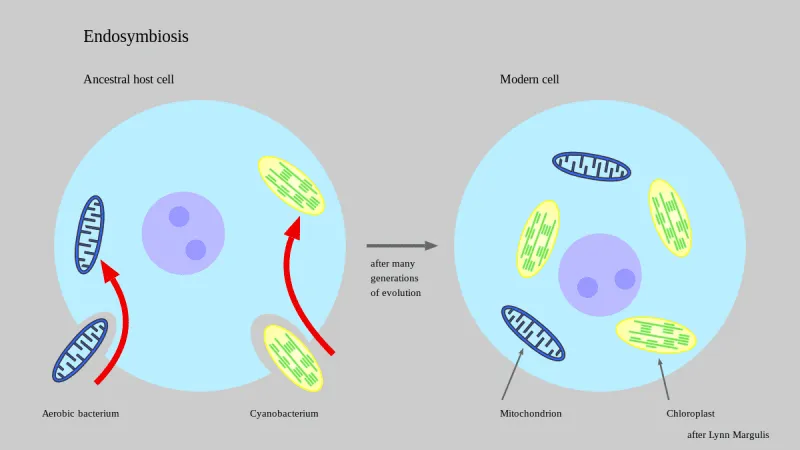
Researchers believe the archaeon may have surrounded or engulfed the bacterium using small extensions of its cell membrane. Instead of digesting the bacterium as food, the host cell allowed it to remain inside. Over time, this internal bacterium began performing useful functions for the host cell.
The bacterium was particularly efficient at producing energy using oxygen. This ability would have given the host cell a major survival advantage, especially as oxygen levels in Earth’s environment continued to rise.
Eventually, the bacterium became a permanent resident inside the host cell. Over millions of years, it evolved into what we now know as mitochondria. Today, mitochondria are found in nearly all eukaryotic cells and serve as the primary source of cellular energy.
This process, known as endosymbiosis, represents one of the most important partnerships in the history of life. It allowed cells to produce more energy and support more complicated biological functions.
Without this partnership, complex multicellular organisms may never have evolved.
Why This Discovery Matters
Understanding how complex cells formed is essential for understanding the origins of life as we know it. The recent findings provide strong evidence that cooperation between microorganisms played a crucial role in evolutionary history.
First, the research highlights the importance of symbiotic relationships in evolution. Instead of competing, some organisms survived by working together and combining their abilities. This cooperative strategy allowed life to adapt to changing environmental conditions.
Second, the discovery reinforces the idea that Asgard archaea may be the closest known relatives of the ancestors of eukaryotic cells. By studying these microbes, scientists can better understand how early cells evolved new structures and functions.
Third, the research shows how environmental changes—particularly rising oxygen levels—may have driven evolutionary innovation. Organisms that could adapt to oxygen-rich environments gained new advantages, encouraging partnerships that ultimately reshaped cellular life.
Finally, this discovery helps explain the origin of the cellular structures that support complex organisms today. Every plant, animal, and human cell depends on mitochondria to generate energy. These structures trace their origins back to the ancient microbial merger described in this research.
In other words, the partnership between two tiny microbes billions of years ago laid the groundwork for all complex life on Earth.
Conclusion
The story of how ancient microbes joined to form complex cells is one of the most remarkable chapters in the history of life. What began as a simple interaction between two microorganisms eventually transformed the structure of cells and opened the door for the evolution of advanced life forms.
By studying microbial genomes and ancient organisms like Asgard archaea, scientists are gradually uncovering the steps that led to this evolutionary breakthrough. The evidence suggests that cooperation, adaptation, and environmental change all played a role in shaping the first complex cells.
This discovery not only answers one of biology’s biggest questions but also reminds us that life’s greatest innovations sometimes begin with the smallest partnerships. From microscopic microbes to complex organisms, the evolution of life is built on connections that span billions of years.