

How Life’s Basic Molecules First Formed: and this shift is more than just academic debate. It touches the deepest question humanity has ever asked: Where did we come from? For generations, American classrooms taught that life’s building blocks formed right here on early Earth, sparked by lightning in a warm little pond or forged near deep-sea hydrothermal vents. That model shaped textbooks, research grants, and scientific thinking for nearly 70 years.
But new discoveries — especially from NASA’s asteroid sample-return missions and advanced space chemistry studies — are prompting researchers to rethink that story. Instead of one single origin location, scientists now believe life’s basic molecules may have formed through multiple pathways, including reactions in deep space long before Earth stabilized. This emerging understanding reshapes astrobiology, planetary science, and even how we search for life beyond our solar system.
After decades of relying heavily on Earth-based origin theories, researchers are now examining evidence that organic chemistry was active in space well before planets like ours became habitable. The implications are profound. If the building blocks of life form easily and commonly across the universe, then the possibility of life elsewhere grows stronger.
Table of Contents
How Life’s Basic Molecules First Formed
Scientists Rethink How Life’s Basic Molecules First Formed because the evidence now points toward a more expansive, interconnected origin story. Earth likely played a critical role in shaping life, but it may not have worked alone. Asteroids, interstellar ice, ultraviolet radiation, and early planetary chemistry likely combined in complex ways to generate the molecules that eventually led to biology. Science is not about tearing down old ideas. It’s about strengthening them with better data. And right now, the data tells us that the universe has been experimenting with organic chemistry long before we arrived. We are, quite literally, connected to the stars — not just poetically, but chemically.
| Topic | Key Data & Facts | Professional Insight |
|---|---|---|
| OSIRIS-REx Mission | Returned 14+ grams of asteroid Bennu samples in 2023 | Confirms carbon-rich compounds and hydrated minerals |
| Meteorite Amino Acids | 70+ amino acids found in Murchison meteorite | More diversity than life on Earth uses |
| Miller-Urey Experiment | Conducted in 1953 | Demonstrated Earth-based amino acid formation |
| Interstellar Molecules | Organic compounds detected in star-forming clouds | Chemistry begins before planet formation |
| NASA 2024 Budget | Approx. $24.9 billion | Significant funding for planetary and astrobiology research |
Understanding How Life’s Basic Molecules First Formed
To understand why scientists are rethinking this, we need clarity on what these “basic molecules” are.
Life depends on several core chemical components:
- Amino acids – the building blocks of proteins
- Nucleotides – the building blocks of DNA and RNA
- Lipids – molecules that form cell membranes
- Sugars – essential for energy and structural chemistry
Proteins control almost every biological function in your body — from muscle movement to immune defense. DNA stores the instructions for building and maintaining cells. Without these molecules, life as we know it simply cannot exist.
According to the National Human Genome Research Institute, human biology uses 20 standard amino acids to build proteins. Yet meteorites contain dozens more varieties, suggesting that prebiotic chemistry is more diverse than previously assumed.
That diversity is key.
Revisiting the Miller-Urey Experiment
In 1953, Stanley Miller and Harold Urey conducted an experiment at the University of Chicago that changed science forever. They recreated what they believed were early Earth atmospheric conditions using methane, ammonia, hydrogen, and water vapor. They added electrical sparks to simulate lightning.
Within days, the mixture turned reddish-brown.
Chemical analysis showed the formation of amino acids.
This landmark study — now widely known as the Miller-Urey experiment — proved that organic molecules could form naturally under plausible early Earth conditions.
For decades, this was the dominant framework. And it still remains valid. Modern variations of the experiment continue to produce organic compounds.
However, updated geological evidence suggests early Earth’s atmosphere may not have been as chemically “reducing” as Miller originally assumed. That doesn’t invalidate the work, but it complicates the scenario.
Science doesn’t discard old models lightly. It refines them.
The Game Changer: Asteroid Bennu and Space Chemistry
NASA’s OSIRIS-REx mission launched in 2016 and successfully returned samples from asteroid Bennu in 2023. Scientists confirmed the presence of:
- Carbon-rich compounds
- Hydrated clay minerals
- Organic molecules relevant to prebiotic chemistry
Bennu is considered a “carbonaceous asteroid,” meaning it contains organic material preserved since the early solar system, roughly 4.6 billion years ago.
Why does this matter?
Because Earth formed around the same time. If asteroids already contained organic compounds, they could have delivered them during heavy bombardment periods approximately 4 billion years ago.
This concept is known as exogenous delivery — meaning life’s ingredients came from outside Earth.
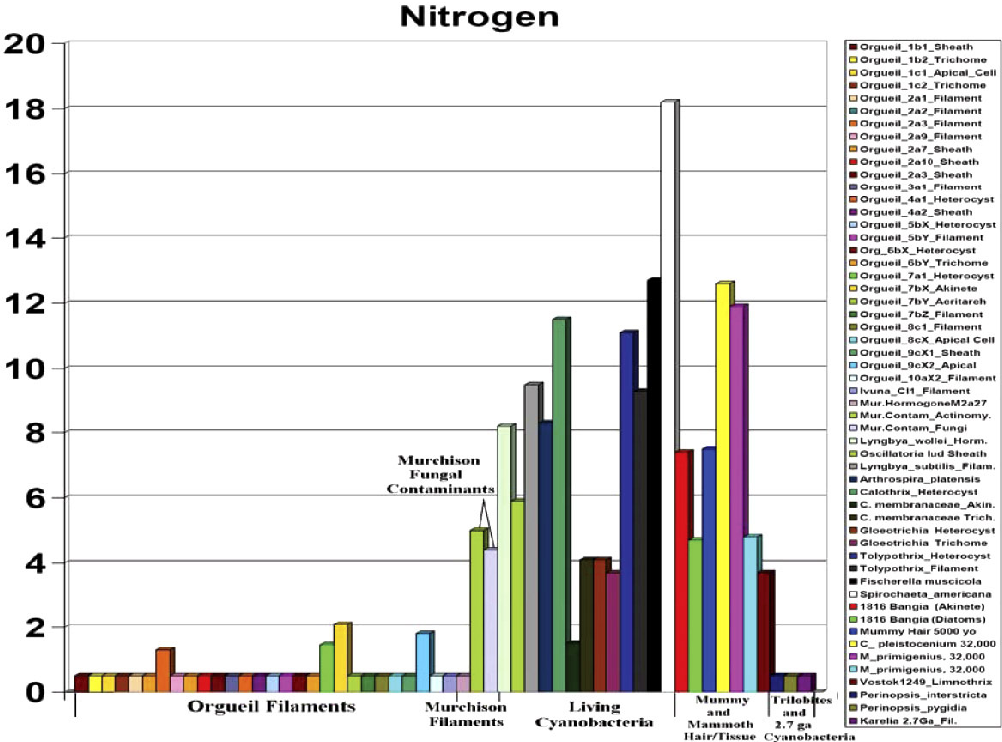
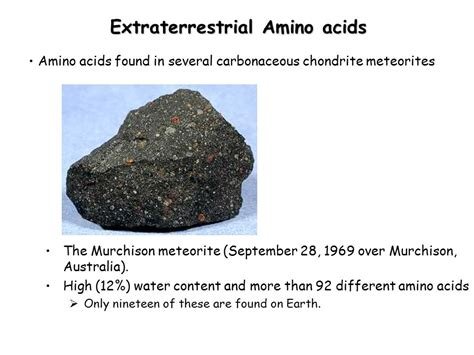
Studies of the Murchison meteorite, which fell in Australia in 1969, revealed more than 70 amino acids. Many were not used by life on Earth. According to NASA-supported research, this suggests that chemical synthesis in space can produce a wide range of organic structures.
That’s a strong signal that prebiotic chemistry isn’t rare.
How Do Molecules Form in Space?
Let’s break this down clearly.
Space is cold. In some regions, temperatures drop to minus 400 degrees Fahrenheit. Tiny dust grains in molecular clouds become coated in ice composed of:
- Water
- Methanol
- Ammonia
- Carbon monoxide
When ultraviolet radiation from nearby stars hits these icy grains, chemical bonds break and recombine. Over time, this radiation-driven chemistry forms increasingly complex organic molecules.
Laboratory simulations at institutions like NASA’s Jet Propulsion Laboratory replicate these conditions. Scientists expose ice mixtures to UV light in vacuum chambers and detect amino acid precursors forming.
This chemistry happens before stars and planets are fully formed.
That means organic chemistry likely predates Earth itself.
Multiple Pathways, Not One Origin Story
The emerging scientific consensus is that life’s building blocks likely formed through multiple processes:
- Atmospheric reactions on early Earth
- Hydrothermal vent chemistry
- UV radiation in interstellar ice
- Delivery via comets and asteroids
Rather than replacing Earth-based origin theories, space chemistry complements them.
It’s not either-or. It’s both.
That’s a more complex — and more realistic — model.
Implications for Astrobiology and Space Exploration
Astrobiology, supported by NASA and research universities across the United States, investigates the potential for life beyond Earth.
If organic molecules form easily in space, then:
- Mars may have once had necessary ingredients
- Icy moons like Europa and Enceladus could host prebiotic chemistry
- Exoplanets in habitable zones may receive organic material through asteroid impacts
According to NASA’s Exoplanet Archive, over 5,500 exoplanets have been confirmed as of 2024. Many exist in regions where liquid water could theoretically persist.
Organic chemistry in space strengthens the argument that the ingredients for life are widespread.
Professional and Career Implications
For professionals in STEM fields, this research expansion affects funding, research direction, and interdisciplinary collaboration.
Fields seeing growth include:
- Planetary geology
- Astrochemistry
- Organic synthesis
- Aerospace engineering
- Data science for spectroscopy
NASA’s approximately $24.9 billion 2024 budget, reported via WhiteHouse.gov, reflects significant investment in planetary science missions.
Graduate students entering astrobiology programs today are stepping into one of the fastest-evolving research areas in science.
Teaching This to the Next Generation
For parents and educators, the message can remain simple:
- Life needs building blocks.
- Scientists once thought Earth made them all.
- Now we know space might have contributed.
- That increases the chances life could exist elsewhere.
Encouraging young students to explore resources like NASA Astrobiology fosters curiosity grounded in credible science.
When kids realize we may literally be made from ancient space chemistry, it sparks imagination backed by evidence.
Scientists Confirm Life in an Unexpected Place, Prompting a Major Rethink
What Did Ancient Egypt Really Smell Like? Museums Are Recreating the Aroma of the Afterlife
Solar Panel Vegetables Deliver Surprising Results — Why Shoppers May Soon Pay More