


27 Minutes of Meditation Can Rewire Your Brain: now that’s a bold claim. You’ve probably seen it splashed across health blogs, YouTube thumbnails, or Instagram reels. Sounds like a hack, right? Sit still for half an hour, and boom — your brain magically transforms. But hold up. As much as we love a feel-good shortcut, the truth behind this headline is both more grounded and more exciting. Yes, science backs it up. But not in the oversimplified, clickbait way it’s often presented. Let’s peel back the layers and understand what’s really going on in your brain when you meditate — backed by Harvard research, neuroimaging studies, and decades of psychological science.
Table of Contents
27 Minutes of Meditation Can Rewire Your Brain
Meditation won’t change your life overnight — but it will absolutely change your life over time. It’s not about perfection. It’s about practice. And the more you show up for it, the more your brain — and your life — begins to shift in subtle, meaningful, and powerful ways. Whether it’s 5, 10, or 27 minutes a day, you’re giving your brain space to breathe, grow, and become more you. And in today’s hyper-connected, stress-filled world… that might be the best rewiring we could ever ask for.
| Topic | Insight |
|---|---|
| Meditation Duration Studied | 27 minutes/day was the average in a Harvard-linked study |
| Program Length | 8 weeks of Mindfulness-Based Stress Reduction (MBSR) |
| Brain Regions Impacted | Hippocampus, posterior cingulate, TPJ, cerebellum |
| Neuroplasticity Defined | Brain’s ability to adapt via new neural pathways |
| Proven Benefits | Reduced stress, better focus, improved emotion regulation |
| Learning Hub | Harvard’s Mind-Body Lab |
Understanding the Claim: What Does “Rewire Your Brain” Actually Mean?
First off, nobody’s plugging wires into your skull — let’s clear that up.
When scientists say “rewire your brain,” they’re referring to neuroplasticity — the brain’s natural ability to change, grow, and adapt by forming new connections between neurons. It’s like your brain’s version of trailblazing: the more often you “walk” a mental path, the clearer and stronger that path becomes.
So meditation doesn’t install new parts into your brain. Instead, it enhances the way existing networks communicate — leading to improved attention, emotion regulation, memory, and self-awareness.
Think of it like upgrading your brain’s software, not its hardware.
Where Did the “27 Minutes of Meditation Can Rewire Your Brain” Come From?
This number traces back to a Harvard-affiliated study conducted by researchers at Massachusetts General Hospital in 2011. The study involved 16 participants who underwent an 8-week MBSR program, a secular course created by Dr. Jon Kabat-Zinn.
Participants were asked to meditate at home daily and attend weekly group classes. By the end, they averaged around 27 minutes of daily practice.
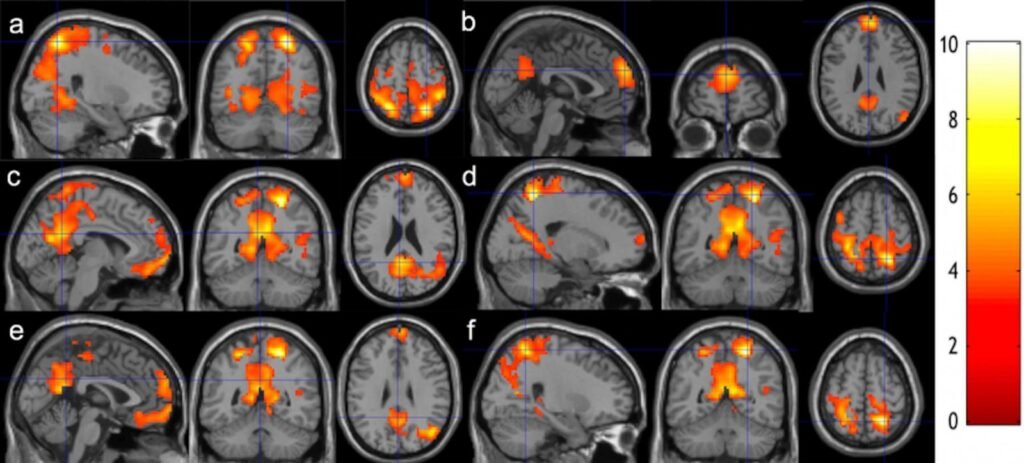
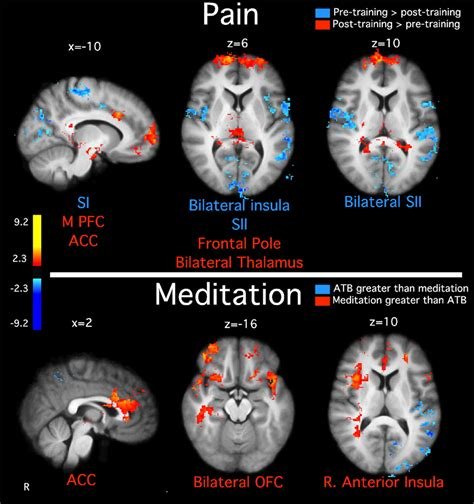
Researchers scanned participants’ brains before and after the program and found measurable increases in gray matter in areas linked to learning, emotion regulation, and self-awareness.
That’s where the magic number comes from — not a one-time “27-minute fix,” but a consistent daily habit over nearly two months.
What Changes Inside Your Brain When You Meditate?
Let’s break down what exactly happens in those brain regions that showed change.
1. Hippocampus (Memory & Learning)
This region is critical for learning and memory — especially spatial navigation and emotional recall. Meditation can boost gray matter here, potentially improving your ability to process and store information.
2. Amygdala (Emotional Reactivity)
Although not always captured structurally, the amygdala’s activity levels drop with meditation. This reduces the fight-or-flight stress response, making you less reactive to life’s curveballs.
3. Posterior Cingulate Cortex (Self-Reflection)
This part of the brain lights up during self-referential thinking (“Why did I do that?”). Meditation helps regulate this region, lowering overthinking and mental chatter.
4. Temporo-Parietal Junction (Empathy & Perspective Taking)
Improved connectivity in this region may enhance your ability to understand others — which can make you more empathetic and emotionally intelligent.
5. Cerebellum (Emotion & Coordination)
Best known for motor function, the cerebellum also plays a role in emotional regulation — helping you stay balanced both physically and mentally.
Real Talk: What the Science Doesn’t Say
Let’s keep it 100:
- Meditation is not a miracle cure.
- You won’t grow a new brain overnight.
- And no, not everyone experiences the same effects.
Some larger replication studies (like a 2022 Science Advances paper) didn’t find significant structural changes across the board. That doesn’t mean meditation is useless — it means human brains are complex, and more research is needed to clarify who benefits most and why.
But the emotional, mental, and behavioral benefits are far less controversial. Thousands of participants in controlled trials report:
- Less anxiety
- Fewer depressive symptoms
- Better focus
- Improved sleep
- Greater resilience to stress
And you don’t need 27 minutes for those effects to kick in.
27 Minutes of Meditation Can Rewire Your Brain: How Long Before You See Real Benefits?
| Timeframe | Common Benefits |
|---|---|
| After 1 week | Slight increase in calm, awareness |
| 2–4 weeks | Less reactivity, better sleep |
| 4–8 weeks | Improved focus, emotional balance |
| 8+ weeks | Lasting resilience, improved attention control |
Step-By-Step Guide: How to Start 27 Minutes of Meditation Can Rewire Your Brain (The Right Way)
If you’re new to meditation, don’t worry — you don’t need incense, robes, or a retreat in the mountains. Here’s how to do it, American-style:
Step 1: Pick a Time You Can Stick To
Morning or bedtime are golden. Commit to at least 5 minutes.
Step 2: Choose a Simple Technique
Start with breath awareness or body scan meditations. No need for mantras or apps right away.
Step 3: Set a Timer
Use your phone’s clock. Start with 5–10 minutes and build up.
Step 4: Sit Comfortably
You can sit on a chair, couch, or the floor — just keep your spine upright and relaxed.
Step 5: Don’t Try to “Clear” Your Mind
Thoughts will pop up — that’s normal. The key is to notice them, then gently return to your breath.
Step 6: Be Consistent
Think of meditation like brushing your teeth — small, daily actions keep your “mental hygiene” in check.
Lifestyle Integration: Make Meditation Part of Everyday Life
- During your commute: Try a walking meditation or focus on your breath at stoplights.
- Before meetings or presentations: Take 3 deep breaths to center yourself.
- With your kids: Do a short bedtime meditation together to build calm habits early.
Common Myths — Busted
MYTH 1: You need to meditate for hours.
🡺 False. Even 10–12 minutes/day yields benefits if done consistently.
MYTH 2: It’s religious or spiritual.
🡺 Nope. Programs like MBSR are secular and evidence-based.
MYTH 3: You have to stop all thoughts.
🡺 Meditation is not about emptying your mind — it’s about learning to watch your thoughts without being controlled by them.
10 Archaeology Discoveries That Sound Fake but Are Completely Real
The Human Skull Discovery That Challenges the Out of Africa Theory
Scientists Confirm Living Beings Emit Light — And It Fades at the Moment of Death