

Millions of Americans who rely on March 2026 SSI Checks will receive their benefits earlier than usual, with the Social Security Administration scheduling payment for Feb. 27, 2026. The shift does not increase benefits; it follows federal rules requiring advance payments when the first day of a month falls on a weekend, a timing change that often causes confusion among recipients.
Table of Contents
March 2026 SSI Checks
| Key Fact | Detail |
|---|---|
| Payment Date | Feb. 27, 2026 |
| Reason | March 1 falls on a Sunday |
| Next Payment | April 1, 2026 |
Federal officials stress that the early deposit of March 2026 SSI Checks is routine and part of long-standing administrative policy. The Social Security Administration encourages recipients to consult the annual payment calendar each year, noting similar adjustments will continue whenever the first of a month falls on a weekend or holiday.
Understanding the March 2026 SSI Checks Schedule
The Supplemental Security Income (SSI) program provides monthly assistance to older adults, blind individuals, and people with disabilities who have limited income and financial resources. The program is administered by the Social Security Administration (SSA) but funded through general federal tax revenue rather than payroll taxes used for retirement benefits.
Under standard rules, SSI benefits are issued on the first day of each month. However, federal regulations require the agency to send payments on the preceding business day if the first falls on a weekend or federal holiday.
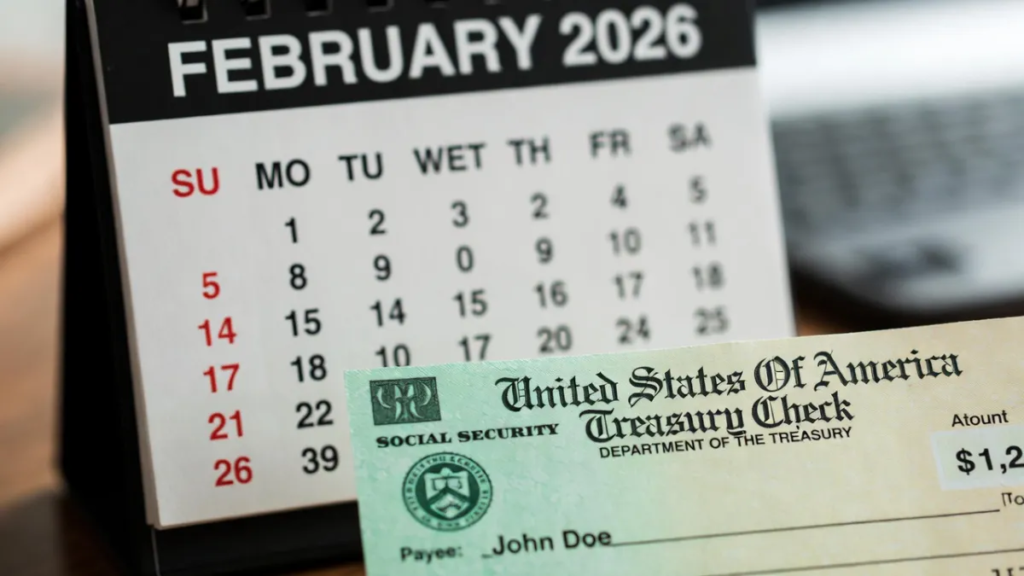
Because March 1, 2026, falls on a Sunday, recipients will receive the March benefit on Friday, Feb. 27, 2026.
An SSA guidance notice explains, “Payments are scheduled to ensure beneficiaries have access to funds before the start of the benefit month whenever the regular payment date is not a business day.”
Why Beneficiaries Will Not Receive a Payment in March
The early deposit frequently causes concern because recipients expect at least one payment during each calendar month. In practice, the Feb. 27 deposit represents the March 2026 SSI Checks.
Advocacy groups say the schedule can create budgeting stress. The National Council on Aging notes that early payments “often appear as missing checks even though benefits were issued in advance.”
After the February deposit, the next SSI payment will arrive April 1, 2026 — a gap of more than 30 days. For households living entirely on fixed income, this gap can feel significant.
Legal aid organizations say calls to support hotlines typically increase during early-payment months.
How Social Security Retirement and Disability Payments Differ
SSI is separate from Social Security retirement benefits and Social Security Disability Insurance (SSDI), though the same federal agency administers all three programs. This distinction is important because payment schedules differ.
Social Security retirement and SSDI benefits follow a birthday-based schedule:
- 1st–10th: Second Wednesday (March 11, 2026)
- 11th–20th: Third Wednesday (March 18, 2026)
- 21st–31st: Fourth Wednesday (March 25, 2026)
People who began receiving Social Security before May 1997 — or who receive both SSI and Social Security — are paid on March 3, 2026.
Payment Amounts and Eligibility
Following recent cost-of-living adjustments (COLA), the federal maximum SSI payment is:
- $994 per month for an individual
- $1,491 per month for a couple
Actual payments vary widely. The SSA adjusts benefits based on:
- other income
- housing assistance
- family support
- state supplements
Many states provide additional payments, meaning recipients in states such as California or New York may receive more than the federal amount.
According to the Congressional Research Service, SSI is often the primary source of income for recipients, particularly those with severe disabilities who cannot maintain full-time employment.
Budgeting Concerns and Financial Impact
Early payments do not change total annual benefits but can complicate monthly finances. Rent, medication, and utility bills typically follow a calendar-month schedule, while benefit payments do not.
Financial counselors advise recipients to treat Feb. 27 as a March payment — not extra income.
“Beneficiaries should divide the payment across the full month of March,” said a public benefits advisor at a nonprofit senior services organization. “The issue is not the amount; it is the timing.”
Experts suggest:
- paying fixed bills immediately
- setting aside grocery funds weekly
- avoiding short-term loans or payday lenders
Advocates say predatory lending increases during months with irregular payment timing.
How Often Early Payments Happen
Early SSI payments occur several times a year whenever the first of the month falls on a weekend or federal holiday. They are not unusual.
Typical months affected include:
- March
- June
- September
- January (in some years)
In some years, recipients may see two payments in a single month. However, officials emphasize this does not represent a bonus.
Instead, it is simply a scheduling adjustment.
Economic Importance of SSI
SSI payments play a significant role in local economies. The Center on Budget and Policy Priorities reports that benefits are spent quickly, often within days, on food, rent, and transportation.
Economists describe SSI as a “stabilizing payment” because it supports consumer spending even during economic slowdowns.
Rural communities, in particular, depend heavily on federal benefit programs. In some counties, a large percentage of households receive Social Security or SSI income.
Policy Background
SSI was established by Congress in 1972 and began operating in 1974. The program replaced state welfare systems for elderly and disabled individuals with a unified federal standard.
Unlike retirement Social Security, eligibility is based on financial need. Recipients must meet strict resource limits — generally $2,000 in countable assets for individuals and $3,000 for couples.
The program serves:
- older adults age 65+
- disabled adults
- disabled children
Lawmakers periodically debate benefit adequacy. Some researchers argue the payment does not fully cover basic living costs, particularly in high-rent cities.
What Recipients Should Do
The SSA advises beneficiaries to wait three business days before reporting a missing payment.
If funds are not received:
- Check bank direct deposit records
- Verify mailing address
- Contact SSA customer service or a local office
Officials also recommend creating an online “my Social Security” account to monitor deposits and benefit letters.
Broader Challenges Facing SSI Recipients
Beyond payment timing, recipients face rising housing and healthcare costs. Advocacy groups say inflation disproportionately affects fixed-income households.
Prescription drug costs, transportation expenses, and food prices have risen in recent years, meaning many beneficiaries spend nearly all of their monthly benefit within the first two weeks.
Public policy researchers say SSI payments remain below the federal poverty threshold in many areas, prompting ongoing policy discussions in Congress.
FAQs About March 2026 SSI Checks
Will there be two SSI payments in February 2026?
Yes. One is February’s benefit and the Feb. 27 payment is the March benefit.
Did benefits increase?
No. The early payment reflects scheduling rules only.
When is the next payment after Feb. 27?
April 1, 2026.
What if I receive both SSI and Social Security?
You will receive SSI on Feb. 27 and Social Security on March 3, 2026.
Do direct deposit and paper checks follow the same schedule?
Yes. The payment date is the same, but mailed checks may arrive later depending on postal delivery.