
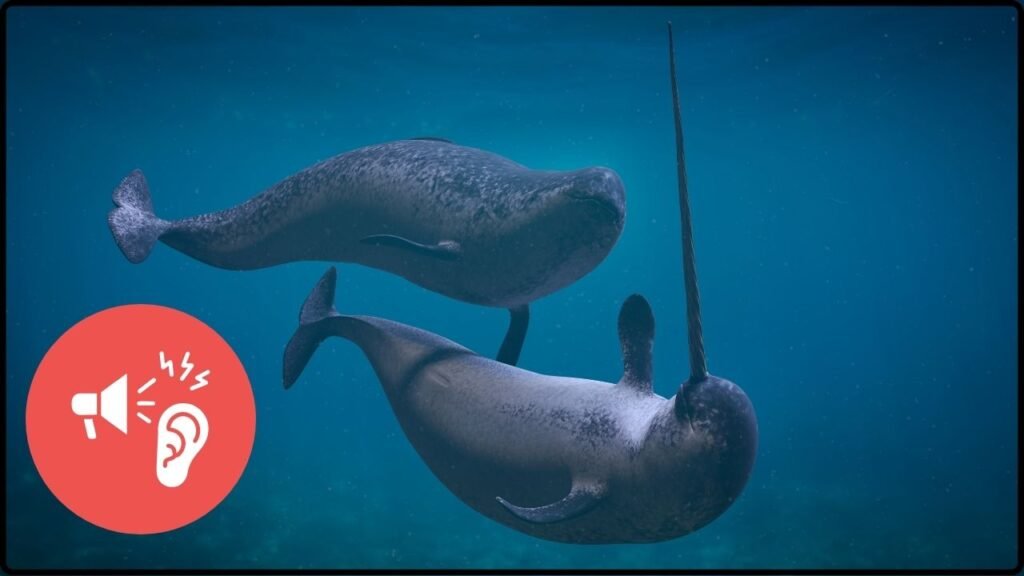
Narwhals Are Growing Quieter: Narwhals Are Growing Quieter as Human Noise Increases in the Arctic, and scientists say this trend could signal a serious environmental challenge unfolding in one of the most remote regions of the planet. These mysterious whales, famous for their long spiral tusk, rely heavily on sound to survive. When the Arctic Ocean becomes louder due to human activity, narwhals change their behavior—sometimes dramatically. In recent years, marine researchers have discovered that narwhals are vocalizing less often in noisy waters, a shift that could affect their ability to hunt, communicate, and navigate through icy environments.
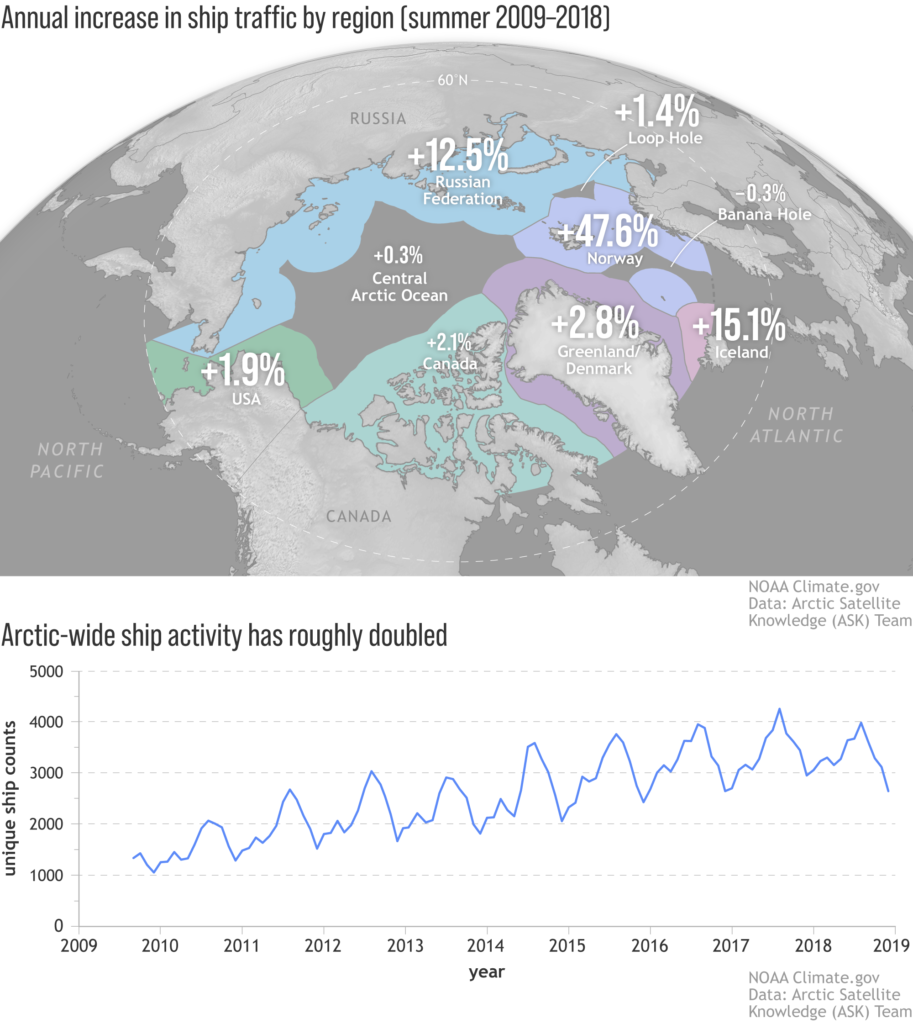
For decades, the Arctic Ocean remained one of the quietest marine environments on Earth. Thick sea ice acted as a natural barrier, limiting ship traffic and industrial exploration. But as climate change accelerates ice loss, more ships are entering Arctic waters. According to research from the National Oceanic and Atmospheric Administration (NOAA), shipping activity in the Arctic has increased significantly over the past 15 years. With each vessel comes underwater engine noise that travels long distances, creating a soundscape that marine animals did not evolve to handle. This growing noise pollution is especially concerning for narwhals because their survival depends on acoustic communication. Scientists studying the animals believe that if the Arctic continues to grow louder, narwhals may struggle to maintain their natural behaviors and could face long-term population impacts.
Table of Contents
Narwhals Are Growing Quieter
The growing concern that Narwhals Are Growing Quieter as Human Noise Increases in the Arctic highlights a broader challenge facing marine ecosystems worldwide. As Arctic waters open to shipping and industrial exploration, the once-silent ocean environment is changing rapidly. For animals like narwhals that rely on sound to hunt, communicate, and navigate, increased noise can disrupt essential behaviors. However, with thoughtful policies, technological innovation, and international cooperation, it is possible to reduce underwater noise and protect the fragile Arctic ecosystem.
| Category | Details |
|---|---|
| Topic | Narwhals Are Growing Quieter as Human Noise Increases in the Arctic |
| Scientific Name | Monodon monoceros |
| Habitat | Arctic waters near Greenland, Canada, and Norway |
| Main Threat | Rising underwater noise from shipping and industrial activity |
| Important Statistic | Arctic ship traffic has increased sharply since 2009 |
| Ecological Impact | Disrupts hunting, communication, and migration patterns |
| Primary Research Sources | National Oceanic and Atmospheric Administration, World Wildlife Fund |
| Official Information | https://www.noaa.gov |
What Makes Narwhals Unique in the Arctic Ecosystem?
The Narwhal is one of the most recognizable marine mammals in the Arctic. Known as the “unicorn of the sea,” the narwhal’s long spiraled tusk has fascinated explorers and scientists for centuries. The tusk, which is actually an elongated tooth, can grow up to 10 feet long and contains millions of sensory nerve endings. Researchers believe the tusk helps narwhals detect subtle environmental changes such as water temperature and salinity.
Narwhals primarily inhabit Arctic waters surrounding Greenland, Canada, and parts of Norway. These whales spend much of their lives near sea ice, diving to depths of more than 1,500 meters (about 5,000 feet) in search of food. Their diet mainly consists of Arctic cod, squid, halibut, and shrimp.
Because sunlight barely reaches the depths where narwhals hunt, vision alone is not enough. Instead, they rely on echolocation, a sophisticated biological sonar system. By producing rapid clicking sounds and listening for echoes, narwhals can detect objects, prey, and obstacles in the dark waters.
This reliance on sound makes narwhals extremely sensitive to disturbances in the ocean’s acoustic environment.
The Science Behind Narwhals Are Growing Quieter
Marine mammals such as narwhals use sound in ways that might surprise people. In many ways, the ocean is a world built on acoustics. Sound travels nearly five times faster in water than in air, and it can travel enormous distances with little loss of energy.
Narwhals produce several types of vocalizations, including:
- Clicks used for echolocation when hunting
- Whistles for communication within groups
- Pulsed calls believed to coordinate movements
Scientists from the University of Washington have recorded thousands of narwhal calls using underwater microphones known as hydrophones. These recordings help researchers understand how narwhals behave in different environments.
What they discovered is that narwhals tend to become quieter when loud human-generated noises are present. In some situations, whales completely stop producing echolocation clicks when ships pass nearby.
For an animal that depends on sound for survival, that silence can be dangerous.
Why the Arctic Ocean Is Becoming Noisier?
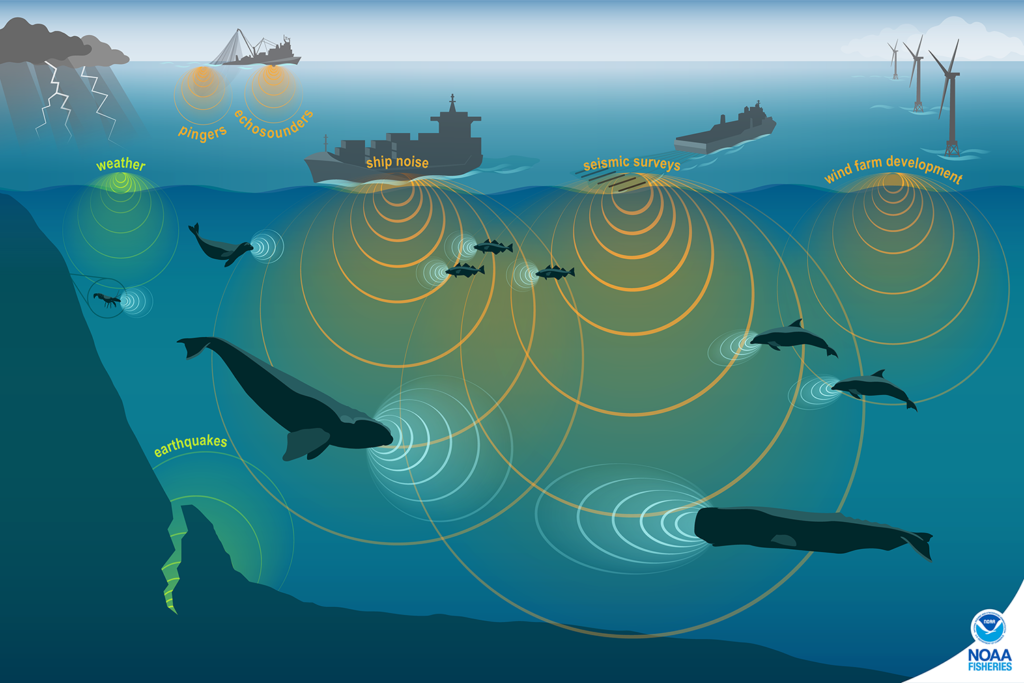
Several factors are contributing to rising underwater noise in the Arctic. The most significant cause is the rapid expansion of human activities in the region.
Increased Global Shipping Routes
As Arctic sea ice melts, new shipping routes are opening across northern waters. One of the most notable is the Northern Sea Route, which allows cargo ships to travel between Europe and Asia more quickly than traditional routes.
According to the International Maritime Organization, commercial vessel traffic in the Arctic has increased steadily since the early 2000s. Each ship produces engine vibrations and propeller cavitation that create underwater noise capable of traveling hundreds of miles.
Oil and Gas Exploration
Energy companies exploring for oil beneath the seabed use seismic airguns that emit powerful bursts of sound to map geological structures. These blasts can reach 230 decibels, making them among the loudest human-generated sounds in the ocean.
Marine scientists warn that such noise can interfere with the communication systems of whales and other marine mammals.
Scientific and Military Sonar
Government and research organizations also use sonar technology to study the ocean floor or monitor submarines. While sonar is essential for navigation and research, it can unintentionally disturb wildlife.
The National Marine Fisheries Service has identified underwater noise pollution as one of the major emerging threats to marine mammals worldwide.
Narwhals Are Growing Quieter: Behavioral Changes Observed in Narwhals
Scientists studying narwhal populations in areas such as Baffin Bay have documented several changes in whale behavior when exposed to human noise.
One of the most noticeable changes is a reduction in vocal activity. Researchers analyzing hydrophone data discovered that narwhals dramatically decrease the number of clicks and whistles they produce when ships are nearby.
There are several possible reasons for this response.
First, narwhals may stop vocalizing because their sounds are masked by engine noise. If their calls cannot be heard by other whales or cannot detect prey echoes, the effort becomes useless.
Second, whales may intentionally remain quiet to avoid predators or unfamiliar disturbances.
Third, loud sounds can cause physiological stress. Studies of marine mammals show that prolonged noise exposure can trigger stress hormones similar to those experienced by humans during stressful events.
Scientists at the Stanford University have reported that noise pollution can reduce the feeding efficiency of certain marine mammals by up to 50 percent. If narwhals struggle to find food due to disrupted echolocation, their overall health could decline.
The Wider Ecological Impact
Narwhals play an important role in maintaining balance within the Arctic marine ecosystem. They help regulate fish populations and serve as prey for top predators like the Polar Bear and the Killer Whale.
If narwhal populations decline or move away from traditional habitats, the entire food web could shift.
Additionally, narwhals are considered indicator species, meaning changes in their behavior can signal broader environmental changes occurring in the Arctic.
Many Indigenous communities in northern Canada and Greenland also depend on narwhals culturally and historically. For generations, these communities have observed narwhal migration patterns and environmental changes long before modern scientific monitoring existed.
Their knowledge is increasingly valuable in understanding how human activities affect the Arctic ecosystem.
Practical Solutions for Reducing Ocean Noise
One encouraging aspect of underwater noise pollution is that it can often be reduced quickly with the right policies and technologies.
Slower Vessel Speeds
Studies have shown that reducing ship speed can significantly lower underwater noise levels. Even a modest speed reduction can decrease engine vibration and propeller cavitation.
In some cases, slowing vessels by 10 percent can reduce underwater noise by nearly 40 percent.
Improved Ship Technology
Shipbuilders are developing quieter propeller designs and better hull shapes that reduce vibration. These engineering improvements can make a noticeable difference in ocean sound levels.
Establishing Quiet Marine Zones
Governments can designate protected areas where shipping and industrial activities are limited. Such zones help protect important habitats where marine mammals feed and reproduce.
Global Regulation
International organizations are working toward global guidelines for reducing underwater noise. The International Maritime Organization has already introduced voluntary recommendations encouraging quieter ship designs.
As more countries adopt these guidelines, the overall noise level in the oceans could decline.
What Narwhals Are Growing Quieter Means for Environmental Professionals?
For professionals working in conservation, marine biology, and environmental policy, the issue of underwater noise is becoming increasingly important.
Researchers are developing new monitoring tools such as autonomous hydrophone arrays that can track marine soundscapes over long periods. These systems provide valuable data about how marine life responds to changing environments.
Policy experts are also exploring regulations that balance economic development with ecosystem protection. Arctic shipping routes provide economic benefits but must be managed responsibly to avoid harming wildlife.
Environmental professionals emphasize the importance of interdisciplinary collaboration between engineers, policymakers, marine biologists, and Indigenous communities.
Only through cooperation can sustainable solutions be developed.
Satellite Data Shows Unusual Ocean Color Patterns Near Remote Islands
Study Examines How the Southern Ocean May Release Stored Heat
A 4500-Year-Old Arctic Voyage Reveals the Earliest High-Latitude Sailors