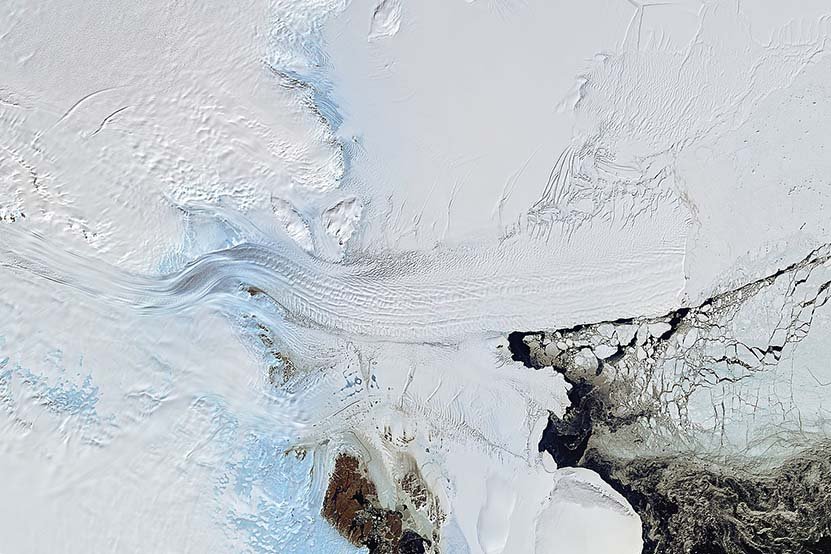

For a long time, the question of the world’s oldest river seemed settled. The Nile and the Amazon dominated the conversation, largely because of their size, history, and continued influence on human civilization. They appeared timeless, as if they had always been there. But geology does not measure age by fame or volume. It measures endurance. And by that standard, scientists now believe the answer lies far from Africa and South America, deep in the dry interior of Australia.
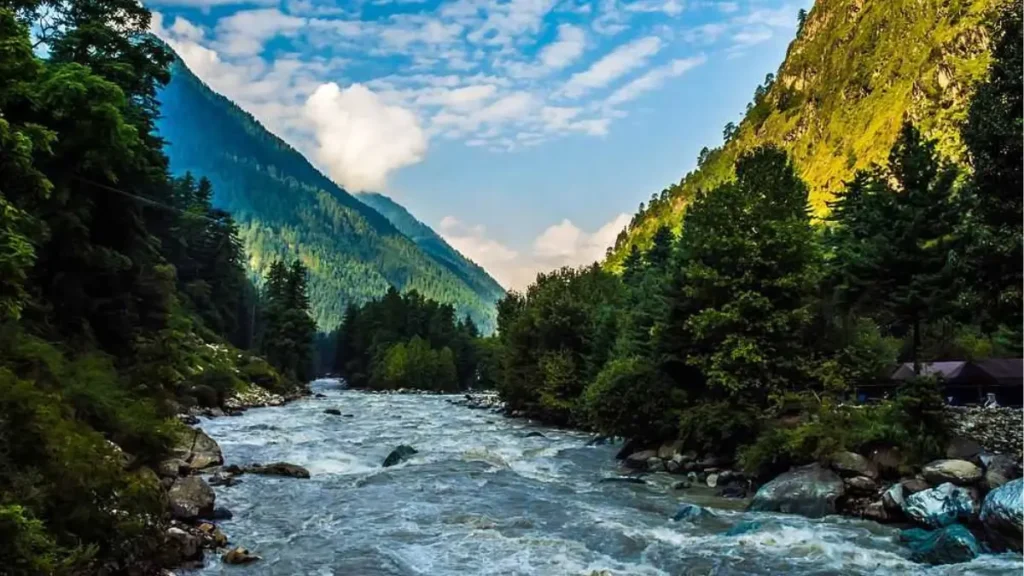
Recent research has revealed that the Finke River oldest river on Earth title belongs to a modest, often dry river system that many people have never heard of. This finding has changed how scientists think about rivers and how landscapes evolve over deep time. The Finke River does not impress with constant water flow or vast deltas. Instead, it tells a story of survival across hundreds of millions of years, outlasting mountain ranges, climate shifts, and continental movement. The idea that the Finke River oldest river on Earth could be older than the world’s most famous rivers may sound surprising at first. Yet when examined through geological evidence rather than surface appearance, the claim becomes remarkably convincing. This discovery highlights how Earth’s most ancient features are often hidden in plain sight.
The Finke River oldest river on Earth claim is rooted in how the river interacts with the land around it. Flowing through central Australia, the Finke River is classified as an antecedent river. This means it existed before the surrounding mountain ranges formed and maintained its original path as the land slowly rose beneath it. Over an estimated 300 to 350 million years, the river continued cutting downward into rock while the terrain lifted upward. This rare geological behavior provides strong evidence of extreme age. Most rivers change direction or disappear entirely when confronted with mountain formation. The Finke did neither. Its course remained intact, marking it as one of the most geologically persistent rivers ever identified.
Table of Contents
Scientists Identify Australia’s Finke River as the Oldest on Earth
| Feature | Details |
|---|---|
| River Name | Finke River |
| Location | Central Australia |
| Estimated Age | 300–350 million years |
| River Type | Seasonal (ephemeral) |
| Geological Classification | Antecedent river |
| Key Characteristic | Cuts through mountain ranges |
| Global Significance | Oldest known river system |
Geological Evidence Behind The Discovery
- The case for the Finke River oldest river on Earth is built on physical evidence preserved in rock and sediment. Geologists studied erosion patterns along the riverbed and surrounding formations. These patterns show uninterrupted water activity over hundreds of millions of years.
- One of the most compelling signs is how the river slices directly through ancient mountain ranges instead of flowing around them. This indicates the river was already there before the mountains formed. Radiometric dating of nearby rocks confirms that the landscape rose long after the river had established its course.
- Unlike younger rivers, which often show signs of rerouting or interruption, the Finke River displays continuity. Even during periods when surface water disappeared due to arid conditions, the underlying channel remained, ready to carry water again when rainfall returned.
How The Finke River Survived Continental Change
- Australia’s geological history is dramatic. Hundreds of millions of years ago, the continent was part of a massive land formation known as Gondwana. Over time, tectonic forces pulled this supercontinent apart, pushing Australia northward and reshaping its climate.
- As the land shifted, rainfall patterns changed drastically. What was once a wetter environment gradually became one of the driest regions on Earth. Through all of this, the Finke River oldest river on Earth endured. Its flow weakened and became seasonal, but its structure remained.
- During rare but intense rainfall events, water still follows the same ancient pathways carved long ago. These episodes refresh the riverbed without erasing its geological history. This ability to adapt without losing identity is central to why scientists recognize the Finke River as uniquely ancient.
Why The Nile and Amazon Are Younger Than the Finke
The Nile and Amazon are impressive by any measure, but they are relatively young in geological terms. Their current forms developed after major tectonic and climatic events reshaped their regions. The Nile’s modern structure emerged after shifts in African plate movement and climate patterns millions of years ago. The Amazon underwent a dramatic transformation when mountain building altered its flow direction, fundamentally resetting its river system. When compared to the Finke River oldest river on Earth, these rivers belong to a much later chapter of Earth’s history. The Finke had already been flowing for hundreds of millions of years before the Nile or Amazon took recognizable form.
The Unique Landscape Carved by the Finke River
The Finke River has shaped some of Australia’s most distinctive landscapes. Deep gorges, exposed rock faces, and layered cliffs reveal an unbroken geological timeline. Each layer tells a story of erosion, sediment movement, and ancient climate conditions. Because the Finke River oldest river on Earth flows only during certain seasons, it does not dramatically reshape its surroundings in a single event. Instead, it reinforces existing channels again and again, preserving its ancient path rather than overwriting it. These landscapes serve as natural archives. Scientists can study them to understand how rivers interact with stable landmasses over immense time spans, something rarely possible in more geologically active regions.
Cultural And Environmental Importance
- Long before scientific studies identified the Finke River oldest river on Earth, Indigenous Australians understood its importance. Aboriginal communities have lived alongside the river for thousands of years, relying on its seasonal flows for survival and embedding it deeply in cultural traditions.
- The river also plays a vital ecological role. During wet periods, it brings life to the desert. Plants bloom, insects emerge, and animals gather around temporary water sources. These cycles mirror patterns that have repeated for millions of years, highlighting the river’s role as a long-standing ecological anchor.
What This Discovery Means For Earth Science
- Recognizing the Finke River oldest river on Earth changes how scientists define river age. It moves the focus away from continuous water flow and toward geological persistence. A river does not need to be large or permanent to be ancient. It needs to maintain its course through deep time.
- This discovery also reinforces Australia’s importance in understanding Earth’s early history. The continent’s relative geological stability has preserved features that were erased elsewhere by ice ages, volcanic activity, or aggressive tectonic movement.
- For researchers, the Finke River provides a rare opportunity to study how landscapes evolve when change happens slowly rather than violently.
A Quiet Giant of Deep Time
The Finke River oldest river on Earth does not command attention the way famous rivers do. It does not dominate trade routes or shape empires. Yet its story reaches further back in time than almost any other river known. While younger rivers rose, shifted, and reformed, the Finke simply endured. Its recognition reminds us that Earth’s most remarkable survivors are often understated. In the silent stretches of Australia’s interior, the planet’s oldest river continues to trace a path first carved hundreds of millions of years ago.
FAQs on Not the Nile or the Amazon
Is the Finke River really the oldest river on Earth?
Yes. Based on geological evidence, many scientists consider the Finke River to be the oldest river system on Earth because it has maintained its course for more than 300 million years.
How old is the Finke River according to scientists?
Researchers estimate the Finke River to be between 300 and 350 million years old, making it far older than famous rivers like the Nile or the Amazon.
Why does the Finke River not flow all year round?
The Finke River flows seasonally due to Australia’s arid climate. Rainfall is infrequent, so water appears mainly after heavy rains, but the ancient river channel remains intact.
What makes the Finke River different from other ancient rivers?
The key difference is that the Finke River cuts through mountain ranges that formed after the river itself. This proves it existed before the surrounding landscape rose.