

Open Source Large Genome AI: The breakthrough Open Source Large Genome AI trained on trillions of DNA bases is shaking up the world of biotechnology and artificial intelligence. Scientists have introduced a powerful AI model called Evo 2, designed to read, understand, and even generate DNA sequences at an unprecedented scale. In simple terms, it’s like a “ChatGPT for genetics,” capable of analyzing the language of life—the four DNA letters A, T, C, and G—across millions of species. If you’re wondering why folks in labs from Silicon Valley to Boston are buzzing about it, here’s the deal: this genome AI model has been trained on over 9 trillion DNA bases gathered from more than 100,000 organisms across the tree of life. That massive dataset allows researchers to uncover patterns in DNA that were nearly impossible to spot before. In other words, scientists now have a supercharged microscope for decoding biology.
Table of Contents
Open Source Large Genome AI
The Open Source Large Genome AI trained on trillions of DNA bases represents a major leap forward in both artificial intelligence and biology. By combining massive genetic datasets with advanced machine learning, scientists now have a tool capable of decoding the complex language of life. From disease research and drug discovery to agriculture and synthetic biology, genome AI could reshape the future of science. The key challenge now is ensuring this powerful technology is used responsibly.
| Feature | Details |
|---|---|
| AI Model Name | Evo 2 Genome AI |
| Training Data | ~9.3 trillion DNA bases |
| Organisms Studied | 100,000+ species |
| Maximum DNA Context | Up to ~1 million DNA bases analyzed at once |
| Developed By | Arc Institute, Stanford University, NVIDIA |
| Main Applications | Disease research, drug discovery, agriculture, synthetic biology |
| Open Source Access | Researchers can access and experiment with the model |
| Official Source | https://arcinstitute.org |
Understanding the New Frontier in Open Source Large Genome AI
Let’s break this down in plain English.
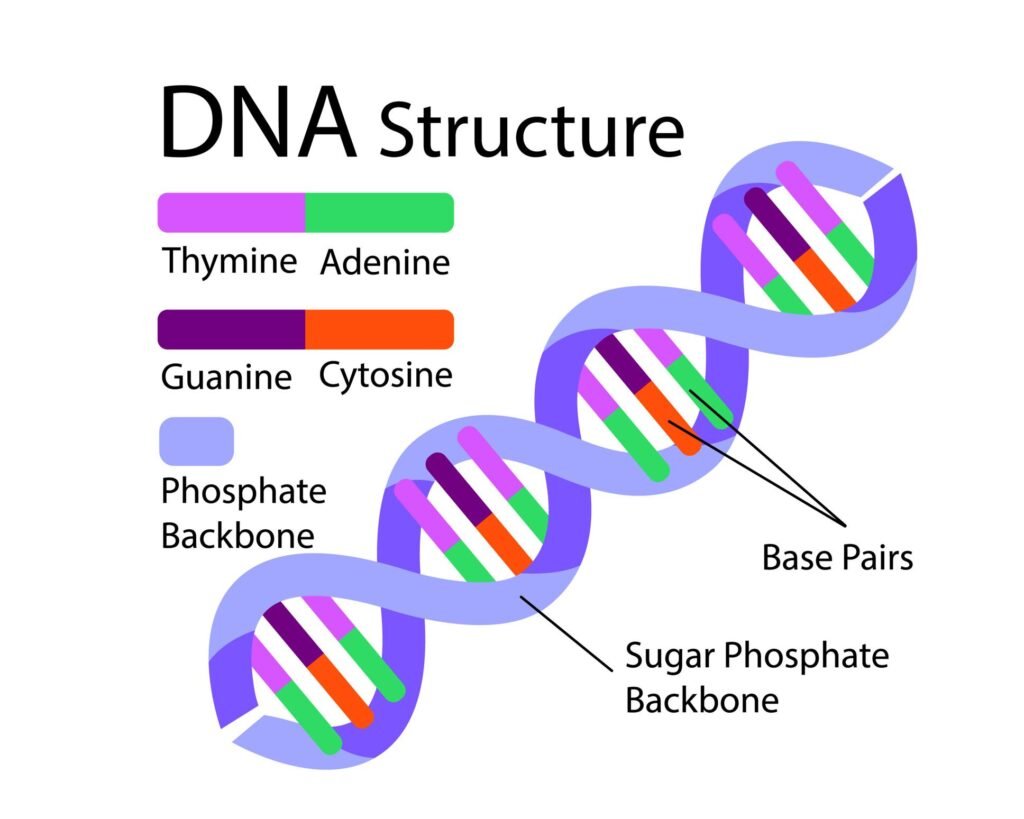
DNA is basically a four-letter code that tells every living thing how to grow and function. Humans have around 3 billion DNA letters in their genome, and those letters interact in incredibly complex ways. For decades, scientists could read DNA but struggled to understand how those letters work together.
That’s where AI-powered genome analysis comes into play.
Just like language models learn grammar and meaning from huge text datasets, genome AI models learn biological rules from massive DNA datasets. Evo 2 was trained on genomes from bacteria, plants, animals, and humans. Because of that diversity, the AI can recognize patterns that apply across life itself.
According to the research team at the Arc Institute and Stanford University, the model can examine up to one million DNA letters at once, helping scientists understand long-range genetic interactions that were previously difficult to detect.
Why This Open Source Large Genome AI Matters?
1. Faster Disease Research
One of the biggest uses of genomic AI models is identifying disease-causing mutations.
For example, some illnesses are caused by tiny DNA changes called mutations. With millions of potential variations, finding harmful ones used to take years. Now, AI models can predict which mutations might cause diseases in hours.
Researchers hope this will accelerate studies on:
- Cancer
- Rare genetic disorders
- Neurological diseases
- Immune system conditions
According to the National Institutes of Health (NIH), over 7,000 rare genetic diseases affect millions of people worldwide. Tools like Evo 2 could dramatically speed up the search for treatments.
2. Revolutionizing Drug Discovery
Pharmaceutical companies spend billions of dollars developing medicines. A huge chunk of that cost comes from trial and error when studying genes and proteins.
With AI genome models, researchers can simulate genetic interactions digitally before running experiments.
This means scientists can:
- Predict how genes react to drugs
- Design therapeutic DNA sequences
- Test genetic therapies virtually
The U.S. Food and Drug Administration (FDA) has increasingly supported the use of AI in drug development.
3. Transforming Agriculture
Farmers across the United States face challenges from climate change, pests, and soil conditions. Genetic science plays a big role in solving those problems.
Genome AI can help scientists create crops that are:
- More drought-resistant
- More disease-resistant
- Higher yielding
- More nutritious
For example, researchers could identify genetic patterns that allow plants to survive extreme heat.
The U.S. Department of Agriculture (USDA) already funds genomic research for crop improvement.
4. Synthetic Biology and Bioengineering
Here’s where things start to feel a little sci-fi.
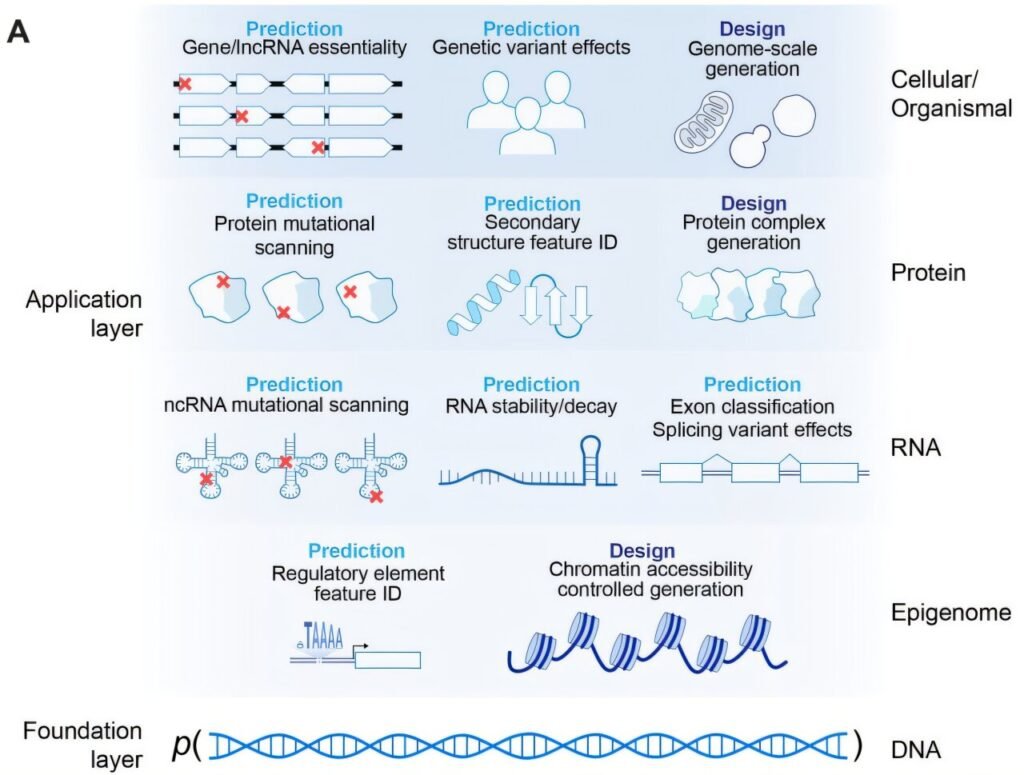
Because Evo 2 is a generative AI model, it can actually design new DNA sequences. That means scientists could potentially create custom organisms designed for specific tasks.
Examples include:
- Microbes that produce biofuels
- Bacteria that clean pollution
- Cells that manufacture medicine
According to a report from Nature Biotechnology, synthetic biology could become a $100+ billion industry by 2030.
How Open Source Large Genome AI Works? (Step-by-Step Guide)
If you’re new to this field, don’t sweat it. Let’s walk through the basics.
Step 1: Gather Massive Genetic Data
Scientists collect genome sequences from thousands of organisms. Each sequence is basically a very long string of DNA letters.
Example:
ATGCGTACCGTTAGC
Multiply that by trillions of letters and you get the training dataset.
Step 2: Train the AI Model
The AI processes the DNA data using deep learning algorithms similar to those used in language models.
The system learns:
- DNA patterns
- Genetic relationships
- Regulatory signals
- Evolutionary changes
Step 3: Predict Biological Outcomes
Once trained, the AI can analyze new DNA sequences and predict:
- Gene function
- Mutation impact
- Protein production
- Disease risks
Step 4: Generate New Genetic Sequences
Finally, the AI can generate entirely new DNA combinations that may perform specific biological functions.
This capability is what makes genome AI such a powerful research tool.
Why Open Source Large Genome AI Access Is a Big Deal?
A lot of cutting-edge AI technology is locked behind corporate walls. But Evo 2 is open source, meaning researchers worldwide can access the model.
This encourages:
- Collaboration
- Innovation
- Faster scientific discoveries
Open science has historically driven major breakthroughs. For instance, the Human Genome Project, completed in 2003, released its data publicly and helped launch modern genomics.
Potential Risks and Ethical Concerns
Of course, with great power comes responsibility.
Experts have raised concerns about how powerful genome AI models could be misused.
Possible risks include:
- Designing harmful pathogens
- Unregulated genetic experiments
- Biosecurity threats
Organizations such as the World Health Organization (WHO) and U.S. National Academies of Sciences are actively discussing guidelines for responsible AI in biotechnology.
What This Means for Careers in Biotechnology?
For students and professionals, this technology is opening new doors.
High-demand fields include:
- Computational biology
- Bioinformatics
- AI engineering
- Genomic medicine
- Synthetic biology
According to the U.S. Bureau of Labor Statistics, jobs in biological sciences are expected to grow 7% through 2033, faster than many other sectors.
Professionals who understand both AI and biology will likely become some of the most sought-after experts in the next decade.
Are Ancient Predictions Being Reinterpreted Through Modern Events?
Scientists Narrow the Search for the Luna 9 Landing Site Using AI Mapping
New Research Looks at Energy Sources Located Far Below Earth’s Surface