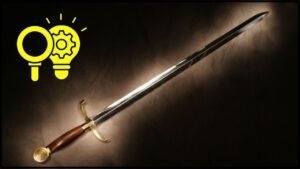

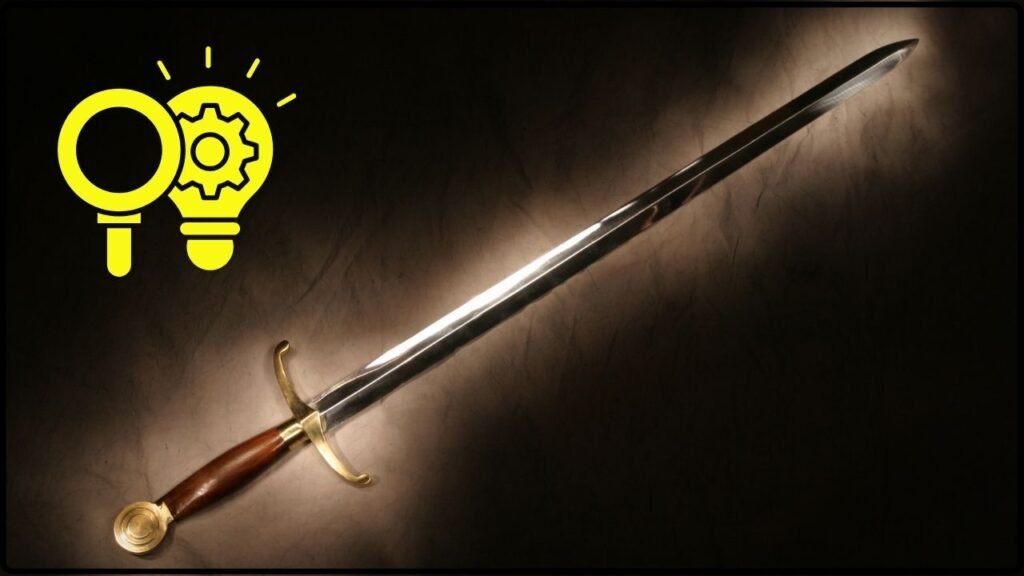
Perfectly Preserved Bronze Age Sword Discovery: The discovery of a perfectly preserved Bronze Age sword near Nördlingen has sparked both excitement and serious head-scratching across the archaeology community. Unearthed during a burial excavation, the sword is so remarkably intact that its blade still reflects light—something no one expects from metal forged more than 3,400 years ago. It’s not often you hear archaeologists say, “This looks like it was made last week.” But this find absolutely earned that reaction.
Right away, professionals knew this wasn’t your everyday artifact. The sword features an immaculate octagonal hilt, beautifully preserved bronze alloying, and decorative copper inlays. It’s basically the ancient-world equivalent of finding a limited-edition collector’s item in perfect mint condition. But instead of being 20 years old, it’s more than three millennia old. And that changes everything we thought we knew about Bronze Age craftsmanship, ritual weaponry, and burial customs. Below is a comprehensive look at what makes this sword so extraordinary, why researchers are buzzing about it, and how this single discovery may influence future archaeological research for decades to come.
Table of Contents
Perfectly Preserved Bronze Age Sword Discovery
The perfectly preserved Bronze Age sword discovered near Nördlingen is far more than a historic artifact—it’s a storybook of ancient engineering, cultural identity, and human creativity. Its pristine condition challenges assumptions about technological limits, trade connections, and ceremonial weaponry in prehistoric Europe. This single find will influence archaeological research, museum curation, and academic understanding for decades. It stands as a reminder that our ancestors were not primitive at all. They were innovators, artists, and engineers whose skills continue to impress even the most advanced researchers today.
| Topic | Summary |
|---|---|
| Discovery Location | Found near Nördlingen, Germany in a Bronze Age burial site |
| Age of Sword | Estimated at 3,400 years old |
| Condition | Nearly pristine, with a reflective blade and intact octagonal hilt |
| Importance | Challenges assumptions about metalworking and social structure |
| Scientific Tools Used | CT scan, XRF analysis, metallurgical microscopy |
| Global Context | Illuminates Bronze Age trade networks and elite symbolism |
| Official Reference | https://www.heritagedaily.com |
Perfectly Preserved Bronze Age Sword Discovery: A Buried Treasure That Shouldn’t Look This Good
When researchers from the Bavarian State Office for the Preservation of Monuments uncovered the sword, they were expecting a typical, heavily corroded Bronze Age relic. That’s the norm when you’re dealing with ancient metal. Soil, oxygen, moisture, and chemical reactions usually leave metal objects pitted, flaking, or warped beyond recognition.
But this sword was different. Even covered in soil, it gave off an unmistakable metallic gleam. After gentle cleaning, researchers found an artifact so sharp, so symmetrical, and so undamaged that it nearly defies the laws of chemistry. Bronze isn’t supposed to age this gracefully—especially over 34 centuries.
Everything from its blade geometry to its grip proportions suggests high-level craftsmanship. And not “village blacksmith who learned from dad” kind of skills. We’re talking about metallurgical expertise that required:
- Specialized tools
- Heat-control knowledge
- Alloy experimentation
- Pattern design skills
This sword wasn’t made by someone casually experimenting with metal. It was made by someone who knew exactly what they were doing.
Why Historians Are Asking New and Bigger Questions About Perfectly Preserved Bronze Age Sword Discovery
A Fresh Look at Ancient Metalworking Skill
Until recently, scholars believed that many Bronze Age swords were somewhat inconsistent in quality because the era relied on limited casting methods. But the Nördlingen sword challenges that narrative. CT scans show that the sword’s blade and hilt were produced with a near-uniform density, meaning the casting process was highly controlled. No weak spots. No inconsistencies. No sloppy seams.
This brings new light to the idea that certain regions of Bronze Age Europe may have had specialized workshops—places where highly trained smiths collaborated, taught apprentices, and produced elite weaponry for nobles, warriors, or ceremonial leaders.
New Questions About Social Hierarchies
This sword was found in a grave that also contained the remains of multiple individuals. That burial context alone raises interesting questions:
- Were these people a family of high status?
- Was one of them a warrior or tribal leader?
- Was the sword symbolic, or an heirloom meant to represent lineage?
- Did the weapon mark them as part of a ritual class or elite society?
Weapons of this quality weren’t everyday items. They were symbols—statements of identity, authority, and prestige.
Rewriting Trade and Cultural Networks
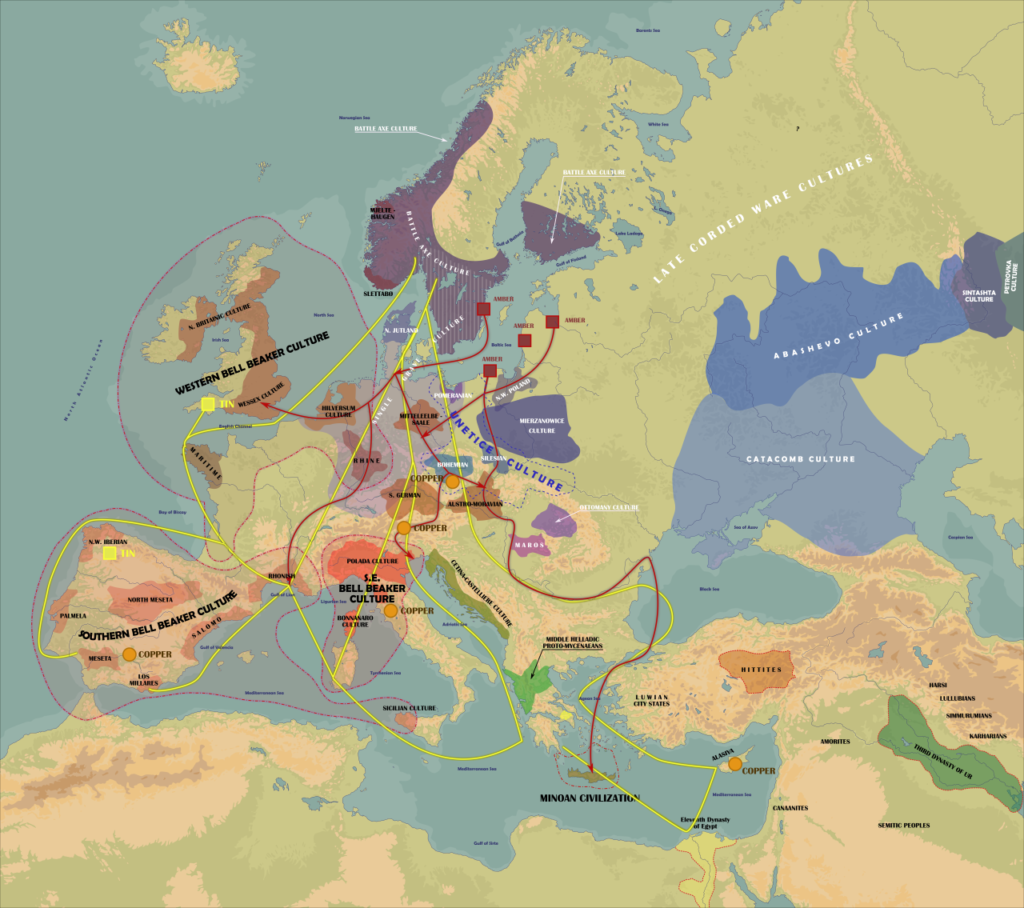
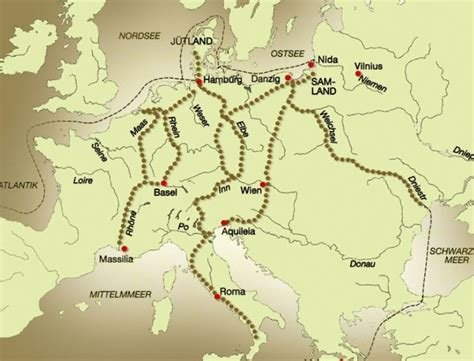
Bronze requires tin and copper, and tin wasn’t easy to come by in central Europe. Tin sources were scattered and often located hundreds or even thousands of miles away. That means this weapon is direct evidence of long-distance trade routes, economic collaboration, and cultural exchange.
Isotope analysis on similar Bronze Age artifacts has traced tin to areas such as:
- Bohemia (modern-day Czech Republic)
- The British Isles
- Iberia
So this sword isn’t just a beautiful object—it’s proof of a connected, trading world long before globalization was a word.
A Beginner-Friendly Guide: How Bronze Age Swords Were Actually Made
A lot of people imagine ancient metalworking as simple hammering. But Bronze Age sword-making was hardcore science.
Step 1: Gathering Raw Materials
Copper was sometimes mined nearby. Tin, however, almost always came from afar. This required planning, negotiation, and trade systems that rival modern supply chains in complexity.
Step 2: Melting
Copper and tin were melted together in clay or stone furnaces that needed to reach over 950°C. Without electricity, this meant using charcoal and specialized airflow systems.
Step 3: Casting
The molten bronze was poured into molds—often two-part molds made of stone or clay. The Nördlingen sword appears to have used an advanced casting method where the hilt and blade were created as a single piece.
Step 4: Finishing
After cooling, the blade was sharpened with stone tools. Decorative grooves and inlays were carved into the hilt, often filled with softer metals like copper.
Step 5: Polishing
One reason this sword looks so shiny today is because it was polished intensely by its makers. Bronze can take on a mirror-like sheen when polished correctly.
In short, Bronze Age smiths were not just metalworkers—they were chemists, engineers, artists, and designers.
Comparing the Sword to Other Iconic Bronze Age Finds
This sword now joins some of Europe’s most influential prehistoric artifacts. To understand just how special it is, let’s compare it to other major finds:
The Nebra Sky Disk (Germany, ~1600 BCE)
This bronze disk, decorated with gold leaf, changed everything we knew about early astronomy. Similar to this new sword, it proves that Bronze Age people were technologically advanced.
Mycenaean Bronze Weapons (Greece)
These often featured gold and decorative inlays. The Nördlingen sword holds its own against them in quality, suggesting that European craftsmanship wasn’t limited to southern civilizations.
The Ewart Park swords (Britain)
These late Bronze Age swords show standardization in shape. The German sword, however, shows elite artistic variation.
The takeaway? Northern and central Europe had craftsmanship just as advanced as the more famous Bronze Age cultures around the Mediterranean.
Expert Commentary: Why Professionals Are So Excited
Professionals across Europe, including researchers at the German Archaeological Institute, have noted that this sword offers rare insight into Middle Bronze Age society.
It Suggests Organized Workshops
Elite quality weapons imply stable training systems. That means:
- apprenticeships
- master craftsmen
- specialized manufacturing centers
This wasn’t casual production.
It Opens Doors to New Scientific Testing
Modern technology allows archaeologists to learn more than ever without damaging artifacts. Tools like CT scanners, microscopes, and isotopic analysis can reveal:
- where the metals came from
- how hot the metals were melted
- which tools were used
- whether the sword was sharpened multiple times
All these clues help reconstruct the life story of the object.
It Brings Fresh Attention to an Understudied Region
Southern Germany’s Bronze Age history doesn’t get as much attention as Greece, Egypt, or Mesopotamia. This sword may change that. Expect more excavations, more studies, and more media coverage in the coming years.
Impact of Perfectly Preserved Bronze Age Sword Discovery on Future Research
This discovery isn’t just a cool moment—it’s a turning point.
More Advanced Studies on Bronze Age Metallurgy
Expect metallurgy researchers to revisit old museum collections, applying new technologies to detect hidden details.
Renewed Excavation Efforts
If one sword of this quality survived underground, more might be waiting nearby. Archaeologists will likely expand the excavation site and survey surrounding regions.
New Theories About Trade and Movement
Tracking the elemental composition of the metals may reveal trade patterns across Europe that were previously undocumented.
Educational Shifts
Textbooks and university lectures may begin re-emphasizing the technological sophistication of prehistoric Europe, reshaping how students understand the Bronze Age.
America’s Oldest Sewn Hide Discovery Could Completely Rewrite Ice Age Clothing History
100 Years of Human Hair Reveal a Stunning Environmental Victory No One Talks About
What Did Ancient Egypt Really Smell Like? Museums Are Recreating the Aroma of the Afterlife