
Scientists studying forest ecosystems have found that trees, aided by internal microbes, may Absorb Trace Gold from underground mineral deposits and trap it inside leaves and needles. The discovery links plant biology, microbiology, and geology, and researchers say it could offer a cleaner way to locate buried gold without destructive drilling.
Table of Contents
Microbes May Help Trees Absorb Trace Gold
| Key Fact | Detail / Statistic |
|---|---|
| Gold particles detected | Microscopic gold nanoparticles found inside spruce needles |
| Biological role | Microbes convert dissolved gold ions into solid metal particles |
| Practical impact | Leaves and needles could guide mineral exploration |
Scientists say forests may become valuable partners in mineral exploration, offering a low-impact method to search for underground resources. As research continues, trees could help geologists locate metals while protecting ecosystems.
How Scientists Discovered the Absorb Trace Gold Process
Researchers analyzing conifer forests in northern Europe examined tree needles under powerful microscopes. To their surprise, they observed tiny metallic particles embedded inside plant tissues.
Chemical analysis confirmed those particles were gold.
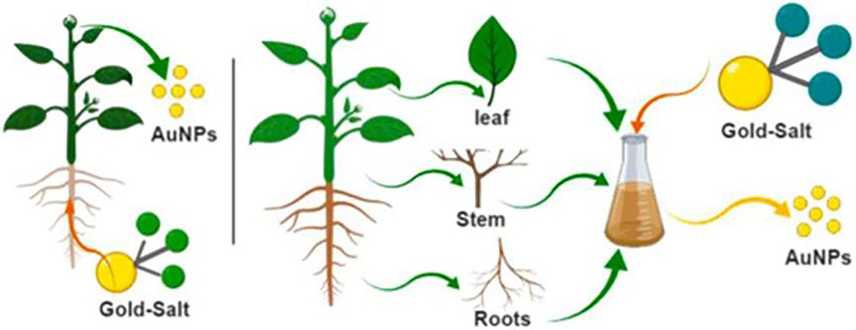
The metal did not originate inside the plant. Instead, it came from underground rock formations. Rainwater passing through soil dissolves extremely small amounts of gold ions from buried ore bodies. Trees absorb that groundwater through their roots as part of normal water intake.
Once inside the tree, the dissolved metals travel upward through vascular tubes that carry nutrients and moisture from roots to leaves.
But the most important step happens afterward.
Scientists discovered colonies of microorganisms living harmlessly inside the plant. These microbes surrounded the dissolved gold ions and chemically transformed them into solid metallic particles — a process involving plant-microbe symbiosis.
A researcher involved in the study explained in a university statement:
“The plant is essentially a pipeline. The microbes are the chemical engineers turning dissolved metals into mineral particles.”
Scientists classify this transformation as biomineralization, a known biological process in shells, coral reefs, and bacterial mineral deposits.
Why Microbes Matter More Than the Tree Itself
Gold ions are chemically reactive and can damage living cells. Plants alone are not well suited to safely store dissolved gold. The microbes provide the crucial missing function.
Microorganisms form thin protective biofilms around the metal ions. These films alter chemical conditions — including acidity and oxidation — causing the dissolved metal to precipitate into solid particles known as gold nanoparticles.
Microbiologists note that bacteria often use mineral formation as a defense strategy, isolating toxic substances outside their cells. In this case, the microbes convert harmful ions into stable metal.
An environmental microbiology expert said:
“The tree provides shelter and nutrients. The microbes provide chemistry. Together they change the behavior of elements in the Earth.”
This discovery reinforces growing evidence that forests operate not as individual organisms but as complex living ecosystems involving plants, fungi, and bacteria.
A Tool for Finding Hidden Mineral Deposits
The discovery has major implications for mineral exploration technology.
Traditional gold exploration requires drilling core samples or excavating test pits. Those operations are costly, slow, and can disturb wildlife habitats and groundwater systems.
Scientists say leaf sampling may provide an alternative.
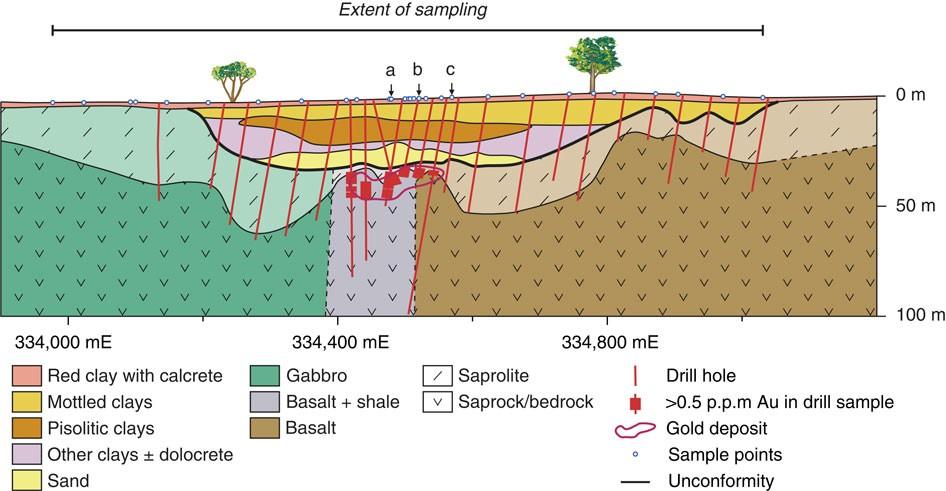
Because trees grow roots deep into soil and fractured rock, they effectively act as natural geological probes. If gold deposits lie below, the trees gradually accumulate microscopic traces over years.
Geologists could test leaves or needles to identify promising locations before drilling.
This technique, known as biogeochemical prospecting, has been studied before, but the microbial mechanism explains why it works.
A geological survey scientist explained:
“Instead of drilling dozens of holes, we could first analyze vegetation. It narrows the search area and reduces environmental impact.”
Environmental and Economic Implications
Mining exploration is often the most environmentally disruptive phase of mining operations. Companies may survey large regions before finding an economically viable deposit.
Biological sampling could significantly reduce disturbance.
Experts say the benefits include:
- Less land clearing
- Lower carbon emissions from heavy machinery
- Reduced soil and groundwater disruption
- Lower exploration costs
Environmental regulators are interested because the method could align mineral exploration with conservation goals.
Scientists also note trees can absorb other metals such as copper, nickel, and zinc. That means similar plant-based monitoring could be used to detect pollution or track toxic contamination near industrial sites.
Global Context and Relevance
Researchers have previously documented similar findings in eucalyptus trees in Australia, where leaves contained tiny gold particles above buried ore bodies. The new microbial evidence helps explain those earlier observations.
The discovery may have relevance in many mineral-rich regions, including parts of Africa, Canada, and South America.
Relevance to India
India contains several gold-bearing geological belts, including regions in Karnataka, Jharkhand, and Rajasthan. Geologists say plant sampling could assist exploration in forested areas where conventional surveys are difficult.
Forest-friendly exploration methods are especially important in ecologically sensitive zones. Scientists note that non-invasive techniques could allow mineral assessment while preserving biodiversity.
What the Discovery Does Not Mean
Researchers stress that trees are not producing gold.
They are only collecting extremely small quantities already present underground.
The concentration is microscopic — far too low to harvest commercially. Even a large forest contains only tiny particles measurable only with laboratory equipment.
Physicists also confirm that gold cannot be biologically created. Creating gold requires nuclear reactions, not biological activity.
In short:
Trees are detectors, not mines.
Scientific Context
The research bridges three major scientific disciplines:
- Botany — how plants transport water and nutrients
- Microbiology — symbiotic microbes inside tissues
- Geochemistry — movement of elements through Earth systems
Understanding these processes helps scientists study nutrient cycles, soil formation, and environmental chemistry.
The findings also contribute to the growing field of the “wood-wide web,” which explores how organisms in forests exchange materials and information through underground networks of roots and microbes.
Historical Background: Plants as Geological Indicators
The concept of plants revealing underground minerals is not entirely new. During the 20th century, geologists noticed certain plants grew unusually well above ore deposits.
For example:
- Some grasses thrive in copper-rich soils.
- Certain plants tolerate nickel concentrations toxic to others.
However, scientists previously lacked a biological explanation for gold detection. The microbial mineralization mechanism now provides a clear answer.
What Happens Next
Researchers plan to test additional tree species in different climates, including tropical forests and temperate woodlands. They also aim to identify which microbial species perform the mineral conversion.
Future studies may focus on:
- Mapping mineral deposits using vegetation
- Monitoring environmental contamination
- Developing biological sensors for metals
A lead researcher summarized:
“Plants are recording geological information continuously. We just needed the tools to read it.”
FAQs About Microbes May Help Trees Absorb Trace Gold
Can gold be collected from trees?
No. The amount is microscopic and cannot be commercially extracted.
Are trees harmed by absorbing gold?
Researchers report no damage to trees at the concentrations observed.
Could this replace mining?
No. It helps locate deposits but does not replace extraction.
Why is this discovery important?
It allows exploration companies to identify promising areas before drilling, reducing environmental impact.
Do only certain trees Absorb Trace Gold?
Early research suggests deep-rooted trees such as conifers and eucalyptus are especially useful indicators, but studies are ongoing.